‘Bridge fuel’ or climate villain? Natural gas in the spotlight as COP27 continues
Advertisement
Read this article for free:
or
Already have an account? Log in here »
To continue reading, please subscribe:
Digital Subscription
One year of digital access for only $1.44 a week*
- Enjoy unlimited reading on winnipegfreepress.com
- Read the E-Edition, our digital replica newspaper
- Access News Break, our award-winning app
- Play interactive puzzles
*Billed as $5.77 plus GST every four weeks. After 52 weeks, price increases to the regular rate of $19.95 plus GST every four weeks. Offer available to new and qualified returning subscribers only. Cancel any time.
To continue reading, please subscribe:
Add Free Press access to your Brandon Sun subscription for only an additional
$1 for the first 4 weeks*
- Enjoy unlimited reading on winnipegfreepress.com
- Read the E-Edition, our digital replica newspaper
- Access News Break, our award-winning app
- Play interactive puzzles
*Your next Brandon Sun subscription payment will increase by $1.00 and you will be charged $17.95 plus GST for four weeks. After four weeks, your payment will increase to $24.95 plus GST every four weeks.
Read unlimited articles for free today:
or
Already have an account? Log in here »
Hey there, time traveller!
This article was published 17/11/2022 (1446 days ago), so information in it may no longer be current.
CALGARY – After long enjoying a reputation as a “bridge fuel” capable of helping the world achieve its climate goals, natural gas is losing some of its environmental lustre — and that has implications for Canada’s energy sector.
Canada is the fourth-largest global producer and sixth-largest exporter of natural gas. And with the war in Ukraine driving a global energy crisis, companies like Enbridge Inc. and TC Energy say they expect demand to grow for liquefied natural gas (LNG) exports from Canada in the coming years.
But natural gas — once seen as a low-emitting fuel able to act as a stopgap until more renewable sources of energy could be developed — has been taking heat at this year’s U.N. COP27 climate summit in Sharm el-Sheikh, Egypt.
“It’s the right time to clear the air on natural gas,” said Binnu Jeyakumar, clean electricity director for clean energy think-tank the Pembina Institute, in an interview from the COP27 climate summit, which she is attending this week.
“We as Canadians need to have a fuller view of the emissions profile of natural gas.”
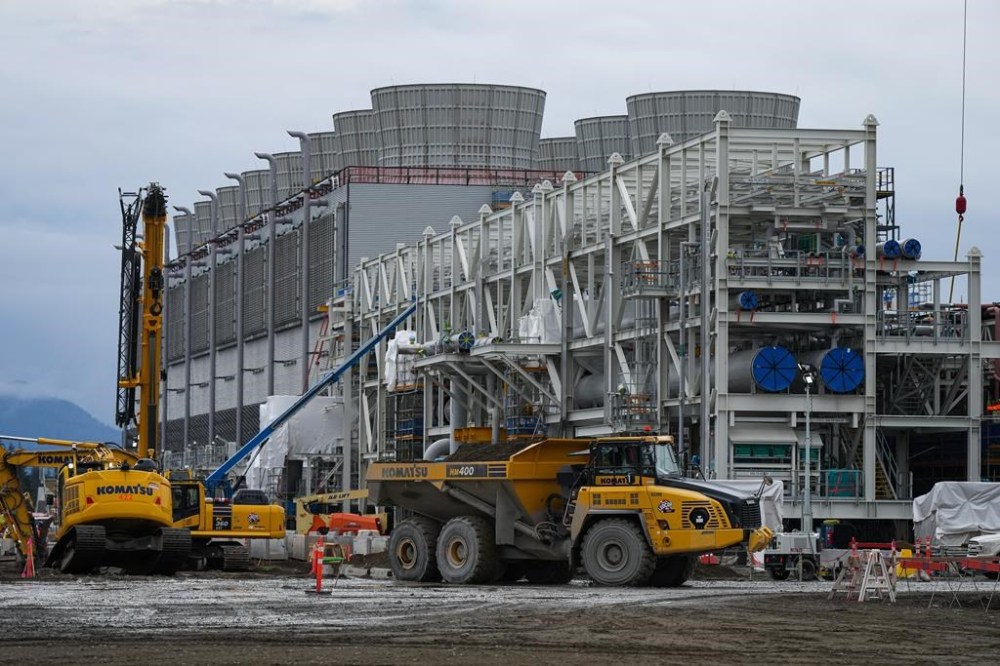
Canadian energy companies have long touted natural gas as a “cleaner” alternative, suggesting that projects like the massive LNG Canada export terminal currently under construction near Kitimat, B.C. can be part of the climate change solution by helping to displace coal-fired power generation around the globe.
It’s true that, when burned, natural gas produces far fewer carbon dioxide emissions than oil or coal. That means that in some cases, it has made sense for jurisdictions to move from a “worse” fossil fuel to a better one.
For example, by converting its coal-fired power plants to natural gas, the province of Alberta has managed to reduce its greenhouse gas emissions from electricity by nearly 40 million tonnes in less than a decade, a feat that has been hailed by experts as a major climate success story.
But delegates at this year’s climate summit are increasingly calling attention to the natural gas industry’s role in the production of methane, a particularly potent greenhouse gas that leaks from natural gas pipelines and wells in the form of “fugitive emissions” or is released during the venting and flaring part of the natural gas extraction process.
Jeyakumar said if the world is serious about its goal of reaching net-zero emissions by 2050, then to drive greenhouse gas production down even further, the majority of electricity production going forward needs to be done through renewables.
“I think the risk with viewing (natural gas) as a bridge fuel is that it could lead one to build natural gas assets, and these assets have an economic life of several decades,” she said.
“So what this does is lock us into these assets . . . and they become stranded assets.”
In Sharm el-Sheikh, both Canada and the U.S. pledged to take further steps to reduce methane emissions, with Canada stating it aims to eliminate 75 per cent of methane emissions from the oil and gas sector compared with 2005 levels by 2030.
But David Hughes, president of energy consultancy Global Sustainability Research Inc., said even without any LNG exports, Canada will be hard-pressed to meet its climate targets. He said once LNG Canada comes on-stream — and its full life-cycle of emissions from production and processing of the gas, pipeline transportation, liquefaction and shipping are taken into effect — it will be nearly impossible.
“It really makes it a hopeless situation,” Hughes said. “The amount of carbon capture and storage and so forth that you would need to do in order to meet your commitments would be huge.”
Dennis McConaghy, a former executive vice-president at TransCanada Corp., now TC Energy, said he believes the current debate over natural gas needs to take into account that the world needs affordable, reliable energy.
“The minute you say you are going to decarbonize, you can demonize natural gas,” McConaghy said in an interview. “But the cost of trying to do this has almost gone without consideration.”
McConaghy said he believes a balanced approach that mitigates the worst effects of climate change while still strategically using natural gas to maximize human well-being is the answer.

“Because to completely eliminate the production and use of all hydrocarbons is, in my view, an extraordinarily extreme view and an extreme objective,” he said.
According to the International Energy Agency, the “golden age” of natural gas was in the 2010s, when the U.S. was going through a large-scale phaseout of coal-fired power plants in favour of natural gas.
With the climate policies that have been implemented by countries since, the IEA now says it expects the world will hit peak natural gas demand as early as the end of this decade, after which demand will begin to fall.
This report by The Canadian Press was first published Nov. 17, 2022.
Companies in this story: (TSX:ENB, TSX:TRP)
Related Articles
COP27 moved the needle, but only very slightly
Advertisement Advertise With Us
Advertisement Advertise With Us