Germany seeks to boost renewable energy, cut Russian imports

Advertisement

Advertise with us

BERLIN (AP) — The German government unveiled a major package of reforms Wednesday to boost the production of renewable power, meet its climate goals and become independent of energy imports from hostile nations such as Russia.

Read this article for free:


or

Already have an account? Log in here »

To continue reading, please subscribe:

Subscribe and receive a limited-edition Free Press branded hat or tote.

Digital Subscription

One year of digital access for only $205*

  • Enjoy unlimited reading on winnipegfreepress.com
  • Read the E-Edition, our digital replica newspaper
  • Access News Break, our award-winning app
  • Play interactive puzzles

*First annual payment billed as $205.00 + GST for one year. This annual subscription will automatically renew at $233.00 + GST every 52 weeks (10% off the regular annual price of $259.35). Offer available to new and qualified returning subscribers only. Cancel any time.

To continue reading, please subscribe:

Add Free Press access to your Brandon Sun subscription for only an additional

$1 for the first 4 weeks*

  • Enjoy unlimited reading on winnipegfreepress.com
  • Read the E-Edition, our digital replica newspaper
  • Access News Break, our award-winning app
  • Play interactive puzzles
Start now

*Your next Brandon Sun subscription payment will increase by $1.00 and you will be charged $17.95 plus GST for four weeks. After four weeks, your payment will increase to $24.95 plus GST every four weeks.

Hey there, time traveller!
This article was published 06/04/2022 (1637 days ago), so information in it may no longer be current.

BERLIN (AP) — The German government unveiled a major package of reforms Wednesday to boost the production of renewable power, meet its climate goals and become independent of energy imports from hostile nations such as Russia.

The 600-page “Easter package” approved by Cabinet lays out ambitious goals for the expansion of offshore power and declares the installation of renewable energy to be of “overriding public interest” — a trump card meant to cut through Germany’s often lengthy bureaucratic processes.

Europe’s biggest economy aims to generate almost all of its electricity from renewable sources such as wind and solar by 2035 — more than doubling the current rate in 13 years. But the roll-out has slowed sharply in recent years due to complex rules and changes in feed-in subsidies.
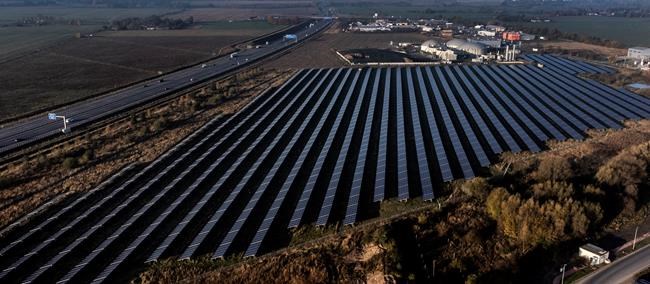
FILE -- A solar farm, front, and a biogas plant, rear, are seen in Oberkraemer, Germany, Thursday, Oct. 28, 2021. The German government presented a major package of reforms Wednesday to boost the construction of renewable power as part of its efforts to meet its climate goals and become independent of energy imports from hostile nations such as Russia. (AP Photo/Michael Sohn, file)

“In sum, this package will lead to a significant increase in renewable energy,” Economy and Energy Minister Robert Habeck told reporters in Berlin.

After adding no offshore wind in 2021, the new center-left government that took power in December said Germany will increase the installed capacity from under 8 Gigawatts currently to 30GW by 2030 and 40GW by 2035. The goal for 2045 — by when Germany aims to achieve “net zero”’ greenhouse gas emissions — is 70 GW of offshore wind capacity.

The government has also set a target of more than doubling onshore wind capacity to 115GW by 2030, including by reducing the minimum distance to certain radio beacons and weather radars. The goal for solar is even more ambitious: almost quadrupling the existing capacity to 215GW by the next decade.

Habeck acknowledged the enormity of the task and said Germany will likely miss its short-term targets for cutting greenhouse gas emissions due to failures of the past.

“It’s the precondition,” he said of the new measures, “not the solution for everything.” Further measures will be agreed in the coming months and many must be approved by parliament before they come into force.

The war in Ukraine would also affect plans, with Germany likely having to use more domestic coal to fill the short-term gap caused by a reduction in Russian energy imports, Habeck said.

Still, the government has already managed to significantly cut its purchase of Russian coal, oil and gas in recent months and aims to stop importing oil and coal from Russia this year, and gas by mid-2024, he said.

“You can see at what speed we are becoming independent of Russian energy,” he added.

Germany’s powerful industry lobby group BDI welcomed the new measures but warned that the targets will be tough to achieve.

Aside from renewables, Germany will also have to expand the use of hydrogen and biomass energy to safeguard the power supply during times when little wind or solar power can be generated, it said.

As Habeck unveiled the new energy package to journalists, about a dozen environmental activists glued themselves to a nearby bridge leading to the German parliament and chancellery.
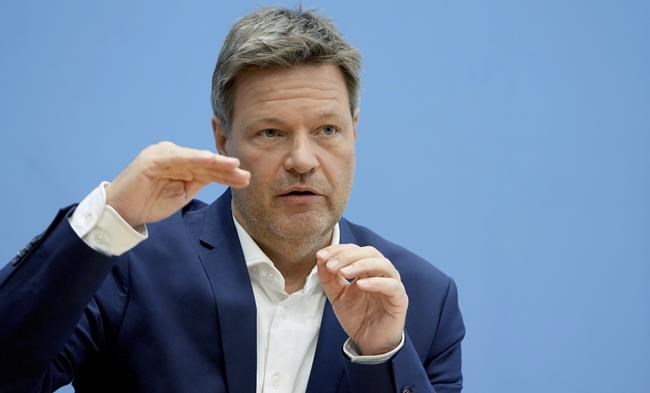
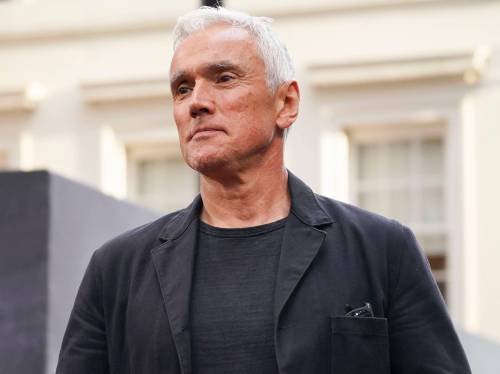
German Economy and Climate Minister Robert Habeck presents the government's so-called 'Easter Package' during a press conference in Berlin, Germany, Wednesday, April 6, 2022. (AP Photo/Michael Sohn)

Protester Cornelia Huth, a biologist and member of the group Scientist Rebellion, said Germany’s targets aren’t enough to meet the goals of the 2015 Paris climate agreement and should be even higher on account of the country’s high historical emissions.

Huth also called on the government to implement a number of measures she described as “no brainers” including a law against food waste and a universal speed limit.

Germany’s transport minister this week dismissed the idea of even a temporary speed limit of 130 kilometers per hour (81 mph) on the Autobahn, saying the country doesn’t have enough signs.

Neighboring Austria announced subsidies worth about 300 million euros ($327 million) Wednesday to install additional renewable energy facilities.

The Alpine nation is even more dependent on Russian gas than Germany, and Environment Minister Leonore Gewessler said every wind turbine or solar power facility “frees us from Vladimir Putin’s grip.”

___

Follow AP’s climate coverage at https://apnews.com/hub/climate

Report Error Submit a Tip

More Stories

Plenty of losses all around

Gwynne Dyer 4 minute read Wednesday, Jul. 15, 2026

The last time oil-tankers were being shot up in the Persian Gulf, back in the 1980s, it was Saddam Hussein’s brutal tyranny in Iraq versus Ayatollah Khomeini’s revolutionary Islamist regime in Iran.

The United States backed Saddam because he was just another murderous thug, whereas the new regime in Tehran was an actual threat to American interests. It had overthrown Iran’s American-backed puppet king and wanted to spread its Islamist ideology across the region.

So, of course, Ronald Reagan’s administration chose Saddam’s side. It sent Iraq arms by clandestine means (because Congress wouldn’t authorize it) and even provided targeting information for Iraqi poison gas attacks on Iran. The Americans chose the “lesser evil,” but at least they knew it was evil.

Once in a while they would even say it out loud, quoting U.S. diplomat Henry Kissinger: “It’s a shame that both sides can’t lose.” But they never did anything about it, and after eight years of slaughter, the war ended in a no-score draw.

Today’s horoscope

Georgia Nicols 4 minute read Preview

Today’s horoscope

Georgia Nicols 4 minute read 2:00 AM CDT

MOON ALERT: Avoid shopping (except food and gas) and important decisions after 6 p.m. The moon is in Taurus.

ARIES (March 21-April 19)

You might find you identify with your possessions more than usual. In fact, this could be why you might be tempted to be a bit extravagant or go overboard buying something. This same sense of largesse might creep into your financial negotiations. Be aware of this.

TAURUS (April 20-May 20)

Read
2:00 AM CDT

Accused grandparent scammer charged with sex crimes involving minor

Free Press staff 3 minute read 12:11 PM CDT

An Edmonton man accused of defrauding several Winnipeg seniors in so-called grandparent scams has also been charged for allegedly sexually assaulting a teenage girl in the city.

Winnipeg Police Service financial crime investigators were alerted after three city residents, all in their 80s, were defrauded of more than $37,000 in August after receiving calls from someone posing as a grandchild who claimed to need cash to pay for bail, police said Tuesday.

The first victim received several phone calls between Aug. 17 and 22 from a caller who claimed the victim’s grandson had been arrested and needed cash bail. The victim agreed to pay and handed over cash and gold and silver coins to a man who showed up at their door four separate times.

On Aug. 18, another adult received a call from someone claiming to be their grandson who needed cash for bail and the victim obliged, paying a man who went to their home to pick up money.

Northern style

AV Kitching 8 minute read Preview

Northern style

AV Kitching 8 minute read Tuesday, Sep. 15, 2026

North of North is partnering with the Winnipeg Art Gallery-Qaumajuq to celebrate the way it has propelled authentic northern fashion into the global spotlight at the gallery’s special edition of Crafted on the Catwalk tonight, featuring fashion and design from Manitoba, Nunavut, the Northwest Territories, Nunatsiavut and Nunavik.

Arnaquq-Baril and series stars Anna Lambe and Zorga Qaunaq spoke to the Free Press ahead of tonight’s catwalk show.

Read
Tuesday, Sep. 15, 2026

The inaugural Editor’s Note

1 minute read Tuesday, May. 26, 2026

The Brazilian election

Gwynne Dyer 6 minute read Preview

The Brazilian election

Gwynne Dyer 6 minute read 2:00 AM CDT

“Flávio Bolsonaro is Trump’s candidate and what Trump wants is to colonize Brazil, take our riches, steal our future and leave us in the dust,” claims the latest video released by President Luiz Inácio ‘Lula’ da Silva’s re-election campaign. The weird thing is about half of Brazil’s voters would be okay with Trump running the country (through Bolsonaro).

Nobody in Brazil thinks that Flávio Bolsonaro is his own man. He is the son of Jair Bolsonaro, the hard right ex-soldier and former president who tried a coup after he lost the 2022 election. It was even clumsier and more half-hearted than Trump’s brief excursion in sedition after he lost the U.S. 2020 election — but Jair Bolsonaro went to jail for his attempt.

In a strange way Trump even recognizes the parallel, showing special sympathy for his imprisoned fellow traveler. He claimed that the senior Bolsonaro was the victim of a “witch-hunt” by the Brazilian Supreme Court and slapped 50 per cent tariffs on the country. And next Sunday (Oct. 4) the junior Bolsonaro faces Lula in another presidential election.

We already know that there will be a second round of voting on Oct. 25, when the other three candidates have dropped out and it’s a straight race between Lula and Junior. We have no idea what that outcome will be, because the two men have been only one or two points apart (i.e. ‘within the margin of error’) in every opinion poll for months.

Read
2:00 AM CDT