Germany says Russia will lose energy customers over Ukraine

Advertisement

Advertise with us

BERLIN (AP) — Germany’s vice chancellor said Thursday that Russia’s attack on Ukraine is “completely illogical” and will backfire, causing western nations to stop buying Russian coal, oil and gas — an important source of income for the resource-rich country.

Read this article for free:


By clicking the button above, an account will be created and you will begin to receive some of our recommended newsletters. You may opt out of any newsletter by visiting your Email and Communication Preferences page or by clicking "unsubscribe" at the bottom of any email.

or

Already have an account? Log in here »

To continue reading, please subscribe:

Digital Subscription

One year of digital access for only $1.44 a week*

  • Enjoy unlimited reading on winnipegfreepress.com
  • Read the E-Edition, our digital replica newspaper
  • Access News Break, our award-winning app
  • Play interactive puzzles

*Billed as $5.77 plus GST every four weeks. After 52 weeks, price increases to the regular rate of $19.95 plus GST every four weeks. Offer available to new and qualified returning subscribers only. Cancel any time.

To continue reading, please subscribe:

Add Free Press access to your Brandon Sun subscription for only an additional

$1 for the first 4 weeks*

  • Enjoy unlimited reading on winnipegfreepress.com
  • Read the E-Edition, our digital replica newspaper
  • Access News Break, our award-winning app
  • Play interactive puzzles
Start now

*Your next Brandon Sun subscription payment will increase by $1.00 and you will be charged $17.95 plus GST for four weeks. After four weeks, your payment will increase to $24.95 plus GST every four weeks.

Hey there, time traveller!
This article was published 24/02/2022 (1711 days ago), so information in it may no longer be current.

BERLIN (AP) — Germany’s vice chancellor said Thursday that Russia’s attack on Ukraine is “completely illogical” and will backfire, causing western nations to stop buying Russian coal, oil and gas — an important source of income for the resource-rich country.

Robert Habeck, a powerful figure in the new German government whose portfolio includes economy and climate, said the crisis will strengthen the case for customers of Russian fossil fuels to pursue energy independence by boosting renewable sources.

“From a rational point of view, this is completely illogical,” he told The Associated Press in an interview hours after Russia unleashed its military might against its smaller neighbor.

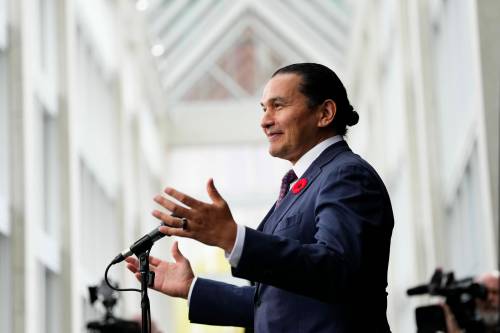
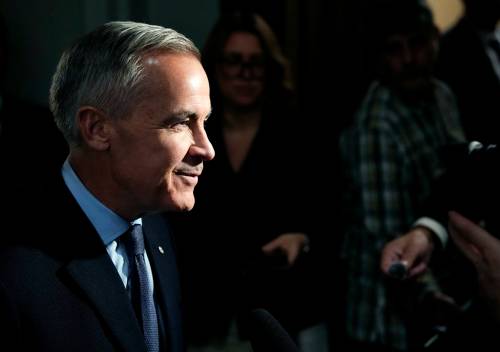
German Economy and Climate Minister and Vice Chancellor Robert Habeck speaks during an interview with The Associated Press, in his office at the Economy ministry in Berlin, Germany, Thursday, Feb. 24, 2022. Germany’s vice chancellor said Thursday that Russia’s attack on Ukraine is “completely illogical” and will backfire, causing western nations to stop buying Russian coal, oil and gas — an important source of income for the resource-rich country. (AP Photo/Michael Sohn)

“The complete West will turn away from Russia,” he said. “We will diversify our energy system. We will not buy Russian coal and gas in such an amount in the future.”

Germany currently gets about half of its natural gas and coal from Russia, and a third of its oil.

Allies such as the United States have long warned that the heavy reliance of Europe’s biggest economy on Russia energy imports is a strategic risk given the growing friction with Moscow. Until recently, German officials insisted that Russia had proved itself to be a reliable supplier and even backed the construction of a new natural gas pipeline through the Baltic Sea, despite protests from the U.S., Poland and Ukraine.

Germany halted the Nord Stream 2 pipeline project Tuesday as tensions with Russia over Ukraine escalated — a move that was applauded in Washington and Kyiv.

Habeck said measures to shore up Germany’s gas reserves in recent months, along with a fortunate abundance of wind power following a blustery February, had helped prevent a shortage for consumers as energy prices shot up and Russia held back additional supplies.

“We see a direct effect: the more renewable energy is in the market, the less natural gas we use,” he said.

“I definitely think that the current situation will help the transition into renewable energy in Germany and Europe,” he told The AP at his office in Berlin. “People see that it is not only a climate-related issue, but a safety or security-related issue right now.”

Extending the lifetime of Germany’s three remaining nuclear plants isn’t an option, and building terminals for tankers filled with liquefied natural gas — an idea Habeck’s Green Party has been skeptical of — will take years, he said.

Germany is looking to import LNG from Qatar via foreign ports and buy gas from other European nations to cover any shortage in the near term.

Habeck acknowledged that, on the diplomatic front, Germany’s efforts to foster talks with Moscow by refusing to supply Ukraine with weapons had failed.

“From a German perspective, we were trying to hold the line open for diplomacy,” he said. “We thought it was a good idea not to go into weapon delivery to Ukraine because then the possibility of talks would be narrowed. This was our strategy, actually. It hasn’t worked out.”

Nor did sanctions imposed earlier this week deter Russia from sending troops into Ukraine, he said. “But we can strengthen the pressure on (Russian President Vladimir) Putin and his people, and then we will wait and see what comes out of it.”

Habeck said he believed Putin personally should face sanctions for his actions on Ukraine, and expressed doubt whether further negotiations with the Russian leader would be helpful.

“I think we have to talk with Russia, and Russia is more than Putin,” he said. “I hope that some people will speak for the other Russia, and they have a voice that can be heard and they will not be suppressed.”

Habeck said he had been emotionally moved by a visit to the Ukrainian embassy in Berlin earlier Thursday, where tearful staff expressed fears for their loved ones back home amid the Russian advance.

Habeck said he hopes to embark on his first official visit to the United States next week, if the crisis allows, arguing that it’s vital to strengthen the trans-Atlantic partnership further.

The trip was scheduled to include meetings with senior U.S. officials and a visit to the Deep South, where several large Germany companies have manufacturing plants.

“In a way it’s the best moment to go there,” he said. “We have a lot of things to discuss: trade issues, relations (with) China, but of course in the current situation I also expect that the security issues and the energy supply … are of uppermost interest.”

___

Follow AP’s coverage of the Ukraine crisis at https://apnews.com/hub/russia-ukraine

Report Error Submit a Tip

More Stories

Colorado low blow: flood fears rise as Manitoba faces yet another weather warning

Chris Kitching 5 minute read Preview

Colorado low blow: flood fears rise as Manitoba faces yet another weather warning

Chris Kitching 5 minute read Thursday, Apr. 28, 2022

Forecasters are saying with certainty another Colorado low will hit southern Manitoba this weekend, putting flood-hit municipalities — including four already in local states of emergency — on high alert.

The third such event in as many weeks is set to arrive Friday and linger through Sunday, with the bulk of the rain falling Saturday, said Natalie Hasell, warning preparedness meteorologist with Environment and Climate Change Canada.

“There is agreement to the point where, yes, a Colorado low is coming, but exactly what it will mean for southern Manitoba is unclear,” she said Wednesday. “I hope people are prepared for another uncomfortable weekend.”

As municipalities filled sandbags and pumped standing water, weather models still disagreed on the storm’s track.

Read
Thursday, Apr. 28, 2022

Walkout creates chaos at St. James Smitty’s

Morgan Modjeski 3 minute read Preview

Walkout creates chaos at St. James Smitty’s

Morgan Modjeski 3 minute read Yesterday at 2:01 AM CDT

Gordon Sharpe wanted to eat a meal at the St. James Smitty’s Wednesday, but he got a helping of bad news instead.

He saw several workers walk out of the restaurant, at 1017 St. James St.

“(The waiter) came back about 10 minutes later and stood over the table, looking a little distraught and said, ‘I’m quitting right now and so is everybody else,’” Sharpe said. “He said, ‘This is my last time serving you,’ and he was quite choked up.”

“I’ve never seen anything like it,” he said, adding that the managers scrambled to serve patrons.

Read
Yesterday at 2:01 AM CDT

Ottawa announces $500 million for North End sewage plant upgrade

Joyanne Pursaga 4 minute read Preview

Ottawa announces $500 million for North End sewage plant upgrade

Joyanne Pursaga 4 minute read Friday, Oct. 30, 2026

The federal government will provide $500 million to help complete the major upgrade to Winnipeg’s North End sewage treatment plant.

Winnipeg South MP Terry Duguid confirmed the total funding at a news conference at the plant Friday, calling the work critical to Winnipeg’s future.

“The stakes could not be higher. Without expanded wastewater treatment, Winnipeg would run out of capacity to build new homes and accommodate new industries within six years,” said Duguid.

The commitment offers the final funding needed to cover the $1.57-billion third and final phase of the upgrade. The city and province will also pay $500 million each for the work.

Read
Friday, Oct. 30, 2026

The long and winding road

Editorial 4 minute read Preview

The long and winding road

Editorial 4 minute read Yesterday at 2:01 AM CDT

As theatre goes, it sent a strong message.

Manitoba Premier Wab Kinew, standing in front of microphones and television cameras, holding up his Indigenous status card and saying that he didn’t feel Canada should have “a race-based form of identification in this country, but that is a reality,” adding that it was time to abolish the Indian Act.

“I think it’s time to abolish the Indian Act, get rid of the Indian Act, move past the Indian Act, and it needs to be done with First Nations people and First Nations governments, of course. I think it’s long overdue that we have a relationship with Indigenous Peoples in Canada that reflects who we are as Canadians today,” he said.

The Indian Act — the name alone suggests how out-dated and out of place the law has become. Originally dating from 1876, the law was put in place to “amend and consolidate the laws respecting Indians” and gave the Minister of the Interior the responsibility to “control and management of the reserves, lands, moneys and property of Indians in Canada.”

Read
Yesterday at 2:01 AM CDT

Province changes Thompson ‘Vaxport’ plan

Carol Sanders 5 minute read Preview

Province changes Thompson ‘Vaxport’ plan

Carol Sanders 5 minute read Thursday, Jan. 14, 2021

The Manitoba government has changed its plans for a vaccination "super site" for the North — just days after it was announced — after local officials argued the original proposal was unworkable.

Some northern residents will still get their COVID-19 shots at Thompson's airport, but "Vaxport" will be less super than originally planned, providing injections only to residents of fly-in communities.

Most northern residents will get their shots at the Thompson Community Recreation Centre, which is centrally located in the city of about 13,000.

"This makes much more sense logistically, and for the citizens of Thompson," Mayor Colleen Smook said Thursday after touring the airport site, which is located 10 kilometres from the city and isn't serviced by public transportation.

Read
Thursday, Jan. 14, 2021

The new normal in Canadian politics

David McLaughlin 5 minute read Preview

The new normal in Canadian politics

David McLaughlin 5 minute read Yesterday at 2:01 AM CDT

“Nothing happening, all at once.”

Welcome to the new normal of Canadian politics, where normality is the new normal. Routine and stable are in; disruptive and excessive are out. Exhibits A and B are the Alberta referendum and the British Columbia election. Voters opted for stability over volatility.

The opposite of being normal is being different from the norm. In politics that means different from where we’ve been and what we’ve come to expect. Two competing trends have dominated our politics for the past decade and a half — progressivism and populism. Think Justin Trudeau and liberal, progressive identity politics in Canada, and Donald Trump and conservative, populist MAGA politics in America. We are now experiencing a swing away from both those trends.

Representing this “new normal” are Prime Minister Mark Carney, for one, and newly elected British Columbia premier, Lorne Doerksen, for another. Both are considered normal because they talk and act like adults in a childish political world. Their political flair is to not have any political flair. They stand out for not standing out.

Read
Yesterday at 2:01 AM CDT