WEATHER ALERT

In split decision, Supreme Court says the federal carbon price is constitutional

Advertisement

Advertise with us

OTTAWA - The Supreme Court of Canada ruled Thursday that the national price on pollution is entirely constitutional, upholding a pivotal piece of the Liberal climate-change plan.

Read this article for free:


By clicking the button above, an account will be created and you will begin to receive some of our recommended newsletters. You may opt out of any newsletter by visiting your Email and Communication Preferences page or by clicking "unsubscribe" at the bottom of any email.

or

Already have an account? Log in here »

To continue reading, please subscribe:

Digital Subscription

One year of digital access for only $1.44 a week*

  • Enjoy unlimited reading on winnipegfreepress.com
  • Read the E-Edition, our digital replica newspaper
  • Access News Break, our award-winning app
  • Play interactive puzzles

*Billed as $5.77 plus GST every four weeks. After 52 weeks, price increases to the regular rate of $19.95 plus GST every four weeks. Offer available to new and qualified returning subscribers only. Cancel any time.

To continue reading, please subscribe:

Add Free Press access to your Brandon Sun subscription for only an additional

$1 for the first 4 weeks*

  • Enjoy unlimited reading on winnipegfreepress.com
  • Read the E-Edition, our digital replica newspaper
  • Access News Break, our award-winning app
  • Play interactive puzzles
Start now

*Your next Brandon Sun subscription payment will increase by $1.00 and you will be charged $17.95 plus GST for four weeks. After four weeks, your payment will increase to $24.95 plus GST every four weeks.

Hey there, time traveller!
This article was published 25/03/2021 (2048 days ago), so information in it may no longer be current.

OTTAWA – The Supreme Court of Canada ruled Thursday that the national price on pollution is entirely constitutional, upholding a pivotal piece of the Liberal climate-change plan.

The case brings a legal end to a years-long battle between Ottawa and many provinces over a carbon tax, and prompted Saskatchewan Premier Scott Moe to start looking at a homegrown carbon-pricing mechanism and Alberta Premier Jason Kenney to nudge open the door to doing so too.

Saskatchewan, Ontario and Alberta challenged the Liberal government’s 2018 Greenhouse Gas Pollution Pricing Act in court, arguing it was a federal overreach into provincial jurisdiction over everything from taxes and the environment to natural-resource development.

The statue representing justice looks out from the Supreme Court of Canada over the Parliamentary precinct in Ottawa, Thursday March 25, 2021. THE CANADIAN PRESS/Adrian Wyld

On Thursday all three were on the losing end, as the court declared Ottawa has the constitutional authority to impose a minimum price on greenhouse-gas emissions.

“The undisputed existence of a threat to the future of humanity cannot be ignored,” wrote Chief Justice Richard Wagner in the 6-3 decision.

He said even the parties arguing against the law agreed that “climate change is real” and that there is extensive evidence showing that carbon pricing is a critical element in addressing it.

The onus had been on Canada to prove it has the power to implement a minimum national price on greenhouse gas emissions because it was in the national interest and didn’t infringe on provincial jurisdictions guaranteed by the Constitution.

Wagner said Ottawa had made its case because of the real threat posted by climate change, and the fact that even one province refusing to act could wreak irreversible harm on the rest.

Environment Minister Jonathan Wilkinson called it “an historic day for Canada” and asked provincial governments to work with Ottawa as a result.

“Canadians rightly expect their governments to build an economy that fights climate change using the most effective tools at our disposal and now we can get on with the job,”” he said.

He said he hopes the provinces without their own carbon prices will implement one now, but the partisan fight over carbon pricing in Canada is still far from over.

Conservative Leader Erin O’Toole, whose party grassroots voted against a motion last weekend to add “climate change is real” to the party policy book, said he will still scrap the carbon tax.

“We will protect the environment and fight climate change but we won’t be doing that by making the poorest Canadians pay,” he said.

Provinces were more open to adjusting their plans as a result of the decision however.

In a news conference, Kenney said he was disappointed with the decision but respects it. Asked if he would restore the Alberta carbon tax he scrapped when he took office in 2018, Kenney said many options are on the table.

“We are going to consult with Albertans and also talk to our allied provinces to determine the best way forward to protect jobs and the economy in Alberta, to minimize the costs of any future policies on this province,” he said.

In Saskatchewan, Moe said the decision did not change his “core conviction that the federal carbon tax is bad environmental policy, bad economic policy, and simply wrong.”

But he said given the decision, Saskatchewan is moving immediately to bring all its industries under a provincial pricing system for industry, and is immediately working to implement a fuel charge that would mimic one introduced last year in New Brunswick.

Ontario Environment Minister Jeff Yurek expressed disappointment in the outcome but said Ontario will respect the decision. He did not say whether Ontario will reintroduce its own pricing mechanism.

The Ontario Tories scrapped a cap-and-trade system implemented by the previous provincial Liberal government.

The court ruling prompted a flurry of celebration and relief from climate activists who hope this is the beginning of a new day for Canadian climate action.

“(The) Supreme Court of Canada just dropped a love letter to the planet,” said Catherine Abreu, the executive director of Climate Action Network Canada.

Stewart Elgie, director of the environment institute at the University of Ottawa, said this was “the most important environmental court decision ever in Canada.”

“I hope this decision will end the partisan fighting over carbon pricing,” he said. “We can’t keep having our climate laws ripped up every time there’s a change in government.”

This report by The Canadian Press was first published March 25, 2021.

—With files from Stephanie Taylor in Regina, Dean Bennett in Edmonton and Shawn Jeffords in Toronto

Report Error Submit a Tip

More Stories

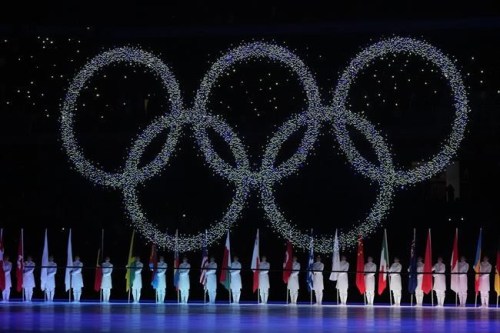
Salt Lake, Sapporo head race to 2030 Olympics, and maybe '34

Stephen Wade, The Associated Press 6 minute read Preview

Salt Lake, Sapporo head race to 2030 Olympics, and maybe '34

Stephen Wade, The Associated Press 6 minute read Monday, May. 2, 2022

Fraser Bullock, who leads Salt Lake City's bid to return the Winter Olympics to Utah, sounds very confident about success.

“I believe we'll host a future Game(s). It's a question of when,” he said last week in a local television interview.

But will it be in 2030, the first opening on the IOC calendar? Or might the International Olympic Committee make a double award and also name the 2034 host? When it had two strong candidates 4 1/2 years ago for the Summer Games, the IOC selected Paris for the 2024 Olympics and Los Angeles for 2028.

The IOC isn't saying. An announcement is expected early next year, with media reports in Salt Lake City suggesting a decision in May 2023.

Read
Monday, May. 2, 2022

Expect a reasonable approach to keep Manitoba’s minimum wage out of cellar

Tom Brodbeck 5 minute read Preview

Expect a reasonable approach to keep Manitoba’s minimum wage out of cellar

Tom Brodbeck 5 minute read Tuesday, May. 31, 2022

The devil will be in the details when it comes to how much the Stefanson government will increase the minimum wage in 2022 under proposed legislation that’s expected to become law this week.

My prediction: government will boost the base wage by at least $1.10 an hour this year.

As expected, the Stefanson government plans to alter its inflation-based formula for setting the minimum wage, which now stands at $11.95 an hour. Normally, the base wage is indexed to the previous year’s rate of inflation. That’s sound policy during normal times. However, with inflation growing at rates not seen in more than 30 years, an immediate adjustment is required to ensure minimum-wage earners don’t lose purchasing power.

Conservative governments in Saskatchewan, Ontario and New Brunswick have all announced significant increases to their base wages in 2022, putting pressure on the Stefanson government to follow suit. Failure to do so would see Manitoba’s minimum wage (previously scheduled to rise 40 cents an hour to $12.35 on Oct. 1) rank lowest in the country.

Read
Tuesday, May. 31, 2022

The ‘Gang of Nine’ and business as usual at city hall

Editorial 4 minute read Preview

The ‘Gang of Nine’ and business as usual at city hall

Editorial 4 minute read 2:00 AM EST

In the early 1990s, after the province reduced the number of municipal wards in Winnipeg to 15, critics spoke at length of how a theoretical “Gang of Eight” could control all decision making at city hall. In subsequent years, there were various incarnations of a Gang of Eight, although it was never conclusively shown that eight members of city council could consistently stay on the same page long enough to dominate civic affairs.

That is an apt tale to consider now, as Winnipeg city hall welcomes nine rookie councillors, the largest number of non-incumbents elected in more than 30 years.

Theoretically, this new group of councillors could band together and push through various reforms. It’s a highly intriguing scenario for anyone who has watched the city, on occasion, shun riskier strategies in favor of status quo politics.

However, as was the case in the early 1990s, the chances of that happening begin to fall apart once you consider the work of building and sustaining a coalition of rookie councillors who come from a broad array of backgrounds.

Read
2:00 AM EST

Bob Saget, beloved TV dad of 'Full House,' dead at 65

Lynn Elber, The Associated Press 6 minute read Preview

Bob Saget, beloved TV dad of 'Full House,' dead at 65

Lynn Elber, The Associated Press 6 minute read Monday, Jan. 10, 2022

LOS ANGELES (AP) — Bob Saget, the actor-comedian known for his role as beloved single dad Danny Tanner on the sitcom “Full House” and as the wisecracking host of “America’s Funniest Home Videos,” died while on a stand-up tour. He was 65.

Deputies in Orange County, Florida, were called Sunday about an “unresponsive man” in a hotel room at the Ritz-Carlton in Orlando and found Saget dead, according to a sheriff’s statement on Twitter. Detectives found “no signs of foul play or drug use in this case.”

Saget was in Florida as part of his “I Don't Do Negative Comedy Tour.” After warm audience receptions to his gigs Friday in Orlando and Saturday in the Ponte Vedra Beach resort area, he celebrated online.

“I’m back in comedy like I was when I was 26. I guess I’m finding my new voice and loving every moment of it,” he posted Saturday on Instagram.

Read
Monday, Jan. 10, 2022

Russian Olympic biathlon champion loses Sochi doping case

Graham Dunbar, The Associated Press 5 minute read Preview

Russian Olympic biathlon champion loses Sochi doping case

Graham Dunbar, The Associated Press 5 minute read Thursday, Sep. 24, 2020

GENEVA - Two-time Olympic biathlon champion Olga Zaitseva lost her appeal Thursday against disqualification from the 2014 Sochi Olympics for her part in Russia’s state-backed doping program.

The Court of Arbitration for Sport said its judges upheld the International Olympic Committee’s disciplinary ruling of 2017, which used evidence against Zaitseva from Russian whistleblower Grigory Rodchenkov.

Zaitseva’s disqualification from all her Sochi events strips Russia of its silver medal in the women’s biathlon 4x6-kilometre relay. She won — and will retain — her gold medals from the same relay event at the two previous Winter Games in 2006 and 2010.

Her lawyer in Switzerland, Yvan Henzer, said Zaitseva would appeal the CAS ruling at Switzerland’s supreme court. The federal court typically only intervenes if legal process was abused.

Read
Thursday, Sep. 24, 2020

China’s electric car sales grow in 2024, as sales of gasoline cars plunge

Ken Moritsugu And Zen Soo, The Associated Press 2 minute read Monday, Jan. 13, 2025

BEIJING (AP) — Sales of all types of electric vehicles rose more than 40% in China last year, while those of gasoline-powered automobiles plunged, industry data showed Monday.

A total of 31.4 million vehicles were sold last year in the world's biggest market by sales, up 4.5% compared from a year earlier, the China Association of Automobile Manufacturers reported. Growth in sales outpaced production, which rose 3.7%.

China's exports of passenger cars jumped almost 20% in 2024, to almost 5 million vehicles. Out of that, exports of what China calls “new energy vehicles,” including battery EVs, fuel-cell cars and plug-in hybrids -- electric vehicles with a small gasoline-powered engine to back up the batteries -- reached 1.28 million. That was a 6.7% increase from 2023.

Domestically, sales of passenger cars rose 13.6% in December, driven in part by rebates for trade-ins, raising sales of all passenger cars in China by 3.1% for the year, to 22.6 million.