Montreal commuter train line blocked in solidarity with B.C. pipeline protest
Advertisement
Read this article for free:
or
Already have an account? Log in here »
To continue reading, please subscribe:

Digital Subscription
One year of digital access for only $205*
- Enjoy unlimited reading on winnipegfreepress.com
- Read the E-Edition, our digital replica newspaper
- Access News Break, our award-winning app
- Play interactive puzzles
*First annual payment billed as $205.00 + GST for one year. This annual subscription will automatically renew at $233.00 + GST every 52 weeks (10% off the regular annual price of $259.35). Offer available to new and qualified returning subscribers only. Cancel any time.
To continue reading, please subscribe:
Add Free Press access to your Brandon Sun subscription for only an additional
$1 for the first 4 weeks*
- Enjoy unlimited reading on winnipegfreepress.com
- Read the E-Edition, our digital replica newspaper
- Access News Break, our award-winning app
- Play interactive puzzles
*Your next Brandon Sun subscription payment will increase by $1.00 and you will be charged $17.95 plus GST for four weeks. After four weeks, your payment will increase to $24.95 plus GST every four weeks.
Read unlimited articles for free today:
or
Already have an account? Log in here »
Hey there, time traveller!
This article was published 10/02/2020 (2427 days ago), so information in it may no longer be current.
Protests in solidarity with opponents of a B.C. pipeline project spread Monday, bringing commuter rail traffic to a halt on a line near Montreal as train lines continued to be blocked in other parts of the country.
Service on the Montreal line was disrupted by opponents of the Coastal GasLink pipeline project that crosses the traditional territory of the Wet’suwet’en First Nation in northwestern British Columbia. The RCMP has been enforcing a court injunction and arresting those attempting to block access to the pipeline route.
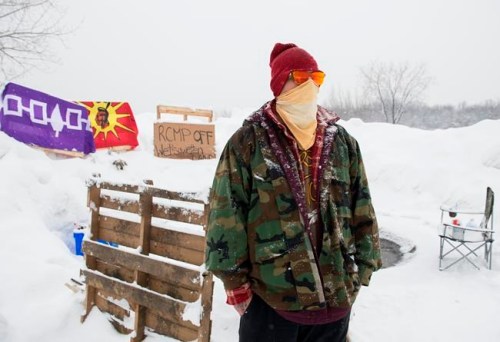
In Montreal, a blockade set up over the weekend by Kahnawake Mohawk community members, featuring a Mohawk flag and a sign reading “RCMP off Wet’suwet’en land,” hit home during the morning commute.
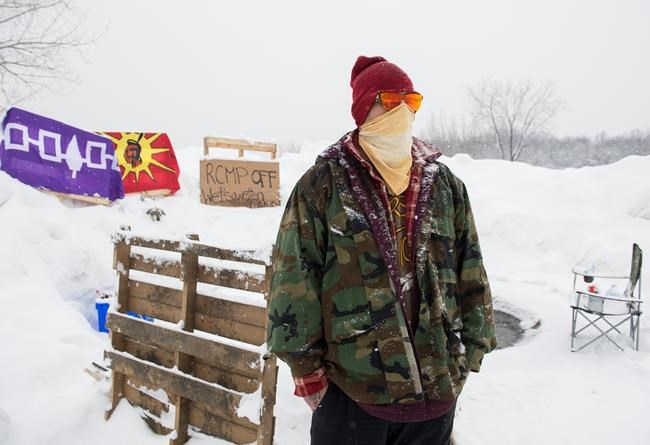
“This might be an inconvenience to some and we don’t mean to offend or attack anybody in particular, like people just trying to go to work,” a blockade member, identified as Wenhniseriio, told CTV Montreal. “It’s unfortunate for them, but unfortunately for us, that’s something we struggle with all the time because we’re always inconvenienced.”
Late Monday, Exo, the company that oversees commuter rail service in the Montreal area, announced service was down for the day and shuttle buses would be provided.
The public transit authority had warned over the weekend that demonstrators near the Canadian Pacific Railway lines could disrupt service for an indefinite period. CP Rail did not reply to a message seeking comment.
The Mohawk Council of Kahnawake added its support for Wet’suwet’en people and hereditary chiefs and condemned RCMP actions.
“We remind British Columbia, Canada and the RCMP that it must use restraint, patience and common sense when dealing with the complex issues relating to Indigenous peoples and territories,” Kahnawake Grand Chief Joe Norton said in a statement.
Protests have cropped up across the country — notably near Belleville, Ont., where a blockade has led to the cancellation of Via Rail service in the Montreal-Toronto corridor and brought freight traffic to a halt. Rail service between Toronto and Ottawa is also affected.
Via Rail said another blockade near Hazelton, B.C., is blocking its service between Prince Rupert and Prince George.
CN Rail operates both rail lines where Via Rail service has been halted, and it says freight traffic has been paralyzed.
“The trains are stopped,” said Sean Finn, CN’s head of corporate affairs and chief legal officer. “Nothing is going through.” …. You put any disruption anywhere on our track, it backs up all the way to our terminal and the ships in Halifax.”
Finn said CN was in court in B.C. seeking an injunction and advising an Ontario Superior Court judge that an injunction issued Friday was served without any change in the situation.
“When you start blockading rail lines that precludes goods from moving across Canada, this impacts people’s livelihoods, people’s jobs, not to mention the travelling public,” Finn said. “We recognize the right for people to protest when they don’t agree on an issue in Canada, but they must do so peacefully, in a safe fashion — not on a railway track, which is not a safe place to be.”

As of Monday afternoon, Via said more than 100 trains had been cancelled since the blockade was mounted last week, with more than 16,000 passengers affected.
Via said passengers are being given three hours notice of cancellations on those routes and refunded.
“At this time, it is too early to tell how service resumption will take place as their will be significant rail traffic that will need to be dealt with,” the rail provider said in a statement. “Via Rail will work with the infrastructure owner on the specifics of the resumption of service, once the situation has been resolved.”
This report by The Canadian Press was first published Feb. 10, 2020.
— With files from Christopher Reynolds.
Related Articles
Blockade halts rail traffic west of Winnipeg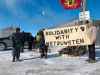


Advertisement Advertise With Us
Advertisement Advertise With Us