Fighting phosphorus

Citizen scientists gather data to help keep Lake Winnipeg healthy

Advertisement

Advertise with us

Volunteers from across Manitoba are heading to local waterways to help the Lake Winnipeg Foundation (LWF) collect data they hope will help improve the health of the province’s great lake.

Read this article for free:


or

Already have an account? Log in here »

To continue reading, please subscribe:

Subscribe and receive a limited-edition Free Press branded hat or tote.

Digital Subscription

One year of digital access for only $205*

  • Enjoy unlimited reading on winnipegfreepress.com
  • Read the E-Edition, our digital replica newspaper
  • Access News Break, our award-winning app
  • Play interactive puzzles

*First annual payment billed as $205.00 + GST for one year. This annual subscription will automatically renew at $233.00 + GST every 52 weeks (10% off the regular annual price of $259.35). Offer available to new and qualified returning subscribers only. Cancel any time.

To continue reading, please subscribe:

Add Free Press access to your Brandon Sun subscription for only an additional

$1 for the first 4 weeks*

  • Enjoy unlimited reading on winnipegfreepress.com
  • Read the E-Edition, our digital replica newspaper
  • Access News Break, our award-winning app
  • Play interactive puzzles
Start now

*Your next Brandon Sun subscription payment will increase by $1.00 and you will be charged $17.95 plus GST for four weeks. After four weeks, your payment will increase to $24.95 plus GST every four weeks.

Hey there, time traveller!
This article was published 03/08/2019 (2593 days ago), so information in it may no longer be current.

Volunteers from across Manitoba are heading to local waterways to help the Lake Winnipeg Foundation (LWF) collect data they hope will help improve the health of the province’s great lake.

“We all have to do our part,” says Jim Duthie, a Birds Hill resident and LWF citizen scientist. “This is one small thing I am doing, but it’s all part of a bigger picture as we look for bigger strategies to help keep Lake Winnipeg healthy.”

Duthie currently collects water samples at the mouth of Bird Lake near his family cottage. He is one of the more than 100 volunteers currently working as a citizen scientist with the Lake Winnipeg Community-Based Monitoring Network.
Lake Winnipeg Foundation
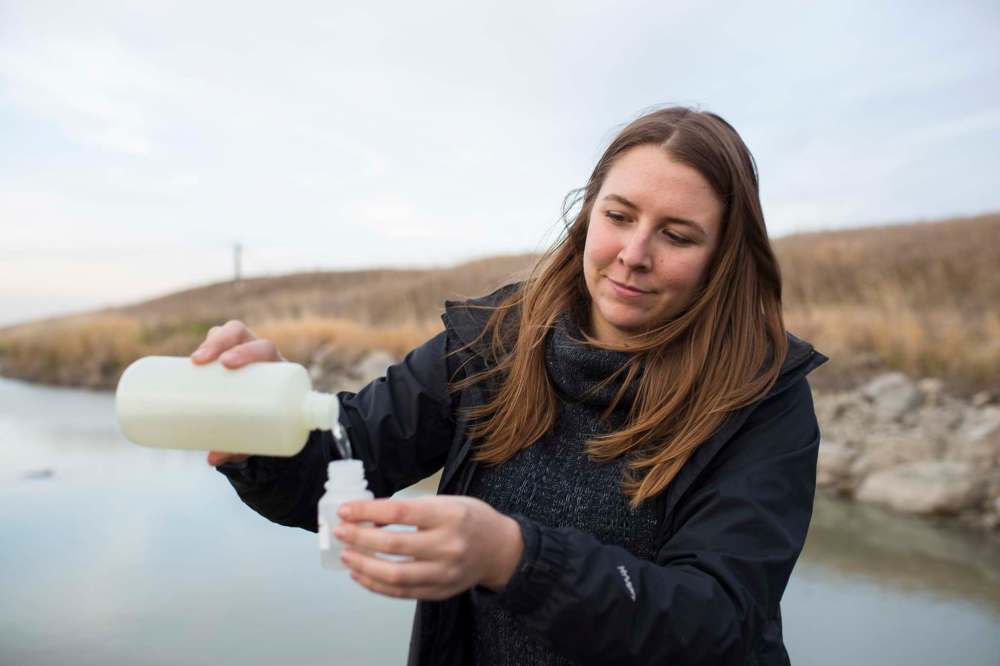
Chelsea Lobson, Lake Winnipeg Community-Based Monitoring Network co-ordinator, takes part in water sampling near Cooks Creek.
Lake Winnipeg Foundation Chelsea Lobson, Lake Winnipeg Community-Based Monitoring Network co-ordinator, takes part in water sampling near Cooks Creek.

The network is helping the foundation collect data about phosphorus levels in Manitoba waterways.

In 2016, LWF started to put together a coalition of citizen scientists, and those volunteers have spent the past three years collecting water samples from bodies of water that make up the Lake Winnipeg watershed.

The samples are then tested to determine phosphorus concentrations, as phosphorus is the nutrient responsible for blue-green algae blooms on Manitoba’s lakes, notably Lake Winnipeg.

With LWF seeking as much data on phosphorus levels as possible, it decided it couldn’t simply rely on environmental scientists or government bodies to do this kind of testing.

“The original idea came from a data deficit in phosphorus data in the watershed, so we saw this as an opportunity to collect more data while also engaging citizens in the process,” says Chelsea Lobson, co-ordinator of the monitoring network.

Volunteers across Manitoba head out during spring, summer and fall to test phosphorus levels.

“With this kind of data, it is really important to collect samples during the spring melt and after big rain events,” Lobson says.

“And citizens allow the network to be nimble and responsive; the volunteers work or live or commute near their samples areas, so they can sample frequently during the spring melt, and also collect samples at a moment’s notice after a big rain event.”

LWF hopes the information it has gathered will lead to solutions to the problem of algae blooms in Lake Winnipeg, Lobson says.

“So we all know that phosphorus causes algae, but in order to reduce that phosphorus, we need to know where it’s coming from, and the network is giving us those answers,” Lobson says.

“They’re collecting phosphorus samples to identify phosphorus hot spots and looking for areas contributing more relative to other areas, and once we know where those hot spots are, we are able to target them.”

With that data now in its hands, executive director Alexis Kanu says, the foundation can work at developing strategies to combat phosphorus in Manitoba waterways.

“It has really been beneficial,” Kanu says. “It is showing us some really interesting stuff, and it is complementary to what we know from government monitoring programs.”
Lake Winnipeg Foundation
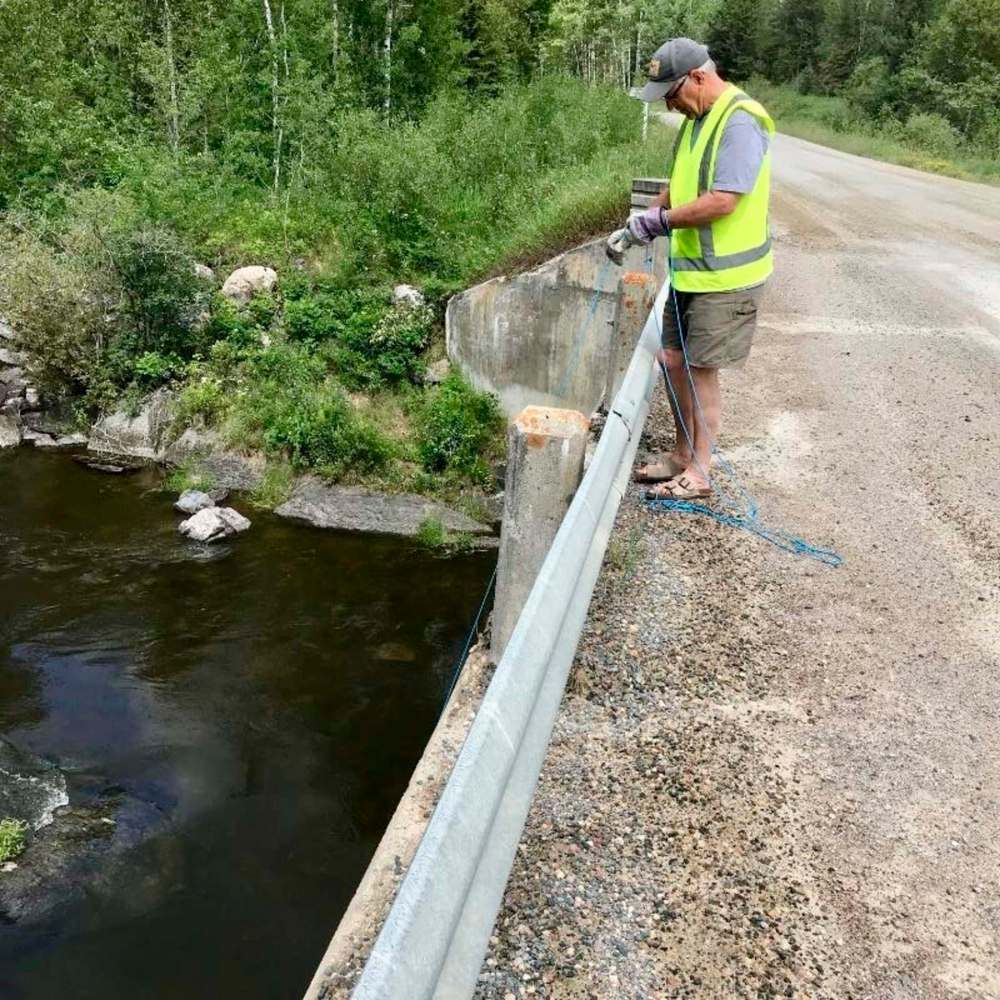
Jim Duthie, a citizen scientist with the Lake Winnipeg Community-Based Monitoring Network, takes water samples at Bird Lake.
Lake Winnipeg Foundation Jim Duthie, a citizen scientist with the Lake Winnipeg Community-Based Monitoring Network, takes water samples at Bird Lake.

A number of phosphorus hot spots were detected in Manitoba in 2017, which was a higher-precipitation year, according to Kanu.

“So when we can find those phosphorus hot spots, then we know that is where we need to be doing the work to reduce phosphorus loading,” she says.

“We obviously want to be working in the landscapes that are contributing the most phosphorus, because there is the most to be gained by reducing phosphorus there.”

Phosphorus hot spots that were discovered in 2017 did not reappear in 2018 — a much drier year — and that tells LWF that runoff plays a big factor in phosphorus levels, Kanu says.

“What that tells us is 2018 was a dry year, so when we have low water levels and low water flows, then less phosphorus is getting into the lake, so if we can replicate dry conditions by keeping water back on the land by holding it behind dams or in retention ponds or in natural wetlands, we can replicate the dry conditions that lead to low phosphorus loading,” Kanu says.

“We were expecting the data to show us where to do the work, but now it’s starting to hint at possible solutions, and anything that helps us tackle this problem by narrowing our focus and making sure we are being strategic is going to go a long way.”

Kanu says it has been the hard work but also the passion of their volunteers that has so far made the monitoring program a success.

“It isn’t something that we could do on our own, and it isn’t anything that any of our partners could do on their own,” Kanu says. “It depends on people coming together and deciding they are going to be a part of this larger network and become part of us discovering the bigger picture.

“I can say that I have been completely inspired by how engaged volunteers are and how committed they are to this.”

For more information on volunteering with the Lake Winnipeg Community-Based Monitoring Network, contact Chelsea Lobson at cbm@lakewinnipegfoundation.org, or visit lakewinnipegfoundation.org.

Report Error Submit a Tip

More Stories

Today’s horoscope

Georgia Nicols 4 minute read Preview

Today’s horoscope

Georgia Nicols 4 minute read 2:00 AM CDT

MOON ALERT: There are no restrictions to shopping or important decisions today. The moon is in Leo.

ARIES (March 21-April 19)

You are the artisan of the zodiac, and this is a creative and productive day! Socialize, enjoy sporting events and the company of kids. It’s the perfect day to hone a technique and improve your creative skills. You rock!

TAURUS (April 20-May 20)

Read
2:00 AM CDT

Parts of River Heights hammered by storm

Melissa Martin 5 minute read Preview

Parts of River Heights hammered by storm

Melissa Martin 5 minute read Yesterday at 5:54 PM CDT

A powerful storm cut a swath of destruction through River Heights on Sunday, leaving much of the area without power.

Thankfully, nobody was hurt in the storm. Yet by the time it subsided, parts of the quiet neighbourhood, especially Borebank and Lindsay streets between Grant and Taylor, had been ravaged. Downed power lines; toppled Manitoba Hydro poles; trees splintered and crashed down on vehicles and homes.

In one case, a vehicle appeared to have been picked up by the wind and flipped into a yard, under a partially downed tree. In others, shingles had been stripped from roofs. Some residents described looking out during the storm and seeing power lines ablaze, and the blue glow of electricity arcing over their back yards.

Jennifer Boychuck was at home with her son, Matthew, when the worst of the storm struck. She was in her kitchen, washing dishes, when she noticed the winds picking up to an alarming level.

Read
Yesterday at 5:54 PM CDT

Citizen scientists gather data to help keep Lake Winnipeg healthy

Dave Baxter 5 minute read Preview

Citizen scientists gather data to help keep Lake Winnipeg healthy

Dave Baxter 5 minute read Saturday, Aug. 3, 2019

Volunteers from across Manitoba are heading to local waterways to help the Lake Winnipeg Foundation (LWF) collect data they hope will help improve the health of the province’s great lake.

“We all have to do our part,” says Jim Duthie, a Birds Hill resident and LWF citizen scientist. “This is one small thing I am doing, but it’s all part of a bigger picture as we look for bigger strategies to help keep Lake Winnipeg healthy.”

Duthie currently collects water samples at the mouth of Bird Lake near his family cottage. He is one of the more than 100 volunteers currently working as a citizen scientist with the Lake Winnipeg Community-Based Monitoring Network.

The network is helping the foundation collect data about phosphorus levels in Manitoba waterways.

Read
Saturday, Aug. 3, 2019

Dauphin ER reopening ‘monumental team effort’

Abiola Odutola 5 minute read Preview

Dauphin ER reopening ‘monumental team effort’

Abiola Odutola 5 minute read Yesterday at 9:55 PM CDT

DAUPHIN — The emergency department at Dauphin Regional Health Centre reopened Monday morning after a closure of just over two months, restoring 24-7 emergency services to Dauphin and surrounding communities.

Health Minister Uzoma Asagwara hailed the reopening as a major milestone.

“It’s been a monumental team effort to get to this point,” Asagwara told the Brandon Sun on Monday afternoon before embarking on a tour of the facility.

“We asked everyone to approach this as one team and that’s exactly what we’re seeing the results of now.”

Read
Yesterday at 9:55 PM CDT

Remembering the Forgotten War

Kevin Rollason 21 minute read Preview

Remembering the Forgotten War

Kevin Rollason 21 minute read Saturday, Nov. 7, 2020

It began with hundreds of thousands of North Korean troops crossing its southern border on June 25, 1950.

It ended... well, it has never really ended.

The Korean War began 70 years ago this year and, sure, there was an armistice on July 27, 1953, but there was no formal end to the war. It even took until 2018 for the leaders of the two sides, South Korean president Moon Jae-in and North Korean leader Kim-Jong Un, to sit at a summit and pledge to formally end the war.

But those talks fell apart and, earlier this year, soldiers fired shots at each other across the border. In recent years, North Korea has test fired long-range missiles.

Read
Saturday, Nov. 7, 2020

National Guard called out after police shoot Black man

By Scott Bauer And Morry Gash 7 minute read Preview

National Guard called out after police shoot Black man

By Scott Bauer And Morry Gash 7 minute read Monday, Aug. 24, 2020

KENOSHA, Wis. - Wisconsin’s governor summoned the National Guard to head off another round of violent protests Monday after the police shooting of a Black man under murky circumstances turned Kenosha into the nation’s latest flashpoint city in a summer of racial unrest.

Democratic Gov. Tony Evers said 125 members of the National Guard would be in Kenosha by night with responsibility for “guarding infrastructure and making sure our firefighters and others involved are protected." County authorities also announced an 8 p.m. curfew.

The move came after protesters set cars on fire, smashed windows and clashed with officers in riot gear Sunday night over the wounding of 29-year-old Jacob Blake, who was hospitalized in serious condition. He was shot, apparently in the back, as he leaned into his SUV while his three children sat in the vehicle.

Police in the former auto manufacturing centre of 100,000 people midway between Milwaukee and Chicago said Blake was gunned down while they were responding to a call about a domestic dispute.

Read
Monday, Aug. 24, 2020