Fatal reflections
Windows a mortal danger for birds
Advertisement
Read this article for free:
or
Already have an account? Log in here »
To continue reading, please subscribe:
Digital Subscription
One year of digital access for only $1.44 a week*
- Enjoy unlimited reading on winnipegfreepress.com
- Read the E-Edition, our digital replica newspaper
- Access News Break, our award-winning app
- Play interactive puzzles
*Billed as $5.77 plus GST every four weeks. After 52 weeks, price increases to the regular rate of $19.95 plus GST every four weeks. Offer available to new and qualified returning subscribers only. Cancel any time.
To continue reading, please subscribe:
Add Free Press access to your Brandon Sun subscription for only an additional
$1 for the first 4 weeks*
- Enjoy unlimited reading on winnipegfreepress.com
- Read the E-Edition, our digital replica newspaper
- Access News Break, our award-winning app
- Play interactive puzzles
*Your next Brandon Sun subscription payment will increase by $1.00 and you will be charged $17.95 plus GST for four weeks. After four weeks, your payment will increase to $24.95 plus GST every four weeks.
Read unlimited articles for free today:
or
Already have an account? Log in here »
Hey there, time traveller!
This article was published 17/10/2015 (4025 days ago), so information in it may no longer be current.
It’s a startling number — windows kill 25 million birds in Canada each year.
While there are no Winnipeg-specific statistics, the issue is just as prevalent here as elsewhere in Canada, says Kevin Fraser, assistant professor in the department of biological sciences at the University of Manitoba and an internationally recognized bird-migration specialist.
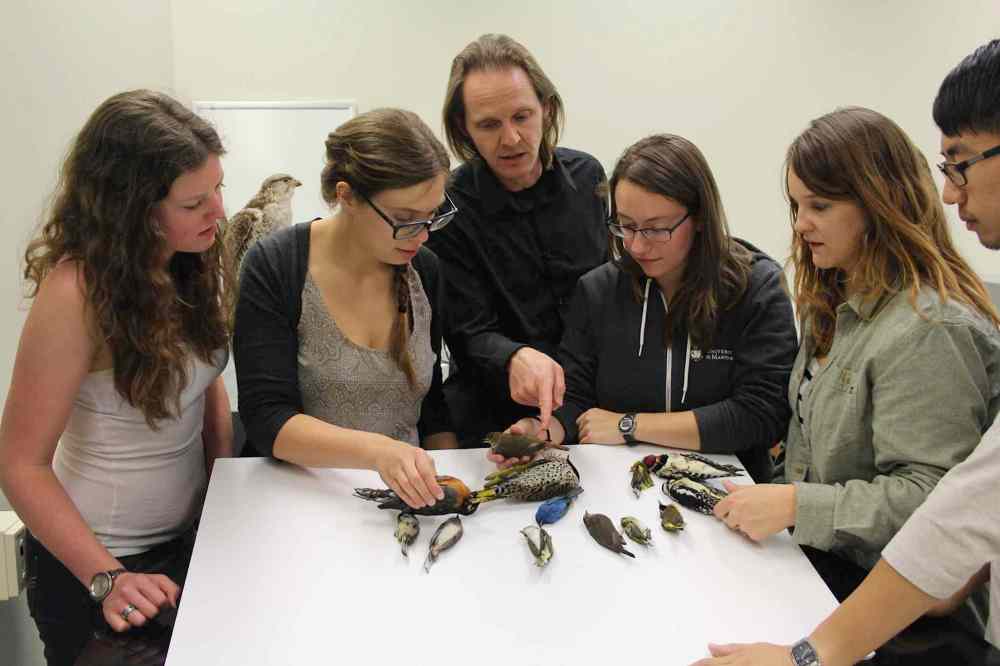
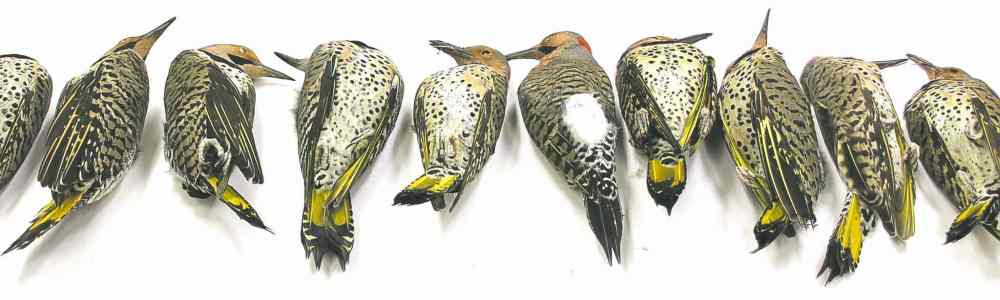
Fraser and his students collect window kills on and near the campus during migration to use in teaching labs. This past spring, they found 14 northern flickers at just one window. Dr. Fraser, a native of Toronto, who obtained his PhD from the University of New Brunswick Fredericton, recently spoke with the Free Press about collision mortality and other forms of human-induced bird deaths during migration.
FP: What is the overall impact on bird populations of this huge number of deaths — 25 million due to collisions with windows?
KF: While we do not yet know the overall impact on populations, to put this in some context, most (about 60 per cent) of Canada’s songbird species have population sizes of less than five million. Many of the species killed by our windows are already at risk and are experiencing very strong population declines due to a variety of factors such as habitat loss and climate change. It is not uncommon to find a window-killed bird that is also a species listed as threatened by COSEWIC (the Committee for the Status of Endangered Species Within Canada).
For many years we thought the main cause of window-strike mortality was highrise office towers in big North American cities. Many species migrate at night and become disoriented by our city lights, which draw them in, often to their deaths if they collide with windows.
FP: What is being done to combat this huge problem?
KF: There have been some successful campaigns in Canada to invoke a lights-off policy in big-city office towers at night during spring and fall migration, to try to reduce this source of migratory bird mortality. Large city towers account for the highest number of strikes per building, which averages to about 10 per building per year.
Our homes kill fewer birds per building, with an average of about two per year, but of course there are many, many more houses than office towers, which adds up to the 25 million kills per year. This was what was game-changing about these results when they were published in a scientific paper last year in the Canadian journal Avian Conservation and Ecology. As alarming as this is, it should also be very encouraging to us, because if it is our private homes that are having the biggest impact, every homeowner also has the power to be able to do something about this issue.
FP: What species are most affected?
KF: Passerines, or perching birds, are the most affected and account for more than 90 per cent of the mortality. This group includes some of the species most appreciated by birdwatchers, such as warblers, sparrows and thrushes. Many passerines are also migratory; they may breed far away from urban areas and only encounter windows during fall or spring migration. Most of our Manitoba passerines are migratory, thus depending upon their migratory routes, may fly an urban gauntlet on fall migration to their overwintering homes at more southerly latitudes.
FP: Why should we be concerned about this?
KF: Do we want a silent spring? Rachel Carson alerted us to that potential with her landmark book Silent Spring in the 1960s on the impact of pesticides on bird populations. We have continued reason for concern with new pesticides such as neonicotinoids, but also a host of other issues including window kills, habitat loss, and climate change. It’s not alarmist to say we are losing our songbirds quickly and risk losing many species.
Migrants in particular, are experiencing very steep population declines. The most recent State of Canada’s Birds provides a good summary of the species and trends.
Humans have a long-standing fascination with birds, and they are an important part of many people’s lives. In addition to their intrinsic value, songbirds perform important ecosystem services such as controlling insect pests on crops and forest lands, pollinating plants and dispersing seeds.
With more than seven million Canadians who consider themselves birdwatchers, birds also support a multibillion-dollar recreation industry. Thus, between ecosystem services and recreation, conserving songbird populations has broad economic impact. The federal government also has a mandate to protect species, through our Species at Risk Act and birds in particular through the Migratory Bird Act.
FP: How and why did you first become interested in this problem?
KF: I first became aware of this issue way back when I was in high school, living in the Greater Toronto Area. A new NGO at that time called the Fatal Light Awareness Program (FLAP) was alerting the public for the first time of the effect of city office towers on migrating birds. I decided to borrow the family Oldsmobile, drive downtown in the middle of the night, and see the situation for myself.
I met up with and joined FLAP staff. They were wandering the streets and alleyways of downtown Toronto armed with nets and paper bags to collect any survivors they found at street level. I found a few live warblers that I transported out of the city and released so that they could continue their migration. Now I find myself doing scientific research on bird migration and teaching ornithology as an assistant professor at the University of Manitoba. While my lab’s research is not specifically on window kills, part of what we do is study factors causing declines in migratory songbirds.
One part of our research involves tracking individual bird migration using tiny electronic devices birds wear on their journeys to the tropics and back. Recently, we tracked a purple martin from southern Manitoba all the way to its overwintering site in the heart of the Brazilian Amazon. When this bird arrived back at its breeding colony in Manitoba, my students and I re-trapped it and collected the migration tracking device so we could reconstruct the year-long odyssey of this individual with the data it contained.
We found this bird travelled more than 22,000 kilometres, which is particularly amazing considering it is only 45 grams, about the size of a tennis ball, and can fit in the palm of our hand.
Sadly, this particular bird was killed when it struck a window a few weeks later. While this is all the more tragic because we “know” this individual and some of his history, it is emblematic of what happens to the unknown 25 million birds a year that collide with our windows in Canada every year.
FP: What can be done to decrease the mortality of birds during migration through our cities?
KF: There are three main reasons birds collide with windows in the daytime. One is they see trees, vegetation, open sky and other habitat reflected in the glass. The second is that they see through clear glass to habitat of interest on the other side and attempt to fly right through, as in the case of glass-lined interior walkways or solariums. Lastly, birds may see indoor plants, trees or other vegetation through the glass and attempt to fly in to land.
In all of these scenarios, anything that visually breaks up the outside surface of a window and reduces its reflectivity or transparency will make our windows look to birds like the solid objects that they are.
There are lots of commercially available window-treatment products, but homemade strategies can work, too. The FLAP website (www.flap.org) contains lots of tips and products for making the windows of your workplace and home bird-friendly.
Some forward-thinking Canadian municipalities have even legislated bird-friendly windows for all new public buildings. We have the knowledge and data, we just need the will.
FP: Are there other forms of human-induced mortality that have a significant impact on bird populations?

KF: Yes, and these threats in Canada have all recently been quantified too; human-induced mortality accounts for approximately 269 million birds per year. Windows are the second-biggest form of human-induced mortality. Cats are No. 1. They kill 140 million birds in Canada every year. Keep your cats indoors. Other factors in the top four, which altogether account for 95 per cent of human-induced avian mortality, are collisions with road vehicles and transmission lines.
Wind-farm mortality is also becoming a larger issue for migratory birds.
FP: What about the effects of climate change?
KF: Climate change, causing earlier springs as well as more extreme and variable weather, may reduce or change the timing of emergence of insect prey for birds; this means birds may have less food for their young when they need it and, therefore, raise fewer of them. These effects have yet to be properly assessed and quantified in Canada, but studying the effects of climate change on migratory birds is a major aspect of my lab’s current research.
History
Updated on Monday, October 19, 2015 11:17 AM CDT: Replaces photo