Religious zeal a mighty force
Shia Islam plays powerful role in Iran’s determined resistance against U.S., Israel

Advertisement
Read this article for free:
or
Already have an account? Log in here »
To continue reading, please subscribe:

Digital Subscription
One year of digital access for only $205*
- Enjoy unlimited reading on winnipegfreepress.com
- Read the E-Edition, our digital replica newspaper
- Access News Break, our award-winning app
- Play interactive puzzles
*First annual payment billed as $205.00 + GST for one year. This annual subscription will automatically renew at $233.00 + GST every 52 weeks (10% off the regular annual price of $259.35). Offer available to new and qualified returning subscribers only. Cancel any time.
To continue reading, please subscribe:
Add Free Press access to your Brandon Sun subscription for only an additional
$1 for the first 4 weeks*
- Enjoy unlimited reading on winnipegfreepress.com
- Read the E-Edition, our digital replica newspaper
- Access News Break, our award-winning app
- Play interactive puzzles
*Your next Brandon Sun subscription payment will increase by $1.00 and you will be charged $17.95 plus GST for four weeks. After four weeks, your payment will increase to $24.95 plus GST every four weeks.
Read unlimited articles for free today:
or
Already have an account? Log in here »
Madeline Albright was the first woman to be Secretary of State in the U.S., holding that position from 1997 to 2001 under president Bill Clinton.
One thing she learned during her time as America’s top diplomat was the important role that religion played when making decisions about foreign policy.
“Religion has to be considered as we look at various conflicts,” she said. “Our diplomats have to understand the religious basis of these conflicts. In fact, they have to have training in religion. I would also make a point of the secretary of state having more religious advisers.”
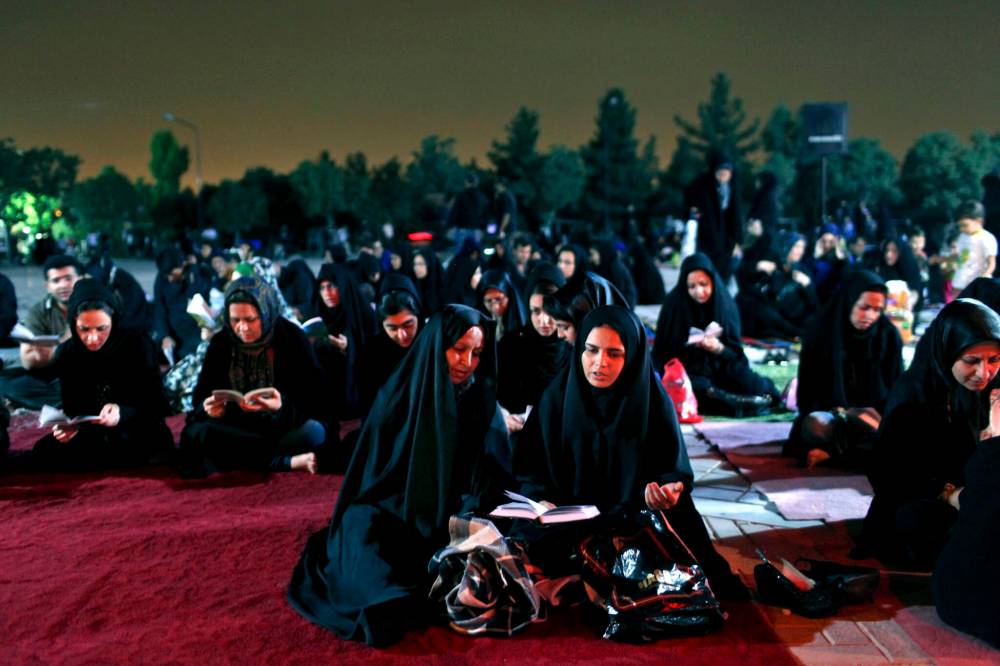
Ebrahim Noroozi / The Associated Press files
Iranian women pray during a ceremony marking the anniversary of the death of Imam Ali, the first Imam of Shia Muslims, near Tehran.
Why do I bring up Albright now? Because the Trump administration, which is now at war against Iran, could have benefitted from her insight before launching its attack three weeks ago. Knowing more about the religious make-up of Iran would have helped them anticipate the regime’s fierce resistance during this conflict.
To understand why that is, here’s a bit of background.
While most of the Muslim world is Sunni, Iran is a Shia Muslim country. The split between the two occurred after the death of the Prophet Muhammad, with Muslims back then disagreeing over who should lead the faith.
The followers who became known as Sunnis (the word comes from “Sunnah,” meaning “the way”), supported the election of a leader from the community. Others, who believed leadership should fall to a member of Muhammad’s family, named Ali, became known as Shia Muslims — the word comes from an Arabic word that means the supporters of Ali.
Today, about 90 per cent of the almost two billion Muslims in the world are Sunni. The one Muslim-majority country with the most Shia Muslims is Iran, where as much as 95 per cent of Muslims are part of that group.
While the two groups share the core beliefs of Islam, they differ on the question of religious authority. Sunnis do not believe any one person after the Prophet has divine authority. Shia Muslims, on the other hand, believe that certain leaders — beginning with Ali — were divinely guided.
Despite the differences, Shia and Sunni Muslims overall live peaceably with each other, just like different branches of other religions do. But in some countries, like Syria, Iraq and Yemen, local political tensions have resulted in conflict between the two groups.
How does all this play into America’s war against Iran?
Muslims in Iran are like people anywhere; some are quite secular, others moderately religious, some take the faith quite seriously. That includes the clerics who rule the country; they are quite fundamentalistic and extreme. They see themselves, and the nation, as part of a larger worldwide spiritual struggle and are willing to go to any length to resist American attacks.
Their stance is emboldened by the Shia belief in martyrdom, viewing it as the ultimate act of faith and resistance. In their eyes, martyrs are celebrated and will be rewarded by God with eternal life in paradise.
For Iran’s religious rulers, this means that dying for their country is a sacrifice for a sacred cause. They are using this belief to galvanize Iranians into enduring any hardship or adversity, including death, as part of a spiritual war against the U.S. and Israel.
There’s another aspect of Shia Islam that is important to know in this context. It is a belief known as Twelver Shi’ism. According to this belief, God called only 12 leaders of the Muslim faith, beginning with Ali and ending with the 12th, or last leader, Mohammad al-Mahdi.
Adherents believe that al-Mahdi did not die, but was hidden by God. He will reappear at the end of time as a kind of messianic figure to bring justice and peace to the world and unify all of humankind under true religion and moral order. But before that happens, there will be chaos and conflict and war, adherents believe — like what we are seeing in the Gulf now.

This Twelver Shi’ism is the official state doctrine in Iran. It is not unlike what some Christians believe about the end times, which also includes prophecies about “wars and rumours of wars” (Matthew 24:6) before the “rapture” of believers into heaven prior to the end times.
This is a view of the end times held by many evangelical Christians in the U.S. — the same ones that are the strongest supporters of Donald Trump, and some of whom are Christian nationalists who want to see the U.S. run by Christian principles, much like Iran is governed by Shia Islam.
To be clear, this is not a defence of Iran’s regime. It has a terrible human rights record and history of supporting terrorism. Those things cannot be overlooked or excused. And religion is just one aspect of this war — oil is also a big factor, as is Iranian national pride and many other things. But careful thought about the influence of religion in that country, like that proposed by Albright, might have prompted the U.S. to think twice before launching the war, or lessened the administration’s surprise at the resistance.
As Australian political commentator Carrick Ryan put it: “The clerics who rule Iran are not afraid of death and believe God is on their side … this is a very different adversary than the Venezuelan regime, and I’m not sure Trump has quite figured that out yet.”
faith@freepress.mb.ca
The Free Press is committed to covering faith in Manitoba through our Religion in the News project. This reporting continues because readers like you step forward to fund it.
Donate now to support our reporting on religion.
Your donation is eligible for a charitable tax receipt.
BECOME A FAITH JOURNALISM SUPPORTER
John Longhurst has been writing for Winnipeg's faith pages since 2003. He also writes for Religion News Service in the U.S., and blogs about the media, marketing and communications at Making the News.
Our newsroom depends on a growing audience of readers to power our journalism. If you are not a paid reader, please consider becoming a subscriber.
Our newsroom depends on its audience of readers to power our journalism. Thank you for your support.
The Free Press is committed to covering faith in Manitoba through our Religion in the News project. This reporting continues because readers like you step forward to fund it.
Donate now to support our reporting on religion.
Your donation is eligible for a charitable tax receipt.
BECOME A FAITH JOURNALISM SUPPORTER
John Longhurst has been writing for Winnipeg's faith pages since 2003. He also writes for Religion News Service in the U.S., and blogs about the media, marketing and communications at Making the News.
Our newsroom depends on a growing audience of readers to power our journalism. If you are not a paid reader, please consider becoming a subscriber.
Our newsroom depends on its audience of readers to power our journalism. Thank you for your support.
Advertisement Advertise With Us
Advertisement Advertise With Us
The Free Press acknowledges the financial support it receives from members of the city’s faith community, which makes our coverage of religion possible.