WEATHER ALERT

‘Very profound’: Hundreds of residential school photos found in Rome archives

Advertisement

Advertise with us

WINNIPEG - Raymond Frogner says when he found images of residential school students in the Missionary Oblates of Mary Immaculate archives in Rome, he knew he was looking at something important.

Read this article for free:


By clicking the button above, an account will be created and you will begin to receive some of our recommended newsletters. You may opt out of any newsletter by visiting your Email and Communication Preferences page or by clicking "unsubscribe" at the bottom of any email.

or

Already have an account? Log in here »

To continue reading, please subscribe:

Digital Subscription

One year of digital access for only $1.44 a week*

  • Enjoy unlimited reading on winnipegfreepress.com
  • Read the E-Edition, our digital replica newspaper
  • Access News Break, our award-winning app
  • Play interactive puzzles

*Billed as $5.77 plus GST every four weeks. After 52 weeks, price increases to the regular rate of $19.95 plus GST every four weeks. Offer available to new and qualified returning subscribers only. Cancel any time.

To continue reading, please subscribe:

Add Free Press access to your Brandon Sun subscription for only an additional

$1 for the first 4 weeks*

  • Enjoy unlimited reading on winnipegfreepress.com
  • Read the E-Edition, our digital replica newspaper
  • Access News Break, our award-winning app
  • Play interactive puzzles
Start now

*Your next Brandon Sun subscription payment will increase by $1.00 and you will be charged $17.95 plus GST for four weeks. After four weeks, your payment will increase to $24.95 plus GST every four weeks.

Hey there, time traveller!
This article was published 01/08/2022 (1554 days ago), so information in it may no longer be current.

WINNIPEG – Raymond Frogner says when he found images of residential school students in the Missionary Oblates of Mary Immaculate archives in Rome, he knew he was looking at something important.

“It did have a very historic feeling to it, very profound,” the head archivist for the Winnipeg-based Centre for Truth and Reconciliation said in a recent interview with The Canadian Press.

Few archivists are able to explore the religious order’s private records in the Italian city, Frogner said. But he spent five days early last month looking through the archives at the Oblate General House, where photos, personnel files and manuscripts describe the group’s actions around the world since its founding in 1816.

Raymond Frogner, the head archivist for the Winnipeg-based National Centre for Truth and Reconciliation, was recently in the Missionary Oblates of Mary Immaculate archives in Rome searching for documents related to the religious order's time running residential schools in Canada. Frogner is shown in this undated handout photo. THE CANADIAN PRESS/HO-Raymond Frogner

That legacy includes a significant presence in Canada.

The Oblates operated 48 residential schools, including the Marieval Indian Residential School at Cowessess First Nation in Saskatchewan and the Kamloops Indian Residential School in British Columbia, where the discovery of unmarked graves last year spurred calls for justice and transparency.

Frogner pored through the archives in the former residence of an Italian nobleman. He worked in front of a statue of the Virgin Mary and a large fresco nearby depicted Jesus and the founder of the Oblates, Eugène de Mazenod.

But his interest was sparked by what was inside a set of metal drawers.

“The big find for me was in the photographs.”

There were 20 drawers of photos and three of those contained images of the order’s missions in Canada. Many depicted children in residential schools in the early 20th century.

Frogner said he suspects there are up to 1,000 photos that could be important to understanding what happened in Canada.

“Not to my surprise, the archivist at the archives there had no idea the significance of what they were holding,” he said.

The next step is to work quickly to digitize the photos, the National Centre for Truth and Reconciliation and Oblates said in a recent joint statement. The images are then to be transferred to the centre in Manitoba.

“The records we assessed will help compile a more accurate timeline of Oblate members at residential schools throughout Canada,” said Stephanie Scott, executive director for the centre, in a statement.

Frogner said the hope is to work with communities to identify the students in the photos.

“For us, as we go through records and try to uncover the destiny of children that have been lost, these are photographs that might indicate at certain points in time where these children were located,” he said.

Frogner brought with him a list of priests known to have committed crimes against children.

He looked through personnel files on the actions and locations of priests. While none of those files contained information about crimes, Frogner said they showed priests moving locations frequently, having difficulty working with children or advising a priest to get married and leave the order.

“(Information) was very much couched in vague terms..”

Frogner said he did not have enough time to fully parse those records. After the images are digitized, he hopes to examine the personnel documents more fully.

The order’s long-standing practice is to keep personnel records sealed for 50 years after a member’s death. The order has said it is taking steps to accelerate access to the files.

The order’s files currently in Canada likely contain more complete information, Frogner added.

The Oblates have already provided the national centre with more than 40,000 records and 10,000 more have been digitized.

The Royal British Columbia Museum received about 250 boxes of materials, a third of which relate to residential schools, from the Oblates beginning in 2019.

There are also agreements between the Oblates and other archives to transfer relevant records.

Frogner said he knows his recent findings are of particular importance as Pope Francis visited Canada last week to apologize for the role members of the Roman Catholic Church had in residential schools.

Throughout the papal visit, Indigenous leaders urged the release of all documents related to the institutions.

The Oblates have previously apologized for their involvement in residential schools and the harms they inflicted on Indigenous Peoples. Rev. Ken Thorson of the OMI Lacombe Canada based in Ottawa said in a news release that transparency is critical to truth and reconciliation efforts.

“While it has been a constructive year of partnership, I know that these steps are only the beginning of a continued journey towards truth, justice, healing and reconciliation.”

This report by The Canadian Press was first published Aug. 1, 2022.
Report Error Submit a Tip

The Free Press acknowledges the financial support it receives from members of the city’s faith community, which makes our coverage of religion possible.

More Stories

Fact Check

1 minute read Thursday, Nov. 30, 2023

Fact Check

Having problems with the form?Contact Us Directly |

Russian Olympic biathlon champion loses Sochi doping case

Graham Dunbar, The Associated Press 5 minute read Preview

Russian Olympic biathlon champion loses Sochi doping case

Graham Dunbar, The Associated Press 5 minute read Thursday, Sep. 24, 2020

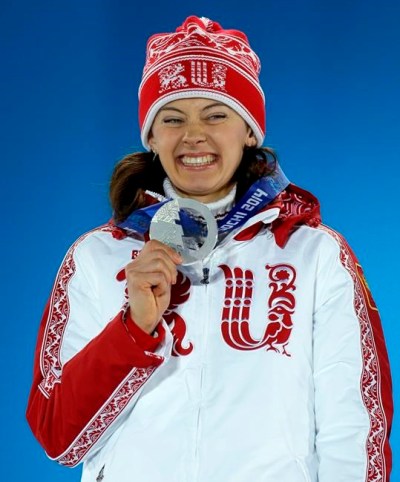
GENEVA - Two-time Olympic biathlon champion Olga Zaitseva lost her appeal Thursday against disqualification from the 2014 Sochi Olympics for her part in Russia’s state-backed doping program.

The Court of Arbitration for Sport said its judges upheld the International Olympic Committee’s disciplinary ruling of 2017, which used evidence against Zaitseva from Russian whistleblower Grigory Rodchenkov.

Zaitseva’s disqualification from all her Sochi events strips Russia of its silver medal in the women’s biathlon 4x6-kilometre relay. She won — and will retain — her gold medals from the same relay event at the two previous Winter Games in 2006 and 2010.

Her lawyer in Switzerland, Yvan Henzer, said Zaitseva would appeal the CAS ruling at Switzerland’s supreme court. The federal court typically only intervenes if legal process was abused.

Read
Thursday, Sep. 24, 2020

Second plant-based protein plant planned in Manitoba to meet vegan meat demand

Martin Cash 5 minute read Preview

Second plant-based protein plant planned in Manitoba to meet vegan meat demand

Martin Cash 5 minute read Tuesday, Jul. 16, 2019

Manitoba is about to become a key production centre for plant-based protein with a second pea-protein production plant about to break ground.

Merit Functional Foods Corporation is building a $65-million, 65,000-square-foot facility that will produce both pea and canola protein.

The French company, Roquette, is building a $400-million pea protein plant in Portage la Prairie.

Merit is a 60-40 partnership between an investor group made up of Shaun Crew, Barry Tomiski and Ryan Bracken -- all veteran senior management and founders of Hemp Oil Canada Inc./Manitoba Harvest -- and Burcon NutraScience Corp., a publicly traded Vancouver company with strong links to Winnipeg where it has had a research lab for 20 years.

Read
Tuesday, Jul. 16, 2019

‘Very profound’: Hundreds of residential school photos found in Rome archives

Kelly Geraldine Malone, The Canadian Press 5 minute read Preview

‘Very profound’: Hundreds of residential school photos found in Rome archives

Kelly Geraldine Malone, The Canadian Press 5 minute read Monday, Aug. 1, 2022

WINNIPEG - Raymond Frogner says when he found images of residential school students in the Missionary Oblates of Mary Immaculate archives in Rome, he knew he was looking at something important.

“It did have a very historic feeling to it, very profound," the head archivist for the Winnipeg-based Centre for Truth and Reconciliation said in a recent interview with The Canadian Press.

Few archivists are able to explore the religious order's private records in the Italian city, Frogner said. But he spent five days early last month looking through the archives at the Oblate General House, where photos, personnel files and manuscripts describe the group's actions around the world since its founding in 1816.

That legacy includes a significant presence in Canada.

Read
Monday, Aug. 1, 2022

Salt Lake, Sapporo head race to 2030 Olympics, and maybe '34

Stephen Wade, The Associated Press 6 minute read Preview

Salt Lake, Sapporo head race to 2030 Olympics, and maybe '34

Stephen Wade, The Associated Press 6 minute read Monday, May. 2, 2022

Fraser Bullock, who leads Salt Lake City's bid to return the Winter Olympics to Utah, sounds very confident about success.

“I believe we'll host a future Game(s). It's a question of when,” he said last week in a local television interview.

But will it be in 2030, the first opening on the IOC calendar? Or might the International Olympic Committee make a double award and also name the 2034 host? When it had two strong candidates 4 1/2 years ago for the Summer Games, the IOC selected Paris for the 2024 Olympics and Los Angeles for 2028.

The IOC isn't saying. An announcement is expected early next year, with media reports in Salt Lake City suggesting a decision in May 2023.

Read
Monday, May. 2, 2022

Manitoba’s First Nations and the Indian Act

Hersh Seth 6 minute read 2:00 AM EST

On Monday in Ottawa, Manitoba Premier Wab Kinew called for the Indian Act to be abolished. Prime Minister Mark Carney said he was open to working with First Nations to reform or repeal this law, calling it racist.

The act was created in 1876 and still controls Indian status, reserve lands and band governance. It’s understandable why many people want a better relationship.

But repealing a law and building a new relationship are not the same. What would replace the act’s protections? Who decides? How do governments ensure removing federal authority gives First Nations power while the Crown keeps its promises?

Manitoba has faced these questions before. In 1971, First Nations created a document called Wahbung: Our Tomorrows, in response to then-prime minister Pierre Trudeau’s white paper on assimilation. More than 45 years later, elders and knowledge keepers met at Turtle Lodge, north of Winnipeg, to continue the conversation. Manitobans Dave Courchene Sr. and his son, Dave Courchene Jr., are generational links to the broader movement, and their story should be part of this discussion.