Muslim Canadians’ Eid celebrations reflect diversity

Advertisement

Advertise with us

My earliest Eid memory is of my grandma cooking fresh, hot Sirnee — a soft, sweet, spiced, cooked dough made of flour and butter. That divine smell alone would make anyone excited to celebrate Eid.

Read this article for free:


or

Already have an account? Log in here »

To continue reading, please subscribe:

Subscribe and receive a limited-edition Free Press branded hat or tote.

Digital Subscription

One year of digital access for only $205*

  • Enjoy unlimited reading on winnipegfreepress.com
  • Read the E-Edition, our digital replica newspaper
  • Access News Break, our award-winning app
  • Play interactive puzzles

*First annual payment billed as $205.00 + GST for one year. This annual subscription will automatically renew at $233.00 + GST every 52 weeks (10% off the regular annual price of $259.35). Offer available to new and qualified returning subscribers only. Cancel any time.

To continue reading, please subscribe:

Add Free Press access to your Brandon Sun subscription for only an additional

$1 for the first 4 weeks*

  • Enjoy unlimited reading on winnipegfreepress.com
  • Read the E-Edition, our digital replica newspaper
  • Access News Break, our award-winning app
  • Play interactive puzzles
Start now

*Your next Brandon Sun subscription payment will increase by $1.00 and you will be charged $17.95 plus GST for four weeks. After four weeks, your payment will increase to $24.95 plus GST every four weeks.

Hey there, time traveller!
This article was published 14/05/2021 (1917 days ago), so information in it may no longer be current.

My earliest Eid memory is of my grandma cooking fresh, hot Sirnee — a soft, sweet, spiced, cooked dough made of flour and butter. That divine smell alone would make anyone excited to celebrate Eid.

Eid-al-Fitr (also called the “Festival of Breaking Fast” or just Eid) marks the end of Ramadan, the holy month in which Muslims fast daily from dawn until sundown. It is an opportunity to foster gratitude, discipline and deepen our connection with God, so we can live from a place of higher consciousness. Not for a single month, but for our entire lives.

Coming from a Guyanese family, I grew up with Hindu and Muslim family members. It wasn’t until my paternal grandparents immigrated to Winnipeg we started to celebrate Eid. After Ramadan, we would gather at their house to feast and enjoy West Indian sweets. We also spent more time in the community donating food hampers and strengthening our faith through acts of charity.
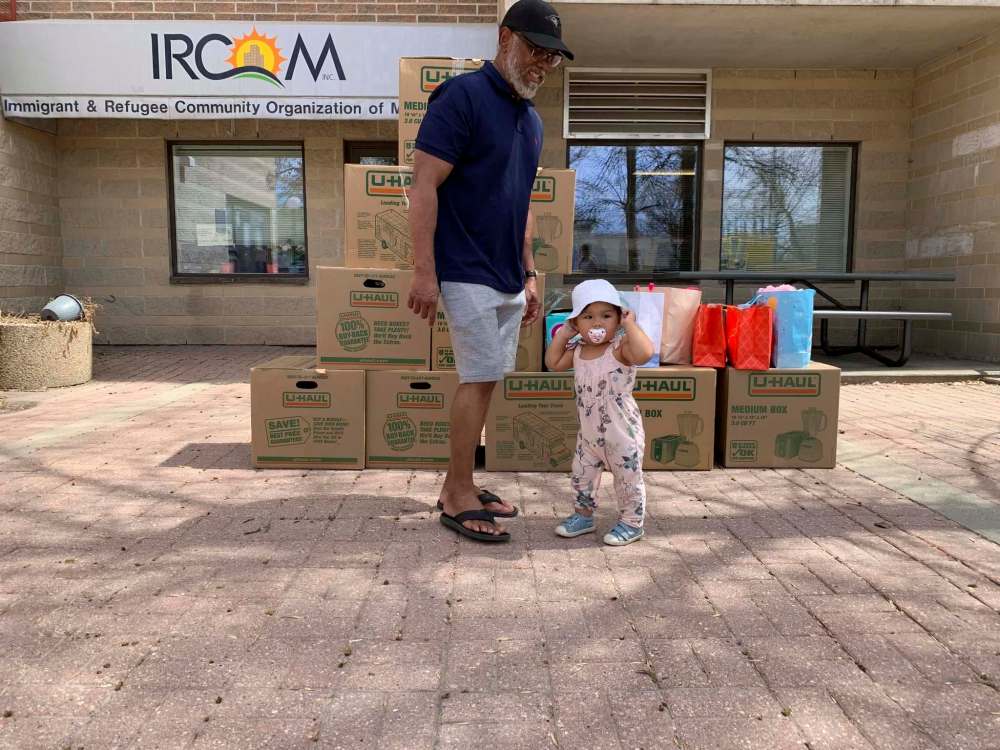
Shafdar Gazze and Malina donate food hampers as a form of Zakat — almsgiving at the end of Ramadan.

As Eid quickly approaches this week, most Muslims celebrate in the same religious sense, but cultural traditions differ from one country to another. A common assumption is being of Muslim faith is synonymous with Middle Eastern countries, but my Muslim friends and I represent the diversity in Islam.

Inclusivity in Muslim Canadian communities is important, as there are many faces of Islam that are underrepresented.

Here are three who eagerly shared their cultural traditions when celebrating Eid:

Amal Shire, 31

“I remember waking up early to get ready for Eid prayers. I would hear, ‘We are leaving you!’ from my parents, because I was usually the last one to get up.

“I was born in Somalia, and grew up in Ethiopia, Kenya, Sudan, Pakistan, Switzerland and arrived in Canada in 1997.

“No matter what country we lived in, we always celebrated Eid with pineapple upside-down cake and Somali halwa (dessert). The excitement during the last night of Ramadan to get everything prepared for Eid was felt throughout our community. I miss being around that energy.

“I’m grateful to be living with my family during the pandemic lockdown, so we can still celebrate together. We plan on doing Eid prayers virtually, calling family, and having a barbecue.”
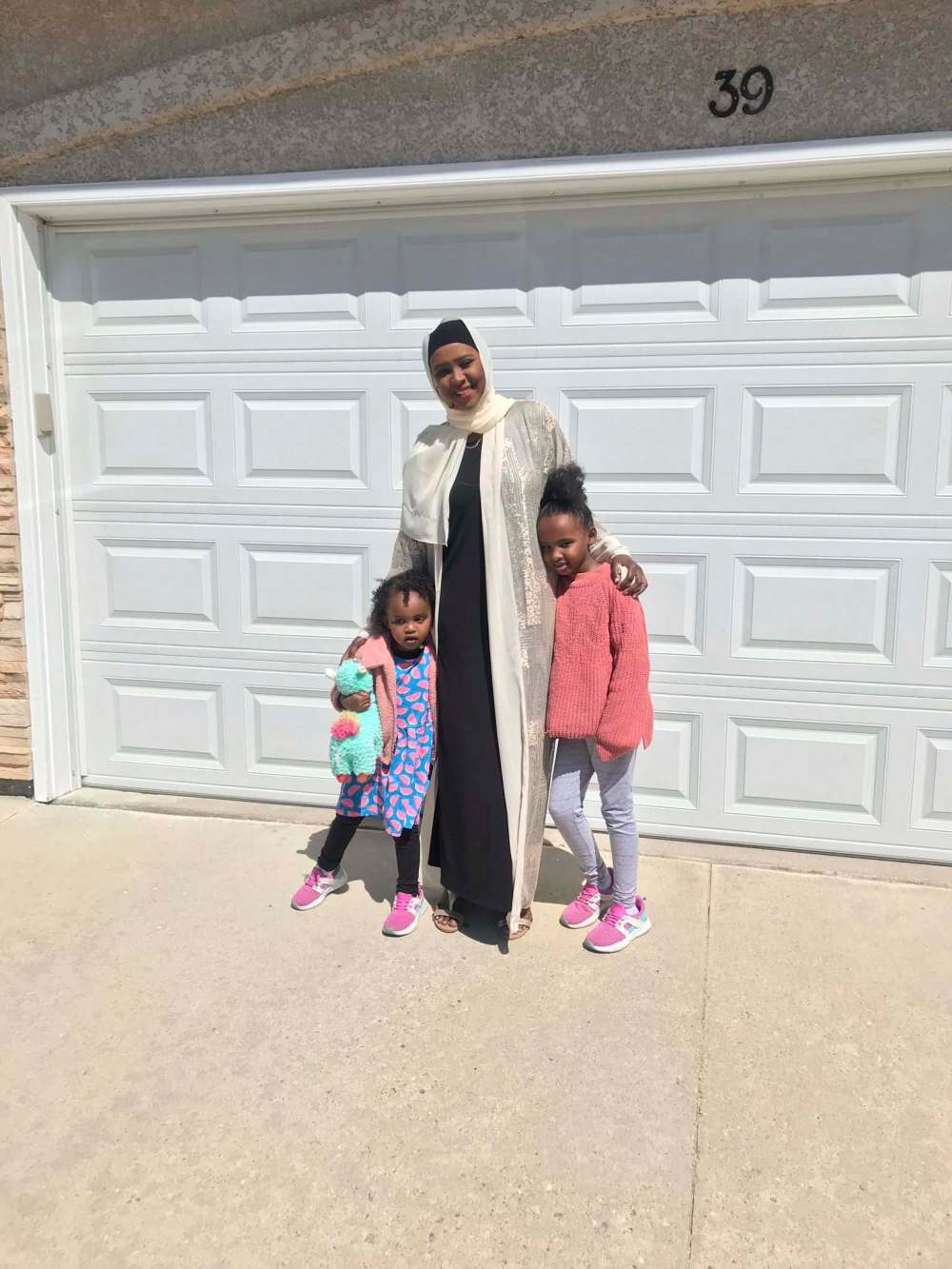
Amal Shire with her nieces Sidra and Suhail.

Medina Puskar, 38

“I was born in Banja Luka, Bosnia. We fled to Croatia because of the war, and spent six months in a refugee camp before arriving in Canada in 1996.

“Growing up, I loved waking up early on Eid to help my mom prepare. The women in my family cooked incredible meals. My family would gather at my grandparents’ house, because it was important to visit the oldest living person in the family first.

“In Winnipeg, my husband, my kids and I would normally attend Eid prayers, open gifts and have a lamb roast. We also enjoy traditional foods such as burek (meat pie), stuffed bell peppers and baklava.

“It is tradition to serve baklava and coffee when you have visitors at your home during Eid.

“We usually have so many visitors dropping in, but with the lockdown, my friends and I had to think of something new so we started a dessert exchange during Ramadan. Every other night, one of us bakes and drops off the dessert outside of each other’s house, so we still feel like we are celebrating together.”

Menal Al-Fekih, 29

“My family is from Ethiopia and Yemen, and I grew up in Ethiopia. I arrived in Canada in 2011, when I was 18 years old.

“In Ethiopia, after Eid prayers, we would always have sabaya (Yemeni dish) for breakfast on Eid. After breakfast, my siblings and I would visit more than 10 homes with our father. We would fit all of these visits into about four hours, so that we could make it home for lunch with our mother who stayed behind to host the families visiting our home.
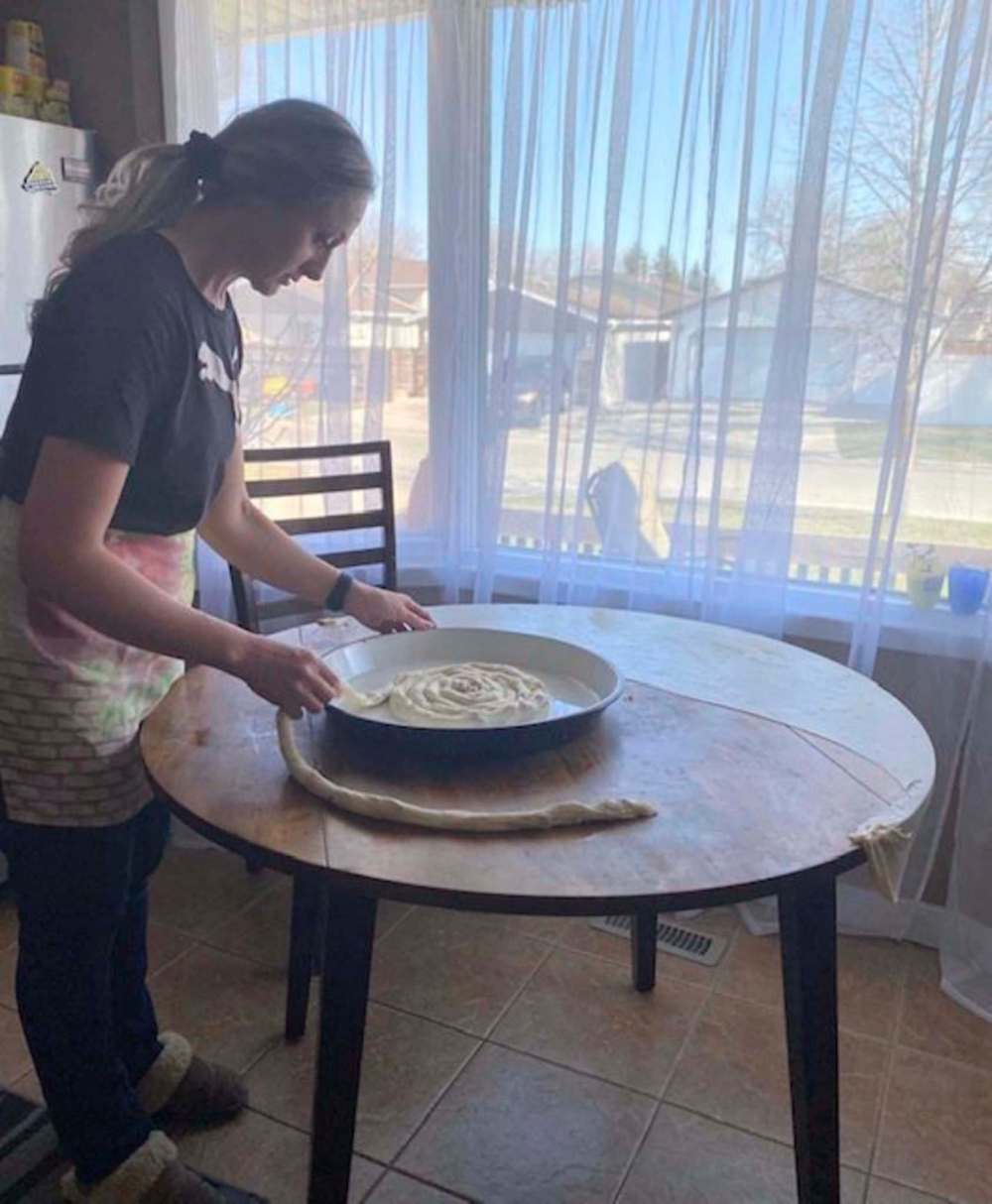
Medina Puskar prepares for Eid celebrations.

“Our lunch consisted of both Ethiopian and Yemeni dishes. We would have injera with doro wot and tibs (Ethiopian dishes) and kabsa (Arab rice and meat dish).

“In Yemen, everyone in my family would meet at my grandmother’s house for the first half of the day, then us children would go to an amusement park for the second half of the day. The best part of celebrating Eid in Yemen was hearing ‘Eid Mubarak’ (blessed feast/festival) from everyone I came across while out and about.

“This year will be difficult, because we will not be able to attend usual Eid prayers at the RBC Convention Centre — the one thing that really makes Eid feel like Eid in Canada. Fortunately, my siblings and I will still be able to have a meal together to celebrate the end of Ramadan.”

faith@freepress.mb.ca

The Free Press is committed to covering faith in Manitoba through our Religion in the News project. This reporting continues because readers like you step forward to fund it.

Donate now to support our reporting on religion.

Your donation is eligible for a charitable tax receipt. BECOME A FAITH JOURNALISM SUPPORTER

Report Error Submit a Tip

The Free Press acknowledges the financial support it receives from members of the city’s faith community, which makes our coverage of religion possible.
More Stories

Stakes are high for organized labour in upcoming provincial election

Dan Lett 7 minute read Preview

Stakes are high for organized labour in upcoming provincial election

Dan Lett 7 minute read Friday, Jul. 5, 2019

Of all the special interests in Manitoba, it would seem organized labour has the most to win — or lose — in the upcoming provincial election.

Just consider the Progressive Conservative government of Manitoba's record on labour issues over the past three years, and you will understand why the stakes are so high for unions, particularly those in the public sector. It has been a non-stop torrent of tough love from Premier Brian Pallister.

The premier had barely settled into the comfy chair in his corner office at the Manitoba legislature when he disbanded blue-ribbon advisory councils that gave labour parallel access on policy to that of business-sector representatives. He then tabled legislation imposing wage freezes on all unionized provincial workers. That law was never proclaimed, but the Pallister government got its wage freeze simply by not bargaining.

Then the premier announced legislation that would force health-care workers to re-organize, from 180 different unionized groups to about 40. The new law has forced unions to campaign against each other to be chosen to represent health workers, a scenario that has led to bitter and divisive confrontations among labour groups.

Read
Friday, Jul. 5, 2019

Bringing home a Fish

Mike McIntyre 7 minute read Preview

Bringing home a Fish

Mike McIntyre 7 minute read Yesterday at 6:25 PM CDT

There’s no place like home.

But what exactly does that mean for members of the Winnipeg Goldeyes, who typically find themselves hundreds or even thousands of miles away from family and friends between May and September, trying to keep their baseball careers alive while living on shoestring budgets?

For some, home is a modest downtown hotel room or small apartment typically shared with a teammate or two. For others, there’s a more personal touch — one that truly connects them to the community they happen to be playing in.

Welcome to the world of billets, a longstanding tradition in this market that dates back to when the Fish first took flight back in 1994. They are a unique and valuable tool for the American Association organization and its players, with a dedicated group of local baseball fans who open their doors and roll out the welcome mat year after year.

Read
Yesterday at 6:25 PM CDT

Shane Minkin

2 minute read Sunday, Aug. 14, 2022

Born with ink in his veins at the old Misericordia Hospital, Shane's been at the Free Press long enough to remember when the paper was delivered by actual paperboys (and girls) in the afternoon.

Slaying 19-year-old ‘caring soul’ during drug binge worth 11 years, judge rules

Dean Pritchard 4 minute read Preview

Slaying 19-year-old ‘caring soul’ during drug binge worth 11 years, judge rules

Dean Pritchard 4 minute read Tuesday, May. 11, 2021

Jordan Belyk may have been in the grip of a drug-induced psychosis when he stabbed 19-year-old stranger Brittany Bung to death, but he knew full well his drug binge could have tragic consequences, a judge said Tuesday before sentencing him to 11 years in prison.

“There is no question this offence was shocking in its violence,” said Queen’s Bench Justice Joan McKelvey. “A significant sentence is appropriate in order to have denunciatory and deterrent effects on those who voluntarily intoxicate themselves with mind-altering drugs.

“Mr. Belyk was aware of the effect such drugs had on his life and indeed recognizes that he may continue to struggle with substance abuse once he returns to the community,” McKelvey said.

McKelvey credited Belyk for time served since the Oct. 3, 2017 killing, reducing his remaining sentence to just under six years.

Read
Tuesday, May. 11, 2021

Dealing with what’s left behind … in the cloud

Editorial 4 minute read Preview

Dealing with what’s left behind … in the cloud

Editorial 4 minute read 2:01 AM CDT

Sooner or later, we will all face it; if we’re wise, we plan for its arrival.

Death.

Notwithstanding the pithy observation of 18th-century American statesman Benjamin Franklin regarding the inescapable nature of taxes, the only real inevitability in each of our lives is that it will end. And when it does, those left behind to (one hopes) mourn our passing are always left with the unenviable chore of tying up multitudinous loose ends.

What comes to mind first are familiar material considerations such as wills, finances, property divestiture and the burdensome responsibility of sorting through and disposing of a lifetime’s worth of accumulated clothing, furniture, vehicles and all manner of personal belongings. These jobs are made immeasurably easier if the departed has left specific and detailed instructions and documentation for those tasked with sorting it all out.

Read
2:01 AM CDT

Differing goals of religion, politics

John R. Wiens 5 minute read 2:00 AM CDT

Kudos to David Driedger for modelling a more appropriate and constructive role for religion in politics than the one that has become commonplace today (“Take care of them; there is enough”, Think Tank, July 27).

Resisting the temptation to preach, coerce and control, he has chosen to remind, persuade and challenge. It could hardly more different to what we are witnessing everyday to the south of us. I thank him for his humility, courage and sense of responsibility to humanity.

Our recent experiences with religion’s forays into the political realm, both in the U.S. and parts of Canada have done little to endear us to either one. Religious fundamentalism, in its many forms, has wrought untold havoc on governments across the globe, with some of the most toxic iterations being right on our doorsteps — we might even call it a form of domestic terrorism.

In the U.S., Christian nationalism, represented by MAGA, has contaminated government and ordinary lives like a hazardous toxin escaping containment — corroding and poisoning the presidency, the legislature, the court system and law enforcement, and in the process threatening the very relationships which make a civilized society possible. Simply put, the positive ideal of godliness in the American constitution, which emphasized tolerance for, acceptance of and upheld the equal worth of all peoples is in peril.