EXPLAINER: 37 years later, Mexican drug lord to face justice

Advertisement

Advertise with us

MEXICO CITY (AP) — The capture of fugitive drug lord Rafael Caro Quintero was hailed by U.S. authorities as an example of cooperation with Mexico in the fight against drugs. But in fact Caro Quintero had been the source of 37 years of tension between the two countries.

Read this article for free:


or

Already have an account? Log in here »

To continue reading, please subscribe:

Subscribe and receive a limited-edition Free Press branded hat or tote.

Digital Subscription

One year of digital access for only $205*

  • Enjoy unlimited reading on winnipegfreepress.com
  • Read the E-Edition, our digital replica newspaper
  • Access News Break, our award-winning app
  • Play interactive puzzles

*First annual payment billed as $205.00 + GST for one year. This annual subscription will automatically renew at $233.00 + GST every 52 weeks (10% off the regular annual price of $259.35). Offer available to new and qualified returning subscribers only. Cancel any time.

To continue reading, please subscribe:

Add Free Press access to your Brandon Sun subscription for only an additional

$1 for the first 4 weeks*

  • Enjoy unlimited reading on winnipegfreepress.com
  • Read the E-Edition, our digital replica newspaper
  • Access News Break, our award-winning app
  • Play interactive puzzles
Start now

*Your next Brandon Sun subscription payment will increase by $1.00 and you will be charged $17.95 plus GST for four weeks. After four weeks, your payment will increase to $24.95 plus GST every four weeks.

Hey there, time traveller!
This article was published 19/07/2022 (1536 days ago), so information in it may no longer be current.

MEXICO CITY (AP) — The capture of fugitive drug lord Rafael Caro Quintero was hailed by U.S. authorities as an example of cooperation with Mexico in the fight against drugs. But in fact Caro Quintero had been the source of 37 years of tension between the two countries.

Caro Quintero was one of the primary suppliers of heroin, cocaine, and marijuana to the United States in the late 1970s and early 1980s. Mexican marines captured him in the mountains of northwest Mexico Friday.

Mexico had been slow in going after the former leader of the Guadalajara cartel for killing U.S. DEA agent Enrique “Kiki” Camarena in 1985, as well as several other U.S. citizens around the same time.
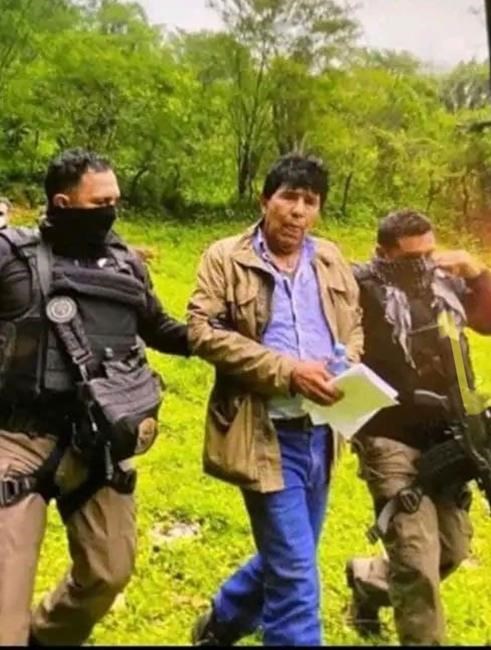
In this government handout photo provided by Mexico's Secretariat of the Navy, agents escort drug trafficker Rafael Caro Quintero, in Sinaloa state, Mexico, Friday, July 15, 2022, captured deep in the mountains of his home state. It was a 6-year-old bloodhound named “Max” who rousted Caro Quintero from the undergrowth. (Mexico's Secretariat of the Navy via AP)

The U.S. had to nearly shut down border traffic to pressure Mexico to go after Caro Quintero in the 1980s, but even then the Mexican legal system wasn’t able to hold him in jail: in 2013 he walked out of prison on an erroneous decision by a Mexican appeals court, and had returned to his drug trafficking operations.

This time, Mexico has made it clear that Caro Quintero was arrested with the intention of extradition. His lawyers, however, quickly signaled through their court filings that the extradition process will be drawn out and it could be many months before he is seen in a U.S. courtroom.

WHO WAS KIKI CAMARENA AND WHY WAS HE KILLED?

Caro Quintero had blamed Camarena, the DEA agent, for a raid on a huge marijuana plantation that Caro Quintero’s cartel ran in northern Mexico in 1984. The next year, Camarena was kidnapped in Guadalajara, allegedly on orders from Caro Quintero. “What they wanted to do is they wanted to get information from Kiki relative to the investigations that the DEA was conducting in Mexico. They wanted to know who the informants were, that they were handling. They wanted to know the addresses where the agents live,” said Mike Vigil, the DEA’s former chief of international operations. “So they wanted to extract as much information from Kiki through horrific torture. And it was finally a blunt instrument blow to the head that caused Kiki Camarena’s … death.” His tortured form was found a month later.

WHY DID CARO QUINTERO THINK HE COULD GET AWAY WITH ALL THIS?

People today are accustomed to hearing about warring drug cartels in Mexico. It is hard to imagine the first generation of drug lords in Mexico in the 1980s: there was only one big cartel, the Guadalajara Cartel, and Caro Quintero, Fonseca Carrillo and Miguel Angel Felix Gallardo ran it. People like Joaquin “El Chapo” Guzman worked for them at that point — as did as many as 4,000 agricultural workers pressed into service growing marijuana on the gang’s 1,350-acre (545 hectare) marijuana plantation. “Given the fact that the cartel was the only cartel in Mexico in the eighties, they operated with complete impunity because they were paying off many, many individuals within the Mexican government for protection,” said Vigil. “So they figured that they could do whatever they damn well please as long as they paid money for protection.”

HOW DID CARO QUINTERO ESCAPE JUSTICE?

In August 2013, an appeals court in Caro Quintero’s home state overturned his 40-year sentence in the killing of Camarena and a Mexican government pilot. The panel of judges argued a state court should have overseen the case, not a federal one, and ordered his immediate release from a maximum-security prison. Mexico’s Supreme Court annulled the order releasing him months later, saying Camarena was a registered U.S. government agent and therefore his killing was a federal crime and had been properly tried. An arrest warrant was issued for Caro Quintero, who was long gone. Questions still swirl around his late-night release: Mexican prosecutors, who by law should have been notified, weren’t notified until hours after he was released in the middle of the night and disappeared in a car that had been waiting for him.

WHAT DID CARO QUINTERO DO WHILE HE WAS ON THE RUN BETWEEN 2013 and 2022?

Caro Quintero was added to FBI’s 10 most wanted list in 2018, with a $20 million reward for his capture. Mexican security analyst David Saucedo believes that the sudden renewed interest in his arrest may have stemmed from the deadly wave of overdoses in the United States from the synthetic opioid fentanyl. “I think that the FBI did that because of the deaths being caused in the United States due to fentanyl consumption,” said Saucedo. “When Caro Quintero got out of prison he takes up drug trafficking again and established the Caborca cartel in Sonora. But his criminal activities include shipping fentanyl.”

WHAT IS LIKELY TO HAPPEN TO CARO QUINTERO NOW?

Caro Quintero was notified this weekend that a process to extradite him to the United States has begun, but his lawyers have already filed for court injunctions that could stretch the legal process out over months, and perhaps years. He will wait out the process in a maximum security prison west of Mexico City. A grand jury in the Eastern District of New York indicted Caro Quintero in 2017 on a number of drug trafficking charges, as well as for conspiring to murder those who posed a threat to his narcotics activities.


Report Error Submit a Tip

More Stories

Métis federation opens Louis Riel College campus

Tyler Searle 4 minute read Preview

Métis federation opens Louis Riel College campus

Tyler Searle 4 minute read Wednesday, Jul. 29, 2026

Thirteen years after establishing the Louis Riel College, the Manitoba Métis Federation opened the doors to the school’s first official campus on Wednesday — cutting the ribbon on what it hopes will become a thriving centre for Métis education in Winnipeg.

The campus, which occupies a handful of rooms on the ground floor of the MMF’s building at 200 Main St., primarily offers courses related to health care and Indigenous-focused early childhood education, but will expand its slate of training options, said JoAnne Remillard, the federation’s education minister.

“This new campus represents opportunity, education and a commitment to creating pathways for students to achieve their goals and build successful futures,” she said.

“Everyone is excited about this.”

Read
Wednesday, Jul. 29, 2026

No museum can tell the whole story

Stuart Williams 5 minute read Wednesday, Jul. 29, 2026

The continuing debate over the Canadian Museum for Human Rights’ Uprooted: Nakba Past and Present exhibit has focused significantly on what the exhibit leaves out.

Some critics argue that the exhibit should have explained the United Nations Partition Plan, the Arab rejection of that plan, the 1948 invasion by neighbouring Arab states, the displacement of Jews from Arab countries, Hamas, October 7, the hostages and the reasons for Israeli security measures.

Others argue with equal conviction that it should also have addressed the Deir Yassin massacre, the expansion of Israeli settlements, decades of occupation, the Right of Return, changing demographic realities and the experiences of Palestinian refugees throughout the Middle East.

All of those subjects matter. Many remain the subject of legitimate scholarly debate. But the controversy points to a broader question that extends well beyond this particular exhibit.

Confidence vote was gamble for MLA, Tories: political expert

Alex Lambert 5 minute read Preview

Confidence vote was gamble for MLA, Tories: political expert

Alex Lambert 5 minute read Yesterday at 7:30 PM CDT

BRANDON — A Progressive Conservative MLA’s decision to put forward a confidence motion against the party’s former leader carries a lot of risk for her and the Tories, a political science expert says.

Obby Khan resigned as leader of the PCs on Monday after Jodie Byram (Agassiz) initiated a confidence vote against him the previous week.

The majority of the PC caucus voted in favour of Khan, but he resigned a few days later, citing continued efforts to undermine him by a minority of MLAs.

Brandon University political science Prof. Kelly Saunders said while she doesn’t know what Byram’s motivations were for triggering the vote, such a move carries a lot of risk.

Read
Yesterday at 7:30 PM CDT

Dynacare workers provide essential services that must be maintained during strike, labour board rules

Nicole Buffie 6 minute read Preview

Dynacare workers provide essential services that must be maintained during strike, labour board rules

Nicole Buffie 6 minute read Updated: Yesterday at 6:30 PM CDT

The Manitoba Labour Board has ruled Dynacare workers are essential employees and their services must be maintained during a labour dispute.

The ruling, issued Thursday afternoon, said the board was satisfied that essential services “must be maintained in the event of job action involving Dynacare and the (Manitoba Association of Health Care Professionals) in order to prevent a threat to the health, safety and welfare of residents of Manitoba.”

The private company’s 350 lab technicians and technologists in Winnipeg, Brandon and other communities went on strike briefly Sept. 8 before the labour board issued an interim order forcing them back to work while it decided the essential-services question.

The dispute is over a significant wage gap between Dynacare employees and people doing the same work in the public health-care sector. The Dynacare workers have been without a contract since March 31.

Read
Updated: Yesterday at 6:30 PM CDT

Legislation needed on vacant buildings

Editorial 4 minute read Preview

Legislation needed on vacant buildings

Editorial 4 minute read Tuesday, Sep. 29, 2026

There is something deeply backwards about a system that lets a property owner keep a building boarded up indefinitely while neighbours are left to live with the consequences.

In Winnipeg, as long as the owner pays the taxes, follows the city’s vacant-building rules and pays the required fees, there is no hard deadline for the building to be dealt with.

The building can remain a neighbourhood eyesore. It can attract drug use and crime. It can become a fire hazard. And the people living nearby can be left wondering how long they are expected to put up with it.

Yet when Premier Wab Kinew was asked Friday whether his government would change provincial legislation to give Winnipeg the power to impose a time limit on such properties, he declined to answer.

Read
Tuesday, Sep. 29, 2026

A stealthy tax increase

Gage Haubrich 4 minute read Wednesday, Jul. 29, 2026

About $2,100. That’s how much Premier Wab Kinew’s bracket creep tax hike could cost your family by 2030, depending on how much you make.

Bracket creep is an income tax hike that happens when the government stops indexing tax brackets to inflation. That means that after getting a cost-of-living raise, taxpayers can be bumped into a new tax bracket and have their tax bill increased even though they can’t afford to buy more.

Think about it this way: A raise that only covers higher grocery prices isn’t a real raise. You’re not richer. Your cart costs the same. But the bigger number on your paycheque bumps you into a higher bracket. That means higher taxes on a paycheque that buys the exact same number of groceries as last year.

That’s why most provincial governments and the federal government adjust income tax brackets with inflation.