Going Rogue
Nissan’s latest hybrid breaks free from standard hybrid tech

Advertisement
Read this article for free:
or
Already have an account? Log in here »
To continue reading, please subscribe:
Digital Subscription
One year of digital access for only $1.44 a week*
- Enjoy unlimited reading on winnipegfreepress.com
- Read the E-Edition, our digital replica newspaper
- Access News Break, our award-winning app
- Play interactive puzzles
*Billed as $5.77 plus GST every four weeks. After 52 weeks, price increases to the regular rate of $19.95 plus GST every four weeks. Offer available to new and qualified returning subscribers only. Cancel any time.
To continue reading, please subscribe:
Add Free Press access to your Brandon Sun subscription for only an additional
$1 for the first 4 weeks*
- Enjoy unlimited reading on winnipegfreepress.com
- Read the E-Edition, our digital replica newspaper
- Access News Break, our award-winning app
- Play interactive puzzles
*Your next Brandon Sun subscription payment will increase by $1.00 and you will be charged $17.95 plus GST for four weeks. After four weeks, your payment will increase to $24.95 plus GST every four weeks.
Read unlimited articles for free today:
or
Already have an account? Log in here »
Nissan’s latest foray into hybrid technology arrives in the form of the 2027 Rogue Hybrid, and it comes with a twist.
It all requires a bit of background to get to where the Rogue is different. Typical hybrids pack a hybrid drive battery paired with a gas motor and use both the gas and electric motors to propel the vehicle. Such typically allows for limited EV-only range before the gas motor fires up.
In these hybrids, the electric propulsion is basically an assist: electrons help smooth out the gas motor’s torque curve and allow the vehicle to have more thrust and better fuel economy than a gas engine alone could provide.
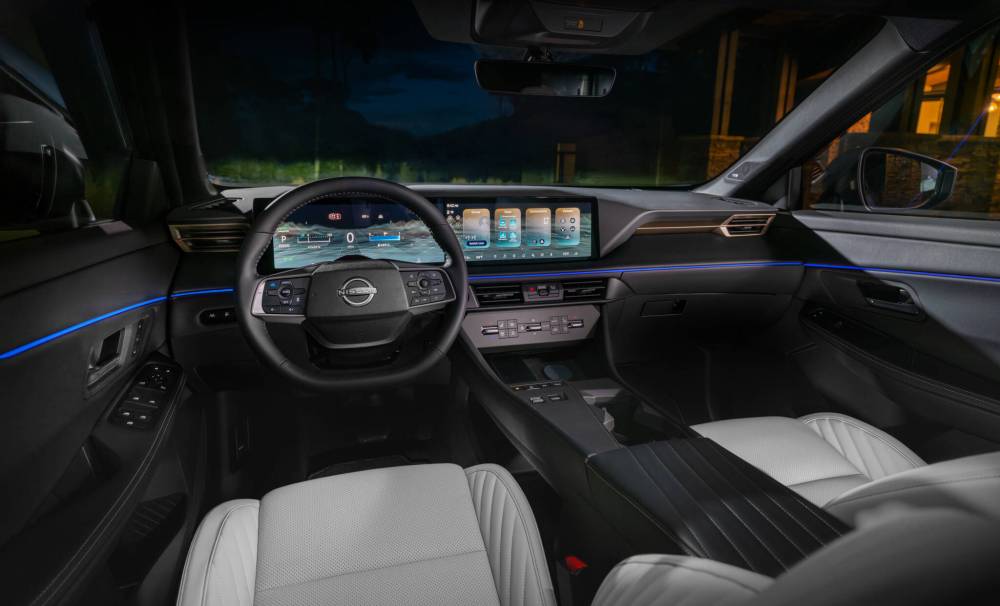
Supplied
The Rogue interior features a large touchscreen and push-button transmission selector.
In the Rogue — which Nissan says is a segment first — electric is the whole ball game. There is no mechanical link between the gas motor and drive wheels. The e-Power hybrid system uses electric propulsion exclusively while the gas motor runs to keep the small hybrid battery charged.
Nissan’s claim of being first in its segment appears to stand up to scrutiny: competing hybrids such as the Toyota RAV4, Hyundai Tucson Hybrid, Kia Sportage Hybrid and Honda CR-V Hybrid all, to some extent, connect their gas motors to the wheels.
That said, the CR-V comes the closest to the Rogue, as Honda’s compact SUV primarily operates as an EV at slower speeds, with the gas motor charging the battery when needed, but will connect the gas motor’s output to the wheels at highway speeds. Because the CR-V doesn’t have a transmission per se, its ability to connect gas motor to wheels is limited to vehicle speeds that match the engine speed.
The benefit to Nissan’s system isn’t necessarily fuel economy: the Rogue is actually slightly worse than the RAV4 and a hair better than the CR-V. The Rogue, which currently only has stated fuel economy for the mid-grade SR model, has a fuel economy rating (city/highway/combined, in litres per 100 km) of 5.9/6.6/6.2. RAV4’s numbers are 5.2/6.1/5.7 for its XLE model. CR-V delivers 6.0/6.9/6.4.
Real world numbers between the three would all likely be within measurement errors of each other.
Instead, the Rogue’s primary differentiator appears to be smooth and powerful acceleration. As primarily an EV, it will have instant torque available. The competitors, in sharing propulsion duties with the gas motor, do have torque curves and do take some time to achieve maximum torque. (The CR-V may be an exception, as it provides only electric thrust at slower speeds.)
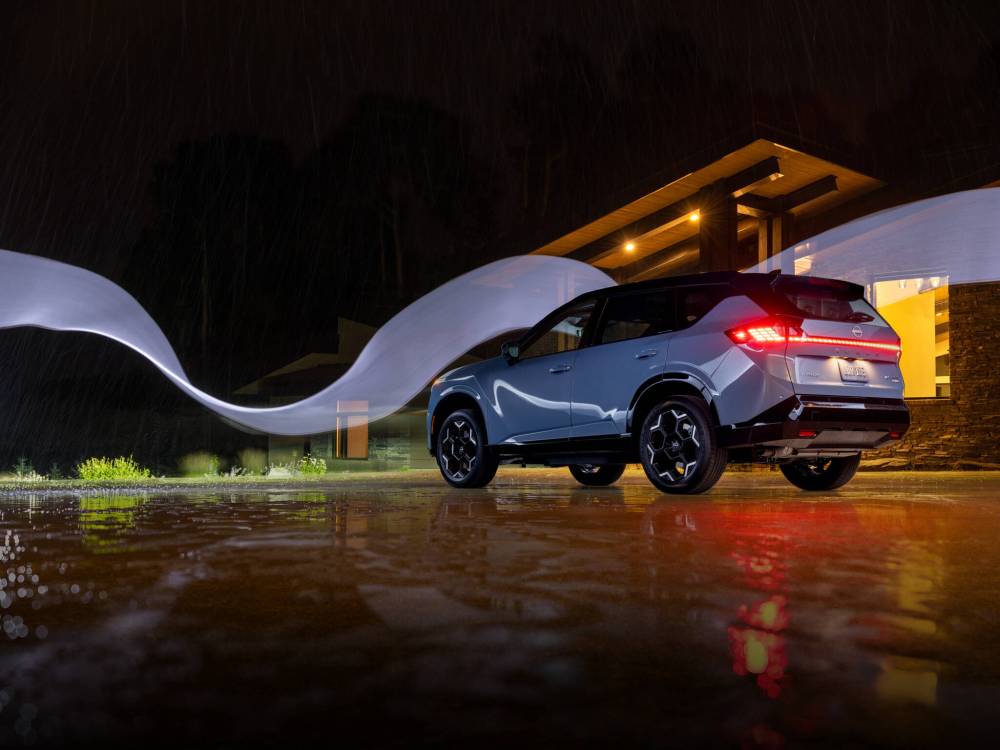
Supplied
With a starting price of $42,845, the Rogue Hybrid is competitive with rivals Toyota RAV4 and Hyundai Tucson Hybrid.
Rogue uses two electric motors: a more powerful unit at the front (202 hp, 243 lb-ft of torque) and a smaller unit at the rear (134hp, 144 lb-ft) for a combined, all-wheel-drive output of 225 horsepower.
As a hybrid, the Rogue offers a learning curve of zero to average drivers. There’s no charger to install in the garage: you fill it up, turn it on, select Drive or Reverse and carry on as you would with most other vehicles.
With only a 1.67 kWh hybrid battery, Rogue isn’t offering much, if any, EV-only driving. By comparison, the Nissan Leaf — a pure EV — has 53 and 75 kWh battery options. If anything, the Rogue battery serves more as a buffer between the gas motor charging system and the motors. The RAV4 hybrid has a 1.59 kWh battery.
These vehicles can get away with such small batteries because the batteries are almost always being charged, either by the gas motor or through regenerative braking.

The Rogue is a bit bigger and a bit heavier than the RAV4: Rogue’s 4,650 mm length and 1,862.9 kg compares to 4,601 mm and 1753.1 kg on the RAV4 (XLE). Yet Rogue’s cargo capacity is a bit less: 866 litres behind the second-row seats to 1,070 in the RAV4.
The Rogue is built in Kyushu, Japan, meaning it arrives in Canada without any U.S. political baggage or retaliatory tariffs. It starts at $42,845, incl. $2,847 in destination and other fees.
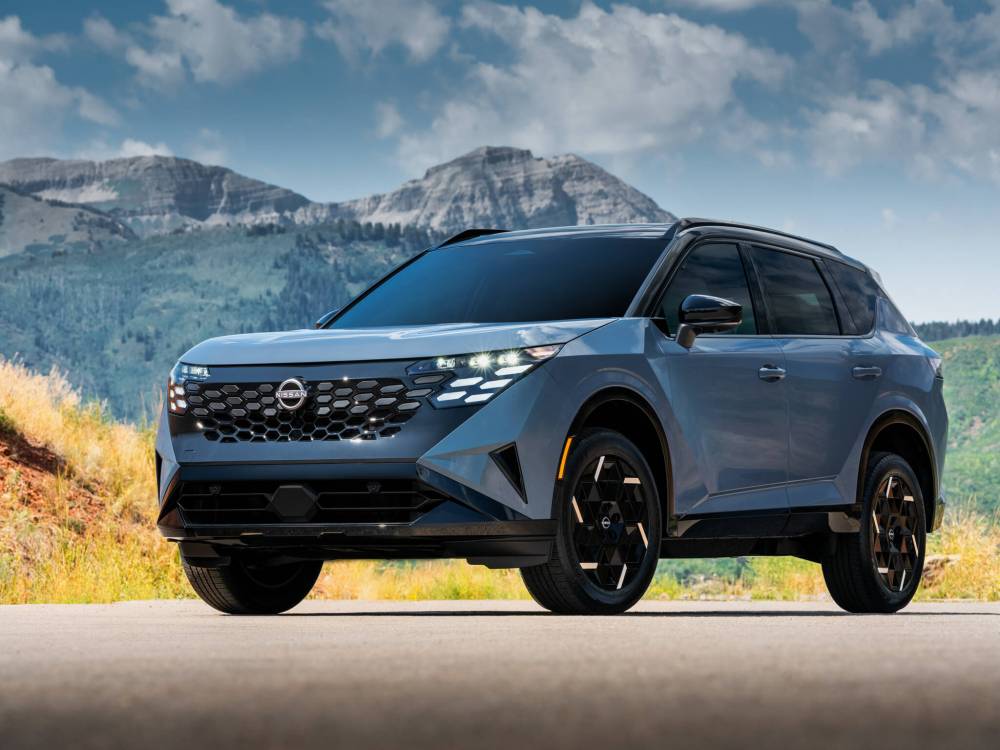
Supplied
The 2027 Nissan Rogue Hybrid operates primarily as an electric vehicle with a gas motor providing charging duties only.
RAV4 starts at $41,998 incl. $3,698 in destination and other fees while the CR-V Hybrid starts at $49,619 incl. $3,119 in destination and other fees. Hyundai Tucson Hybrid starts at $46,523 incl. $3,124 in destination and other fees.
As hybrids, none qualifies for either the federal or provincial EV rebates.
kelly.taylor@winnipegfreepress.com
Our newsroom depends on a growing audience of readers to power our journalism. If you are not a paid reader, please consider becoming a subscriber.
Our newsroom depends on its audience of readers to power our journalism. Thank you for your support.
Our newsroom depends on a growing audience of readers to power our journalism. If you are not a paid reader, please consider becoming a subscriber.
Our newsroom depends on its audience of readers to power our journalism. Thank you for your support.
Advertisement Advertise With Us
Advertisement Advertise With Us