Grand enhancement for Jeep

New Grand Cherokee gets 2.0-litre turbo powerhouse that delivers satisfying kick

Advertisement

Advertise with us

For 2026, and the vehicle that arguably launched the luxury SUV segment — the Jeep Grand Cherokee — it’s what you can’t see that makes the biggest difference.

Read this article for free:


or

Already have an account? Log in here »

To continue reading, please subscribe:

Subscribe and receive a limited-edition Free Press branded hat or tote.

Digital Subscription

One year of digital access for only $205*

  • Enjoy unlimited reading on winnipegfreepress.com
  • Read the E-Edition, our digital replica newspaper
  • Access News Break, our award-winning app
  • Play interactive puzzles

*First annual payment billed as $205.00 + GST for one year. This annual subscription will automatically renew at $233.00 + GST every 52 weeks (10% off the regular annual price of $259.35). Offer available to new and qualified returning subscribers only. Cancel any time.

To continue reading, please subscribe:

Add Free Press access to your Brandon Sun subscription for only an additional

$1 for the first 4 weeks*

  • Enjoy unlimited reading on winnipegfreepress.com
  • Read the E-Edition, our digital replica newspaper
  • Access News Break, our award-winning app
  • Play interactive puzzles
Start now

*Your next Brandon Sun subscription payment will increase by $1.00 and you will be charged $17.95 plus GST for four weeks. After four weeks, your payment will increase to $24.95 plus GST every four weeks.

For 2026, and the vehicle that arguably launched the luxury SUV segment — the Jeep Grand Cherokee — it’s what you can’t see that makes the biggest difference.

Under the hood, the venerable Pentastar V-6 engine continues, but expanding the list of powertrain options is a new Hurricane 2.0-litre turbo four-cylinder engine.

It would be easy to see that change as a step backward. If four cylinders are good, six are better, right?
Supplied
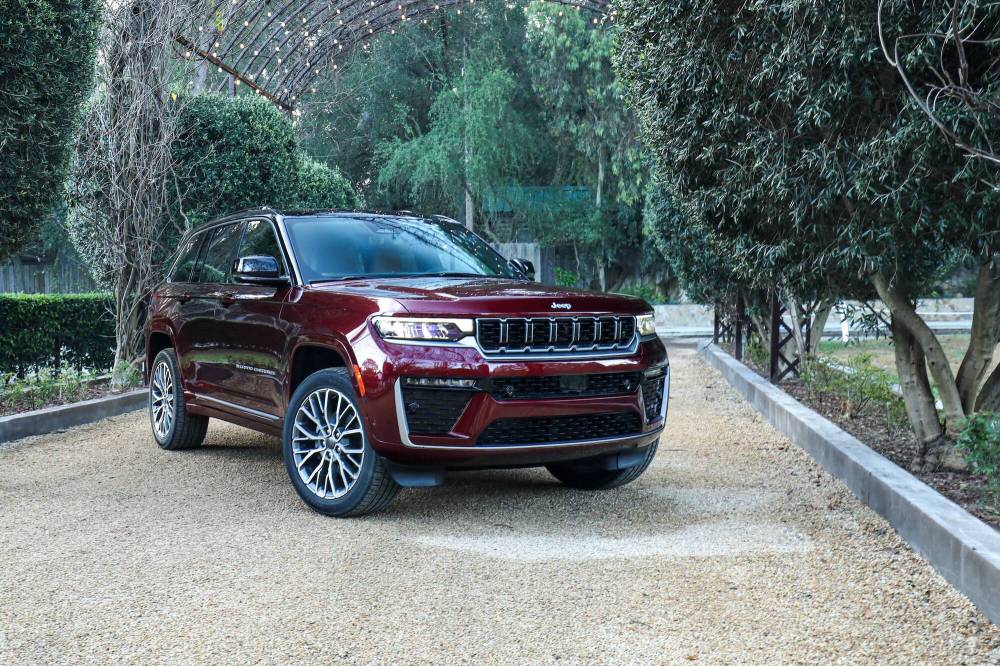
                                The 2026 Jeep Grand Cherokee gets what is best described as a mid-cycle refresh, but also a new engine: an available 2.0-litre Hurricane turbocharged four-cylinder. A larger infotainment screen is the big news inside the Grand Cherokee cabin.

Supplied

The 2026 Jeep Grand Cherokee gets what is best described as a mid-cycle refresh, but also a new engine: an available 2.0-litre Hurricane turbocharged four-cylinder. A larger infotainment screen is the big news inside the Grand Cherokee cabin.

Not so fast. The new engine is the high-output option, offering more power, more torque and better fuel economy than its six-cylinder stablemate.

While the V-6 churns out a respectable 293 horsepower and 257 pound-feet of torque, the new Hurricane blows in with 324 and 332, respectively. The two engines both get 9.4 L per 100 km on the highway, but the turbo beats the V-6 in the city, 11.7 L/100km to 13.

We’ll leave it to future reliability rankings to determine which engine is the more reliable, but in the here and now, the extra oomph of the Hurricane is very noticeable. The turbo spools up quickly and delivers a satisfying kick to the backside when the right-most pedal is pushed.

The Hurricane employs an interesting twist on internal combustion: it ignites a small amount of fuel inside a small, cup-like chamber above each cylinder. The burning fuel is then jetted into the combustion chamber, where it ignites the fuel air-fuel charge triggering what Jeep says is a faster burn and more complete combustion of each burn cycle.

A variable-geometry turbocharger offers boost at low engine speeds to reduce a sense of turbo lag.

The Hurricane is offered on the Laredo Altitude trim level and higher. The Pentastar appears in the Laredo and Laredo X models.

Both engines are mated to eight-speed automatic transmissions.

Phased out of the Grand Cherokee lineup for 2026 is the plug-in hybrid powertrain.
Supplied
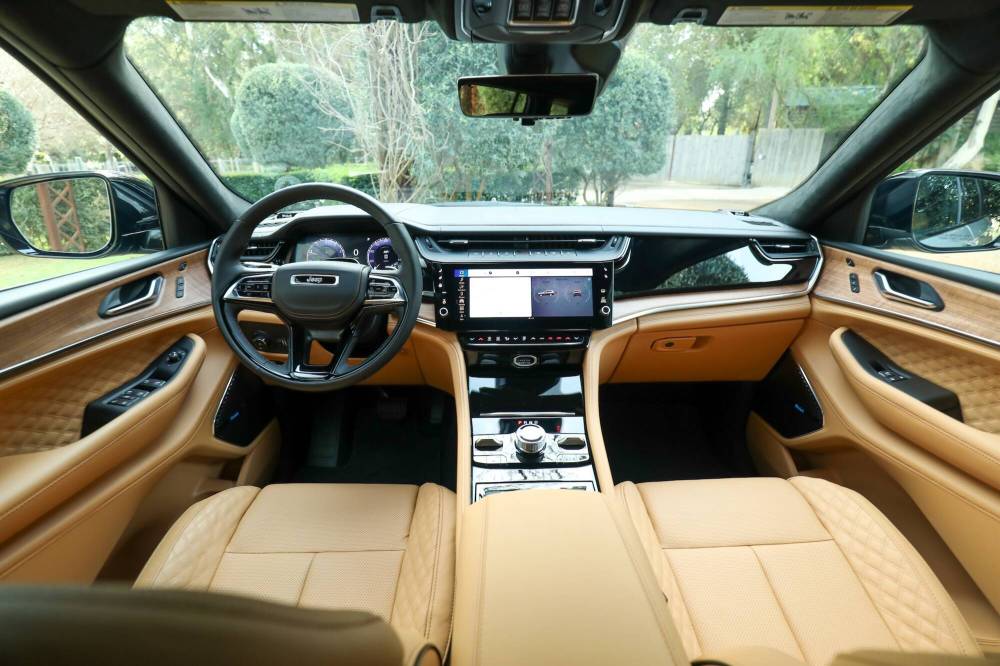
                                A larger infotainment screen is the big news inside of the Grand Cherokee cabin.

Supplied

A larger infotainment screen is the big news inside of the Grand Cherokee cabin.

This latest version of the Grand Cherokee can be best described as a mid-cycle refresh: there’s no dramatic reimagining of the vehicle’s design.

That said, inside there’s a reworked cabin and a larger infotainment screen.

Also available is a premium McIntosh sound system. The front fascia has been refreshed slightly, as well, with an updated seven-slot grille, a Jeep hallmark. Three new colours — steel blue, copper shino and fathom blue — are also offered.

The Grand Cherokee Laredo begins at $62,290. The Laredo Altitude begins at $68,280. The range tops out with the Summit Reserve at $86,785. All prices include $2,295 destination fee. For a three-row model, add $2,500.

kelly.taylor@freepress.mb.ca

Kelly Taylor

Kelly Taylor
Copy Editor, Autos Reporter

Kelly Taylor is a Winnipeg Free Press copy editor and award-winning automotive journalist. He's been a member of the Automobile Journalists' Association of Canada since 2001.

Our newsroom depends on a growing audience of readers to power our journalism. If you are not a paid reader, please consider becoming a subscriber.

Our newsroom depends on its audience of readers to power our journalism. Thank you for your support.

Report Error Submit a Tip

More Stories

DNA on beer can helps solve killing

Dean Pritchard 5 minute read Preview

DNA on beer can helps solve killing

Dean Pritchard 5 minute read 2:00 AM CDT

Two years after 74-year-old James Monaghan was stabbed in his Sherburn Street home, DNA found on a beer can led police to his killer.

Shara Harper, 29, pleaded guilty to manslaughter and on Tuesday was sentenced to six years in prison.

A neighbour found Monaghan dead in his home on July 29, 2022. He had been stabbed twice in the chest and back.

The investigation into Monaghan’s killing had stalled until June 2024, when DNA found on an empty beer can in Monaghan’s home was confirmed to be a match for Harper.

Read
2:00 AM CDT

Fund full-day kindergarten for all

Catherine-Laura Dunnington and Molly McCracken 4 minute read Yesterday at 2:00 AM CDT

Children entering kindergarten are starting school this fall. While the 2.5-hour kindergarten day commonly found in Manitoba schools sounds like a pleasant transition to the school system, in truth it remains one of the biggest missing pieces of the child-care puzzle.

Province-wide, families face a stressful dilemma — if they are lucky enough to have child care, they have to leave work at lunch and shuttle a child from school to child care; if they don’t, they must reduce hours, or forgo working or education, because they don’t have child care for their kindergartener.

The Government of Manitoba has made progress on making child care more affordable and accessible. But we have largely left one enormous piece untouched — part-day kindergarten. Why is publicly funded education for kindergarten still only 2.5 hours a day? To date, British Columbia, Ontario, Quebec, New Brunswick, Newfoundland and Labrador, Nova Scotia, and Prince Edward Island have all implemented full-day, publicly funded kindergarten. The Manitoba School Boards Association passed a resolution in 2025 to implement full-day kindergarten programming, but the province has not provided sufficient funding to implement it province-wide.

There are currently 13,600 children in kindergarten in Manitoba. With a coverage rate for licensed child care of 32.3 per cent, roughly 5,000 families with kindergarteners lack access to licensed child care during the part of the day when their child is not in school. That is a precarious position to put any family in.

Ford’s anti-tariff ad leaves bruise

Editorial 4 minute read Preview

Ford’s anti-tariff ad leaves bruise

Editorial 4 minute read Saturday, Nov. 1, 2025

Say what you will about Ontario Premier Doug Ford — he knows how to get under a fellow populist’s skin.

Ford succeeded in irritating U.S. President Donald Trump with his decision to run a TV ad critical of Trump’s tariff scheme, utilizing old footage of former president Ronald Reagan to make the point that the late president — still greatly admired among many Americans — would not have approved of Trump’s methods.

Reaction to the ad among Trump and his supporters was swift and furious. MAGA acolytes denounced it, claiming it skewed Reagan’s words, while Trump claimed the ad was AI-generated (it was not). He immediately threatened to impose an extra 10 per cent in tariffs on Canada, “over and above” what he has previously laid out.

The clips of Reagan, pulled from a 1987 speech, are authentic, although a case can be made they did not include the full context of Reagan’s words regarding the U.S.’s trading relationship with Japan — the subject of the comments — at the time of the speech.

Read
Saturday, Nov. 1, 2025

0 minute read

There is a better way

Hersh Seth 4 minute read Saturday, Aug. 29, 2026

Hal Turner is correct about the challenges posed by winter and drought to our energy grid (The right plan for reliable energy, Think Tank, Aug. 11). But the ongoing debate is really about how we manage them.

Manitoba Hydro’s chief operating officer wants that debate to stay focused on facts, and his summary is fair. Demand is going up. The toughest times are still the coldest nights, and dry years put the most strain on the system. Wind power is unpredictable, solar is weakest when our days are shortest, and batteries alone cannot get Manitoba through a drought. The province also already buys wind power, is growing Indigenous-led supply and still has one of the cleanest and most affordable grids in North America. We’re not arguing with these points.

The real issue is not whether Manitoba needs reliable winter power. It is about whether building a $3-billion gas plant in Brandon is the only or best way to bridge the forecasted energy gap.

Almost all of our electricity, about 99.7 per cent, already comes from water, wind and biomass. We emit about 1.3 tonnes of carbon per gigawatt-hour. By comparison, the average Canadian utility emits approximately 121, and the American average is ~350.

South Winnipeg neighbourhood will be first to go geothermal

Chris Kitching 4 minute read Preview

South Winnipeg neighbourhood will be first to go geothermal

Chris Kitching 4 minute read Updated: 5:07 PM CDT

A new neighbourhood in south Winnipeg will be Manitoba’s first to use a shared, large-scale geothermal system to heat and cool hundreds of homes over coming decades.

The province is giving up to $4 million to the developers of Southwood Circle, just north of the University of Manitoba’s Fort Garry campus, for a district geothermal system as part of the NDP’s goal to reach net-zero greenhouse gas emissions by 2050.

“It means a whole neighbourhood can tap into geothermal, which means low-carbon heating and cooling for at least 1,000 homes,” Premier Wab Kinew said at a news conference Wednesday.

Geothermal systems, equipped with pumps and pipes, use underground temperatures to heat and cool one or more buildings. Proponents point to long-term energy and cost savings compared with conventional heating and cooling systems.

Read
Updated: 5:07 PM CDT