Omicron cousin BA.5 predicted to cause nearly 70% of COVID-19 cases by Canada Day
Advertisement
Read this article for free:
or
Already have an account? Log in here »
To continue reading, please subscribe:
Digital Subscription
One year of digital access for only $1.44 a week*
- Enjoy unlimited reading on winnipegfreepress.com
- Read the E-Edition, our digital replica newspaper
- Access News Break, our award-winning app
- Play interactive puzzles
*Billed as $5.77 plus GST every four weeks. After 52 weeks, price increases to the regular rate of $19.95 plus GST every four weeks. Offer available to new and qualified returning subscribers only. Cancel any time.
To continue reading, please subscribe:
Add Free Press access to your Brandon Sun subscription for only an additional
$1 for the first 4 weeks*
- Enjoy unlimited reading on winnipegfreepress.com
- Read the E-Edition, our digital replica newspaper
- Access News Break, our award-winning app
- Play interactive puzzles
*Your next Brandon Sun subscription payment will increase by $1.00 and you will be charged $17.95 plus GST for four weeks. After four weeks, your payment will increase to $24.95 plus GST every four weeks.
Read unlimited articles for free today:
or
Already have an account? Log in here »
Hey there, time traveller!
This article was published 30/06/2022 (1582 days ago), so information in it may no longer be current.
Researchers examining the threat of emerging COVID-19 strains predict Omicron BA.5 will account for nearly 70 per cent of cases by Canada Day.
Modelling expert Sarah Otto of the Coronavirus Variants Rapid Response Network says the fast-spreading subvariant is on track to dominate infections across the country.
The University of British Columbia professor predicted a July wave, peaking in August.
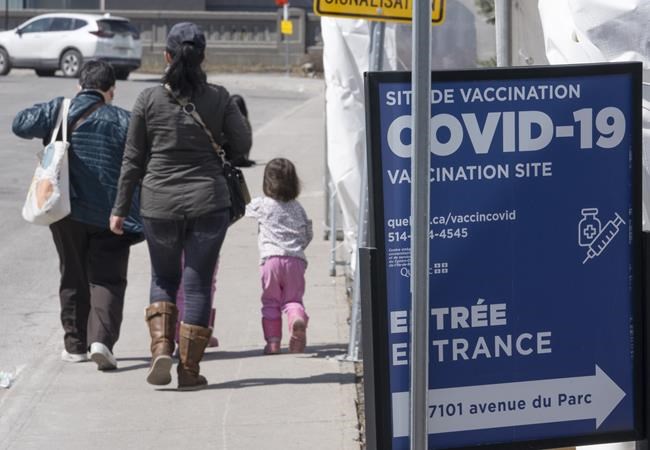
“The last sequence data was mid-June but the projections for July 1 would be: roughly 13 per cent (of cases are) BA.4, and 69 per cent BA.5,” said Otto, co-lead of the computational biology and modelling arm of the network, also known as CoVaRR-Net.
“I’m referring to it as a third Omicron wave because I’ve lost count of all of the other waves.”
The head of Ontario’s COVID-19 advisory group also suspected BA.5 to be the main driver nationally, and pointed to several indicators that suggest it is already responsible for more than half of his province’s reported cases.
Dr. Fahad Razak said the strain is especially adept at evading immunity from vaccination and prior infection, leading to “a very fast rise.”
A national breakdown of variants by the Public Health Agency of Canada charted a dramatic jump earlier this month, with BA.5 responsible for 14.6 per cent of COVID-19 cases identified through whole genome sequencing as of June 5, up from 7.1 per cent the previous week.
Quebec’s public health director Dr. Luc Boileau said Wednesday that BA.2.12.2 remains the dominant strain in that province, but that BA.5 is gaining ground faster than others. Those two Omicron cousins, combined with BA.4, make up more than three-quarters of Quebec infections.
Here’s a look at what we know about BA.5.
IS IT MORE SEVERE?
It appears to be no more or less severe than previous strains, said Razak, but several issues make it difficult to say whether a jump in BA.5-fuelled cases will also affect hospitalizations.
He noted the Canadian population now boasts a mix of two, three and four doses of vaccines — different vaccines were used depending on eligibility, and the timing of vaccinations varied, which all affects where immunity stands today. Meanwhile, the recent surge of infections layered on even more immunity, with possibly half of Canadians or more infected in the last six months.
“It makes it very difficult to know what happens when you have this subvariant, which is mutated but still part of the Omicron family as it comes through. Will it trigger another rise in hospitalizations? I think it’s very hard to say,” said Razak.
Otto noted that BA.4 and BA.5 appear to primarily infect the upper airways — versus the lower lungs — leading to less severe cases on average than pre-Omicron variants.
“My prediction is that the cases are going to go up, hospitalizations are going to go up, but my current hope is that it won’t be as bad as the BA.2 wave,” she said, adding there was not enough data yet to know for certain.
At the pace BA.5 has been growing, she said BA.5 is now about five times more common in Canada than BA.4.
“Pretty soon, it will just be the BA.5 wave,” said Otto, also a member of B.C.’s COVID-19 modelling group, and an external modelling group of the Public Health Agency of Canada.
WHY IT’S A CONCERN
While Canadians have higher immunity than ever before, this new subvariant is radically different than what came before, said Razak, making reinfection more likely.
“It’s mutated enough that even if you got infected with the original Omicron wave that just came through in the spring, the virus surface looks sufficiently different that your immune system doesn’t recognize it, and another infection is happening again.”
Most fully vaccinated people infected by BA.5 experience a mild bout of COVID-19, Razak said, but high-risk groups including immunocompromised individuals and the elderly are still at greater risk of falling severely ill.
Even mild COVID-19 can be very disruptive, added Razak, who got sick despite being triple vaccinated and found it hard to work.
“I was really not feeling back to normal for three or four weeks. And I have many, many friends and colleagues who are in a similar kind of risk category with very low risk for hospitalization, yet the infection really affected us in terms of our family lives, our work lives,” he said.
Then there’s the threat of long COVID-19, a still largely mysterious condition in which some symptoms linger months later, such as fatigue, brain fog, shortness of breath and general pain, he said.
WHAT CAN INDIVIDUALS DO?
The best thing an individual can do is get fully vaccinated, stay outside as much as possible when socializing or interacting with others, and wear a mask as much as you can when indoors, said Razak.
“This no longer is a black-and-white situation where it’s all or nothing. Public health measures, many of them have been lifted and so you really have to look at how can you as an individual, reduce your risk,” said Razak.
“And get vaccinated to the full extent possible, knowing that there’s probably a new generation of vaccines, which are more tuned to Omicron which have greater protection that are going to be available, potentially as early as the fall.”
Masks can play a part to lessen the blow of BA.5, even if mask mandates have dropped in many circumstances, said Otto.
“The weather report is not great right now for COVID. And the weather is about to turn bad and we should act accordingly.”
Otto also said now is the time to get up to date on vaccines, especially seniors, many of whom were boosted in December and January and would have low protection unless they’ve had a fourth dose.
“That would be my one really strong call: Anybody that has any health susceptibility, anybody who’s older, they should be getting the boosters that are available to them right now and so that they are protected in this wave coming in,” she said.
WHAT’S NEXT?
Vaccines in development now are trying to match the strains currently circulating, said Razak.
“More doses are in our future,” he said.
Razak says the version of the virus circulating now has mutated so much “it’s barely recognizable compared to what emerged two years ago.”

“It’s not a failure of the original vaccines. They were very effective for what they were supposed to achieve. They still give you protection against severe disease, it just means we’ve been able to advance the science to give you something even better.”
In the meantime, Otto called on public health officials to be blunt about what this summer could look like without ongoing measures to contain infections as cases rise.
“I think the public doesn’t know that the BA.5 wave is really upon us in Canada. Public health officials should make that a lot clearer. And they should be encouraging the public to ramp up the protective measures that we all know work — masking, (opening) those windows, socializing outdoors. We should just be prepared.”
— With files from Morgan Lowrie in Montreal
This report by The Canadian Press was first published June 29, 2022.
Related Articles
Tweaked COVID boosters in US must target newer omicron types



Advertisement Advertise With Us
Advertisement Advertise With Us