Examining racial bias ‘outside the box’
Advertisement
Read this article for free:
or
Already have an account? Log in here »
To continue reading, please subscribe:

Digital Subscription
One year of digital access for only $205*
- Enjoy unlimited reading on winnipegfreepress.com
- Read the E-Edition, our digital replica newspaper
- Access News Break, our award-winning app
- Play interactive puzzles
*First annual payment billed as $205.00 + GST for one year. This annual subscription will automatically renew at $233.00 + GST every 52 weeks (10% off the regular annual price of $259.35). Offer available to new and qualified returning subscribers only. Cancel any time.
To continue reading, please subscribe:
Add Free Press access to your Brandon Sun subscription for only an additional
$1 for the first 4 weeks*
- Enjoy unlimited reading on winnipegfreepress.com
- Read the E-Edition, our digital replica newspaper
- Access News Break, our award-winning app
- Play interactive puzzles
*Your next Brandon Sun subscription payment will increase by $1.00 and you will be charged $17.95 plus GST for four weeks. After four weeks, your payment will increase to $24.95 plus GST every four weeks.
Read unlimited articles for free today:
or
Already have an account? Log in here »
Hey there, time traveller!
This article was published 13/06/2022 (1546 days ago), so information in it may no longer be current.
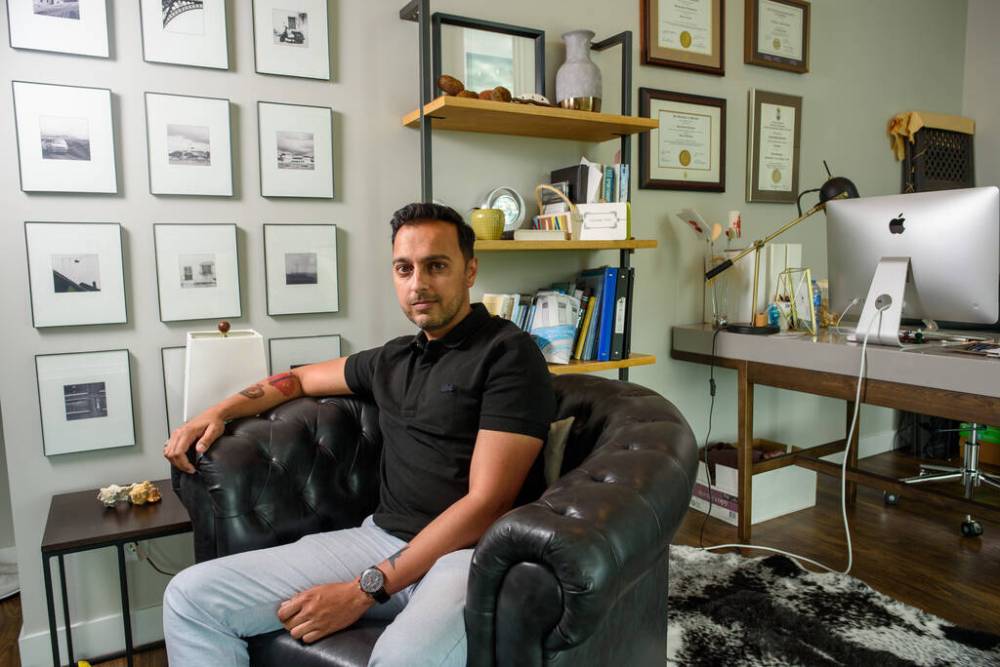
Dr. Rehman Abdulrehman is no stranger to racial bias. The Winnipeg psychologist is an immigrant and has faced discrimination his entire life as a person of colour.
To encourage others to look within themselves, Abdulrehman created an online survey called “Bias outside the box” that takes a closer look into participants’ unconscious thinking.
“We may think we’re doing a better job of controlling bias… in Canada, but we’re not necessarily. A lot of people still have a considerable amount of bias.”
After going to testbias.com, participants select pictures of people from different ethnicity, gender, religion and financial background to answer 17 multiple-choice questions about their immigration status, job position, and personal and spiritual beliefs.
With more than 3,000 participants surveyed in the initial analysis stage, Abdulrehman was able to start dissecting the findings.
“Something we are noticing that’s very interesting is who allies actually are. Typically, what tends to happen is we see a lot of white men getting the brunt of things, but from what we’ve seen, white women are equally holding as much bias, and in some cases more.”
Another takeaway from the survey was bias wasn’t determined by demographic.
“We found that no matter what political leaning, age group, gender or race you are, you’re likely to have some form of bias,” he said.
“People sometimes assume they are safe from bias because they are part of a particular demographic. When we have that perception of safety, we have complacency and the moment we have complacency, we maintain systemic racism.”
When promoting the survey, Abdulrehman reached out to the Winnipeg Chamber of Commerce, which got on board with the movement. It promoted the campaign on social media internally and broadcast test pictures from the windows of its office on Portage Avenue.
Last year, the chamber launched a movement called Commitment to Opportunity, Diversity and Equity (CODE) to increase awareness and empower local companies to advance their inclusion.
“A part of our program focuses on truth and reconciliation. In order to move forward on reconciliation, you have to begin with truth and Dr. Rehman’s test was a great opportunity for us to start with that truth component,” said Loren Remillard, chamber president. “As human beings, we all have inherent bias. We need to come to terms with that.
“We need to recognize where that exists and move to address those biases and correct them. You can only do that if you start by recognizing you have them.”
Canada Education Group (the parent company of Robertson College) chief executive officer Liz Choi was also a major advocate of the test.
“The mutual appreciation and desire to do better by people is evident now more than ever,” Choi said, adding she encourages other business leaders to have their staff participate in the exercise.
“It would tell leaders many different stories. If a majority of the team takes it, it’s a good indicator that they want to know about their personal biases and self-awareness. If they don’t, it shows their readiness for starting this work.”
Most of the team members and leadership group at the Canada Education Group participated in the survey and provided positive feedback to Choi. “While the topic was heavy and not easy for all, they walked away with a sense of pride knowing it was a step in the right direction.”
The exercise mainly received positive support overall, but there was also some backlash.
“The moment the test went live, there was hate mail coming in. There’s always an automatic criticism when a test challenges a certain point of view,” Abdulrehman said. “The fact that so many people took time to email in anger speaks to the need for us to be more aware of what our biases are.
“If the creator of this test was a white man or woman, would they be getting these kinds of messages?”
One piece of positive feedback that fascinated Abdulrehman came from the explanations people gave for their responses.

In a question that asked which person was most likely to be an executive leader, a majority of participants selected a white woman over a man of colour in cultural clothing, citing the woman was in a more powerful stance.
“That finding supports a lot of research that is already confirmed, that when we think leadership, we think white,” he said.
With this information and feedback recorded, Abdulrehman has begun publishing the results of the test and may complete a write-up with fully published results. However, publishing is not what’s most important.
“We now have this tool that people can use to increase mindfulness and that was our hope. We want to make the public more aware of what we actually think when it comes to people of colour and people of culture.”
fpcity@freepress.mb.ca