Selkirk is shaping its climate future

Manitoba city planting trees and introducing more naturalized settings

Advertisement

Advertise with us

Trees in the urban landscape provide many benefits including beauty, shade, privacy, protection from wind, stormwater retention, improved air quality, increased property values, habitat for wildlife, as well as health and wellness benefits. Trees influence our sense of place. When tree losses occur because of age or stress factors — pests, diseases, extreme weather events — the impact is felt immediately. We shape our future by planting new trees.

Read this article for free:


or

Already have an account? Log in here »

To continue reading, please subscribe:

Subscribe and receive a limited-edition Free Press branded hat or tote.

Digital Subscription

One year of digital access for only $205*

  • Enjoy unlimited reading on winnipegfreepress.com
  • Read the E-Edition, our digital replica newspaper
  • Access News Break, our award-winning app
  • Play interactive puzzles

*First annual payment billed as $205.00 + GST for one year. This annual subscription will automatically renew at $233.00 + GST every 52 weeks (10% off the regular annual price of $259.35). Offer available to new and qualified returning subscribers only. Cancel any time.

To continue reading, please subscribe:

Add Free Press access to your Brandon Sun subscription for only an additional

$1 for the first 4 weeks*

  • Enjoy unlimited reading on winnipegfreepress.com
  • Read the E-Edition, our digital replica newspaper
  • Access News Break, our award-winning app
  • Play interactive puzzles
Start now

*Your next Brandon Sun subscription payment will increase by $1.00 and you will be charged $17.95 plus GST for four weeks. After four weeks, your payment will increase to $24.95 plus GST every four weeks.

Hey there, time traveller!
This article was published 28/05/2022 (1565 days ago), so information in it may no longer be current.

Trees in the urban landscape provide many benefits including beauty, shade, privacy, protection from wind, stormwater retention, improved air quality, increased property values, habitat for wildlife, as well as health and wellness benefits. Trees influence our sense of place. When tree losses occur because of age or stress factors — pests, diseases, extreme weather events — the impact is felt immediately. We shape our future by planting new trees.

If you are thinking of planting a tree this spring, look to the City of Selkirk where trees have become a fundamental part of enhancing the quality of life for its citizens and integral to being better prepared for climate change. Selkirk’s Street Tree Policy is extraordinary and provides inspiration for everyone. Its emphasis is not only on tree species diversity to combat climate change but also includes the creation of more naturalized settings in place of traditional turfgrass. Selkirk is the only city in Manitoba and one of just 130 cities around the world awarded platinum-level ISO certification from the World Council on City Data, a global leader on standardized data that helps create sustainable, resilient and prosperous communities.

CAO Duane Nicol is passionate about Selkirk’s green initiative and committed to walking the walk. “What we are building is an architecture to deliver on trees as a core municipal service to citizens, rooted in the idea that trees are core municipal infrastructure and a core part of climate change adaptation,” he says. Environmental stewardship was identified as one of the five key pillars of the City of Selkirk’s community strategic plan which was approved in 2014. “Trees are just as important as streets, sidewalks, and pipes,” says Nicol.
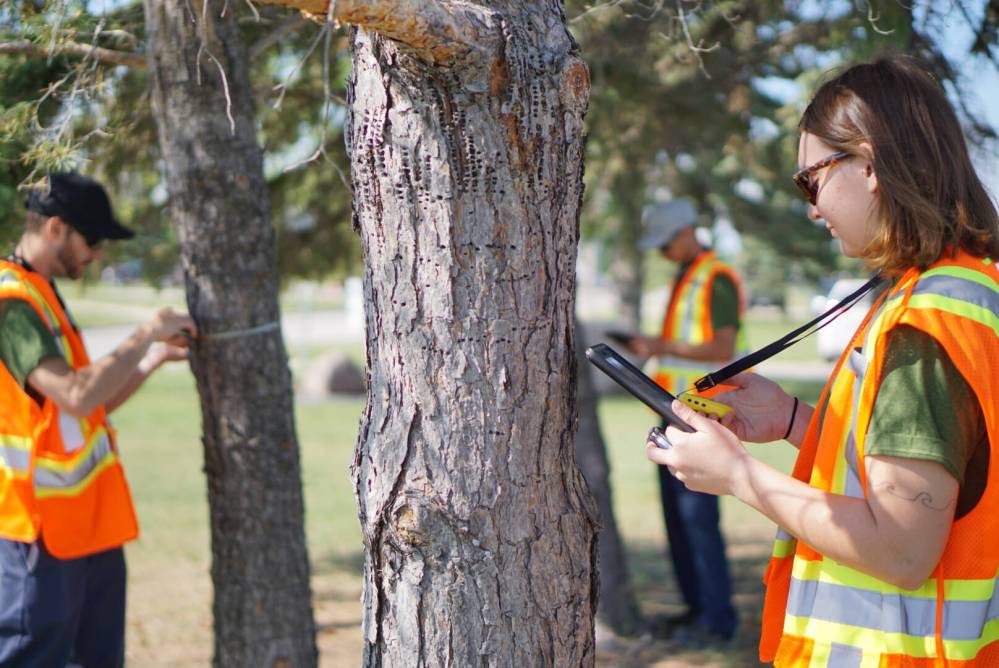
Vanessa Figus The City of Selkirk has undertaken an inventory of every tree on public land and documented species, age, size, and condition.

One of the first steps was to create an inventory of trees on public lands within the city, not including forested areas. The city catalogued 4,700 trees and created a detailed list of each species including the location and the condition of each individual tree. This information will assist the city in managing the health and life of its tree assets on a tree-to-tree basis, says Nicol. Interestingly, the inventory showed that 53 percent of Selkirk’s trees on public land consists primarily of two species — Manitoba Maple and Green Ash, the latter of which is a species at risk.

The city has developed a list of 42 target species that it has identified. “We looked at the types of tree species that would thrive in our urban centre and then applied a climate lens. We asked, which tree species would be more likely to thrive in a changed environment.” To identify the future conditions of the city over the next 100 years – because that’s the time span you need to use when you are planting trees, says Nicol – the city used climate data from the Prairie Climate Centre.

Drought tolerance is a key factor. Diversity of species is essential because a monoculture is more susceptible to pests and diseases. Additional factors are key as well, says Nicol. When a street is selected for tree plantings, for example, not all trees will be planted at once so that there is a diversity of tree age and tree size.

Last fall, the City of Selkirk planted 64 Manitoba-grown trees along city boulevards. The species selection is impressive and enviable: Ruby Slippers Amur Maple, Silver Maple, Lord Selkirk Sugar Maple, Hot Wings Tatarian Maple, Ohio Buckeye, Prairie Horizon Manchurian Alder, Prairie Dream Paper Birch, Delta Hackberry, Snowbird Hawthorn, Silverado Hybrid Olive, Spring Snow Flowering Crabapple, Gladiator Rosybloom Crabapple, Ming Amur Cherry, Shooting Star Northern Pin Oak, Bur Oak, American Linden, Greenspire Littleleaf Linden, and Triumph Hybrid Elm.

The physical attributes alone of these diverse species will contribute enormously to residents’ enjoyment of their surroundings. The environmental, economic, and social benefits will contribute to the health and wellbeing of the city and its residents over the next 50 or 100 years.
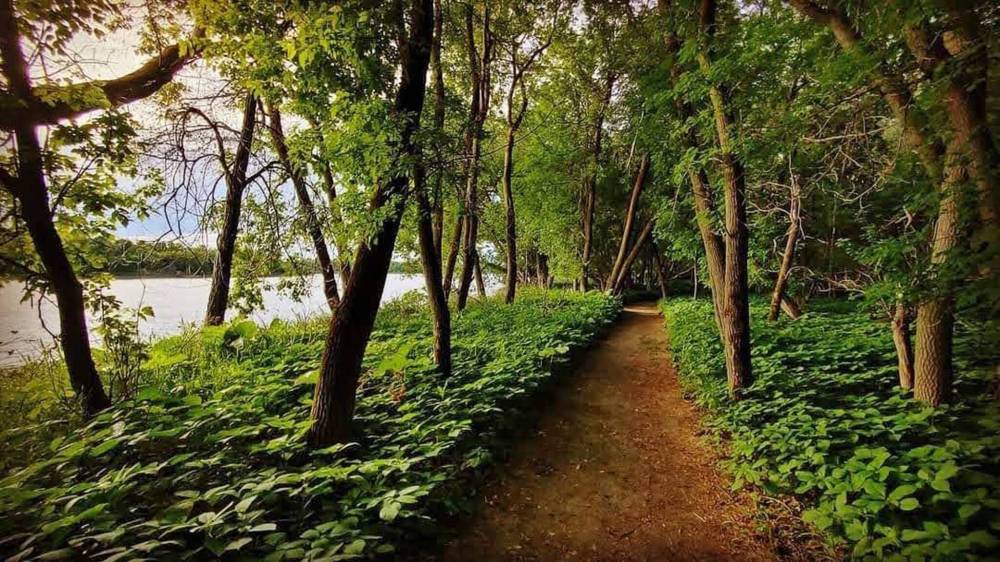
Vanessa Figus Trees contribute to health and well-being. What would this trail in Selkirk be like without trees?

“We have really put some thought into this,” says Nicol who would like to see every street in Selkirk protected by a robust tree canopy. Trees play an essential role in preventing harmful stormwater runoff. “Streets that already have some drainage issues are the first on the list to get planted and that is aligned directly with our climate adaptation strategy. Streets that have lower tree density or have higher volumes of traffic are high priority. The city is also addressing social equity issues. “Areas that have lower than average household income tend to have less natural spaces so we are prioritizing those areas,” says Nicol.

Eveline Street is one of Selkirk’s most historic streets. The plan this year is to plant forty-eight trees on seven blocks of Eveline Street from the Selkirk Bridge to Selkirk Park. The tree species being considered include Autumn Blaze Maple which boasts brilliant red fall colour, Delta Hackberry, a native tree with corky bark, and Triumph Elm which has an attractive vase-shape and dark green glossy leaves that turn an outstanding gold in the fall. Infrastructure is being installed to support healthy trees including special drainage systems, says Nicol. Rainwater will be captured from neighbourhood buildings to help provide moisture for the newly planted trees. The trees will provide shade and a cooling effect to both businesses and passersby on hot summer days.

The Eveline Street project — Selkirk’s largest street reconstruction project in decades — will also include benches, planters, and naturalized plantings consisting of perennial plants that will attract birds and other pollinators. Some of the different types of plants that are being considered include Russian Sage, Autumn Joy sedum, Echinacea purpurea purple coneflower, Karl Foerster feather reed grass, Three-Lobed Spirea, Sem False Spirea, Calgary Carpet Juniper, and Veronica Blue Bomb Speedwell. This beautifully curated selection of plants will bring a mix of textures, colours, and seasonal interest not often found in municipal plantings.

The city is working with HTFC Planning and Design and J.R. Cousins Consultants in the development of Eveline Street. “We also have a great relationship with Trees Please Winnipeg whose members share our same goals,” says Nicol. “They reviewed our Street Tree Policy and helped make it better.” A video will be released soon. You can learn more about the transformation of Eveline Street by visiting myselkirk.ca/eveline. Learn even more by visiting Selkirk.

Maintaining newly planted trees as well as the city’s existing mature tree canopy is critical, says Nicol. That’s why a five-year tree maintenance cycle including pruning has been created. There is also a pilot project to replace the turfgrass that grows on medians along Main Street in Selkirk with natural prairie grasses and wildflowers to promote pollinators and plant species diversity. “Mowing turfgrasses on medians contributes to climate change by adding more pollution into the air,” says Nicol. Trees thrive in a biodiverse ecosystem, not a monoculture of turfgrass.

City of Selkirk The Eveline Street project is Selkirk’s largest street project in decades and involves the planting of 48 trees and naturalized plantings.

Maximizing species diversity makes communities more climate-resilient. It’s an important message for all of us, wherever we live.

colleenizacharias@gmail.com

Colleen Zacharias is writing a monthly newsletter from the Free Press that will be loaded with advice, ideas and tips to keep your outdoor and indoor plants growing. Sign up to have Winnipeg Gardener delivered conveniently to your own inbox at wfp.to/wpggardener

Philip Ronald Northern Pin Oak is one of 42 tree species that will be planted in the City of Selkirk.
Shirley Muir Selkirk’s Street Trees Project focuses on species diversity and is an inspiration for Selkirk residents like Shirley Muir and homeowners everywhere.
Report Error Submit a Tip

More Stories

Selkirk is shaping its climate future

Colleen Zacharias 7 minute read Preview

Selkirk is shaping its climate future

Colleen Zacharias 7 minute read Saturday, May. 28, 2022

Trees in the urban landscape provide many benefits including beauty, shade, privacy, protection from wind, stormwater retention, improved air quality, increased property values, habitat for wildlife, as well as health and wellness benefits. Trees influence our sense of place. When tree losses occur because of age or stress factors — pests, diseases, extreme weather events — the impact is felt immediately. We shape our future by planting new trees.

If you are thinking of planting a tree this spring, look to the City of Selkirk where trees have become a fundamental part of enhancing the quality of life for its citizens and integral to being better prepared for climate change. Selkirk’s Street Tree Policy is extraordinary and provides inspiration for everyone. Its emphasis is not only on tree species diversity to combat climate change but also includes the creation of more naturalized settings in place of traditional turfgrass. Selkirk is the only city in Manitoba and one of just 130 cities around the world awarded platinum-level ISO certification from the World Council on City Data, a global leader on standardized data that helps create sustainable, resilient and prosperous communities.

CAO Duane Nicol is passionate about Selkirk’s green initiative and committed to walking the walk. “What we are building is an architecture to deliver on trees as a core municipal service to citizens, rooted in the idea that trees are core municipal infrastructure and a core part of climate change adaptation,” he says. Environmental stewardship was identified as one of the five key pillars of the City of Selkirk’s community strategic plan which was approved in 2014. “Trees are just as important as streets, sidewalks, and pipes,” says Nicol.

One of the first steps was to create an inventory of trees on public lands within the city, not including forested areas. The city catalogued 4,700 trees and created a detailed list of each species including the location and the condition of each individual tree. This information will assist the city in managing the health and life of its tree assets on a tree-to-tree basis, says Nicol. Interestingly, the inventory showed that 53 percent of Selkirk’s trees on public land consists primarily of two species — Manitoba Maple and Green Ash, the latter of which is a species at risk.

Read
Saturday, May. 28, 2022

Double climate whammy hits home

Editorial 4 minute read Preview

Double climate whammy hits home

Editorial 4 minute read 2:00 AM CDT

It’s a bit of a one-two punch.

First, the show-and-tell of what global warming could be bringing us.

Then, the fact we’ve already failed our best chance of halting climate change.

On Sept. 3, the World Meteorological Organization released its forecast of the potential effects of the rapidly-developing super El Niño phenomenon.

Read
2:00 AM CDT

There is a better way

Hersh Seth 4 minute read Saturday, Aug. 29, 2026

Hal Turner is correct about the challenges posed by winter and drought to our energy grid (The right plan for reliable energy, Think Tank, Aug. 11). But the ongoing debate is really about how we manage them.

Manitoba Hydro’s chief operating officer wants that debate to stay focused on facts, and his summary is fair. Demand is going up. The toughest times are still the coldest nights, and dry years put the most strain on the system. Wind power is unpredictable, solar is weakest when our days are shortest, and batteries alone cannot get Manitoba through a drought. The province also already buys wind power, is growing Indigenous-led supply and still has one of the cleanest and most affordable grids in North America. We’re not arguing with these points.

The real issue is not whether Manitoba needs reliable winter power. It is about whether building a $3-billion gas plant in Brandon is the only or best way to bridge the forecasted energy gap.

Almost all of our electricity, about 99.7 per cent, already comes from water, wind and biomass. We emit about 1.3 tonnes of carbon per gigawatt-hour. By comparison, the average Canadian utility emits approximately 121, and the American average is ~350.

Ford’s anti-tariff ad leaves bruise

Editorial 4 minute read Preview

Ford’s anti-tariff ad leaves bruise

Editorial 4 minute read Saturday, Nov. 1, 2025

Say what you will about Ontario Premier Doug Ford — he knows how to get under a fellow populist’s skin.

Ford succeeded in irritating U.S. President Donald Trump with his decision to run a TV ad critical of Trump’s tariff scheme, utilizing old footage of former president Ronald Reagan to make the point that the late president — still greatly admired among many Americans — would not have approved of Trump’s methods.

Reaction to the ad among Trump and his supporters was swift and furious. MAGA acolytes denounced it, claiming it skewed Reagan’s words, while Trump claimed the ad was AI-generated (it was not). He immediately threatened to impose an extra 10 per cent in tariffs on Canada, “over and above” what he has previously laid out.

The clips of Reagan, pulled from a 1987 speech, are authentic, although a case can be made they did not include the full context of Reagan’s words regarding the U.S.’s trading relationship with Japan — the subject of the comments — at the time of the speech.

Read
Saturday, Nov. 1, 2025

Bumps in the road as students collect free bus passes

Maggie Macintosh 5 minute read Preview

Bumps in the road as students collect free bus passes

Maggie Macintosh 5 minute read Yesterday at 9:17 PM CDT

Alexis Enns left her guidance counsellor’s office empty-handed, but no less excited about starting Grade 12 — even though she still didn’t know how she would get there or her timetable — on Tuesday.

“My summer was pretty boring,” the 17-year-old said after an unsuccessful trip to get her free bus pass and bearings at Technical Vocational High School.

“I like back-to-school. I like having somewhere to be every day and something to do every day.”

For some families in the Winnipeg School Division, hers included, the 2026-27 academic year kicked off with delays related to the rollout of free youth transit and course schedules.

Read
Yesterday at 9:17 PM CDT

Wildfires force two northern First Nations, Lynn Lake to evacuate for second consecutive year, province warns of ‘high to extreme’ danger

Tyler Searle 6 minute read Preview

Wildfires force two northern First Nations, Lynn Lake to evacuate for second consecutive year, province warns of ‘high to extreme’ danger

Tyler Searle 6 minute read Monday, Jun. 29, 2026

The Manitoba government warned of “a high to extreme level of fire danger” in northern parts of the province Monday, where out-of-control wildfires have already prompted hundreds of people to flee their homes.

The community of Lynn Lake, about 800 kilometres north of Winnipeg, was evacuated Saturday and nearby Marcel Colomb First Nation followed suit through the weekend. O-Pipon-Na-Piwin Cree Nation, located about 130 kilometres east of the communities, also issued a local state of emergency and began to evacuate vulnerable residents owing to smoke in the region, the province said in a news release Monday.

The province said it is tracking 127 active fires across Manitoba, bringing the year-to-date total up to 196 — well above the annual average of 156 on the same date in previous years.

About 600 people were ordered to leave Lynn Lake Saturday. Some fled in their vehicles while others boarded flights destined for Brandon.

Read
Monday, Jun. 29, 2026