Studies find having COVID-19 may protect against reinfection

Advertisement

Advertise with us

Two new studies give encouraging evidence that having COVID-19 may offer some protection against future infections. Researchers found that people who made antibodies to the coronavirus were much less likely to test positive again for up to six months and maybe longer.

Read this article for free:


By clicking the button above, an account will be created and you will begin to receive some of our recommended newsletters. You may opt out of any newsletter by visiting your Email and Communication Preferences page or by clicking "unsubscribe" at the bottom of any email.

or

Already have an account? Log in here »

To continue reading, please subscribe:

Digital Subscription

One year of digital access for only $1.44 a week*

  • Enjoy unlimited reading on winnipegfreepress.com
  • Read the E-Edition, our digital replica newspaper
  • Access News Break, our award-winning app
  • Play interactive puzzles

*Billed as $5.77 plus GST every four weeks. After 52 weeks, price increases to the regular rate of $19.95 plus GST every four weeks. Offer available to new and qualified returning subscribers only. Cancel any time.

To continue reading, please subscribe:

Add Free Press access to your Brandon Sun subscription for only an additional

$1 for the first 4 weeks*

  • Enjoy unlimited reading on winnipegfreepress.com
  • Read the E-Edition, our digital replica newspaper
  • Access News Break, our award-winning app
  • Play interactive puzzles
Start now

*Your next Brandon Sun subscription payment will increase by $1.00 and you will be charged $17.95 plus GST for four weeks. After four weeks, your payment will increase to $24.95 plus GST every four weeks.

Hey there, time traveller!
This article was published 23/12/2020 (2138 days ago), so information in it may no longer be current.

Two new studies give encouraging evidence that having COVID-19 may offer some protection against future infections. Researchers found that people who made antibodies to the coronavirus were much less likely to test positive again for up to six months and maybe longer.

The results bode well for vaccines, which provoke the immune system to make antibodies — substances that attach to a virus and help it be eliminated.

Researchers found that people with antibodies from natural infections were “at much lower risk … on the order of the same kind of protection you’d get from an effective vaccine,” of getting the virus again, said Dr. Ned Sharpless, director of the U.S. National Cancer Institute.
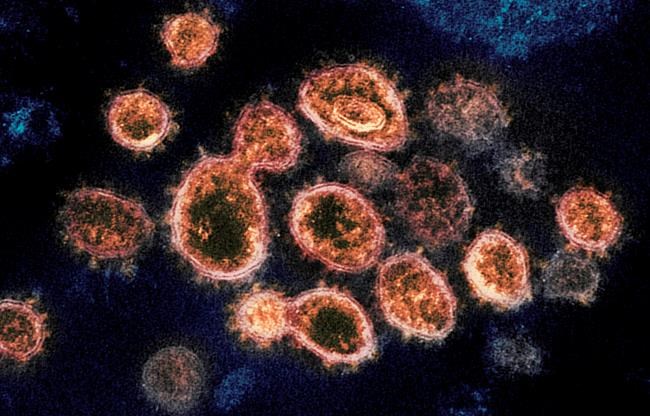
FILE - This 2020 electron microscope image provided by the National Institute of Allergy and Infectious Diseases - Rocky Mountain Laboratories shows SARS-CoV-2 virus particles which cause COVID-19, isolated from a patient in the U.S., emerging from the surface of cells cultured in a lab. According to two new studies released on Tuesday, Dec. 22, 2020, people who have antibodies from infection with the coronavirus seem less likely to get a second infection for several months and maybe longer. (NIAID-RML via AP)

“It’s very, very rare” to get reinfected, he said.

The institute’s study had nothing to do with cancer — many federal researchers have shifted to coronavirus work because of the pandemic.

Both studies used two types of tests. One is a blood test for antibodies, which can linger for many months after infection. The other type of test uses nasal or other samples to detect the virus itself or bits of it, suggesting current or recent infection.

One study, published Wednesday by the New England Journal of Medicine, involved more than 12,500 health workers at Oxford University Hospitals in the United Kingdom. Among the 1,265 who had coronavirus antibodies at the outset, only two had positive results on tests to detect active infection in the following six months and neither developed symptoms.

That contrasts with the 11,364 workers who initially did not have antibodies; 223 of them tested positive for infection in the roughly six months that followed.

The National Cancer Institute study involved more than 3 million people who had antibody tests from two private labs in the United States. Only 0.3% of those who initially had antibodies later tested positive for the coronavirus, compared with 3% of those who lacked such antibodies.

“It’s very gratifying” to see that the Oxford researchers saw the same risk reduction — 10 times less likely to have a second infection if antibodies were present, Sharpless said.

His institute’s report was posted on a website scientists use to share research and is under review at a major medical journal.

The findings are “not a surprise … but it’s really reassuring because it tells people that immunity to the virus is common,” said Joshua Wolf, an infectious disease specialist at St. Jude Children’s Research Hospital in Memphis who had no role in either study.

Antibodies themselves may not be giving the protection, they might just be a sign that other parts of the immune system, such as T cells, are able to fight off any new exposures to the virus, he said.

“We don’t know how long-lasting this immunity is,” Wolf added. Cases of people getting COVID-19 more than once have been confirmed, so “people still need to protect themselves and others by preventing reinfection.”

___

The Associated Press Health and Science Department receives support from the Howard Hughes Medical Institute’s Department of Science Education. The AP is solely responsible for all content.

Report Error Submit a Tip

More Stories

Incoming councillor calls for safety improvements on Main Street

Morgan Modjeski 3 minute read Preview

Incoming councillor calls for safety improvements on Main Street

Morgan Modjeski 3 minute read Updated: Yesterday at 8:00 PM CDT

A newly elected city councillor has called for improvements to Main Street after a man in his 60s was hit and killed while in a crosswalk at Main and Jarvis Avenue.

Natalie Smith, who was elected Wednesday to represent the Mynarski ward, attended a small vigil at the site Friday afternoon.

“I walk through here, I bike through here and I have to drive through here. I know at this intersection, I have seen so many close calls,” she said, calling the area, which is north of an underpass, “poorly designed.”

She promised to ask city administration to look into ways to slow down traffic flow on Main Street.

Read
Updated: Yesterday at 8:00 PM CDT

Olympics Overnight: Canada reclaims gold in women’s hockey, Thompson wins silver in ski cross, and Kamila Valieva struggles in women’s free skate

Richie Assaly - Toronto Star, Toronto Star 8 minute read Preview

Olympics Overnight: Canada reclaims gold in women’s hockey, Thompson wins silver in ski cross, and Kamila Valieva struggles in women’s free skate

Richie Assaly - Toronto Star, Toronto Star 8 minute read Thursday, Feb. 17, 2022

Here’s what you missed overnight at Day 13 of the 2022 Beijing Olympics.

Read
Thursday, Feb. 17, 2022

Judge halts any construction on housing project across from curling club until he rules on city’s approval

Dean Pritchard 4 minute read Preview

Judge halts any construction on housing project across from curling club until he rules on city’s approval

Dean Pritchard 4 minute read Yesterday at 6:58 PM CDT

A judge has ordered that preliminary construction activities at a hotly contested housing development next door to the Granite Curling Club be “paused” until after he delivers a court ruling that could decide its future.

At a hearing last June, lawyers for the curling club urged King’s Bench Justice Ami Kotler to quash a city bylaw approving the project, set to be built on a parking lot owned by the city but used for decades by the curling club, arguing the decision was rushed and significantly flawed.

Kotler has not yet delivered his decision.

On Friday, curling club lawyer James Mercury told court project developer Granite Project Holding Inc. had secured permits to begin “early works” including excavating and shoring of the site and the installation of piles, starting as early as Monday.

Read
Yesterday at 6:58 PM CDT

Rural hospital shutdowns continue into fall

Katie May 5 minute read Preview

Rural hospital shutdowns continue into fall

Katie May 5 minute read Monday, Sep. 12, 2022

Summer shutdowns at some rural Manitoba hospitals have quietly extended into fall, and the uncertainty about reopening is frustrating residents.

Read
Monday, Sep. 12, 2022

SNC planned U.S. move if no deal: documents

Jordan Press and Christopher Reynolds, The Canadian Press 5 minute read Preview

SNC planned U.S. move if no deal: documents

Jordan Press and Christopher Reynolds, The Canadian Press 5 minute read Thursday, Mar. 28, 2019

OTTAWA - SNC-Lavalin warned federal prosecutors last fall about a possible plan to split the company in two, move its offices to the United States and eliminate its Canadian workforce if it didn't get a deal to avoid criminal prosecution, newly obtained documents show.

The documents, part of a PowerPoint presentation obtained by The Canadian Press, describe something called "Plan B" — what Montreal-based SNC might have to do if it can't convince the government to grant a so-called remediation agreement to avoid criminal proceedings in a fraud and corruption case related to projects in Libya.

Under that plan, SNC would move its Montreal headquarters and corporate offices in Ontario and Quebec to the U.S. within a year, cutting its workforce to just 3,500 from 8,717, before eventually winding up its Canadian operations.

“The government of Canada needs to weigh the public interest impact of the prosecution of SNC-Lavalin," the presentation reads.

Read
Thursday, Mar. 28, 2019

Ottawa announces $500 million for North End sewage plant upgrade

Joyanne Pursaga 4 minute read Preview

Ottawa announces $500 million for North End sewage plant upgrade

Joyanne Pursaga 4 minute read Yesterday at 5:03 PM CDT

The federal government will provide $500 million to help complete the major upgrade to Winnipeg’s North End sewage treatment plant.

Winnipeg South MP Terry Duguid confirmed the total funding at a news conference at the plant Friday, calling the work critical to Winnipeg’s future.

“The stakes could not be higher. Without expanded wastewater treatment, Winnipeg would run out of capacity to build new homes and accommodate new industries within six years,” said Duguid.

The commitment offers the final funding needed to cover the $1.57-billion third and final phase of the upgrade. The city and province will also pay $500 million each for the work.

Read
Yesterday at 5:03 PM CDT