Testing timeline: What’s ahead for COVID-19 vaccines

Advertisement

Advertise with us

Pfizer's surprising news that its COVID-19 vaccine might offer more protection than anticipated — an announcement right after a fraught U.S. presidential election campaign — is raising questions about exactly how the different shots will make it to market.

Read this article for free:


or

Already have an account? Log in here »

To continue reading, please subscribe:

Subscribe and receive a limited-edition Free Press branded hat or tote.

Digital Subscription

One year of digital access for only $205*

  • Enjoy unlimited reading on winnipegfreepress.com
  • Read the E-Edition, our digital replica newspaper
  • Access News Break, our award-winning app
  • Play interactive puzzles

*First annual payment billed as $205.00 + GST for one year. This annual subscription will automatically renew at $233.00 + GST every 52 weeks (10% off the regular annual price of $259.35). Offer available to new and qualified returning subscribers only. Cancel any time.

To continue reading, please subscribe:

Add Free Press access to your Brandon Sun subscription for only an additional

$1 for the first 4 weeks*

  • Enjoy unlimited reading on winnipegfreepress.com
  • Read the E-Edition, our digital replica newspaper
  • Access News Break, our award-winning app
  • Play interactive puzzles
Start now

*Your next Brandon Sun subscription payment will increase by $1.00 and you will be charged $17.95 plus GST for four weeks. After four weeks, your payment will increase to $24.95 plus GST every four weeks.

Hey there, time traveller!
This article was published 09/11/2020 (2128 days ago), so information in it may no longer be current.

Pfizer’s surprising news that its COVID-19 vaccine might offer more protection than anticipated — an announcement right after a fraught U.S. presidential election campaign — is raising questions about exactly how the different shots will make it to market.

Pfizer Inc. and the maker of the other leading U.S. vaccine candidate, Moderna Inc., have been cautioning for weeks that the earliest they could seek regulatory approval for wider use of their shots would be late November. In Britain, AstraZeneca recently said it hoped to prove its own vaccine was effective by year’s end.

Late on Monday in a series of tweets President Donald Trump accused the U.S. Food and Drug Administration and Pfizer of waiting until after the election to announce its positive vaccine news for political reasons. Pfizer did not receive data from independent trial monitors until Sunday, however. The FDA was not involved in Pfizer’s decision to announce its early results and made no announcements of its own.
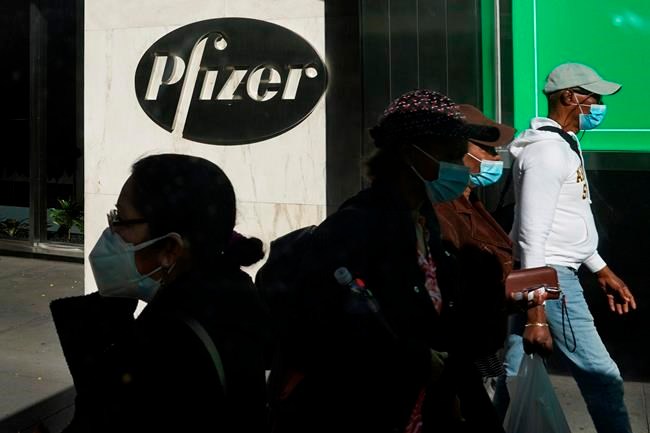
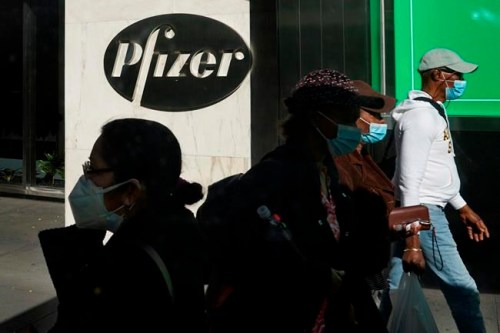
Pedestrians walk past Pfizer world headquarters in New York on Monday Nov. 9, 2020. Pfizer says an early peek at its vaccine data suggests the shots may be 90% effective at preventing COVID-19, but it doesn't mean a vaccine is imminent. (AP Photo/Bebeto Matthews)

The hard truth: Science moves at its own pace. While COVID-19 vaccines are being developed at record speeds in hope of ending the pandemic, when they’re ready for prime time depends on a long list of research steps including how many study volunteers wind up getting the coronavirus — something scientists cannot control.

Here’s a look at the process:

HOW THE STUDIES WORK

Pfizer and its German partner BioNTech have enrolled nearly 44,000 people in final testing of their vaccine. Neither participants, their doctors nor Pfizer know who gets the real vaccine and who gets a dummy shot. They get a second dose about three weeks after the first.

And then another week after the second dose, key tracking begins: Counting anyone who experiences COVID-19 symptoms and tests positive for the virus as participants go about their daily routines, especially in hot spots.

Late-stage testing of other vaccine candidates is similar, varying slightly in the number of volunteers and timing.

HOW TO TELL SHOTS WORK

Every vaccine study is overseen by an independent “data and safety monitoring board,” or DSMB. These boards include scientists and statisticians who have no ties to the vaccine makers.

Before a study is complete, only the DSMB has the power to unlock the code of who got real vaccine and who got placebo, and to recommend if the shots are working well enough to stop testing early.

Those boards take sneak peeks at pre-determined times agreed to by the manufacturer and the Food and Drug Administration. The first interim analysis for Pfizer came Sunday. The company reported its data monitors had counted 94 infections so far — and that among those initial cases, the vaccine appeared 90% effective.

But the study isn’t stopping: To be sure of protection, it’s set to run until there are 164 infections. The more COVID-19 cases occur in the trial, the better idea scientists will have of just how protective the shots really are.

COULD THAT SNEAK PEEK HAVE COME EARLIER?

Pfizer’s initial plans called for evaluating when just 32 infections had been counted. But many scientists warned that was simply too small to draw conclusions about a vaccine needed by billions.

Pfizer said it reconsidered, going back to the FDA for permission to change the plan and do its first interim analysis when there were more cases. By the time Pfizer made the change and caught up with a backlog of virus tests, the DSMB had 94 infections to analyze.

The higher number increases confidence in those still preliminary results, said Dr. Jesse Goodman, a former FDA vaccine scientist now at Georgetown University.

Moderna, AstraZeneca and other companies not quite as far along in their final testing all have set slightly different timepoints for when their data monitors will peek at how the shots are working.

DON’T FORGET SAFETY

Safety is the top priority. Monitors also watch for unexpected or serious side effects. Earlier this fall, separate studies of vaccine candidates made by AstraZeneca and Johnson & Johnson were temporarily halted after some participants experienced health problems, delaying the research until safety investigations allowed both to resume.

Pfizer said Monday no serious safety concerns have emerged so far with its vaccine.

But the FDA is requiring that companies track at least half of study volunteers for two months to look for side effects before asking the agency to review their vaccine. That’s about when side effects have cropped in studies of other vaccines.

Pfizer and Moderna both expect to reach that safety milestone later in November.

WHAT HAPPENS THEN?

Companies are expected to seek permission for “emergency use” of their vaccines, rather than waiting to fully complete their studies and then seeking traditional approval.

The FDA’s scientific advisers will debate each company’s study findings in a public meeting before the agency decides.

Manufacturers already have begun stockpiling vaccine doses in anticipation of eventual approval, but the first shots will be in short supply and rationed. And the first people vaccinated will need to undergo extra safety tracking, as the government watches for rare side effects that might crop up when the shots are given to many more people than were in the research studies.

___

The Associated Press Health and Science Department receives support from the Howard Hughes Medical Institute’s Department of Science Education. The AP is solely responsible for all content.

Report Error Submit a Tip

More Stories

Billboard evangelism may look outdated but group says it’s effective

John Longhurst 5 minute read Preview

Billboard evangelism may look outdated but group says it’s effective

John Longhurst 5 minute read Saturday, Sep. 5, 2026

Maybe you’ve seen them in Winnipeg — billboards that say things like: “Jesus is alive!” “Are you prepared to meet Jesus?” “After you die, you will meet God.” They include a phone number to call: 844-FIND-TRUTH.

There are two billboards in Winnipeg. One is on Henderson Highway in Elmwood. The other is on Balmoral Street, by Cumberland.

Have you ever wondered who is behind them, and why they do it?

You might be surprised to learn they are created and sponsored by an Amish/Mennonite organization called Christian Aid Ministries (CAM). Based in rural Ontario, the group is funded by Amish and some conservative Mennonite denominations and individuals.

Read
Saturday, Sep. 5, 2026

Testing timeline: What’s ahead for COVID-19 vaccines

Lauran Neergaard, The Associated Press 5 minute read Preview

Testing timeline: What’s ahead for COVID-19 vaccines

Lauran Neergaard, The Associated Press 5 minute read Monday, Nov. 9, 2020

Pfizer's surprising news that its COVID-19 vaccine might offer more protection than anticipated — an announcement right after a fraught U.S. presidential election campaign — is raising questions about exactly how the different shots will make it to market.

Pfizer Inc. and the maker of the other leading U.S. vaccine candidate, Moderna Inc., have been cautioning for weeks that the earliest they could seek regulatory approval for wider use of their shots would be late November. In Britain, AstraZeneca recently said it hoped to prove its own vaccine was effective by year’s end.

Late on Monday in a series of tweets President Donald Trump accused the U.S. Food and Drug Administration and Pfizer of waiting until after the election to announce its positive vaccine news for political reasons. Pfizer did not receive data from independent trial monitors until Sunday, however. The FDA was not involved in Pfizer’s decision to announce its early results and made no announcements of its own.

The hard truth: Science moves at its own pace. While COVID-19 vaccines are being developed at record speeds in hope of ending the pandemic, when they’re ready for prime time depends on a long list of research steps including how many study volunteers wind up getting the coronavirus — something scientists cannot control.

Read
Monday, Nov. 9, 2020

Heavy hearts, happy hearts

Melissa Martin 5 minute read Preview

Heavy hearts, happy hearts

Melissa Martin 5 minute read Thursday, Sep. 30, 2021

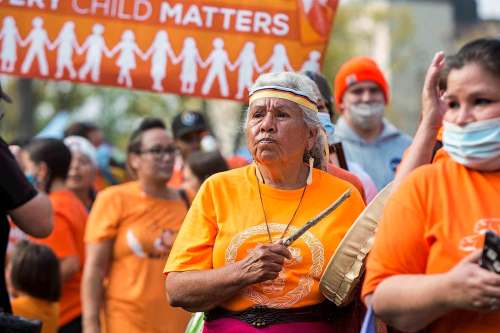
The marchers arrive at St. John's Park at almost exactly the minute predicted. They arrive in a great orange wave, all wearing shirts the same colour. They arrive led by the drum, and the riders on horseback, and the tendrils of smudge that curl over Main Street, cleansing the path to the park where the powwow is underway.

"Are we all going to fit into the park, guys?" one young woman gasps, laughing as she surveys the scene.

In a way they do, in a way they don't. For hours, the people flow into the park from all directions. They flow by the hundreds, and then the thousands. They flow until the fields show less green than orange, until lines for the porta-potties stretch into the dozens, until the whole park is alive with laughter and conversation.

The crowd looks like Manitoba. It contains faces of all ages, all races. Most of the people here are Indigenous, but on this day they are joined in solidarity by people of all nations; a movement, generations in the making, to call for a way forward, to call for action on reconciliation, to call for justice for Indigenous people.

Read
Thursday, Sep. 30, 2021

Consume, at what cost?

Joel Schlesinger 6 minute read Preview

Consume, at what cost?

Joel Schlesinger 6 minute read Saturday, Mar. 28, 2026

Consumers are the kings, queens, servants and paupers of the market economy, increasingly relied upon to drive growth.

A recent study points to many struggling to keep up — a sign of growing income inequality post-COVID-19 pandemic.

The report from RBC highlights wealth growing faster for those at the top, while others are experiencing their share declining.

“There’s a lot of questions regarding consumption in the (United) States … with this narrative about the K-shaped economy,” says Rachel Battaglia, an RBC economist and co-author of Affordability: Decoding Canada’s uneven household realities.

Read
Saturday, Mar. 28, 2026

Throne speech offers glimpse of PCs’ priorities

Shannon Sampert 5 minute read Preview

Throne speech offers glimpse of PCs’ priorities

Shannon Sampert 5 minute read Thursday, Nov. 22, 2018

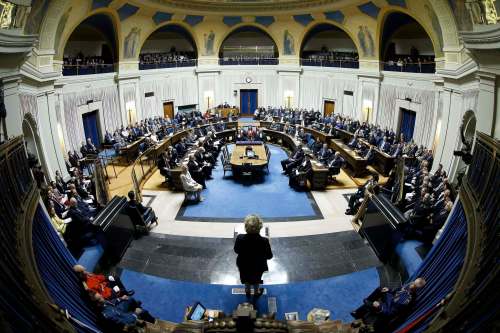
Throne speeches are more than just pomp and circumstance and the opportunity for selfies between political rivals on the beautiful marble floors of the Manitoba legislature building on Broadway. They set the agenda for the legislative session and set the tone for the government as it moves into its new session. Looked at carefully, they also reveal the priorities of the government by what is said, and also what is not said.

But they are also highly symbolic. They are delivered by the lieutenant-governor of the province, who acts as the symbol of the head of state, the Queen, but they are written by speechwriters for the government of the day.

Political scientists have studied the throne speeches delivered at the federal level to understand the thematic commonalities and what they say about nationalism over the past 30 years. Janine Brodie of the University of Alberta, for example, determined that Canadian throne speeches delivered before the 2000s embraced a more neo-liberal tone that was tied to the global economy.

After 2000, an analysis by Tim Nieguth (Laurentian University) and Tracey Raney (Ryerson University) found that Conservative throne speeches tended to focus on neo-conservative themes — emphasizing the family, the military and threats to security — while Liberals’ speeches talked about health care and Indigenous issues.

Read
Thursday, Nov. 22, 2018

Controlling pace of response path to success

Tim Kist 5 minute read Saturday, Sep. 5, 2026

WITH the recent collapse of Canada-U.S. trade talks, the economic, political and social changes are coming at business leaders on a daily basis.

While you cannot control the pace of these changes, you can control the pace of response and timing of actions your organization takes. This is a time for thoughtful analysis and careful action, not chasing the latest trends.

Artificial intelligence, for example, can write articles, create images, draft emails and perform seemingly countless other tasks. But is this new tool solving a current business problem?

Successful companies know they must develop a strategy before launching any tactics. Otherwise, the strategy is based on “hope” — and we all know hope is not a strategy.