Five days, 400 wines, one certainty

A return to the WineAlign competition was a workout for nose, teeth and tongue, but confirms Canadian wine is doing fine

Advertisement

Advertise with us

Between the Winnipeg Wine Festival, trips to wine regions, judging at competitions and my own “homework,” in an average year I’d taste somewhere between 1,500 to 2,000 wines.

Read this article for free:


By clicking the button above, an account will be created and you will begin to receive some of our recommended newsletters. You may opt out of any newsletter by visiting your Email and Communication Preferences page or by clicking "unsubscribe" at the bottom of any email.

or

Already have an account? Log in here »

To continue reading, please subscribe:

Digital Subscription

One year of digital access for only $1.44 a week*

  • Enjoy unlimited reading on winnipegfreepress.com
  • Read the E-Edition, our digital replica newspaper
  • Access News Break, our award-winning app
  • Play interactive puzzles

*Billed as $5.77 plus GST every four weeks. After 52 weeks, price increases to the regular rate of $19.95 plus GST every four weeks. Offer available to new and qualified returning subscribers only. Cancel any time.

To continue reading, please subscribe:

Add Free Press access to your Brandon Sun subscription for only an additional

$1 for the first 4 weeks*

  • Enjoy unlimited reading on winnipegfreepress.com
  • Read the E-Edition, our digital replica newspaper
  • Access News Break, our award-winning app
  • Play interactive puzzles
Start now

*Your next Brandon Sun subscription payment will increase by $1.00 and you will be charged $17.95 plus GST for four weeks. After four weeks, your payment will increase to $24.95 plus GST every four weeks.

Opinion

Hey there, time traveller!
This article was published 09/10/2021 (1853 days ago), so information in it may no longer be current.

Between the Winnipeg Wine Festival, trips to wine regions, judging at competitions and my own “homework,” in an average year I’d taste somewhere between 1,500 to 2,000 wines.

Needless to say, that number plummeted when the COVID-19 pandemic hit, and all wine-related events and travel came to a grinding halt.

So it was a bit of a shock to the system — and a real workout for my nose, teeth, tongue and gums — to head to Penticton, B.C., at the beginning of October to judge at the 2021 WineAlign National Wine Awards of Canada.
Ben Sigurdson / Winnipeg Free Press

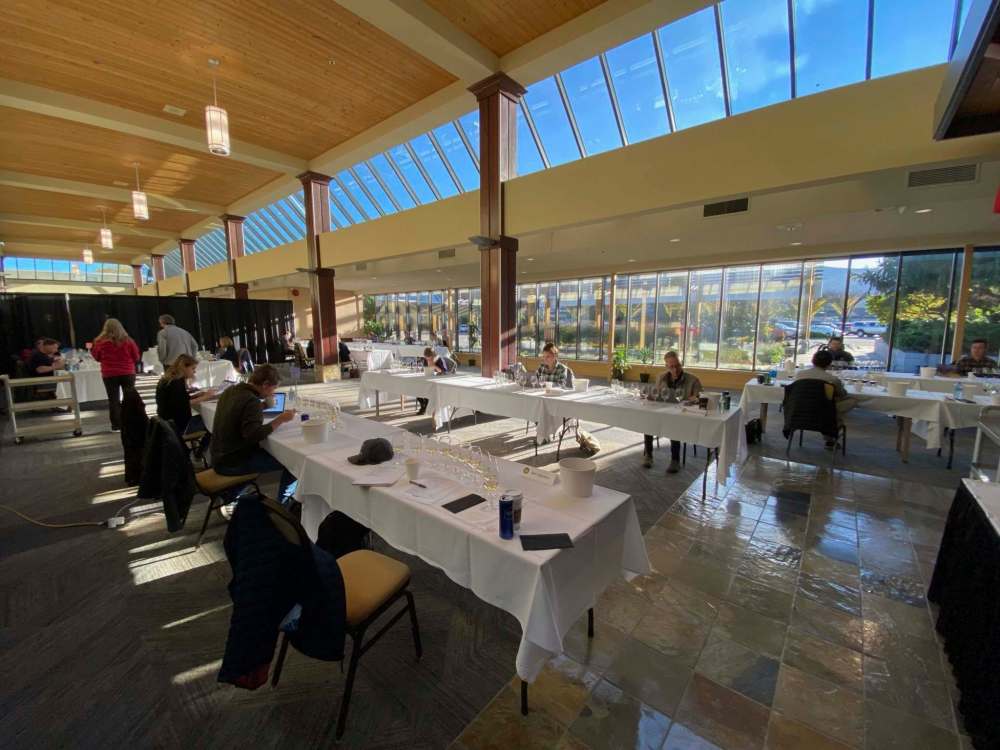
After almost two years, judges at the recent 2021 WineAlign wine awards in Penticton, B.C., were glad to reconvene in the tasting room.
Ben Sigurdson / Winnipeg Free Press After almost two years, judges at the recent 2021 WineAlign wine awards in Penticton, B.C., were glad to reconvene in the tasting room.

This year’s competition, the 20th, boasted the highest number of entries yet from all parts of the country — a whopping 2,089 reds, whites, rosés, sparkling wines, fortified wines, meads, ciders and fruit wines. Over the course of five days I tasted around 400 wines at the competition, as well as at evening visits with producers at area wineries.

Organizers were impressively diligent with ensuring the safety of judges, staff and volunteers at all times. Masks, gloves and face shields were worn by those working both in the front and back rooms. Judges, meanwhile, sat at socially distanced tables, had our temperatures taken every morning and had proof of vaccination checked every time we filed on to a bus (masked) and visited producers throughout the Okanagan and Similkameen Valleys in the evenings. All visits by our pod were held outdoors or in areas where large doors or windows could be opened for maximum ventilation.
Ben Sigurdson / Winnipeg Free Press

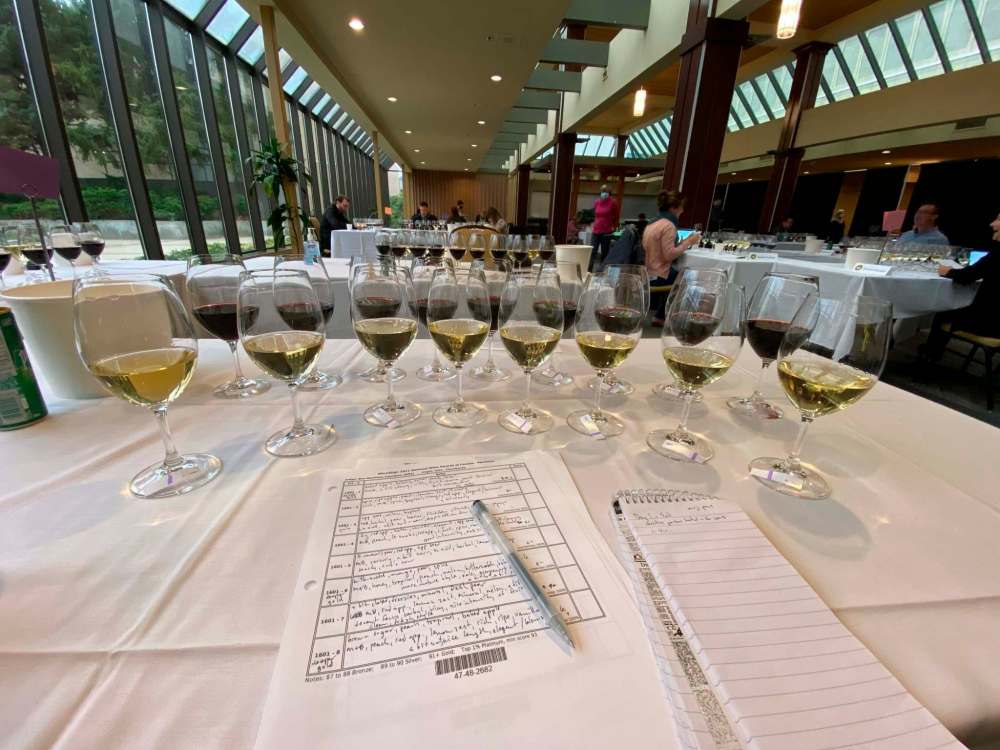
A typical day at the WineAlign awards involves tasting 10 flights of about eight wines of a particular grape variety, blend or style. Repeat for five days, and palate fatigue can set in.
Ben Sigurdson / Winnipeg Free Press A typical day at the WineAlign awards involves tasting 10 flights of about eight wines of a particular grape variety, blend or style. Repeat for five days, and palate fatigue can set in.

Most of us judges hadn’t travelled at all over the last two years, so while we were glad to reconvene and swap stories (and share some post-judging drinks), we were all a bit shell-shocked while re-emerging into the world of tasting and judging wines. It was a very careful step towards some sense of normalcy that initially felt a bit scary, but eventually was quite welcome. (The air travel… well, that’s another story.)

As for the wines? The results of the tasting (which is blind — judges don’t know the producer, region of origin or price) won’t be released for around another month, and I’ve not yet had time to browse through my chicken-scratch notes for clues. But a general picture of the state of wine in Canada emerged throughout the competition — one that shows a wine-producing country making great strides forward on a number of fronts.
Ben Sigurdson / Winnipeg Free Press

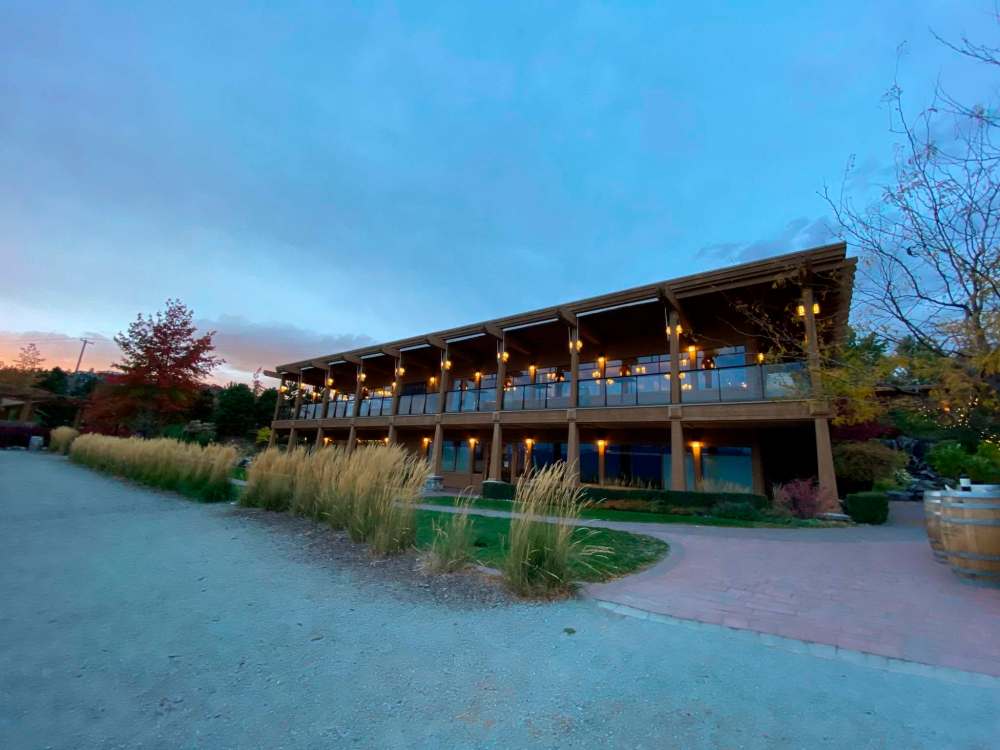
Quails’ Gate Estate Winery in Kelowna was one of the wineries visited by judges in the evenings after judging was done.
Ben Sigurdson / Winnipeg Free Press Quails’ Gate Estate Winery in Kelowna was one of the wineries visited by judges in the evenings after judging was done.

Canadian sparkling wines continue to show brilliantly, especially those made using Chardonnay and/or Pinot Noir grapes (like they do in Champagne) and made in the traditional method (secondary fermentation, causing bubbles, happening in the bottle, rather than pumping carbon dioxide into a tank of juice). Canadian producers are making rosé, meanwhile, with all manner of grape varieties, and there are some gems in the lighter, more elegant styles as well as bolder, darker, fruit-forward pink wines.

In terms of still white wines, Chardonnay and Riesling rule the roost, both from B.C. and Ontario. Chardonnays not overly weighed down by excessive oak-barrel aging were favourites, and there were great examples of both dry, lean and racy Rieslings as well as off-dry, richer examples. A handful of white blends made using aromatic grapes such as Gewürztraminer, Muscat, Viognier and more also impressed.

Ben Sigurdson / Winnipeg Free Press

Winnipeg-born, Ottawa-based judge Janet Dorozynski (left) has her temperature taken. Safety measures made for a very careful step towards some sense of normalcy.
Ben Sigurdson / Winnipeg Free Press Winnipeg-born, Ottawa-based judge Janet Dorozynski (left) has her temperature taken. Safety measures made for a very careful step towards some sense of normalcy.

On the red wine side of things, a great number of Pinot Noirs were once again entered in the competition, with mixed results (although the good ones were truly excellent). Reds made from the Syrah grape proved producers are managing to harness the rich, red berry notes of the grape as well as the more savoury, earthier components.

Cabernet Franc, like Syrah, is a grape that does well in both cooler and warmer climates, and the examples we tasted were stellar. Producers might consider turning more attention to making more wines with this grape instead of big, oak-driven Bordeaux-style red blends or reds made from Cabernet Sauvignon or Merlot (although there were very good examples of both tasted).

The fortified wines, fruit wines, ciders and meads ran the gamut style-wise, as did the grapes (or other fruit) with which they were made. The collection was so diverse that it’s tough to comment without first reviewing my notes.
Jamie Goode photo

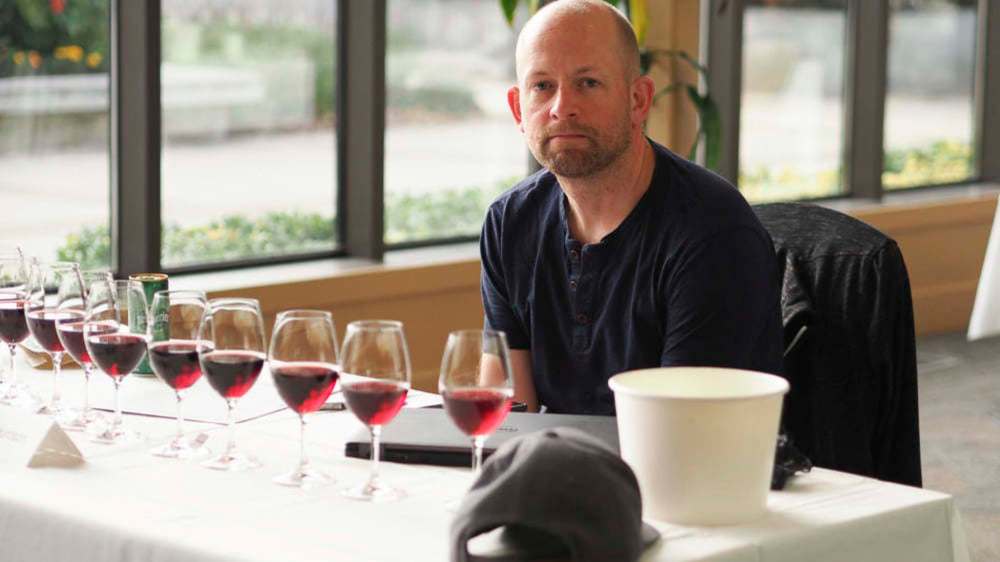
Free Press Uncorked columnist Ben Sigurdson says many judges detected a hint of smoke in the samples wines, likely the result of wildfires in B.C.’s 2018 growing season.
Jamie Goode photo Free Press Uncorked columnist Ben Sigurdson says many judges detected a hint of smoke in the samples wines, likely the result of wildfires in B.C.’s 2018 growing season.

As for icewine? I was never on a panel of judges that tasted any of the stuff, so I can’t report on the state of the super-sweet, concentrated dessert wine based on the competition.

One thing we judges found in many of the flights were wines impacted by smoke taint, likely the result of wildfires in the 2018 growing season. In some wines the smoky notes added interesting complexity, while in others it overpowered the fruit flavours. Whether that smoky note will dissipate with age remains to be seen.

I’ll have more on the National Wine Awards of Canada results once they’re released later this fall, and will check in with the head judges and organizers to see how they think things managed to shake out. But for now, the overall feeling is that the state of Canadian wine is very good, and getting better every year.

uncorked@mts.net

Twitter: @bensigurdson


Wines of the week
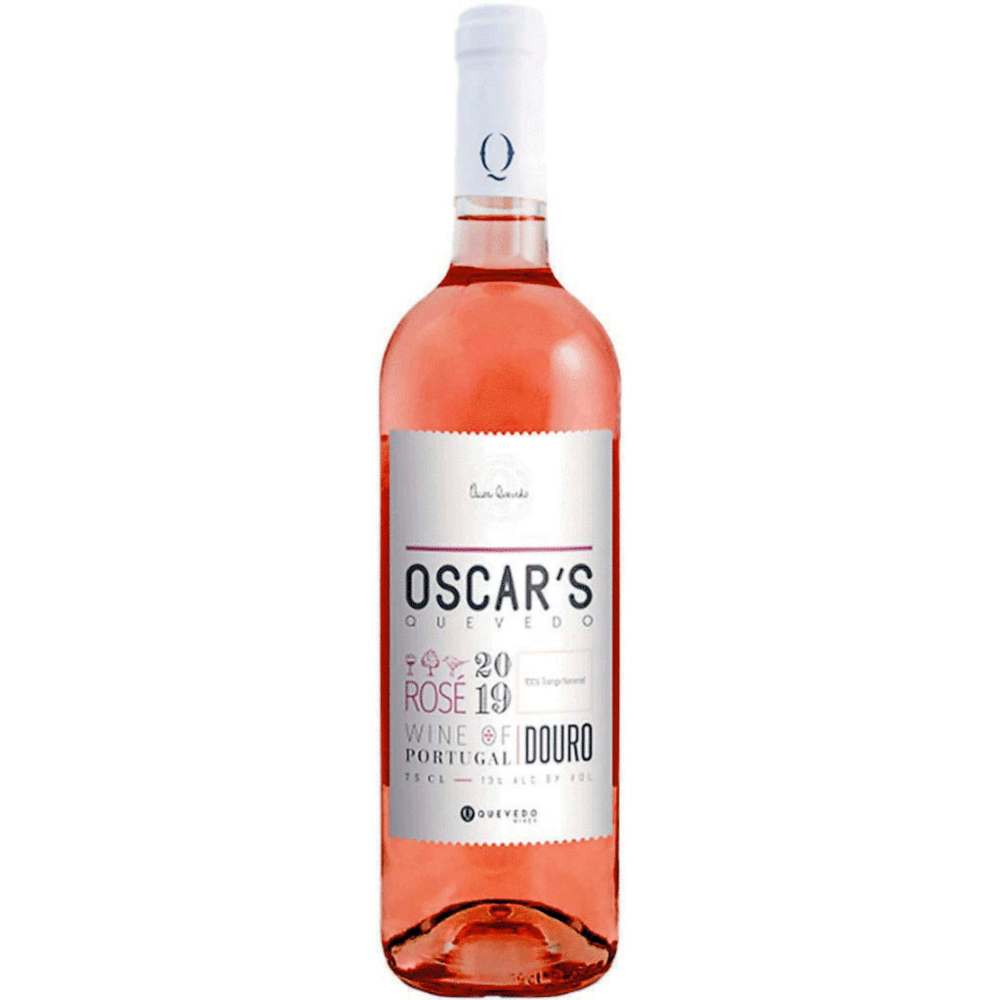
Quevedo 2019 Rosé (Douro, Portugal —$17.99, Liquor Marts and beyond)

This fun, easygoing rosé, a blend of indigenous Portuguese grapes, is pale pink in colour, and offers raspberry, watermelon candy, strawberry and hints of rhubarb. It’s slightly off-dry and fresh, offering strawberry and raspberry candy flavours, modest acidity, no discernable oak and a long, balanced finish. 3/5
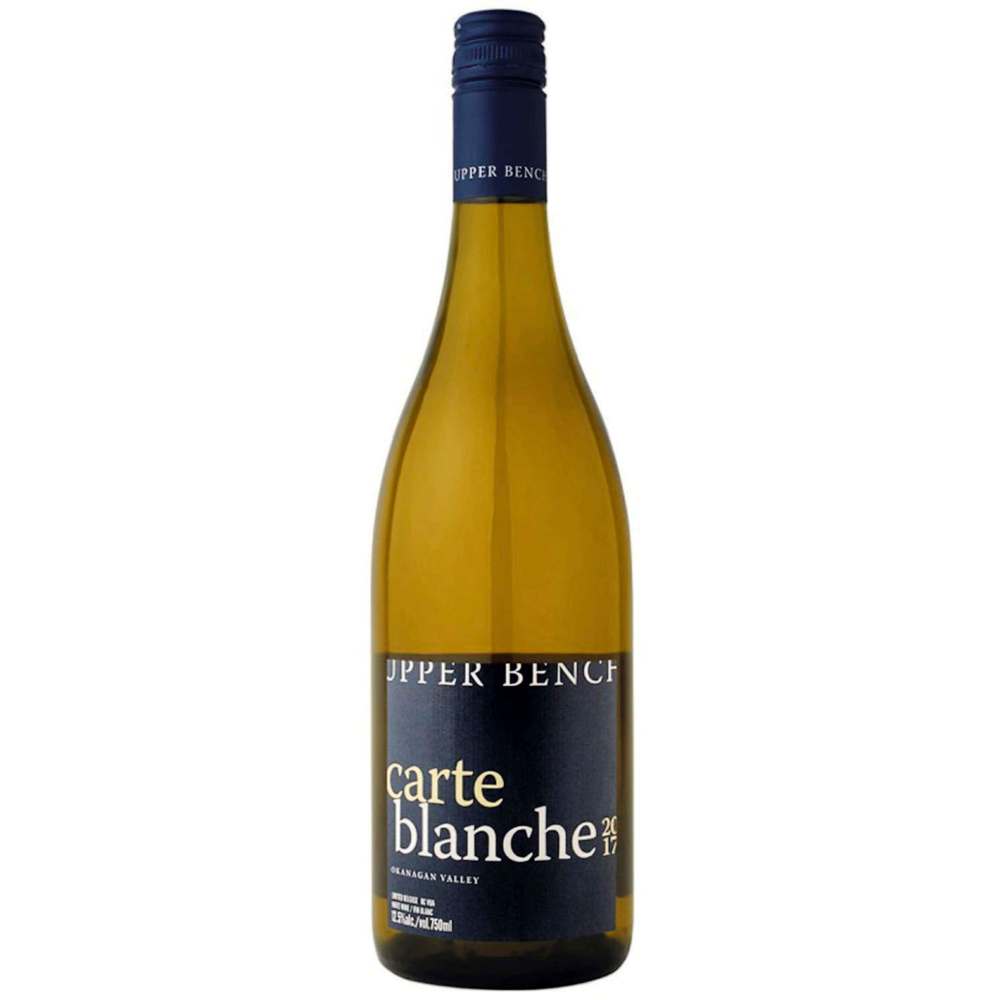
Upper Bench 2019 Carte Blanche White (Okanagan Valley, B.C. — around $37, private wine stores)

A blend of Chardonnay, Riesling, Pinot Blanc, Pinot Gris and Gewürztraminer, this B.C. white blend brings peach, pear, red apple, flint and secondary herbal notes on the nose. It’s dry, crisp and light-bodied, with apple and spice working well together with pear, peach, steely mineral notes, a hint of honey and a long, clean finish. Delicious. Purchased at De Luca Fine Wines. 4.5/5
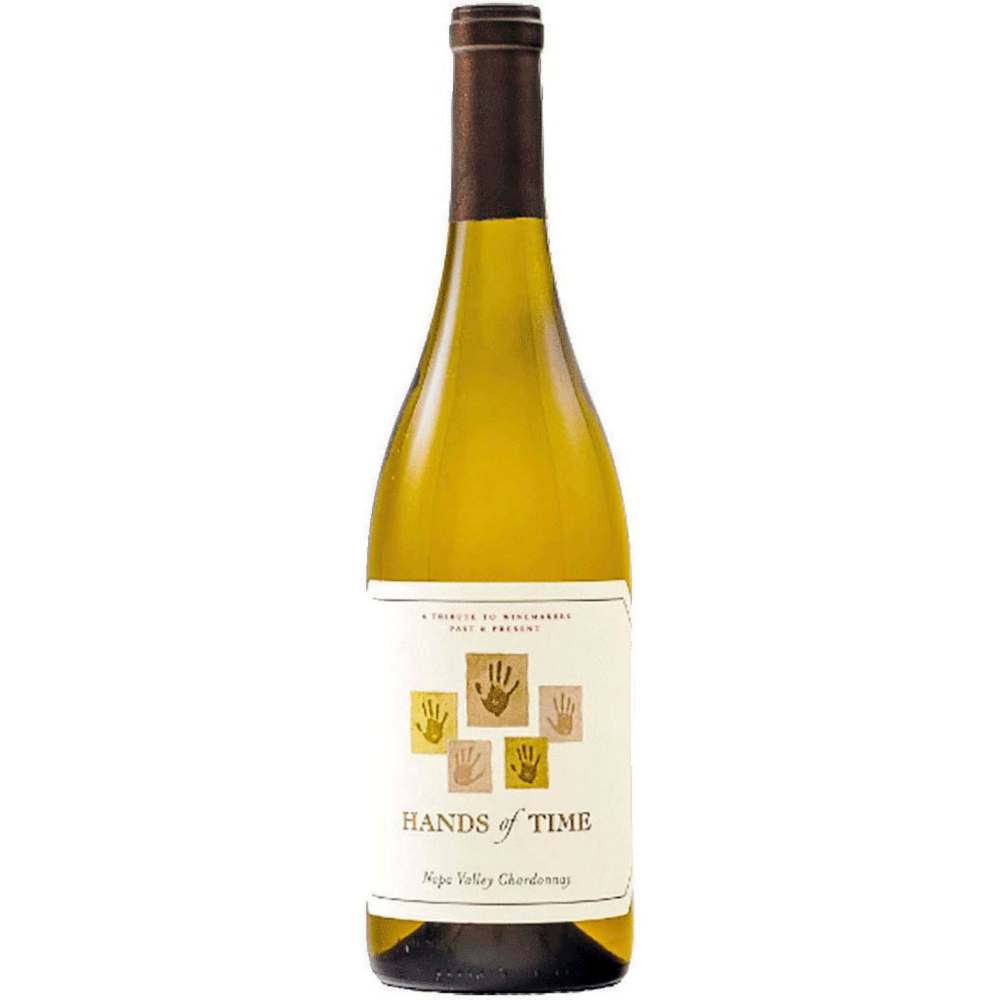
Stag’s Leap Wine Cellars 2018 Hands of Time Chardonnay (Napa Valley, Calif. $39.99, Liquor Marts and beyond)

Pale gold in colour, this Napa Valley Chardonnay offers ripe red apple, vanilla, peach, pineapple and a dab of honey on the nose. It’s dry and medium-plus-bodied and viscous, delivering ripe apple and peach flavours, caramel and vanilla thanks to some time in oak barrels, a hint of lemon candy lingering underneath and a honeyed component that’s balanced by a touch of chalkiness. A stylish example of Napa Chard. 4/5

Ben Sigurdson

Ben Sigurdson
Literary editor, drinks writer

Ben Sigurdson edits the Free Press books section, and also writes about wine, beer and spirits.

Our newsroom depends on a growing audience of readers to power our journalism. If you are not a paid reader, please consider becoming a subscriber.

Our newsroom depends on its audience of readers to power our journalism. Thank you for your support.

Report Error Submit a Tip

More Stories

Rock musical returns to Winnipeg stage after 14 years

Ben Waldman 5 minute read Preview

Rock musical returns to Winnipeg stage after 14 years

Ben Waldman 5 minute read 6:42 AM EST

Can any household honestly claim to be normal?

The Goodmans — the central family of the rock musical Next to Normal — seem perfectly average on the surface. But it takes only a lyric or two before the domestic mythology gets punctured.

“They’re the perfect loving family, so adoring and I love them every day of every week,” sings Diana Goodman, the matriarch, as she introduces her family in the play’s first song, Just Another Day. “So my son’s a little s—-, my husband’s boring and my daughter, though a genius, is a freak.”

Diana’s bold, she’s honest, she’s strong and for more than 15 years, she has been dealing with a diagnosis of bipolar disorder. Her energy shifts and swings, but her commitment to her family’s well-being is steadfast.

Read
6:42 AM EST

They say a man's home is his castle; grand old Queen Anne house takes the adage literally

Ben Waldman  10 minute read Preview

They say a man's home is his castle; grand old Queen Anne house takes the adage literally

Ben Waldman  10 minute read Monday, Apr. 26, 2021

To call the house at 494 College Ave. anything other than a castle would seem wrong, so we’ll call it the Castle. It’s three storeys tall but seems taller, 115 years old but seems older, and it is right smack in the middle of a neighbourhood, right in the middle of a city, where its turreted existence inspires confusion, bewilderment and a touch of awe. It’s a place both out of time and out of place, but somehow, it feels like it’s exactly where it belongs.

“It definitely stands out around here,” says Ryan Lavallee, a 33-year-old man who lives two doors down, on the second floor of a house without turrets of its own. “Kids are always stopping to look at it. Even adults do. I have.”

In 2015, Vanh Thiep Hoang looked at it, and couldn’t stop. Hoang had come to Winnipeg with his family from Vietnam, where he worked as a surgeon. He marvelled at the Queen Anne-style castle — its gabled roof, its orange bricks, its ten-foot ceilings, and its playful disregard of convention and defiance of expectation. It cast a bit of a spell.

“It reminded me of palaces I’d seen where I was from,” and of buildings in Ukraine, where he studied, says the 63-year-old Hoang, who emerges from the castle’s front door wearing board shorts and metal-rimmed glasses, his thick head of hair as attention-grabbing as the castle he calls home.

Read
Monday, Apr. 26, 2021

Ready to launch: Inside the massive undertaking to revitalize the beloved Nonsuch replica

Jill Wilson  35 minute read Preview

Ready to launch: Inside the massive undertaking to revitalize the beloved Nonsuch replica

Jill Wilson  35 minute read Monday, Jun. 4, 2018

For 44 years, the Nonsuch has been enchanting visitors to the Manitoba Museum, bringing a whiff of adventure and the romance of the sea to our landlocked city.The jewel in the crown of the Hudson’s Bay Company Museum Collection, the replica of the 17th-century fur-trading ship takes those who board her back in time.

Decades’ worth of schoolchildren have clutched the rails at the side of the rickety gangway that leads you onboard and descended the narrow stairs — backwards, please, for safety! — into the fo’c’sle, where they could marvel at the tiny bunks — how short men were back then — and peer out the round portholes, imagining them being lashed by salt spray as you crossed the Atlantic Ocean on a grand adventure to find a new trade route for England.

Few of us on long-ago field trips ever stopped to think about why this Prairie city was honouring a British ship that never actually visited Manitoba — let alone why we had built an entire museum wing around a replica that, while it sailed more than 14,000 kilometres in European, Canadian and American waters, was hauled into Winnipeg in pieces.

As the first phase of its $17.5-million Bringing Our Stories Forward capital campaign, the museum has spent about three years planning its refurbishment of the Nonsuch exhibit, which has remained largely untouched since it was installed in 1974, in part to better tell that story.

Read
Monday, Jun. 4, 2018

Call to revoke Buffy Sainte-Marie’s honorary doctorate from Brandon U

Alex Lambert 3 minute read Preview

Call to revoke Buffy Sainte-Marie’s honorary doctorate from Brandon U

Alex Lambert 3 minute read 2:01 AM EST

BRANDON — Brandon University has been urged to revoke the honorary doctor of music degree given to singer-songwriter Buffy Sainte-Marie in 2011.

Alex Lacharité made the request to the university senate and cited the 2023 investigation by the CBC’s The Fifth Estate that found her claims to Indigenous ancestry were false.

“She has since been stripped of her Order of Canada and other honours by the Governor General of Canada, honorary degrees from the University of Toronto and Dalhousie University, Juno Awards, and the Polaris Prize,” Lacharité wrote in an Oct. 25 email to the senate, president and other officials.

“Her actions of assuming the identity of an Indigenous person who was adopted into the United States as part of the ’60s Scoop, generally pretending to be an Indigenous person, and taking awards, space and opportunities from actual Indigenous people were and are harmful to our society and are morally wrong,” Lacharité wrote.

Read
2:01 AM EST

Leader of Indigenous chamber steps down

Free Press staff 2 minute read 2:01 AM EST

The chief executive of the Indigenous Chamber of Commerce is stepping down.

Shelly Bulycz, who was appointed CEO in April, said she’s accepted a new job in The Pas.

She made the announcement in a message to chamber members on Tuesday: “I am grateful for the opportunity to have served the organization and worked alongside so many dedicated individuals who share a commitment to Indigenous business, entrepreneurship and economic reconciliation.”

In the message, board chair Adam Nepon thanked Bulycz and wished her well.

Blue wave in U.S. gives Democrats a choice

Editorial 4 minute read Preview

Blue wave in U.S. gives Democrats a choice

Editorial 4 minute read 2:00 AM EST

The win might not have been completely unexpected, but the size of it certainly was.

U.S. President Donald Trump’s Republican party was handily dismantled by the Democrats in Tuesday’s midterm elections, with the Democrats taking control of both the U.S. House of Representatives and the Senate.

States including Texas, South Carolina and Kansas elected Democrats, something that hasn’t happened in Kansas, for example, for 94 years. The Democrat who won a senate seat in Kansas, Adam Hamilton, notably campaigned on a moderate platform, promising to listen to all sides. There might be a lesson in that.

An unrepentant Trump said on social media that the loss was because he was not personally on the ballot, “I wasn’t on the Ballot and if I was, we would have won IN A LANDSLIDE.” He also said that he didn’t view the vote as a rejection of his policies: “We’ve had the greatest two years in the history of the presidency.”

Read
2:00 AM EST