A one-pot classic
No right or wrong recipe when it comes to chili
Advertisement
Read this article for free:
or
Already have an account? Log in here »
To continue reading, please subscribe:
Digital Subscription
One year of digital access for only $1.44 a week*
- Enjoy unlimited reading on winnipegfreepress.com
- Read the E-Edition, our digital replica newspaper
- Access News Break, our award-winning app
- Play interactive puzzles
*Billed as $5.77 plus GST every four weeks. After 52 weeks, price increases to the regular rate of $19.95 plus GST every four weeks. Offer available to new and qualified returning subscribers only. Cancel any time.
To continue reading, please subscribe:
Add Free Press access to your Brandon Sun subscription for only an additional
$1 for the first 4 weeks*
- Enjoy unlimited reading on winnipegfreepress.com
- Read the E-Edition, our digital replica newspaper
- Access News Break, our award-winning app
- Play interactive puzzles
*Your next Brandon Sun subscription payment will increase by $1.00 and you will be charged $17.95 plus GST for four weeks. After four weeks, your payment will increase to $24.95 plus GST every four weeks.
Read unlimited articles for free today:
or
Already have an account? Log in here »
Hey there, time traveller!
This article was published 26/01/2019 (2833 days ago), so information in it may no longer be current.
A pot of chili may be one of winter’s ultimate comforts. Hearty, filling, hot and well suited for a long cook time on your stove top, filling your kitchen with warmth and enticing aromas.
It’s also the kind of meal that lends itself to improvisation, at least for the home cook. (As one 1998 Washington Post story said about competition chili, “Cook-off chili has become a rarefied beast, like a well-groomed show dog. Think of it as the NASCAR of the food world. It looks like chili on the outside, but under the hood it’s a whole ‘nuther thing.”)
“I think it is pretty flexible and up to the individual,” says Dan Farber, chef de cuisine at the Washington location of Texas-inspired restaurant Hill Country, home to an annual chili cook-off.
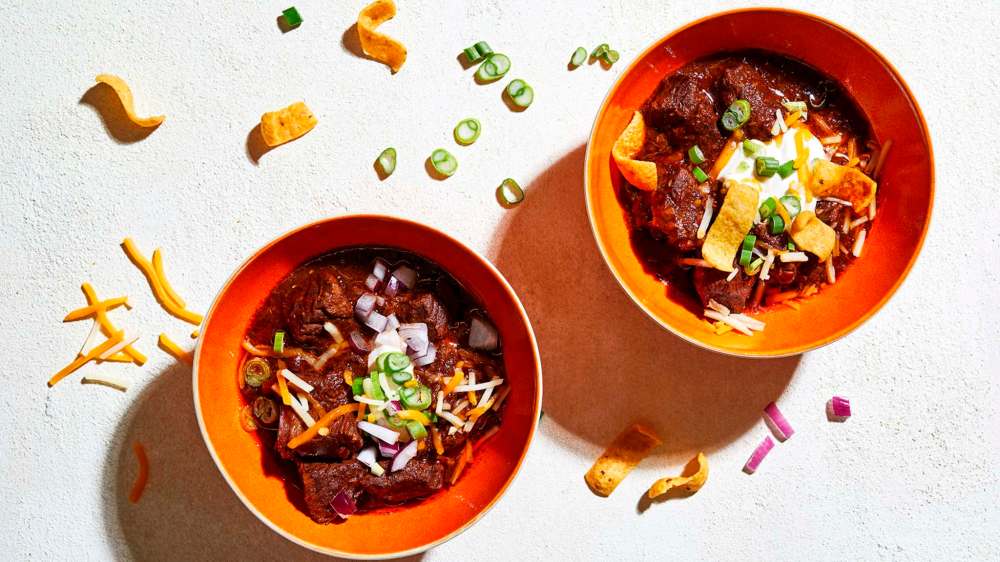
There are, in fact, many ways to make chili — so many that food writer and restaurateur Robb Walsh wrote a whole book dedicated to the topic, The Chili Cookbook: A History of the One-Pot Classic, with Cook-off Worthy Recipes from Three-Bean to Four-Alarm and Con Carne to Vegetarian.
That’s not to say there aren’t strong opinions, particularly when it comes to regional specialties (Texas, New Mexico, etc.), beans and vegetarian versions.
“People have strong opinions on the right way to make all kinds of provincial dishes,” Walsh says. “Everybody puts some sort of provincial pride into their foods.”
Even if you’re making up your own rendition on the fly, you can make something to be proud of, too. Here’s how to get started:
Think about the chili peppers and the chili powder. Despite the many iterations, the one unifying thread among everything calling itself chili is the chili powder, Walsh says. (According to Post style, the whole peppers are chilis, the spice blend and dish are chili.) The chili powder “is the backbone” of chili, so that’s the first thing to figure out, he says. You can certainly buy chili powders, but what’s in the blends is often not disclosed.
If you prefer to have more control, start with your choice of ground chilis, or grind them yourself, and combine them with other typical spices, such as cumin, oregano and garlic or onion powder. Toast the spices first for extra oomph.
Among the types of chilis to consider: ancho, pasilla, chipotle and New Mexican long red. If you want even more deep pepper flavour, you can reconstitute and purée dried chilis to incorporate into the chili, even using some of the soaking liquid for additional taste and colour.
Consider other additional flavours and ingredients. Farber suggests coriander as a complementary spice, as well as smoked paprika (itself a ground pepper). He also likes to incorporate tomato paste, which briefly cooks in the pot after any aromatics have been sautéed in the fat left over from searing the meat. He deglazes (gets up those tasty brown bits) with beer, too.
Other possible liquid additions include a little coffee, beef broth and dry red wine. Even chocolate can provide a savoury depth that tasters won’t necessarily be able to identify. Tomatoes — a can of Rotel or just some plain Italian plum tomatoes — can work, too, though Walsh points out that some purists say that’s just making spaghetti sauce. “I tend to err on the light side, on not too much tomato, because you don’t want the tomato to take over,” he advises.
Pick your meat — or don’t. Traditional Texas chili, a “bowl of red,” is made with beef. End of story. At El Real Tex-Mex Cafe, the Houston restaurant that Walsh co-owns, the chili features cubed beef chuck. Texas grocery stores even sell a “chili grind” of beef, which is coarse. But for the rest of us, ordinary ground beef is fine, too. It just depends on the texture you’re going for. Walsh does, however, recommend against more tender — and expensive — cuts of beef (say, tenderloin) which will get too mushy after a long cook time.
Walsh thinks game-based chili is “fantastic,” so if venison or bison suits you, go for it. Lamb and ground turkey are popular, too, and Walsh’s book features recipes with pot roast from James Beard and short ribs from Tyler Florence.
Pork and chicken? Yes, the latter of which is especially nice in a chili featuring green chilis. “Use what you have or what inspires you,” Walsh writes in his book’s introduction.
Most of the time, you’re going to want to brown your meat in the pot first for better flavour and texture. Do it in batches so as not to overcrowd the pot. If a lot of fat is rendered, you don’t have to use all of it, but some makes for an ideal base for sautéing your aromatics.
As for meatless chilies, Walsh writes, “While much is made about the debate over beans versus no beans, that’s a minor squabble among close friends compared to the vicious dispute over meat versus no meat.” (More on beans below.)
That being said, make your chili however you want. Walsh developed recipes with seitan, tempeh and tofu that serve as sort of meat substitutes, but you can also skip those and just go heavy on the beans. Vegetables such as zucchini and sweet potatoes work well in vegetarian versions.
Add beans — or don’t. Yes, people have strong feelings about beans. But in the grand scheme of things, is it really worth it to get all worked up about beans in chili? I don’t think so. If you want beans, add them and don’t apologize.
For cooked or canned beans especially, it’s best to add them in the last 20 to 30 minutes of cooking so they don’t disintegrate, Walsh says. If you have the time, though, he recommends looking into starting with dried beans, which gives you a flavourful broth to work with and more interesting heirloom varieties to try.
Cook it low and slow. “It’s a long, slow cook,” Walsh says. “Within reason, the longer, the better.” That type of cooking tenderizes meat, melds flavours and ideally creates a luxurious texture.
Farber recommends tasting a bit along the way, adding more salt and pepper as needed. If you’re cooking uncovered, check the pot occasionally to make sure things aren’t looking too dry. Low heat will prevent the food from scorching.
Because of the low and slow approach, Walsh is a big fan of slow-cooker chili. On the other hand, if you own an Instant Pot, you can go the other direction and pressure cook for a faster chili fix.
Knowing when chili is done can be a little tricky. “It’s not like a steak where you’ve got a thermometer in it,” Walsh says. So taste it and look at it. Is the meat tender? Are you happy in general with the flavour? How’s the consistency? “Is it coming together or does it look like ground beef soup?” Walsh says.
If you’re happy with it otherwise, a slurry with flour or masa harina (dried corn dough ground to a flour) can help. Combine the thickener with a bit of the liquid from the chili and then add it back to the pot. You should start to get some thickening as it cooks more and then after the chili comes off the heat and cools.
The long cook time on chili makes it a prime candidate for make-ahead status, which is just as well anyway, because some chili cooks swear that a day in the refrigerator actually improves the flavour.

Garnish to your heart’s content. Farber thinks the garnishes are really where home cooks can go wild with chili. His favourite toppers are red onion, cheddar cheese and sour cream. But that’s just a start.
Of course, if you’d never cook chili with beans in it, you can serve them as a topping or side. Put out tortilla chips or Fritos for crunch. Sliced or chopped serrano and jalapeño peppers can add heat, as can hot sauce. Lettuce, scallions and cilantro bring a fresh, green vibe. Or provide tortillas for filling.
In other words, follow your heart and your stomach. “I’m a Texas chili guy,” Walsh says, but he’s not a stickler for definitions. Even if they’re not hewing to that formula, “People can make stuff that’s ‘chili’ as far as I’m concerned.”
— Washington Post
Related Articles
Instant Pot maker to merge with U.S. company
Advertisement Advertise With Us
Advertisement Advertise With Us