Doomscrolling has ruined our sense of time

Advertisement

Advertise with us

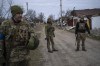
THE dual crises of the global pandemic and the war in Ukraine have been testing our governments, our institutions, our diplomacy — and our collective sense of time. In part because of social media, both events already seem intolerably long, even though the Russian invasion of Ukraine is a month old.

Read this article for free:


or

Already have an account? Log in here »

To continue reading, please subscribe:

Subscribe and receive a limited-edition Free Press branded hat or tote.

Digital Subscription

One year of digital access for only $205*

  • Enjoy unlimited reading on winnipegfreepress.com
  • Read the E-Edition, our digital replica newspaper
  • Access News Break, our award-winning app
  • Play interactive puzzles

*First annual payment billed as $205.00 + GST for one year. This annual subscription will automatically renew at $233.00 + GST every 52 weeks (10% off the regular annual price of $259.35). Offer available to new and qualified returning subscribers only. Cancel any time.

To continue reading, please subscribe:

Add Free Press access to your Brandon Sun subscription for only an additional

$1 for the first 4 weeks*

  • Enjoy unlimited reading on winnipegfreepress.com
  • Read the E-Edition, our digital replica newspaper
  • Access News Break, our award-winning app
  • Play interactive puzzles
Start now

*Your next Brandon Sun subscription payment will increase by $1.00 and you will be charged $17.95 plus GST for four weeks. After four weeks, your payment will increase to $24.95 plus GST every four weeks.

Opinion

Hey there, time traveller!
This article was published 28/03/2022 (1647 days ago), so information in it may no longer be current.

THE dual crises of the global pandemic and the war in Ukraine have been testing our governments, our institutions, our diplomacy — and our collective sense of time. In part because of social media, both events already seem intolerably long, even though the Russian invasion of Ukraine is a month old.

One of the most prominent words of the last few years is “doomscrolling.” People can now easily imbibe new information 24/7, about COVID or the war, simply by scrolling through social media on their phones.

In the case of Ukraine, every day there are scores of events to learn about and react to. I can pop into my Twitter feed and see that Russian missiles have started hitting Odesa, the Ukrainian city of Mariupol refuses to surrender, and a shopping mall in Kyiv has been destroyed. I can read multiple analyses of how the China-Russia relationship is evolving, or get the latest about rumours of a coup against Putin. And all this is without even making much of an effort.

Once upon a time, news of war was lumpier and more periodic — people watched the nightly news or read the morning paper. They could turn on the radio and hear more frequent bulletins, but due to the absence of the internet and other means of modern communication, there were far fewer reports from far fewer sources.

The now-never-ending stream of information shapes our perception of time. For many people, especially America’s news-intensive elites, it may make the war feel much longer than it actually has been.

This greater sense of witness to atrocities cements this impression. Each moral outrage, no matter how small, is taken in. Each terrible event somehow feels more intolerable than the last, fuelling the feeling that something must give and that the war has to end soon.

That is a dangerous feeling, if only because it makes it harder for leaders to pursue strategies of patience. Polls show high U.S. public support for a no-fly zone, although in my view that would lead to an unacceptably higher risk of escalating the war. This hawkish stance is not hard to understand. If the current situation feels intolerable, then surely something dramatic and decisive has to happen very soon — and better to act than be acted upon. At the very least action will imbue a feeling of having “done something.”

Doomscrolling-induced impatience also induces people to underrate Russian military prospects. It is true that Russia failed to achieve its objective of an immediate Ukrainian collapse. Still, it took Hitler five weeks to conquer Poland, and that is usually regarded as an extremely successful military campaign.

It’s just not clear yet how well, or how badly, the Russians are likely to do. It is hard to embrace that fundamental uncertainty when everything else feels so intolerable.

COVID is a much longer-running story, now more than two years old, but it has engendered similar reactions. People feel that the pandemic is or should be “over” by now.

At one level, that is a very healthy reaction that will help reboot economic activity. On another level, it is extremely dangerous. If a new and more serious variant were to come along, we would simply not be ready, not even after two years of suffering and more than one million deaths.

It is possible that, over the long run, people will become numb to all this detailed reporting of suffering from both the pandemic and the war. They might forget just how much those events commanded the world’s attention. These moments might come to feel like time-slices rather than eternities.

But for now, we are not at peace with our grasp on time — and this runs the risk of being a major problem.

Tyler Cowen is a Bloomberg Opinion columnist. He is a professor of economics at George Mason University.

Report Error Submit a Tip

More Stories

Roughing it (less)

AV Kitching 6 minute read Preview

Roughing it (less)

AV Kitching 6 minute read Monday, Jul. 6, 2026

I hate camping.

I loathe the very idea of leaving the comfort and safety of home to sleep in a random field, where not only will I be exposed to the elements, but will also be at the mercy of all manner of creatures, from ursine to canine to insectan.

I do not want to hike up a hill just to share one outdoor tap with 12 others, standing alongside them as I brush my teeth.

I do not want to queue for 15 minutes, then part with a $2 coin to wedge myself into a shower stall just to stand under a piddly stream of lukewarm water while trying my best to swiftly soap up and sponge off lest I irk the rapidly growing line of campers outside.

Read
Monday, Jul. 6, 2026

Use it twice: a data centre we could support

Hersh Seth 4 minute read Preview

Use it twice: a data centre we could support

Hersh Seth 4 minute read Thursday, Jul. 30, 2026

In June, Premier Wab Kinew rejected a massive AI data centre planned near Île-des-Chênes. The project would have used 500 megawatts of power, which is about the same as the Grand Rapids generating station, and would have run on six natural gas turbines. Kinew said the environmental cost was too high and the long-term benefit for Manitobans was too low.

He made the right call. But simply saying no to data centres is not enough.

Winnipeg is a cold city. Data centres are basically huge electric heaters with computers inside. Almost every watt they use turns into heat, and most facilities pay to release it into the air. In a city that spends half the year paying to stay warm, that’s not just waste; it’s an opportunity. The idea is simple: use the energy twice. First for computing, then for heating our buildings.

The stakes are real. Manitoba Hydro’s new resource plan says peak demand will exceed our capacity as early as 2029 or 2030, and that the province will need about 1,760 additional megawatts of dependable capacity by 2035.

Read
Thursday, Jul. 30, 2026

Plenty of losses all around

Gwynne Dyer 4 minute read Wednesday, Jul. 15, 2026

The last time oil-tankers were being shot up in the Persian Gulf, back in the 1980s, it was Saddam Hussein’s brutal tyranny in Iraq versus Ayatollah Khomeini’s revolutionary Islamist regime in Iran.

The United States backed Saddam because he was just another murderous thug, whereas the new regime in Tehran was an actual threat to American interests. It had overthrown Iran’s American-backed puppet king and wanted to spread its Islamist ideology across the region.

So, of course, Ronald Reagan’s administration chose Saddam’s side. It sent Iraq arms by clandestine means (because Congress wouldn’t authorize it) and even provided targeting information for Iraqi poison gas attacks on Iran. The Americans chose the “lesser evil,” but at least they knew it was evil.

Once in a while they would even say it out loud, quoting U.S. diplomat Henry Kissinger: “It’s a shame that both sides can’t lose.” But they never did anything about it, and after eight years of slaughter, the war ended in a no-score draw.

No dog? No problem Local program offers offices pup for a day

AV Kitching 4 minute read Preview

No dog? No problem Local program offers offices pup for a day

AV Kitching 4 minute read Saturday, Nov. 1, 2025

Brandt and Paisley are raring to start their new jobs.

They’ve passed their assessment tests, aced their personality evaluations, received all the relevant vaccinations and are getting ready to greet their colleagues at their respective places of employment.

But instead of hellos and handshakes, they’ll most likely be giving their co-workers tail wags and face licks. Not that anyone in the office will mind.

The doggie duo are part of Business Buddies, a new program from the city’s Animal Services Agency which sees canines in the facility spending the afternoon with local businesses.

Read
Saturday, Nov. 1, 2025

Klein vows to freeze water, sewer rate for next two years

Joyanne Pursaga 4 minute read Preview

Klein vows to freeze water, sewer rate for next two years

Joyanne Pursaga 4 minute read Yesterday at 6:09 PM CDT

Mayoral candidate Kevin Klein is promising to cancel a water and sewer rate hike proposed for next year and freeze the fee for two years.

Klein said Winnipeggers are simply paying far too much for the utility.

“I think we have to freeze them right now because we’ve seen (a substantial increase) in the last four years. We are facing some of the most difficult financial times for families right now,” he said.

He would also ask the provincial Public Utilities Board to set Winnipeg’s future water and sewer rates, a power currently held by city council.

Read
Yesterday at 6:09 PM CDT

Ferraro gets a call-up to the Jets

Mike McIntyre 6 minute read Preview

Ferraro gets a call-up to the Jets

Mike McIntyre 6 minute read 1:46 PM CDT

Landon Ferraro vividly recalls the moment his NHL career came to an extremely painful end — Oct. 20, 2017, in downtown Winnipeg.

“My last play was a breakaway on Connor Hellebuyck,” Ferraro told the Free Press this week.

“I tried to poke the puck past the first D. It was me and (Dustin) Byfuglien chasing it down. I thought he was going to throw me across the ice, so I tried to cut in on him, and he moved. I overextended, and I literally ripped my abductor off the bone and gave myself a hernia.”

Ferraro — at the time playing forward for the visiting Minnesota Wild — said he managed to get off a weak shot that hit the Jets goaltender square in the chest. But his 77th appearance in the big leagues would be his last following previous stops with Detroit (which drafted him 32nd overall in 2009) and Boston.

Read
1:46 PM CDT