Literary romance delivers desire with class commentary
Actors convincingly portray meeting of minds and bodies in Lawrence adaptation

Advertisement
Read this article for free:
or
Already have an account? Log in here »
To continue reading, please subscribe:
Digital Subscription
One year of digital access for only $1.44 a week*
- Enjoy unlimited reading on winnipegfreepress.com
- Read the E-Edition, our digital replica newspaper
- Access News Break, our award-winning app
- Play interactive puzzles
*Billed as $5.77 plus GST every four weeks. After 52 weeks, price increases to the regular rate of $19.95 plus GST every four weeks. Offer available to new and qualified returning subscribers only. Cancel any time.
To continue reading, please subscribe:
Add Free Press access to your Brandon Sun subscription for only an additional
$1 for the first 4 weeks*
- Enjoy unlimited reading on winnipegfreepress.com
- Read the E-Edition, our digital replica newspaper
- Access News Break, our award-winning app
- Play interactive puzzles
*Your next Brandon Sun subscription payment will increase by $1.00 and you will be charged $17.95 plus GST for four weeks. After four weeks, your payment will increase to $24.95 plus GST every four weeks.
Read unlimited articles for free today:
or
Already have an account? Log in here »
Hey there, time traveller!
This article was published 05/12/2022 (1426 days ago), so information in it may no longer be current.
Lady Chatterley’s Lover, D.H. Lawrence’s notorious 1928 novel, was banned in several countries for decades after its publication because of its explicit sexual content and use of “four-letter Anglo-Saxon words.” (It was officially cleared by the Supreme Court of Canada in 1962.)
This new cinematic adaptation no longer faces the problem of censorship, but it has another challenge. In a time when graphic sex and a little salty language no longer shock, the filmmakers need to find a new way to feel frank and fresh and authentic.
French director Laure de Clermont-Tonnerre (The Mustang) and scripter David Magee (Life of Pi) struggle at first to avoid escaping into period-piece prettiness. But the film heats up when it charges into class and gender politics, with ideas that are embodied — and how! — by emotionally and often physically naked work from the two leads, Emma Corrin as the unhappily married Constance Chatterley and Jack O’Connell as Oliver Mellors, the independent-minded gamekeeper who lives on her husband’s estate.
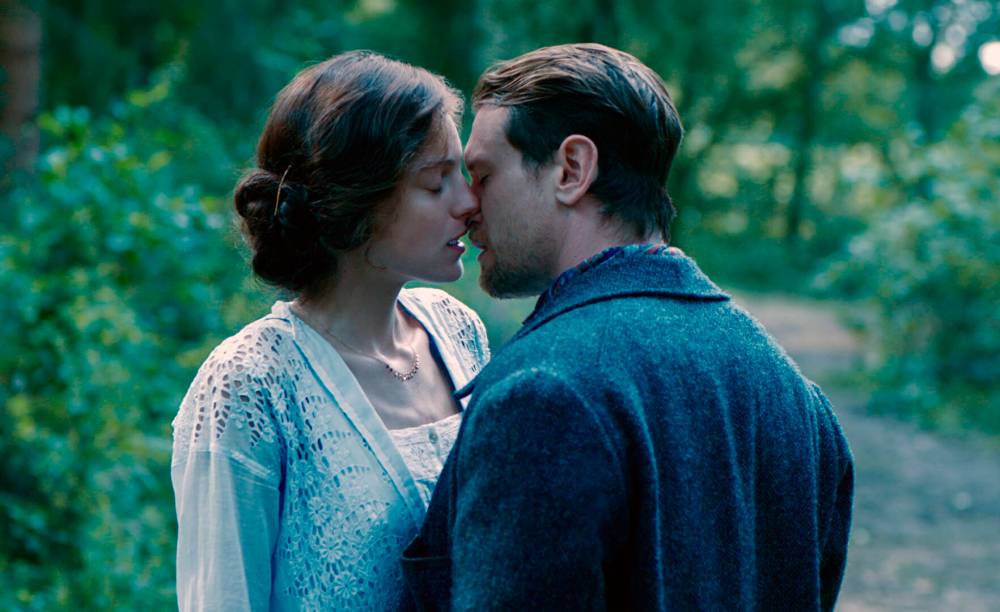
Netflix
Connie Chatterley (Emma Corrin, left) and Oliver Mellors (Jack O’Connell) share a bond that is both physical and intellectual.
Constance Reid, who has had an upper-class, vaguely bohemian upbringing, has made a hasty wartime marriage to Clifford Chatterley (Matthew Duckett), the aristocratic heir to Wragby, a large estate in the Midlands. The morning after their wedding night, Clifford goes back to the front, and returns to Connie with injuries that leave him using a wheelchair.
Connie wants to help, but Clifford has shut down. He’s intent on living in his head, a decision telegraphed when he sets up a bedroom in the manor house’s library. He tries writing, and Connie finds his literary friends arid and empty.
Then he concentrates on mechanizing the family’s mining interests, which she sees as cruel and exploitative. He also says things like, “Dammit, man, put your back into it,” basically coming off as a type rather than a character.
Connie, on the other hand, is a full-blooded character. Lawrence’s novel is feminist in an odd way: it combines an exploration of female desire with a lot of Lawrencian hectoring about what is “natural” for women to desire and what is not. Clermont-Tonnerre and Magee do focus on Connie’s desire, but they also track her determination to break out of the social structures that define her as an upper-class woman.

Corrin is something of an expert at playing ignored and unfulfilled young wives — such as Diana in Season 4 of The Crown — and here we see Corrin taking long walks in the woods, and coming across Oliver Mellors, nude and washing himself at a pump. O’Connell matches Corrin’s performance, playing the character’s intense physicality and soft-spoken thoughtfulness without falling into “hot workingman” clichés.
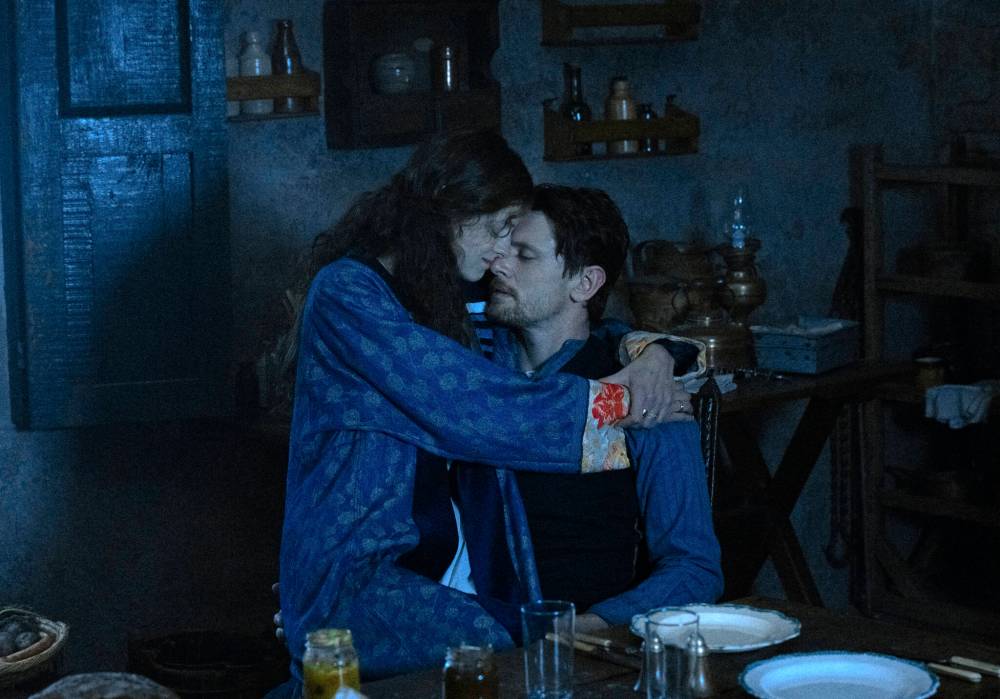
Seamus Ryan/Netflix
Emma Corrin, left, and Jack O’Connell in Lady Chatterley’s Lover
The two start with a wary, impulsive sexual encounter but eventually form a bond that is both intellectual — together they read James Joyce and Virginia Woolf — and physically liberating; they run around naked in the rain (something that might sound goofy summed up that way but actually works onscreen).
This may seem crass, but the film only really comes together when Connie and Oliver start coming together. So many cinematic sex scenes feel extraneous or generic, but the sequences in Lady Chatterley’s Lover are both necessary and specific to these two people, to Oliver and Connie. And the work Corrin and O’Connell do here is unafraid and electrifying.
Of course, the lovers’ idyll, taking place in nature, away from the social pressures of both village and manor house, eventually gets overtaken first by rumour and then by scandal, and the two face difficult choices. The writing wobbles again in these final scenes, but the performances remain extraordinary.
alison.gillmor@winnipegfreepress.com
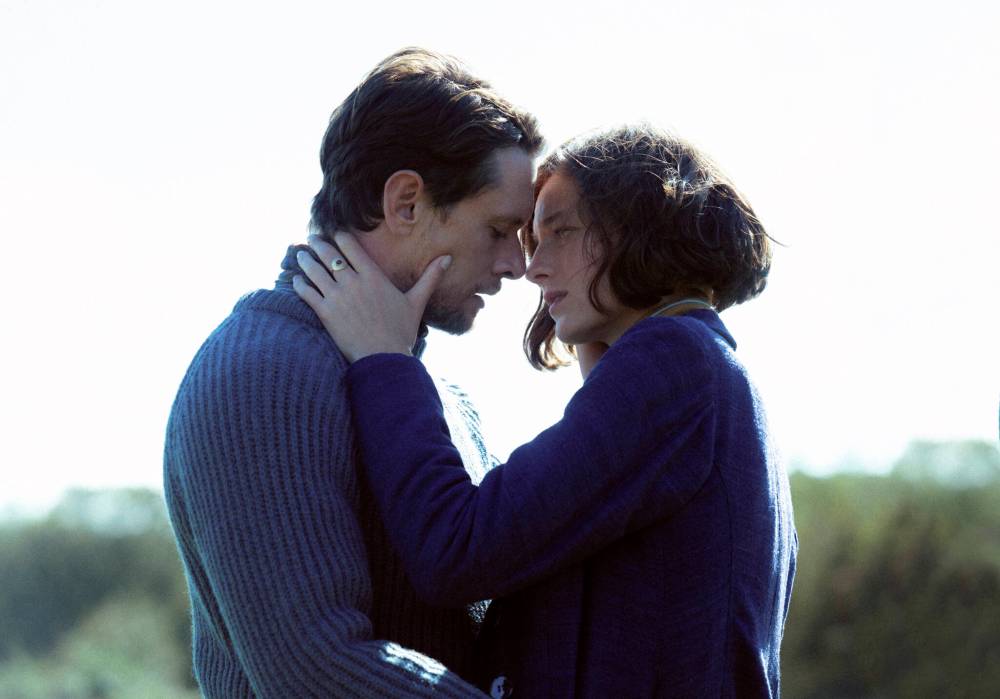
Netflix
The romance between Connie Chatterley (Emma Corrin, right) and Oliver Mellors (Jack O’Connell) is complicated by questions of class.
Studying at the University of Winnipeg and later Toronto’s York University, Alison Gillmor planned to become an art historian. She ended up catching the journalism bug when she started as visual arts reviewer at the Winnipeg Free Press in 1992.
Our newsroom depends on a growing audience of readers to power our journalism. If you are not a paid reader, please consider becoming a subscriber.
Our newsroom depends on its audience of readers to power our journalism. Thank you for your support.
Movie review
Lady Chatterley’s Lover
Starring Emma Corrin and Jack O’Connell
● Now on Netflix
● 127 minutes
★★★1/2 out of five
Other voices
It might be overstating the case to call this a feminist take on the novel. But Corrin, an exciting talent who we will doubtless be watching for years, gives us reason to crack open the dusty volume and consider it anew.
— Jocelyn Noveck, Associated Press
It’s sexy as hell, and makes Lawrence’s themes reverberate more than ever.
— Randy Myers, San Jose Mercury News
There’s a feverish wildness to Corrin’s performance, while O’Connell unleashes the full force of his considerable charisma.
— Wendy Ide, Observer (U.K.)
An unabashedly heady romance, rich in pretty costumes — when they’re wearing them — and lush, lusty atmosphere.
— Leah Greenblatt, Entertainment Weekly
In the end, the couple’s chemistry is off the charts, and that’s all that matters.
— Peter Debruge, Variety
Studying at the University of Winnipeg and later Toronto’s York University, Alison Gillmor planned to become an art historian. She ended up catching the journalism bug when she started as visual arts reviewer at the Winnipeg Free Press in 1992.
Our newsroom depends on a growing audience of readers to power our journalism. If you are not a paid reader, please consider becoming a subscriber.
Our newsroom depends on its audience of readers to power our journalism. Thank you for your support.
Advertisement Advertise With Us
Advertisement Advertise With Us
History
Updated on Tuesday, December 6, 2022 11:17 AM CST: Minor changes throughout