Key milestones in Queen Elizabeth II’s life

Advertisement

Advertise with us

LONDON (AP) — Key milestones in the life of Queen Elizabeth II, who died Thursday at Balmoral Castle in Scotland at age 96 after serving more than seven decades on the throne.

Read this article for free:


By clicking the button above, an account will be created and you will begin to receive some of our recommended newsletters. You may opt out of any newsletter by visiting your Email and Communication Preferences page or by clicking "unsubscribe" at the bottom of any email.

or

Already have an account? Log in here »

To continue reading, please subscribe:

Digital Subscription

One year of digital access for only $1.44 a week*

  • Enjoy unlimited reading on winnipegfreepress.com
  • Read the E-Edition, our digital replica newspaper
  • Access News Break, our award-winning app
  • Play interactive puzzles

*Billed as $5.77 plus GST every four weeks. After 52 weeks, price increases to the regular rate of $19.95 plus GST every four weeks. Offer available to new and qualified returning subscribers only. Cancel any time.

To continue reading, please subscribe:

Add Free Press access to your Brandon Sun subscription for only an additional

$1 for the first 4 weeks*

  • Enjoy unlimited reading on winnipegfreepress.com
  • Read the E-Edition, our digital replica newspaper
  • Access News Break, our award-winning app
  • Play interactive puzzles
Start now

*Your next Brandon Sun subscription payment will increase by $1.00 and you will be charged $17.95 plus GST for four weeks. After four weeks, your payment will increase to $24.95 plus GST every four weeks.

Hey there, time traveller!
This article was published 08/09/2022 (1513 days ago), so information in it may no longer be current.

LONDON (AP) — Key milestones in the life of Queen Elizabeth II, who died Thursday at Balmoral Castle in Scotland at age 96 after serving more than seven decades on the throne.

—April 21, 1926: Born Princess Elizabeth Alexandra Mary in Mayfair, London, the first child of the future King George VI and Queen Elizabeth, later called the Queen Mother.

—Dec. 10, 1936: Elizabeth becomes heir-apparent to the throne after her uncle King Edward VIII abdicates and her father becomes king.

FILE - Britain's Queen Elizabeth II cuts into a birthday cake baked by Nadiya Hussain, left, winner of the Great British Bake Off, during celebrations of her 90th birthday in Windsor, England, Thursday April 21, 2016. Queen Elizabeth II, Britain’s longest-reigning monarch and a rock of stability across much of a turbulent century, has died. She was 96. Buckingham Palace made the announcement in a statement on Thursday Sept. 8, 2022. (John Stillwell/Pool via AP, File)

—Oct. 13, 1940: Elizabeth makes first public speech at age 14 on the BBC Children’s Hour to reassure children who had been separated from their parents during the Blitz.

—1945: Elizabeth is made a Subaltern in the Auxiliary Territorial Service, serving for Britain during World War II.

—Nov. 20, 1947: Elizabeth marries Prince Philip Mountbatten of Greece and Denmark at Westminster Abbey.

—Nov. 14, 1948: Prince Charles, now Prince of Wales, heir-apparent to the throne, is born.

—Aug. 15, 1950: Elizabeth’s second child and only daughter, Anne, the Princess Royal, is born.

—Feb. 6, 1952: Elizabeth becomes queen upon the death of her father George VI.

—June 2, 1953: Crowned in a grand coronation ceremony at Westminster Abbey. She sets out on a tour of the Commonwealth, visiting places including Bermuda, Fiji, Tonga, Australia, and Gibraltar.

—Feb. 19, 1960: Elizabeth’s third child, Prince Andrew, is born.

—March 10, 1964: Elizabeth’s fourth child, Prince Edward, is born.

—May 1965: Elizabeth makes a historic visit to West Germany, the first German visit by a British monarch in 52 years.

—1977: Elizabeth celebrates her Silver Jubilee, which marks 25 years on the throne.

—1992: Elizabeth has what she describes as an “annus horribilis,” or a “horrible year.” The year sees marriages for three of her four children end. Also that year, a fire damages Windsor Castle. Public outcry over the cost of repairs amid a recession prompts the queen to volunteer to pay income taxes.

—Aug. 31, 1997: Princess Diana dies in a car crash in Paris. Under public pressure to demonstrate her grief, Elizabeth makes an unprecedented television broadcast in tribute to Diana’s memory.

—2002: Elizabeth marks 50 years of reign with her Golden Jubilee. The year also sees the deaths of Elizabeth’s mother and her sister, Margaret.

—Dec. 20, 2007: Elizabeth becomes the longest-living British monarch, overtaking Victoria.

—May 2011: Elizabeth makes a historic visit to Ireland — the first visit by a British monarch since Irish independence.

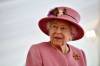
FILE -Britain's Queen Elizabeth II, smiles as she leaves a service of Thanksgiving to mark the Centenary of the Royal British Legion at Westminster Abbey, in London, Oct. 12, 2021. Queen Elizabeth II, Britain’s longest-reigning monarch and a rock of stability across much of a turbulent century, has died. She was 96. Buckingham Palace made the announcement in a statement on Thursday Sept. 8, 2022 (AP Photo/Frank Augstein, Pool, File)

—2012: Elizabeth marks 60 years of her reign with a Diamond Jubilee.

—Sept. 9, 2015: Elizabeth surpasses Queen Victoria and becomes the longest-serving monarch in British history.

—June 11, 2016: Britain celebrates Elizabeth’s official 90th birthday with three days of national festivities.

—Feb. 6, 2017: Elizabeth becomes the first British monarch to celebrate a Sapphire Jubilee, marking 65 years on the throne.

— March 2020: Elizabeth and Philip move from Buckingham Palace in London to Windsor Castle at the start of the coronavirus pandemic.

—April 9, 2021: Prince Philip, Elizabeth’s husband of 73 years, dies at age 99.

–Oct. 20, 2021: Elizabeth spends a night in a London hospital undergoing health tests. She cancels major engagements in subsequent months, on doctors’ orders to only undertake light duties.

–Feb. 6, 2022: Elizabeth becomes first British monarch to reach a Platinum Jubilee, marking 70 years as sovereign.

–June 2022: Elizabeth makes limited public appearances during a four-day holiday weekend celebrating her Platinum Jubilee.

–Sept. 6, 2022: Elizabeth meets Boris Johnson and Liz Truss at her summer holiday home in Scotland to oversee the handover of power from the outgoing prime minster to his successor. The ceremonies, traditionally held at Buckingham Palace in London, were moved to Balmoral for the first time in the queen’s reign in light of her mobility problems.

–Sept. 8, 2022: Elizabeth dies at Balmoral Castle in Scotland at age 96. Her eldest son becomes King Charles III.

___

Follow AP coverage of Queen Elizabeth II at https://apnews.com/hub/queen-elizabeth-ii

Report Error Submit a Tip

More Stories

Is Canada headed for time chaos this weekend?

Michelle Bastian 5 minute read 2:00 AM CDT

When Manitoba Premier Wab Kinew declared Sept. 17 that the province would remain on permanent daylight time, he suggested it was a historical moment people would share with their “great-great-grandkids.” But, while Sunday, Nov. 1 has been heralded as the date many Canadians will stop changing their clocks, there are rumblings behind the scenes suggesting this will actually cause more trouble than ever before.

There are, of course, the warnings from chrono-biologists and sleep scientists about the damage permanent daylight time will do. The lighter evenings will mean many more dark mornings. But there is another set of problems in the offing in the critical infrastructure that underpins our digital lives.

While it used to be common to spend the Sunday morning after a time change going around our homes updating the clocks, we now wake up to devices that have already adjusted to the new time. These automatic updates occur regularly for daylight time, as well as when we travel to new time zones.

Our clocks are able to change by themselves owing to the hard work of a group of volunteers who were recently named in a list of the people who hold up the internet. This group, led by Paul Eggert, a computer scientist at UCLA, maintains a little-known tool called the Time Zone Database. Since the 1980s, it has kept track of regional, national and international debates about clock time and provided an up-to-date table of what time it should be on our walls.

Building healthier Canadians

Jason M. Sutherland 4 minute read 2:00 AM CDT

Ottawa is betting that billions of taxpayer dollars spent on steel, asphalt and concrete will secure Canada’s economic future and prosperity. Through the $51 billion Build Communities Strong fund, the federal government is paying for roads, bridges, water systems and transit to boost productivity and attract capital from Europe and Asia.

As the shovels hit the ground from Halifax to Vancouver, Canadians should be asking themselves: What good does it do to build a stronger country if we are not building healthier Canadians?

The fund’s $5 billion allocation for health infrastructure is welcome news, as many of our hospitals and long-term care homes across the country are showing severe signs of aging, and modern care centres are much needed. But pouring concrete for new facilities is not the same as building a healthy population.

A ribbon-cutting at a modern hospital does not guarantee you see a family doctor when you need one, keep a rural emergency department open overnight, or shorten the wait for a knee replacement keeping someone off the job or robbing a retiree of independence.

A timeline of the WE Charity controversy

The Canadian Press 9 minute read Wednesday, Aug. 19, 2020

OTTAWA - A timeline of events regarding the Canada Student Service Grant program, based on public documents, events and statements from cabinet ministers, government officials, and WE Charity:

March 6, 2020: WE Charity staff prepare a concept paper on service learning for public servants at Employment and Social Development Canada.

April 5: Finance Minister Bill Morneau and Prime Minister Justin Trudeau talk over the phone about how to help students whose summer job and volunteer opportunities were vanishing due to the COVID-19 pandemic. Finance Department officials are tasked with considering options the next morning.

April 7: Small Business Minister Mary Ng and WE co-founder Craig Kielburger have an introductory phone call in which Ng asks WE to send what it calls a ``pre-established proposal'' to help young people launch businesses.

Fawcett promises growth in second term as Brandon mayor

Alex Lambert 2 minute read Preview

Fawcett promises growth in second term as Brandon mayor

Alex Lambert 2 minute read 9:39 AM CDT

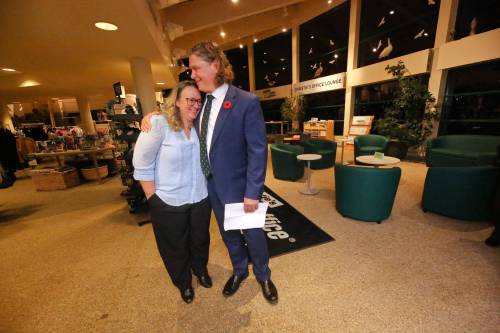
BRANDON — Jeff Fawcett promises “incredible opportunities” for Brandon over the next four years.

The incumbent was handily re-elected for a second term as Brandon mayor Wednesday evening, receiving 54 per cent of the vote. He defeated his only challenger, former councillor and MLA Len Isleifson, by 907 votes.

“The next four years presents incredible opportunities for our city,” Fawcett told supporters after the victory. “We’ll continue to support responsible growth, strengthening our neighbourhoods, investing in infrastructure, supporting local businesses, and ensuring Brandon remains a place where families and future generations can thrive.”

Isleifson, a Brandon councillor from 2010 to 2014 and Brandon East Tory MLA from 2016 to 2023, called the result disappointing but said he wouldn’t change anything about his campaign.

Read
9:39 AM CDT

Waiting for Cormier verdict the ‘calm before the storm’

Katie May 6 minute read Preview

Waiting for Cormier verdict the ‘calm before the storm’

Katie May 6 minute read Thursday, Feb. 22, 2018

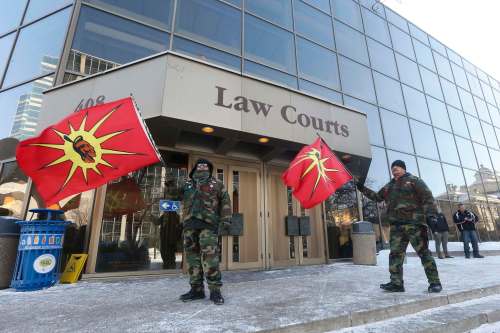
As the jury room door closed behind the seven women and four men who are now deliberating on the evidence against Tina Fontaine’s accused killer, Thelma Favel rose from the chair she’s occupied for most of Raymond Cormier’s second-degree murder trial.

Almost every day over the past three weeks, Favel, the woman who raised 15-year-old Tina, has sat right up front, directly across from the jury box, listening, sobbing and soaking in disturbing details of the teen’s last days that have come to light over the course of Cormier’s second-degree murder trial.

On Wednesday afternoon, after Court of Queen’s Bench Chief Justice Glenn Joyal instructed the jury and sent them off to be sequestered until they decide whether 56-year-old Raymond Cormier is guilty of killing Tina, Favel got up and hugged Crown prosecutor Breta Passler. It was one of many moments, this one shielded from jurors, that have long since proven the emotional impact of the case and the lasting power of Tina’s legacy.

Tina’s death sparked a public outcry that renewed calls for a national inquiry into disproportionately high rates of missing and murdered Indigenous women and girls across Canada, and the criminal trial for the man accused of killing her hasn’t happened in a vacuum.

Read
Thursday, Feb. 22, 2018

Science-art collaboration injects dose of emotion into cold, hard truths

Sarah Lawrynuik 5 minute read Preview

Science-art collaboration injects dose of emotion into cold, hard truths

Sarah Lawrynuik 5 minute read Wednesday, Apr. 28, 2021

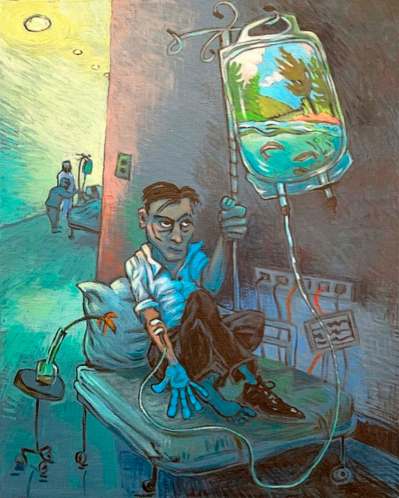
Looking at spreadsheets and map plots of trees is far beyond Rhian Brynjolson’s typical day as a visual artist, but she became entranced and inspired by data collected by Canadian scientists for a new art project.

Her hope is to try and bring the numbers, map dots and statistics to life in a new way to help the public better connect to climate science.

Falcon Lake’s Brynjolson is one of 12 Canadian artists who participated in an art-science collaboration exhibit, co-ordinated by the Global Water Futures program out of the University of Saskatchewan. The project saw the artists paired with researchers and scientists across the country who then engaged in conversations to try to inspire a new angle to their art.

“The whole idea behind it is: water is life,” says Louise Arnal, the project lead, and a post-doctoral fellow at the Centre for Hydrology and Coldwater Laboratory.

Read
Wednesday, Apr. 28, 2021