Business as usual? How Europe’s royals mix work and duties

Advertisement

Advertise with us

THE HAGUE, Netherlands - As the British royal family wrestles with the future roles of Prince Harry and his wife, Meghan, it could look to Europe for examples of how princes and princesses have tried, with varying degrees of success, to carve out careers away from the pomp and ceremony of their families’ traditional duties.

Read this article for free:


or

Already have an account? Log in here »

To continue reading, please subscribe:

Subscribe and receive a limited-edition Free Press branded hat or tote.

Digital Subscription

One year of digital access for only $205*

  • Enjoy unlimited reading on winnipegfreepress.com
  • Read the E-Edition, our digital replica newspaper
  • Access News Break, our award-winning app
  • Play interactive puzzles

*First annual payment billed as $205.00 + GST for one year. This annual subscription will automatically renew at $233.00 + GST every 52 weeks (10% off the regular annual price of $259.35). Offer available to new and qualified returning subscribers only. Cancel any time.

To continue reading, please subscribe:

Add Free Press access to your Brandon Sun subscription for only an additional

$1 for the first 4 weeks*

  • Enjoy unlimited reading on winnipegfreepress.com
  • Read the E-Edition, our digital replica newspaper
  • Access News Break, our award-winning app
  • Play interactive puzzles
Start now

*Your next Brandon Sun subscription payment will increase by $1.00 and you will be charged $17.95 plus GST for four weeks. After four weeks, your payment will increase to $24.95 plus GST every four weeks.

Hey there, time traveller!
This article was published 15/01/2020 (2453 days ago), so information in it may no longer be current.

THE HAGUE, Netherlands – As the British royal family wrestles with the future roles of Prince Harry and his wife, Meghan, it could look to Europe for examples of how princes and princesses have tried, with varying degrees of success, to carve out careers away from the pomp and ceremony of their families’ traditional duties.

While many members of European royal families pursue careers, some of their experiences offer up a lesson for Harry and Meghan as they seek to disengage from the House of Windsor and move into the private sector: Don’t try to cash in on your royal connections.

___
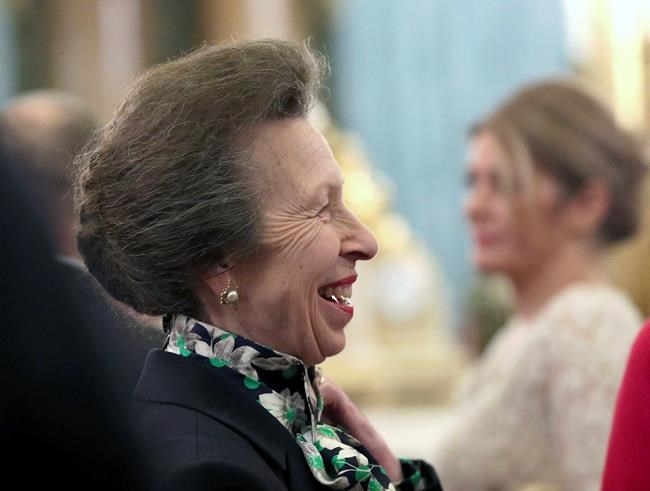
FILE - In this Tuesday, Dec. 3, 2019 file photo, Britain's Princess Anne talks to guests during a reception at Buckingham Palace, as NATO leaders gather to mark 70 years of the alliance, in London. The British royal family might be known for smiling and waving in fancy outfits, but they work just as hard as anyone else…right? According to official records, prominent members of the royal family worked on average 84.5 days, a third of the 253 working days in 2019. The Queen’s only daughter, Princess Anne, was the hardest working royal for the second year in a row, working a total of 167 days. (Yui Mok/Pool Photo via AP, File)

THE NETHERLANDS

Dutch King Willem-Alexander has a full-time job as his country’s monarch, but he still finds time to fly KLM passenger jets to rack up enough hours in the cockpit to keep his pilot’s license.

Willem-Alexander’s wife Maxima, an Argentine by birth, has plenty of royal duties but also acts as the U.N. Secretary-General’s Special Advocate for Inclusive Finance for Development, promoting microcredit and other initiatives around the world.

But even the rock-steady Dutch royal family has hit turbulence in the past over business dealings. Willem-Alexander’s late grandfather, Prince Bernhard, resigned from official functions over his alleged role in a bribery scandal involving plane maker Lockheed. Former Lockheed vice chairman A. Carl Kotchian told a U.S. Senate hearing in 1976 that Bernhard had been given money in the early 1960s to promote the company’s sales in the Netherlands.

A Dutch government panel concluded that the prince had solicited payments of between $4 million and $6 million, but found no conclusive evidence that he had actually received money, apart from $100,000 that Bernhard acknowledged and said he distributed as “Christmas presents.”

___

BELGIUM

Prince Laurent, the brother of Belgium’s King Philippe, has long struggled with his royal role and obligations that come with his annual taxpayer-funded endowment.

In an emotional 2018 letter, Laurent wrote that since his youth “my existence was at the service of my brother, my family and the state. I could not work as I pleased or develop projects which could have given me some independence.”

The letter didn’t prevent the Belgian House of Representatives docking his annual endowment of around 300,000 euros by 46,000 euros after he showed up at a Chinese diplomatic function in military uniform without the consent of the government.

___

NORWAY

Princess Martha Louise, the oldest of King Harald’s children and fourth in line to the throne, gave up the “royal highness” part of her title in 2002 when she married Norwegian writer Ari Behn.

Martha renounced the title saying she wanted the freedom to pursue private interests, including running a cultural and arts business and appearing on television and in the theatre.

After her divorce from her husband of 14 years, she and her new American boyfriend, Durek Verrett, organized seminars called “The Princess and the Shaman.”

However, after hefty criticism, she apologized and said she would drop her royal title in future work endeavours.

___

SWEDEN

When Christopher O’Neill, a British-American, married Sweden’s Princess Madeleine in 2013, he declined a royal title so he could continue to work as a financier.

Madeleine — the youngest o f King Carl XVI Gustaf and Queen Silvia’s three children and fourth in line to the throne — performs royal duties and works with non-profit foundations.
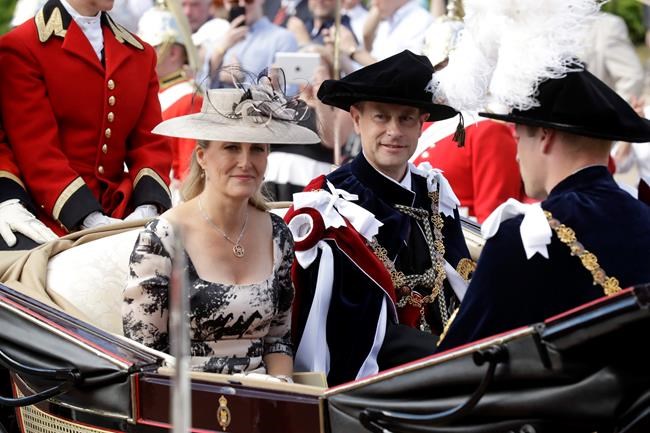
FILE - In this Monday, June 18, 2018 file photo, Britain's Prince Edward, center, in his roles as Knight Companion and his wife Sophie, Countess of Wessex, leave in a carriage after the Order of The Garter Service at Windsor Castle in Windsor, England. As the British royal family wrestles with the future roles of Prince Harry and his wife Meghan, it could look to Europe for examples of how princes and princesses have tried to carve out careers away from the pomp and ceremony of their families’ traditional duties. Prince Edward, the youngest son of Queen Elizabeth II, in 1993 launched a TV production firm that failed in 2011, and his wife Sophie tried to keep her established public relations firm going after she married Edward in 1999. (AP Photo/Matt Dunham, Pool, File)

He appears alongside the royal family at major occasions. The couple and their three children, who all have royal titles and are in direct line to the throne, have since moved to Florida.

—-

SPAIN

Members of Spain’s royal family hold down many honorary jobs, but only Princess Cristina and her now-imprisoned husband were known to be active in the private sector.

Cristina has worked for Spain’s Caixa bank foundation and the Aga Khan trust. But husband Iñaki Urdangarín, King Felipe VI’s brother-in-law, was convicted and sentenced in 2016 for using a non-profit institution he co-ran to embezzle about 6 million euros in public funds.

A court found that Urdangarin and his business partner exploited the duke’s privileged status to obtain public contracts related to sports events. In the midst of it all, Cristina and Urdangarín were removed as official royal family members. Cristina was acquitted of any criminal responsibility but her summons was a first for the then King Juan Carlos’ immediate family.

The probes seriously damaged the image of the king — once one of Spain’s most respected figures — and eroded Spaniards’ admiration for their royal family, especially as the investigations coincided with a severe economic crisis that widened the gap between rich and poor.

—-

UNITED KINGDOM

Closer to home for Harry and Meghan, British royals have in the past tried to pursue professional careers with varying degrees of success. Prince Edward, the youngest son of Queen Elizabeth II, launched in 1993 a TV production firm called Ardent that failed in 2011 after years of mediocre performance. Many of its films dealt with the royal family and its history.

His wife, Sophie, tried to keep her established public relations firm going after she married Edward in 1999, but she was embarrassed two years later by an undercover reporter pretending to be a wealthy sheikh interested in doing business with her firm. In response, she hinted that the prospective client would get greater publicity because of her royal status.

Edward and Sophie have both concentrated on full-time royal duties in recent years rather than pursue private business interests.

____

Associated Press writers Jan M. Olsen in Copenhagen, Raf Casert in Brussels, Ciaran Giles in Madrid and Gregory Katz in London contributed.

___

Follow full AP coverage at https://www.apnews.com/PrinceHarry

Report Error Submit a Tip

More Stories

Mayoral candidate Vogiatzak criticized for living outside Winnipeg

Malak Abas 4 minute read Preview

Mayoral candidate Vogiatzak criticized for living outside Winnipeg

Malak Abas 4 minute read 5:08 PM CDT

A mayoral hopeful took heat from other candidates Friday for living outside Winnipeg while running in the civic election.

Mike Vogiatzakis’s primary residence is in the Rural Municipality of St. Andrews, about 25 kilometres north of Winnipeg — a community with its own mayor and councillors.

But the funeral director said he owns a home in Winnipeg where he divides his time, and he would move to the city full-time if elected mayor.

“It doesn’t matter where a person lives. Why are we dividing St. Andrews and Manitoba and Winnipeg? I’ve met the criteria to run for mayor,” Vogiatzakis said Friday morning.

Read
5:08 PM CDT

Winnipeg, source d’inspiration pour la philanthropie canadienne

Camille Harper 7 minute read Preview

Winnipeg, source d’inspiration pour la philanthropie canadienne

Camille Harper 7 minute read Saturday, Sep. 19, 2026

Dirigé par le Franco-Manitobain d’origine Jean-Marc Mangin, l’organisme Fondations philanthropiques du Canada (FPC) sera à Winnipeg du 23 au 25 septembre prochains pour sa conférence nationale, organisée tous les deux ans. Une première pour FPC, et un retour au bercail attendu pour son président-directeur général.

Pour la première fois depuis 26 ans que l’organisme existe, FPC a choisi le Manitoba pour sa grande conférence nationale de 2026. “On a été dans plusieurs gros centres urbains du Canada, notamment Ottawa, Montréal, Toronto, Vancouver ou encore Calgary, mais ce sera notre première fois à Winnipeg,” se réjouit le PDG de FPC, Jean-Marc Mangin, lui-même originaire de Saint-Boniface.

Ce n’est toutefois pas la nostalgie de l’enfance qui a fait pencher la balance en faveur du Manitoba, mais plutôt un vent de changement observé par bon nombre dans la capitale manitobaine.

“Nous ne sommes pas les seuls dans le secteur caritatif à choisir Winnipeg,” constate Jean-Marc Mangin. “Plusieurs organismes y tiennent leurs conférences nationales cette année ou la suivante. Et ça, ça dit quelque chose sur ce qui se passe au Manitoba : c’est très actif, il y a beaucoup d’innovation sociale qui prend place.”

Read
Saturday, Sep. 19, 2026

Stable incomes, not more weapons, provide security

David Olive - Star Business Columnist, Toronto Star 5 minute read Preview

Stable incomes, not more weapons, provide security

David Olive - Star Business Columnist, Toronto Star 5 minute read Thursday, Apr. 7, 2022

Even amid a global arms race, a hike in Canadian defence spending should be a tough sell, David Olive writes.

Read
Thursday, Apr. 7, 2022

Americanizing education is pure folly

John R. Wiens 5 minute read Thursday, Apr. 8, 2021

BILL 64, if passed, would succeed in cutting some of the last strands tying education to democracy in the English-speaking western world, a movement which had its beginnings in the post-war European continent.

Friedrich von Hayek, the founder of neoclassical economic theory, persuaded the political elite of the day that their future lay in a deregulated capitalistic marketplace, and in the reduction of government investment in public services. But even he would be shocked by the latest developments in Manitoba.

A rough timeline would have had Hayek meeting the newly elected Tory leader, Margaret Thatcher, in 1975. Immediately upon her election as prime minister in 1979, she began to implement his economic theory of mass privatization of state assets. The oil and gas industry and the national British Airways were privatized. The powerful miners’ unions were relentlessly pilloried as enemies of the state.

Public services such as health and education were methodically dismantled, systematically privatized in the name of personal choice, while taxes for the wealthy were reduced. In the name of creativity, entrepreneurship and innovation, among other public goods, airlines, telecommunications, banking, trucking and environmental protections were deregulated. Is this starting to sound familiar?

Prairie sculptor Joe Fafard pays tribute to revered Dutch master

Alan Small 6 minute read Preview

Prairie sculptor Joe Fafard pays tribute to revered Dutch master

Alan Small 6 minute read Tuesday, Jul. 10, 2018

Vincent van Gogh has been inspiring artists for close to 150 years. For sculptor Joe Fafard, the Dutch master’s life and art have been objects of fascination for many of his 75 years.

So much so that Fafard’s latest Winnipeg exhibition, The Essential Joe Fafard — Van Gogh and Other Inspirations, which opened Friday at Mayberry Fine Art, includes several sculptures of van Gogh, who began painting in 1881 but lived a short, turbulent life, fraught with mental illness, before committing suicide in 1890 at the age of 37.

“Starting about 1983, I started doing portraits of van Gogh,” Fafard says in a phone conversation from his home near Regina.

“Essentially, people used his life, his career and his anguish as sort of a stereotype of an artist’s blueprint for artistic endeavour. I became quite fascinated to see that he was the Christ and other artists were the apostles.”

Read
Tuesday, Jul. 10, 2018

Premier League would be all too relieved if Blues simply went away for a while

Jerrad Peters 6 minute read Preview

Premier League would be all too relieved if Blues simply went away for a while

Jerrad Peters 6 minute read 2:08 PM CDT

Manchester City will face Liverpool in the Premier League next weekend.

That is a statement of fact. The match will kick off Sunday, October 11 at 4:30 p.m. local time (10:30 a.m., CT, FuboTV) at Anfield, though the 90 minutes that follow will be more a spectacle than a game, if not a circus.

By now the football world — as well as the general news cycle and relevant authorities — has had more than a week to absorb the shock of the sport’s biggest tremor of recent times.

Man City, according to the findings of an independent commission, broke more than 100 of the Premier League’s financial rules between 2009 and 2018. Its breaches, per the ruling, were deliberate, premeditated and at industrial scale.

Read
2:08 PM CDT