Taking flight
Author’s bond with Harris’s hawk offers ruminations on falconry, anxieties and purpose
Advertisement
Read this article for free:
or
Already have an account? Log in here »
To continue reading, please subscribe:
Digital Subscription
One year of digital access for only $1.44 a week*
- Enjoy unlimited reading on winnipegfreepress.com
- Read the E-Edition, our digital replica newspaper
- Access News Break, our award-winning app
- Play interactive puzzles
*Billed as $5.77 plus GST every four weeks. After 52 weeks, price increases to the regular rate of $19.95 plus GST every four weeks. Offer available to new and qualified returning subscribers only. Cancel any time.
To continue reading, please subscribe:
Add Free Press access to your Brandon Sun subscription for only an additional
$1 for the first 4 weeks*
- Enjoy unlimited reading on winnipegfreepress.com
- Read the E-Edition, our digital replica newspaper
- Access News Break, our award-winning app
- Play interactive puzzles
*Your next Brandon Sun subscription payment will increase by $1.00 and you will be charged $17.95 plus GST for four weeks. After four weeks, your payment will increase to $24.95 plus GST every four weeks.
Read unlimited articles for free today:
or
Already have an account? Log in here »
After a harrowing battle with breast cancer in her 40s, Candida Meyrick sought to recover and find a new sense of purpose by taking up the ancient sport of falconry.
Be More Bird is not just a chronicle of her experiences training, hunting with and bonding to her bird. As the hortatory title indicates, it is arranged as a self-help book for her, her bird and, by implication, those who choose to read it. What it does not recommend is being more voracious and predatory like a raptor.
A slender, spare book (with generous amounts of white space), it’s written simply and directly. Although it presents a thorough and attractive account of the life and skills of the bird she adopts, whether you’ll like Be More Bird will depend on what you think about falconry.
Jessie Wilkington photo
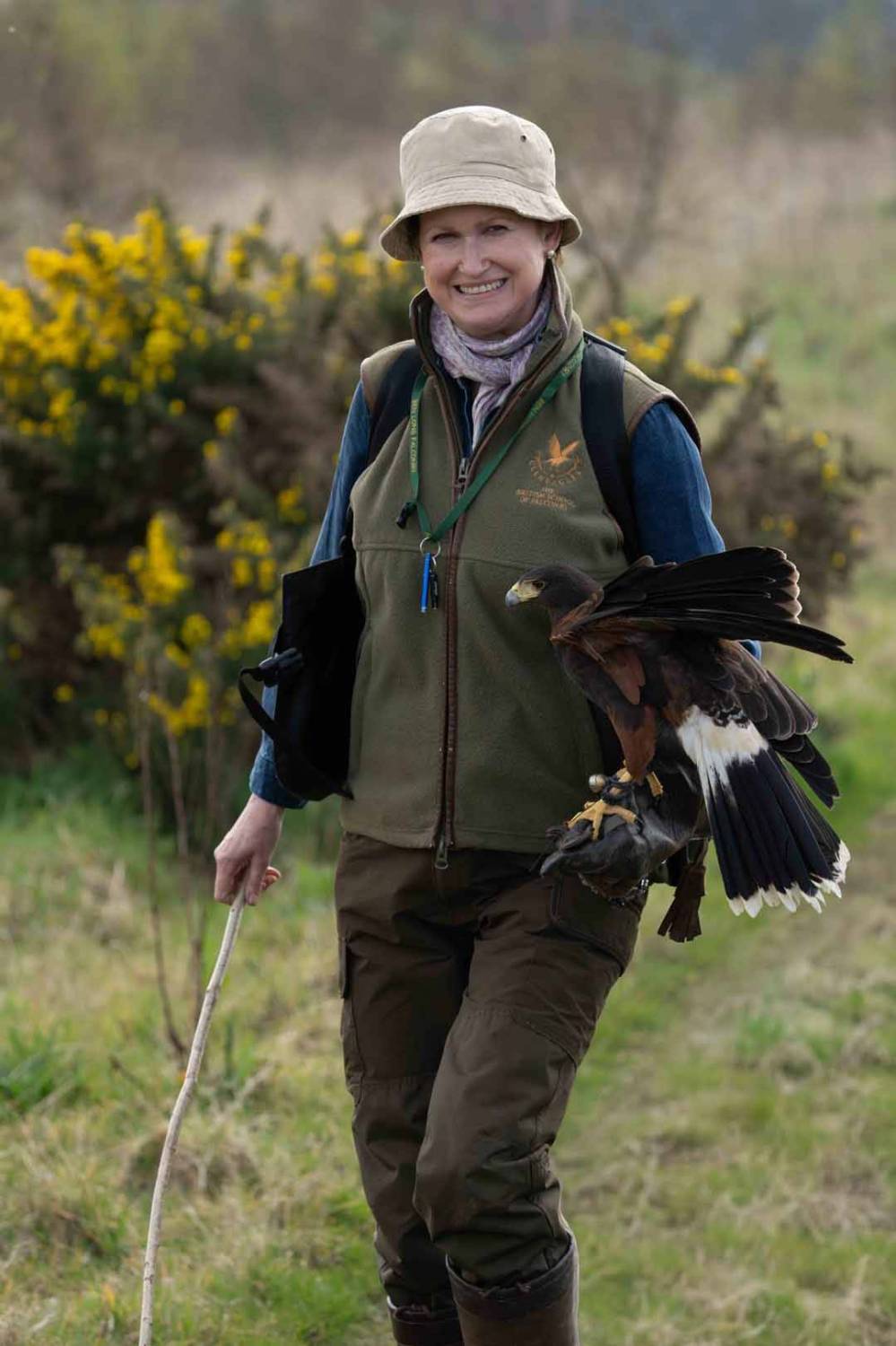
Candida Meyrick bought Bird, a Harris’s hawk, when the medium-large accipiter was 12 weeks old.
Candida Meyrick is the author (as Candida Clark) of six highly regarded novels published between 1998 and 2006. Since then she has written essays, book reviews, short fiction and poetry, devoting her creative energies chiefly to large landscape paintings, some inspired by her outings as a falconer.
Her bird (a female which she simply calls “Bird”) is technically not a falcon. It’s a Harris’s hawk, a handsome, medium-large accipiter related to eagles, harriers, kites and buzzards. A new-world bird, it’s found mainly in the American southwest, Mexico and along both coasts of South America down through Brazil, Chile and central Argentina.
Harris’s hawks are among the most agile and intelligent of the accipiters; this makes them easy to train and therefore very popular among falconers, especially beginners, around the world.
Meyrick bought Bird at 12 weeks old from a breeder she simply calls “Expert Falconer.” She takes Bird to her estate on Angelsey, a large island off the northwest coast of Wales. There she’s built a palatial mews (housing quarters) where Bird spends her nights, off-hours and molting period.
Since Bird was taken from her nest without the benefit of any parental training, Meyrick assumes the role of surrogate parent while learning to be a falconer. It is at times a gripping account of their mutual adventures and advances.
In the process Meyrick provides a brief history of falconry (few women participate) as well as insights into its peculiar vocabulary, equipment and techniques. While there are many training manuals and practical guides to falconry, her account makes it much more personal and engaging.
It’s easy to relate to her anxieties, dedication, excitement and sense of responsibility and purpose in helping Bird reach her potential. To describe it as Bird’s “soul purpose,” however, underlines Meyrick’s questionable tendency to anthropomorphize the hawk.

The account reaches its height when Meyrick coaxes Bird to become her best self, her “most bird.” Bird overcomes her fears and takes chances, swooping into an unfamiliar, potentially dangerous place in search of prey.
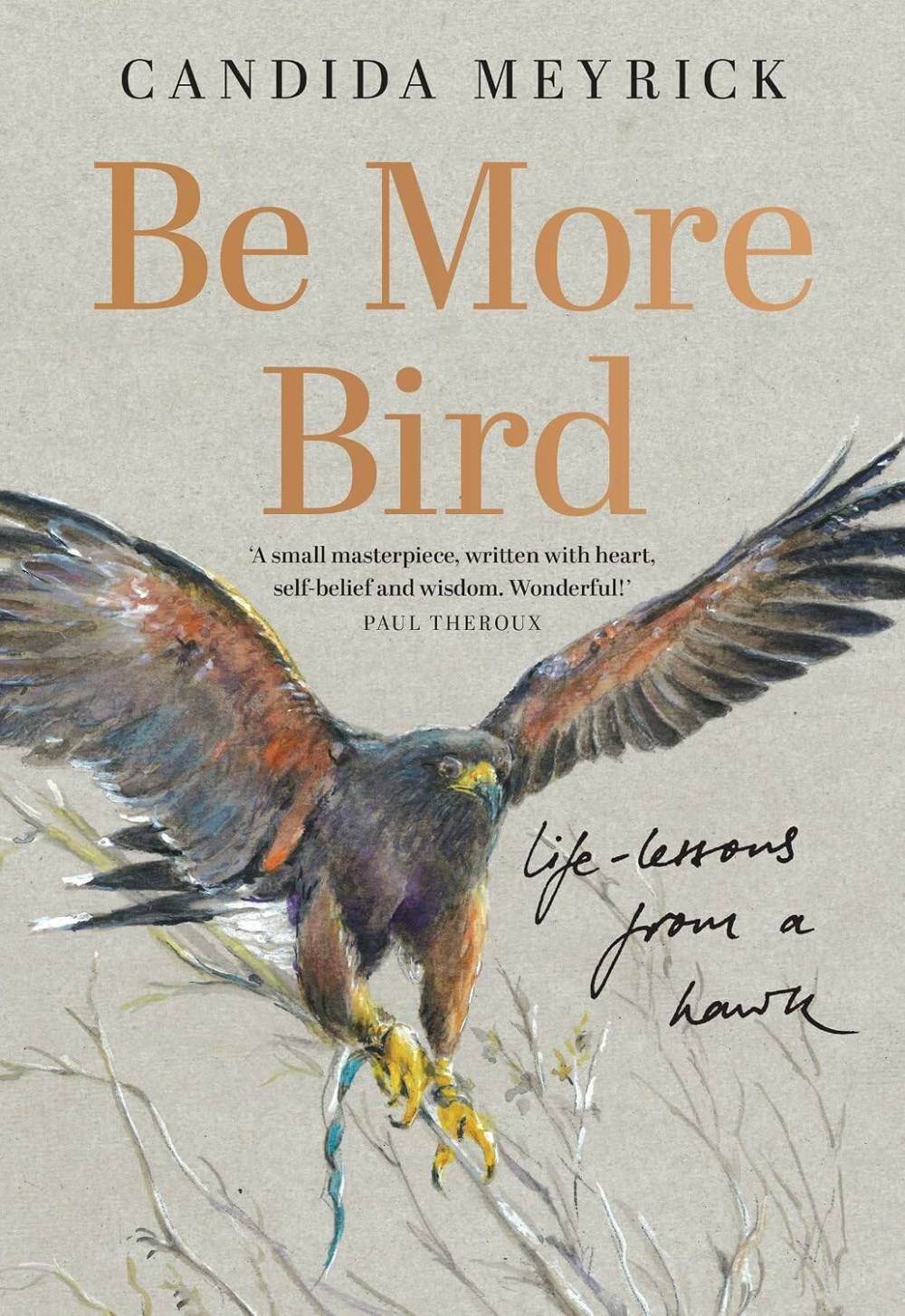
Be More Bird
All of the 25 chapters except for the very first begin with a “life lesson,” describing in brief what Meyrick has learned from Bird at every step along the way. The ultimate lesson is this: “Important for us all to be more Bird. Show up for yourself, your dreams; slow down; surrender to the process.” While this may be helpful advice, it is neither original nor profound.
As revealing and engaging as this book is, it will likely not be attractive to those who object to falconry — those adverse to the practice of people using wild creatures merely for their own personal entertainment or edification.
That Bird is a Harris’s hawk provides an added problem — she is a new world bird out of her element in Wales. Harris’s hawks are the most social of the raptors, hunting together as a team and cooperating in nesting. Bird would be most herself if allowed to do this.
Gene Walz is the author of Happiness Is a Rare Bird: Living the Birding Life.