Extraordinary espionage

KGB agent in Iran’s defection to MI6 recalled in powerful, riveting prose

Advertisement

Advertise with us

In factual accounts of Cold War spy defections, or in movie and TV thrillers, there are a few basic reasons for deciding to undermine your own nation by providing secret information to the enemy: disillusionment with your government; getting a better life for yourself and family; adventure; fear for your life; money.

Read this article for free:


By clicking the button above, an account will be created and you will begin to receive some of our recommended newsletters. You may opt out of any newsletter by visiting your Email and Communication Preferences page or by clicking "unsubscribe" at the bottom of any email.

or

Already have an account? Log in here »

To continue reading, please subscribe:

Digital Subscription

One year of digital access for only $1.44 a week*

  • Enjoy unlimited reading on winnipegfreepress.com
  • Read the E-Edition, our digital replica newspaper
  • Access News Break, our award-winning app
  • Play interactive puzzles

*Billed as $5.77 plus GST every four weeks. After 52 weeks, price increases to the regular rate of $19.95 plus GST every four weeks. Offer available to new and qualified returning subscribers only. Cancel any time.

To continue reading, please subscribe:

Add Free Press access to your Brandon Sun subscription for only an additional

$1 for the first 4 weeks*

  • Enjoy unlimited reading on winnipegfreepress.com
  • Read the E-Edition, our digital replica newspaper
  • Access News Break, our award-winning app
  • Play interactive puzzles
Start now

*Your next Brandon Sun subscription payment will increase by $1.00 and you will be charged $17.95 plus GST for four weeks. After four weeks, your payment will increase to $24.95 plus GST every four weeks.

In factual accounts of Cold War spy defections, or in movie and TV thrillers, there are a few basic reasons for deciding to undermine your own nation by providing secret information to the enemy: disillusionment with your government; getting a better life for yourself and family; adventure; fear for your life; money.

British author Ben Macintyre, in his account of how KGB Major Vladimir Kuzichkin supplied a treasure trove of intelligence to Britian’s spy service, MI6, before defecting, has discovered another, unusual reason: erectile dysfunction.

Yes, erectile dysfunction.
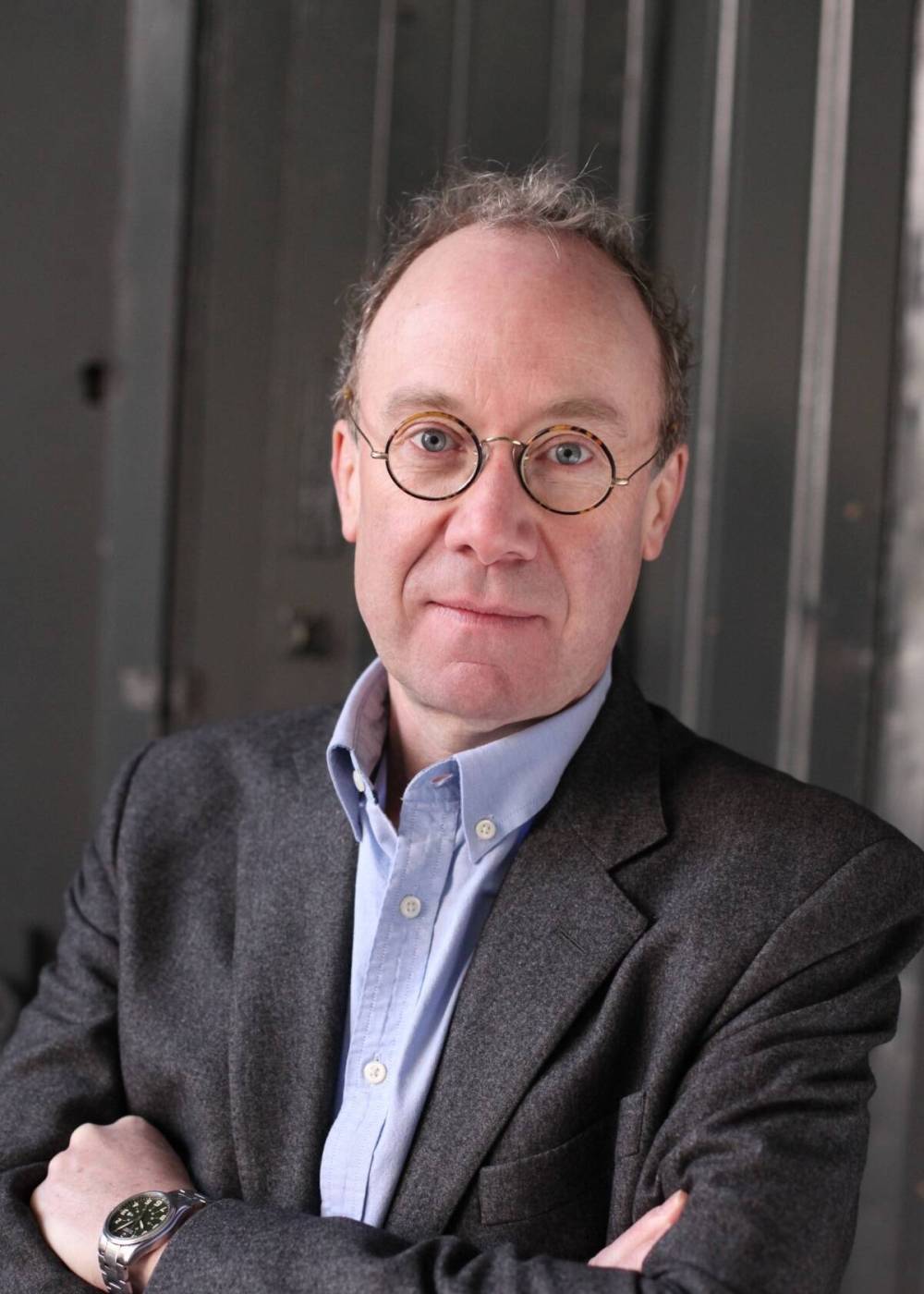
Justine Stoddart photo
                                Ben Macintyre

Justine Stoddart photo

Ben Macintyre

It’s true Kuzichkin was also disillusioned by the way the KGB was operated, but of greater concern was his wife’s disillusionment with his affliction, coupled with the fact the Soviets had no treatment for the condition; he saw defection to the West as the only way to get medical help and save his marriage.

Macintyre — a bestselling author of The Spy and the Traitor, among others, and a columnist and associate editor at The Times (U.K.) — knows his way around the murky world of espionage, and has written a powerful account of a case with vastly broader repercussions than the norm.

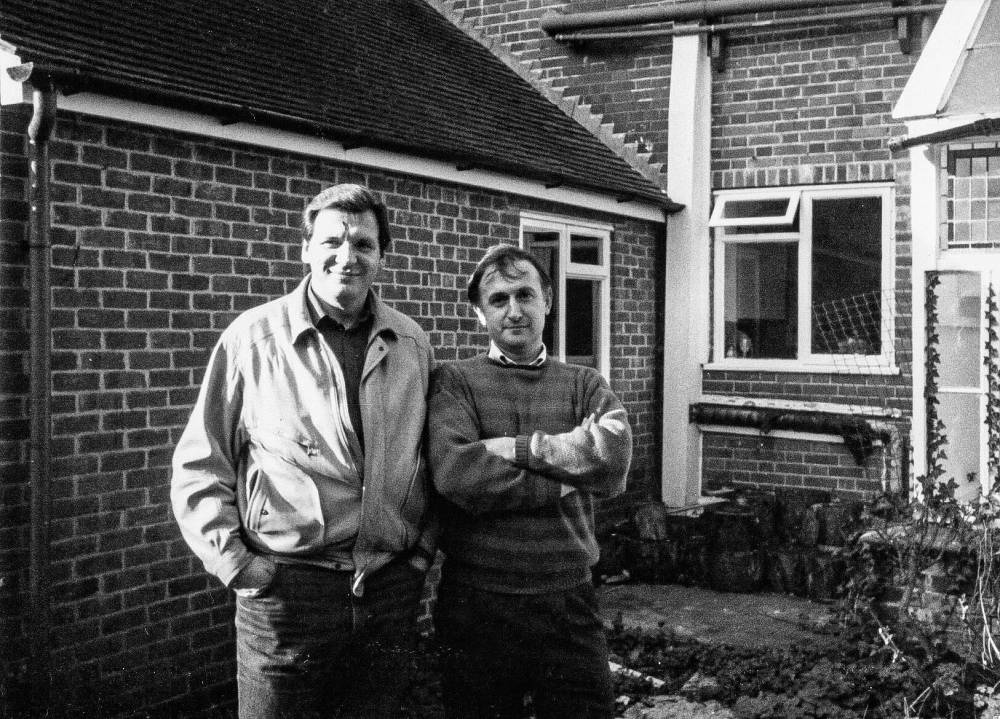
Kuzichkin did well in his KGB training and seemed destined for a successful career spying for his own country. At the same time, Ian McCredie was following a similar path in MI6; the two would meet in Tehran in the late 1970s, each spying on the Iranian regime of the Ayatollah Khomeini for their respective intelligence services.

By 1981, Kuzichkin was the best Soviet officer in the Iranian capital, running spies and working with a hidden network of Iranian communists who operated a front as the Tudeh Party, but whose ultimate aim was to overthrow the fledging Islamic regime.

The KGB agent was a godsend to the British; he knocked on the embassy door and asked to talk to McCredie, whose cover was a trade representative, and offered his services. Once MI6 was convinced Kuzichkin wasn’t a plant to trap the British, Kuzichkin began supplying crucial information about the Soviet spy network, internal politics as well as information gleaned from his own spies in Iran.

The British, and the American CIA with whom it shared the intel, were ecstatic at their good fortune in having an agent like Redwood, the codename Kuzichkin was given by McCredie (because at their first meeting he stood towering over his British contact like a mighty tree). Macintyre describes it as one of the biggest intelligence hauls in MI6 history.
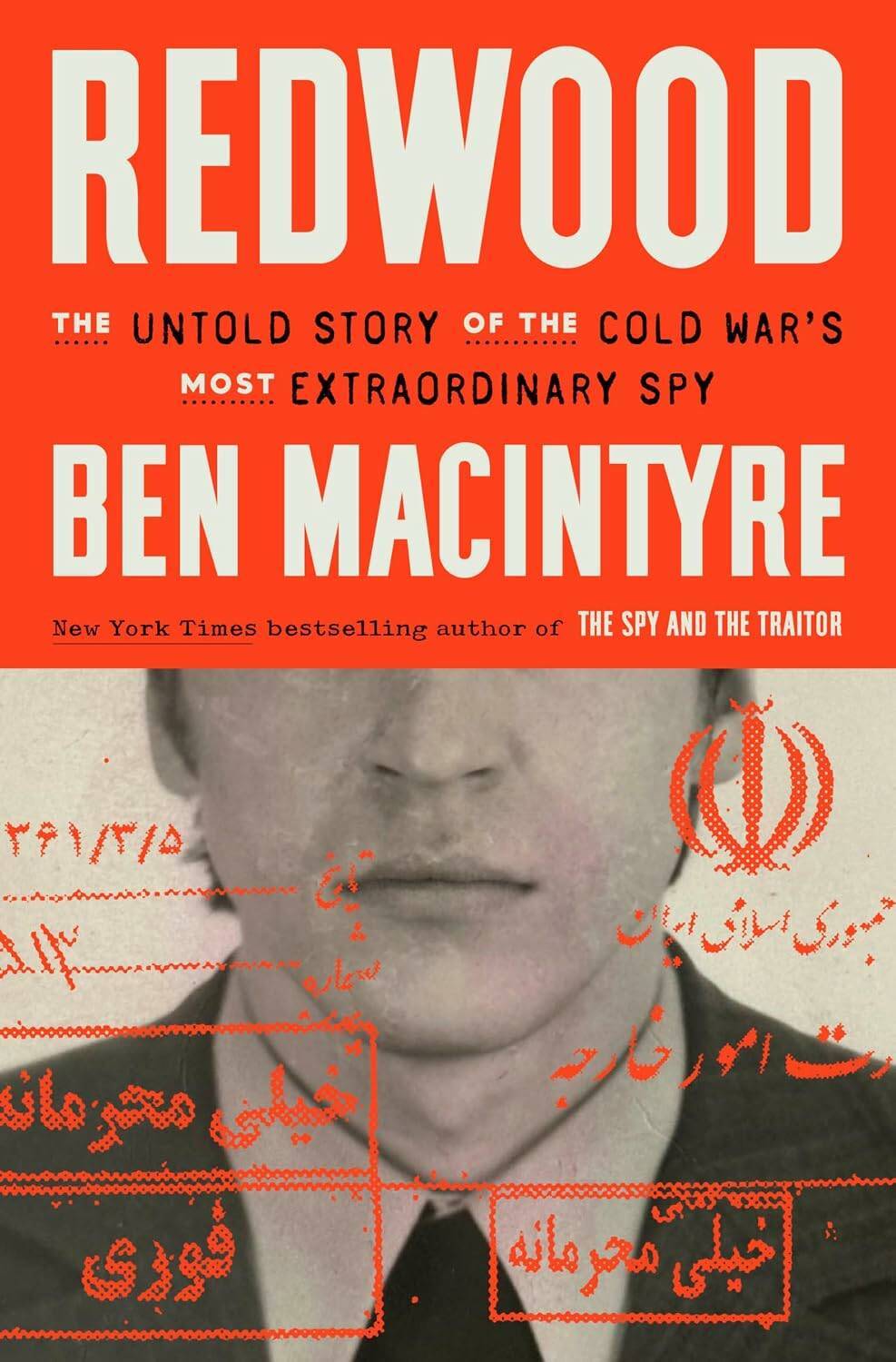
Redwood

Redwood

Macintyre’s extensive research, his feel for the spy game and his captivating writing make Redwood both interesting and exciting. He captures the fear and danger of operating as spies in post-revolution Iran (especially a series of oh-so-close calls as Kuzichkin finally flees from Iran) and the exhilaration of outwitting your enemies.

Once Redwood is safely out of the country in 1983, the British and Americans decide it’s a good idea to share information on Soviet activities in Iran and the Tudeh with Iran, partly to thwart Soviet plans and to partly show goodwill to Iran.

The Western powers were pleased with the move as it wrecked the Iranian communist party, confounded the KGB and averted a coup that could have changed the course of the Cold War.

What they hadn’t predicted was the Iranian response of show trials, lynch mobs, mass arrests and executions (often televised). British agent Nigel McCoy admitted: “We didn’t make the leap of imagination. We were seeing the trees rather than the forest.”

Redwood settled in rural Britain, where he became an acupuncturist; he regained his sexual function from either surgery or the absence of extreme stress from the spying. He remarried and had a child. His first wife was in Moscow and was trapped there when he escaped from Iran. Kuzichkin died in 2009.

If Viagra had been approved for medical use in 1981 instead of 1998, Kuzichkin might never have approached MI6, and a Tudeh coup could have succeeded, backed by Soviet military force, Macintyre posits. Perhaps the U.S.S.R. would have won the Cold War by invading Iran, or have triggered a nuclear confrontation.
Ian McCredie photo
                                Vladimir Kuzichkin (left) and Ian McCredie served as spies in Iran for the KGB and MI6, respectively.

Ian McCredie photo

Vladimir Kuzichkin (left) and Ian McCredie served as spies in Iran for the KGB and MI6, respectively.

Predictions like that, he adds, are of course pointless. Suffice to say a Soviet KGB agent’s erectile dysfunction created a massive upheaval in global political and military affairs, with consequences far, far beyond what any of the protagonists imagined.

Chris Smith is a Winnipeg writer.

Report Error Submit a Tip

More Stories

Documentary film fest brings truth to Cinematheque

Ben Waldman 5 minute read Preview

Documentary film fest brings truth to Cinematheque

Ben Waldman 5 minute read 2:01 AM EST

Documentary film is the star of the month at the Dave Barber Cinematheque.

Starting today and running through Nov. 8, Cinematheque and the Winnipeg Film Group play host to the 18th edition of the Gimme Some Truth festival, an annual event devoted to sharing new and restored local, Canadian and international documentaries.

Artist and curator Christina Oyawale — a recent graduate of the University of Manitoba’s master of fine arts program — is the festival’s short-film programming assistant.

Oyawale, who uses they/them pronouns, says the goal of the festival “feels like the opportunity to sit in our collective humanity,” by presenting films about some of the “most human topics affecting us as a society.

Read
2:01 AM EST

They say a man's home is his castle; grand old Queen Anne house takes the adage literally

Ben Waldman  9 minute read Preview

They say a man's home is his castle; grand old Queen Anne house takes the adage literally

Ben Waldman  9 minute read Monday, Apr. 26, 2021

To call the house at 494 College Ave. anything other than a castle would seem wrong, so we’ll call it the Castle. It’s three storeys tall but seems taller, 115 years old but seems older, and it is right smack in the middle of a neighbourhood, right in the middle of a city, where its turreted existence inspires confusion, bewilderment and a touch of awe. It’s a place both out of time and out of place, but somehow, it feels like it’s exactly where it belongs.

“It definitely stands out around here,” says Ryan Lavallee, a 33-year-old man who lives two doors down, on the second floor of a house without turrets of its own. “Kids are always stopping to look at it. Even adults do. I have.”

In 2015, Vanh Thiep Hoang looked at it, and couldn’t stop. Hoang had come to Winnipeg with his family from Vietnam, where he worked as a surgeon. He marvelled at the Queen Anne-style castle — its gabled roof, its orange bricks, its ten-foot ceilings, and its playful disregard of convention and defiance of expectation. It cast a bit of a spell.

“It reminded me of palaces I’d seen where I was from,” and of buildings in Ukraine, where he studied, says the 63-year-old Hoang, who emerges from the castle’s front door wearing board shorts and metal-rimmed glasses, his thick head of hair as attention-grabbing as the castle he calls home.

Read
Monday, Apr. 26, 2021

4/20 party organizers lose their mellow

Solomon Israel 4 minute read Preview

4/20 party organizers lose their mellow

Solomon Israel 4 minute read Thursday, Apr. 18, 2019

The organizing committee behind the subdued 4/20 cannabis celebration expected at the Manitoba Legislative Building this Saturday has been torn apart by internal political rifts over the past year, as former participants accuse head organizer Steven Stairs of embezzling money meant to fund the event — allegations Stairs vigorously denies.

Tracey Cecchini, who identified herself to the Free Press as a member of the Winnipeg 420 Organizing Committee, said other committee members and event sponsors "all pitched in money" to help fund the event last year.

"Unfortunately the money was never put into the treasury, the money was mishandled," said Cecchini.

"He was using it to throw parties at his house, he was paying his rent, he wasn't putting it back into the 420 (Organizing Committee) for our permits, and (for) what we were going to do for this year."

Read
Thursday, Apr. 18, 2019

Rock musical returns to Winnipeg stage after 14 years

Ben Waldman 5 minute read Preview

Rock musical returns to Winnipeg stage after 14 years

Ben Waldman 5 minute read 6:42 AM EST

Can any household honestly claim to be normal?

The Goodmans — the central family of the rock musical Next to Normal — seem perfectly average on the surface. But it takes only a lyric or two before the domestic mythology gets punctured.

“They’re the perfect loving family, so adoring and I love them every day of every week,” sings Diana Goodman, the matriarch, as she introduces her family in the play’s first song, Just Another Day. “So my son’s a little s—-, my husband’s boring and my daughter, though a genius, is a freak.”

Diana’s bold, she’s honest, she’s strong and for more than 15 years, she has been dealing with a diagnosis of bipolar disorder. Her energy shifts and swings, but her commitment to her family’s well-being is steadfast.

Read
6:42 AM EST

Shifting line on COVID-19 statistics

Larry Kusch 5 minute read Preview

Shifting line on COVID-19 statistics

Larry Kusch 5 minute read Friday, Aug. 7, 2020

Last week, Saskatchewan Premier Scott Moe provided residents of his province with the kind of detailed coronavirus pandemic information rarely seen in neighbouring Manitoba.

Concerned by the rapid spread of COVID-19 in Saskatchewan Hutterite colonies, Moe served up some cold facts July 29: of the 322 active cases in the province that day, 244 were from colonies. In an update the following day, Saskatchewan officials backed away from specifically mentioning Hutterite colonies, instead citing infection totals for "multiple communal living settings."

Manitoba has also seen a recent spike in Hutterite case counts, but its residents have received scant information from their provincial government.

For a time, the province did refer to certain cases as being linked to Hutterite colonies, but quickly stopped when it received blowback from the communities for being singled out. The public can now only guess the actual numbers based on regional health authority counts.

Read
Friday, Aug. 7, 2020

Digital media an illusion of democracy

Rod Lastra 5 minute read Preview

Digital media an illusion of democracy

Rod Lastra 5 minute read 2:01 AM EST

I recently finished reading The Obsolescence of the Human (Die Antiquiertheit des Menschen) by Günther Anders, a German philosopher and critical theorist known for his critique of technology and modern society.

First published in German in 1956, the book appeared in English for the first time only in 2025. It is an unsettling work. Writing in the age of television, industrial automation and the atomic bomb, Anders worried that humanity was becoming more technologically capable without becoming better able to understand, much less control, what it had created.

Seven decades later, his observations seem remarkably prescient. Quoting a tale set in his fictional land of Molussia, Anders writes: “The less people have a voice, the more they are given to look at and see.”

Anders was describing a world in which images brought distant events into people’s living rooms while decisions shaping those events remained beyond their influence. The world appeared increasingly accessible, but accessibility was not agency. He warned that images could become “stultification-devices”: representations that reveal fragments of reality while obscuring the relationships needed to understand and judge them. One could watch history unfold without having much say in its direction.

Read
2:01 AM EST