British colonization of underworld a raucous romp straddling sci-fi, satire
Advertisement
Read this article for free:
or
Already have an account? Log in here »
To continue reading, please subscribe:
Digital Subscription
One year of digital access for only $1.44 a week*
- Enjoy unlimited reading on winnipegfreepress.com
- Read the E-Edition, our digital replica newspaper
- Access News Break, our award-winning app
- Play interactive puzzles
*Billed as $5.77 plus GST every four weeks. After 52 weeks, price increases to the regular rate of $19.95 plus GST every four weeks. Offer available to new and qualified returning subscribers only. Cancel any time.
To continue reading, please subscribe:
Add Free Press access to your Brandon Sun subscription for only an additional
$1 for the first 4 weeks*
- Enjoy unlimited reading on winnipegfreepress.com
- Read the E-Edition, our digital replica newspaper
- Access News Break, our award-winning app
- Play interactive puzzles
*Your next Brandon Sun subscription payment will increase by $1.00 and you will be charged $17.95 plus GST for four weeks. After four weeks, your payment will increase to $24.95 plus GST every four weeks.
Read unlimited articles for free today:
or
Already have an account? Log in here »
If you were to colonize hell, how would you do it? Let’s look at who empired best.
The Roman Empire, long lasting for sure, stretched centuries, from 27 BC to about 476 AD. The Mongols created the largest contiguous land empire, but only from 1206 to 1368.
But the Brits? The British created the largest global maritime empire that lasted centuries, from 1583 all the way to 1997. These people knew how to empire.
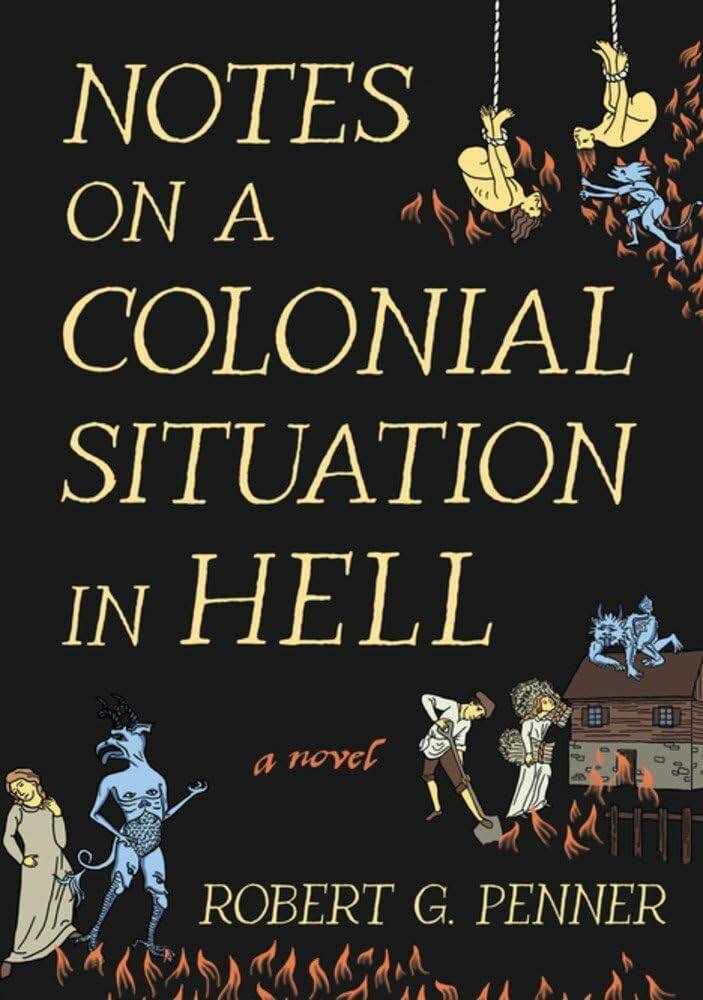
Notes on a Colonial Situation in Hell
Of course, if the Brits had colonized hell, it would have messed with their slogan: The Sun Never Sets on the British Empire. When the reader is first introduced to British hell in Robert G. Penner’s wonderfully imagined Notes on a Colonial Situation in Hell, the sun does not rise nor set. Hell’s sky glowed an endless eerie yellow that played, well, hell with the colonists’ attempts to sleep.
Penner, a Winnipeg writer, is a master of science fiction. His novel Strange Labour was named one of Publisher Weekly’s best science fiction books of 2020. He has written many short stories and novellas, some under pseudonyms including William Squirrell, and is the founder and editor of the online science fiction zine Big Echo: Critical Science Fiction.
Notes straddles science fiction and satire. Penner’s hell is so very British, with all the pomposity that empire imposed on its colonies: bridge parties among the powerful and gin and tonics at the club. Hell’s colonists viciously subdue the natives, in this case demons, shooting and oppressing them to take the best land.
The damned are made to work on plantations. Like the actual Victorian columnists, the colonists of hell do not see the natives as human. Of course in this case, the colonists are accurate, an example of the upside-down world of a colonized hell.
Descriptions of the demons are artworks unto themselves. One is an eel with a child’s face. Another is a “great, wrinkled, hairless head as big as a barrel walking about on three-fingered arms growing out from where the ears should have been.” A character named Chickenhead, painting a picture with its name alone, has one yellow eye that follows people around the room.
One storyline has young girls, Barnardo orphans, brought to hell to work as domestics, much the way Barnardo’s sent 30,000 British Home Children to Canada to work as farms labourers and domestic servants. One of the girls has willingly gone to hell to search for her brother, a suicide she believes to be held in a forest of lost souls, tormented by enormous crows with human hands for feet.

British hell follows the playbook of Pulitzer Prize-winning historian Caroline Elkins’ A Legacy of Violence: A History of the British Empire. Her 2022 study recounted the British Empire’s use of violence to maintain its imperial interests throughout the 20th century.
In Notes, scheming powerbrokers manipulate hell’s political situation to justify advancing to Hell Undiminished, a previously unconquered portion. Lurid murders of missionaries and military people are used as an excuse for Whitehall — those “up above” — to send troops and slaughter yet more demons.
For all the violence — and it is extreme, with eyes gouged out and genitals sliced off and shoved in victims’ mouths — Penner’s story is quite amusing, the writing witty. Imagine the challenge of running a séance and fortune-telling business in hell.
The hypocrisy is beautifully captured. A missionary working to convert the dead souls into Christians leads the Governor of Hell to comment, “We never would have let the missionaries in if we thought they could actually succeed.”
Julie Carl is a freelance journalist who lives in Toronto. It is not at all hellish.