Serial killers’ kids convene in dark psychological thriller
Advertisement
Read this article for free:
or
Already have an account? Log in here »
To continue reading, please subscribe:

Digital Subscription
One year of digital access for only $205*
- Enjoy unlimited reading on winnipegfreepress.com
- Read the E-Edition, our digital replica newspaper
- Access News Break, our award-winning app
- Play interactive puzzles
*First annual payment billed as $205.00 + GST for one year. This annual subscription will automatically renew at $233.00 + GST every 52 weeks (10% off the regular annual price of $259.35). Offer available to new and qualified returning subscribers only. Cancel any time.
To continue reading, please subscribe:
Add Free Press access to your Brandon Sun subscription for only an additional
$1 for the first 4 weeks*
- Enjoy unlimited reading on winnipegfreepress.com
- Read the E-Edition, our digital replica newspaper
- Access News Break, our award-winning app
- Play interactive puzzles
*Your next Brandon Sun subscription payment will increase by $1.00 and you will be charged $17.95 plus GST for four weeks. After four weeks, your payment will increase to $24.95 plus GST every four weeks.
Read unlimited articles for free today:
or
Already have an account? Log in here »
Guilt by association or inherited guilt are contentious issues, even if they are rarely openly stated. For Nicola Fischer and a small group of people attending a retreat in V.A. Vasquez’s debut novel The Death Row Club, being the son or daughter of a serial killer opens their lives to exploitation, distrust and loneliness that only people who have gone through the same kinds of experiences can really understand.
Vasquez was born and raised in New York, and is currently a teacher of English in Buffalo. She spent five years in Scotland teaching at the University of Glasgow.
Connections among retreat attendees begin on the plane when Nicola meets another member of the new club, Zach. She also hopes to renew her friendship with a second member of the group, Greer, the maker of a true-crime TV miniseries called To Catch a Killer, about Nicola’s investigation into several murders committed by someone the media has dubbed the Ellicott Creek Ripper. When the filmmaker identifies Nicola’s father as the guilty party, she is torn between the guilt of not discovering her father’s actions sooner and a sense of betrayal about the tone and content of Greer’s commentary on the case.
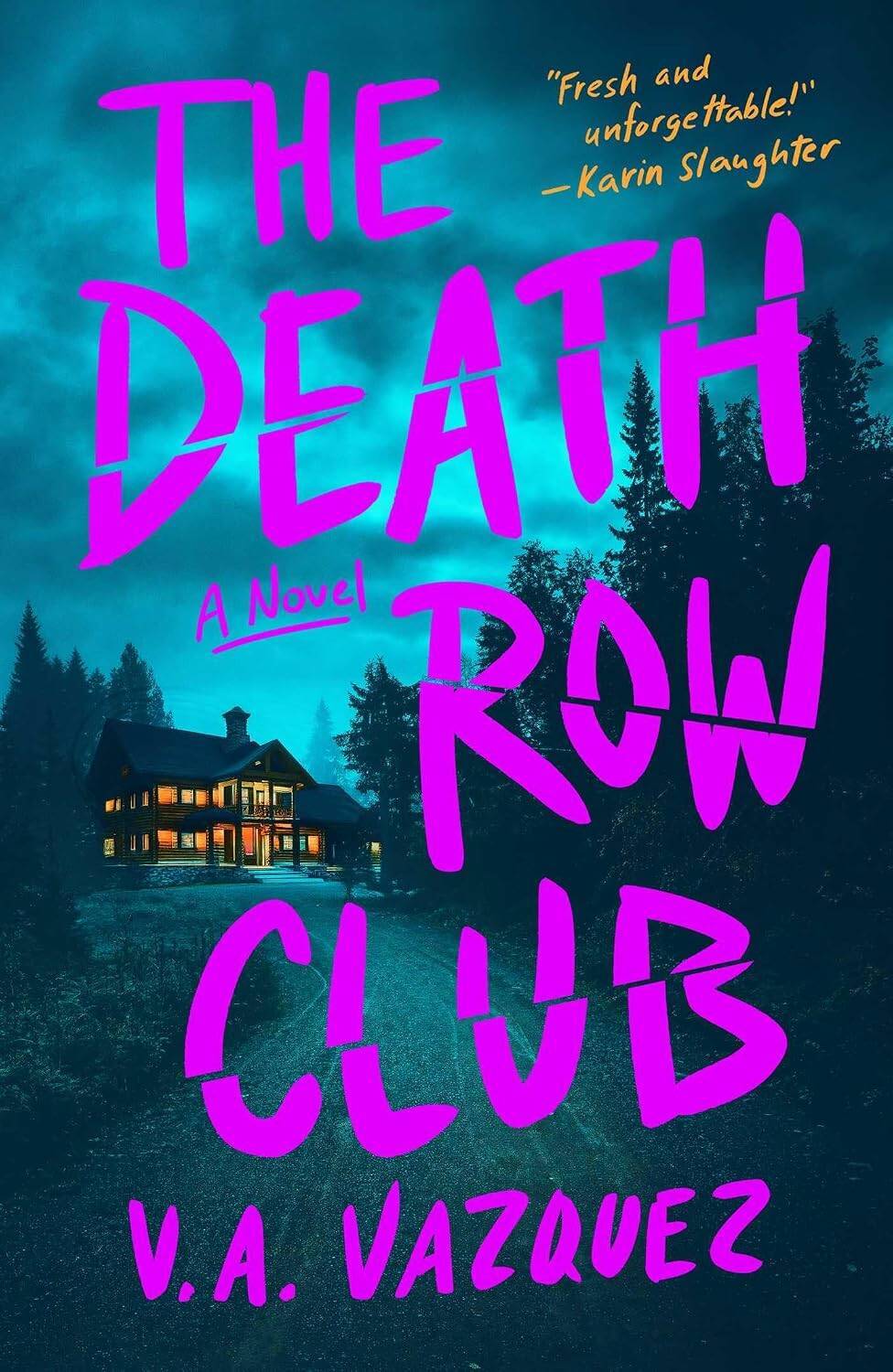
The question of how much the sons and daughters of the murderers knew about their parents’ crimes, and how much influence they had over what happens, runs throughout the book. Nicola believes that she influenced her father to stop killing for 20 years, but is still struggling with the question of whether she could have stopped him altogether. Similarly, the other members of the group consider their own influence over their parents’ actions and wonder if they could have ended the killings.
Meanwhile, an outsider named Steffani is attempting to run from her father, who she claims is violent and murderous. When she arrives at the lodge where the others are staying, she disturbs the fragile peace the others have finally achieved.
Zach offers to drive her home; when he fails to return from his errand, it raises more questions and suspicions among the group. All the while, relationships are forming and changing among group members as they try to sort out their feelings about the others in the Death Row Club — and what might have happened to Zach.
Themes of trust and betrayal and good versus evil run through the book. “‘Is it possible to do bad deeds and still be a good person?’” asks Nicola, who narrates most of the book (although several chapters by Steffani provide a contrast to the main narrative). While Nicola’s father is in prison, Steffani’s father is still at large and looking for her, adding tension and urgency to these sections.
Other than some minor potential confusion as the author switches from one narrator to another (each chapter begins with the narrator’s name to help readers keep track of who is speaking), the story is generally well written and easy to follow. It’s dark at times, with themes of trust, betrayal and friendship.

While most readers obviously won’t relate to being the children of serial killers, they may find themselves identifying with characteristics of certain characters and their interactions with the people around them, whether sympathetic or hostile.
Susan Huebert is a Winnipeg writer and pet sitter.