Backcountry baron
Minnesota paddler’s many adventures in Boundary Waters, Canadian Shield chronicled
Advertisement
Read this article for free:
or
Already have an account? Log in here »
To continue reading, please subscribe:

Digital Subscription
One year of digital access for only $205*
- Enjoy unlimited reading on winnipegfreepress.com
- Read the E-Edition, our digital replica newspaper
- Access News Break, our award-winning app
- Play interactive puzzles
*First annual payment billed as $205.00 + GST for one year. This annual subscription will automatically renew at $233.00 + GST every 52 weeks (10% off the regular annual price of $259.35). Offer available to new and qualified returning subscribers only. Cancel any time.
To continue reading, please subscribe:
Add Free Press access to your Brandon Sun subscription for only an additional
$1 for the first 4 weeks*
- Enjoy unlimited reading on winnipegfreepress.com
- Read the E-Edition, our digital replica newspaper
- Access News Break, our award-winning app
- Play interactive puzzles
*Your next Brandon Sun subscription payment will increase by $1.00 and you will be charged $17.95 plus GST for four weeks. After four weeks, your payment will increase to $24.95 plus GST every four weeks.
Read unlimited articles for free today:
or
Already have an account? Log in here »
Minnesotan Bob O’Hara was a young lad when he fell in love with camping and canoeing on the Boundary Waters that stretch from northern Minnesota to the Canadian Shield.
He first launched a canoe as a Boy Scout in the 1950s, and as of last summer you could still find him on the border lakes, his 67th consecutive year on the waterways that launched his 50-year odyssey of Far North expeditions. In Where the Green Light Shines, author Ryan Rodgers describes it as “an astonishing run, every year from the age of 18 to 84.”
As remarkable as that seems, it is the five decades O’Hara spent paddling through northern Canada — mostly as a leader, dealing with often horrendous weather, one set of rapids after another, food shortages and a myriad of other concerns while living in the exhilaration of discovery and of communing with nature — that tell the real story of a life lived large, outside the constraints of everyday urban existence.
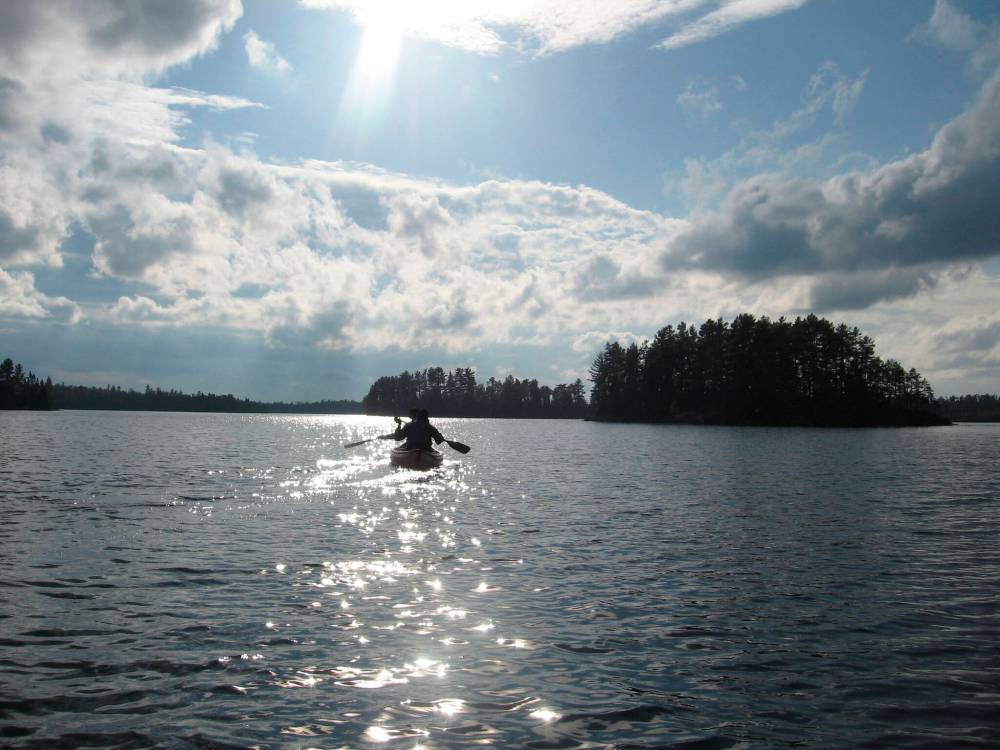
Giovanna Dell’Orto / The Associated Press files
Bob O’Hara has been paddling the Boundary Waters of northern Minnesota for 67 consecutive years, and has been undertaking expeditions to the Far North for a half century.
Not that O’Hara didn’t have to work for a living and to finance his adventures. He began a teaching job in 1963 and started what he’d continue throughout his career: taking students canoeing and camping in the Boundary Waters. During the first five years of the job, he taught for 180 days and camped for 125.
His induction into the major leagues, so to speak, occurred in 1967. When another Minnesota canoeist discovered Canoeing With the Cree, an account of a 1930 trip by Eric Sevareid (later a well-known TV correspondent) and put together a crew of seven, O’Hara, the youngest at age 26, was more than ready for the 1967 trip.
O’Hara jumped at the chance to visit a place he’d fantasized about, even if jobs and families meant the participants would start at Norway House at the north end of Lake Winnipeg rather than Minnesota.
Sevareid’s book, although out of print by the 1960s, was still capturing the attention of many Minnesotans, including Natalie Warren and Ann Raiho, whose 3,200-kilometre, 85-day canoe trip in 2011 was chronicled in Warren’s 2021 book Hudson Bay Bound, also published by University of Minnesota Press.
Rodgers, a freelance writer, frequent paddler himself and the author of Winter’s Children: A Celebration of Nordic Skiing, has crafted a detailed account all of O’Hara’s northern expeditions: the planning that goes into such ventures; the dangers of northern canoe travel; the hardships and disappointment when plans just don’t pan out; the joy of reaching your goal safely; and the planning of the next trip as soon as you’re home. He not only had access to O’Hara and his trip journals, but also those of some of the crew members over the years.
O’Hara studied accounts of early explorers and more recent writing to determine destinations and routes for his own trips. Of course the best-laid plans don’t always work out, and finding river inlets can sometimes be a test for northern canoeists — or as O’Hara explained, after a wild ride that saw him and his canoe mate hanging on as high waves rolled over them: “This was preternatural power, this was the might of the Earth in its elemental glory.”

Most of all, he expanded his own knowledge with every trip.
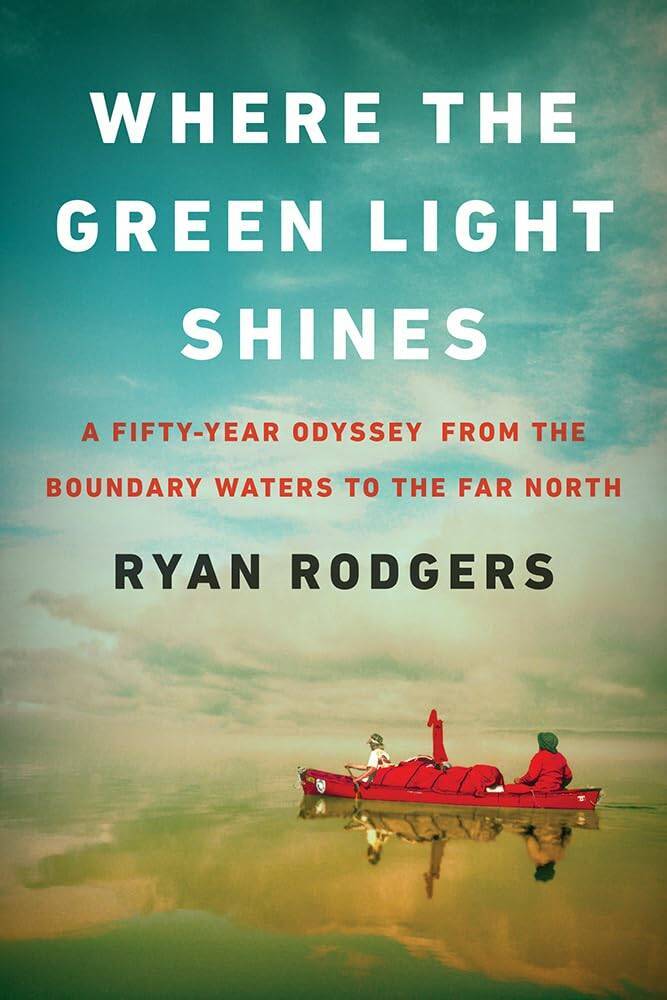
Where the Green Light Shines
O’Hara was known for his single-minded devotion to Far North exploration and how to run a trip (his way), and several crew members over the years remarked how difficult he could be. One, a professor of surgery, said nobody had yelled at him like O’Hara since he’d been a medical resident. Another said: “Bob makes most of the decisions from which whitewater route to take to how much salt in the soup.” Oh yeah, he also snored loudly in a tent.
Yet most of those same people could list the many things that went right on a trip thanks to O’Hara, and some went on subsequent ventures. O’Hara would eventually travel with more than 100 people on Far North paddling trips.
O’Hara has lived a spectacular, adventurous life, largely by following his mantra: when deciding whether or when to travel across difficult waters, when the green light shines, get moving.
Chris Smith is a Winnipeg writer.