Mennonite revenge story shuns subtlety for depravity
Advertisement
Read this article for free:
or
Already have an account? Log in here »
To continue reading, please subscribe:

Digital Subscription
One year of digital access for only $205*
- Enjoy unlimited reading on winnipegfreepress.com
- Read the E-Edition, our digital replica newspaper
- Access News Break, our award-winning app
- Play interactive puzzles
*First annual payment billed as $205.00 + GST for one year. This annual subscription will automatically renew at $233.00 + GST every 52 weeks (10% off the regular annual price of $259.35). Offer available to new and qualified returning subscribers only. Cancel any time.
To continue reading, please subscribe:
Add Free Press access to your Brandon Sun subscription for only an additional
$1 for the first 4 weeks*
- Enjoy unlimited reading on winnipegfreepress.com
- Read the E-Edition, our digital replica newspaper
- Access News Break, our award-winning app
- Play interactive puzzles
*Your next Brandon Sun subscription payment will increase by $1.00 and you will be charged $17.95 plus GST for four weeks. After four weeks, your payment will increase to $24.95 plus GST every four weeks.
Read unlimited articles for free today:
or
Already have an account? Log in here »
Try as you might, you can’t avoid going home.
That’s the message of Sinner’s Banquet, the latest novel from Alberta writer Randy Nikkel Schroeder. Billed by the publisher as “Miriam Toews meets the Coen Brothers,” the novel tells the story of Luke Falk, a shunned member of the Mennonite Brethren, who is pulled back to the hellish and crime-infested wasteland of L.A. (That’s Lethbridge, Alberta, to the uninitiated).
His motive: revenge. Revenge for past trauma. Revenge for being shunned. Revenge for broken and conditional family bonds. Revenge for hypocrisy. Heck, revenge for being Mennonite at all.
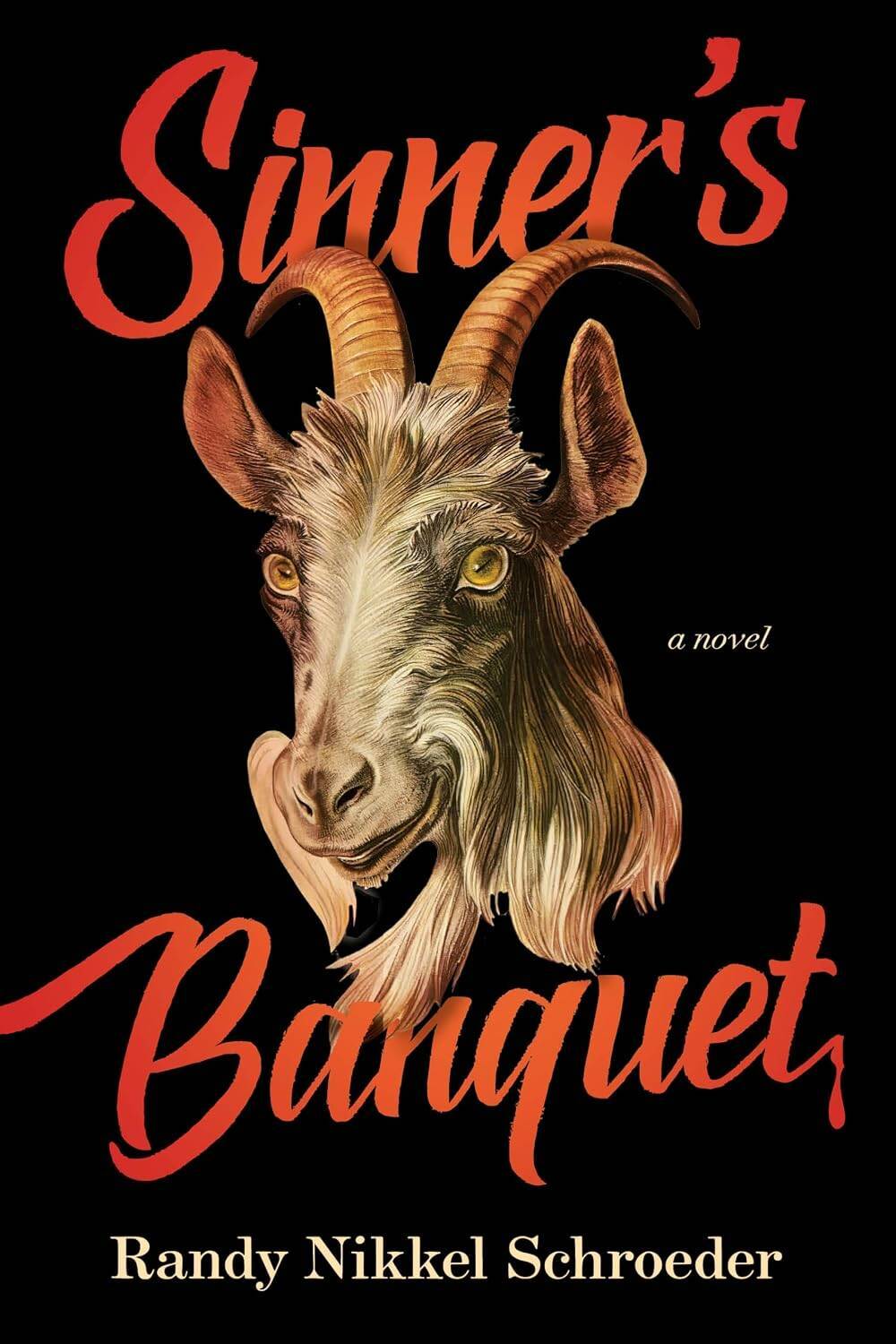
Sinner’s Banquet
Schroeder’s novel opens in the broken diaspora of Vancouver, where our narrator and his fellow fallen engage in all manner of drug-fuelled and funded double-crossing depravity. Luke is decisively, if not happily, getting on with his bummer of a life and trying unsuccessfully to forget where he came from. The thing about home, though, it’s that it’s always there waiting for you, and Luke never stops thinking or talking (and talking) about it.
That dark gravity, the inevitable pull of home, proves too strong and soon Luke is on his way. Ostensibly returning for both a funeral for a genuinely beloved uncle and the wedding of a profoundly despised cousin, Luke joins forces with a pair of his fellow shunned to extract some particularly ghoulish payback on their community. Their targets are the faithful who cast them out, the cousin who ratted them out and anyone else who stands in their way.
What becomes clear is that home isn’t so much a place you’ll always return to as one you never truly leave. It’s a compelling thought. Unfortunately, the novel’s prose never rises to the level of its philosophical core.
Everything in Schroeder’s gauntlet of wickedness, endless conflict and hypocrisy is cranked up to 11. Language is calibrated to maximalist extremes. Characters don’t laugh, they scream with laughter. They exhale orgasmically. They even yell “hello.” Violence and conflict, both physical and spiritual, are constant. Dialogue flows in endless streams of sarcasm, accusation, recrimination and Plaudietsch slang. It’s all meant to be kinetic, but quickly grows exhausting.
There’s a kind of forced punk energy to Schroeder’s writing that comes off as self-consciously “edgy.” Characters are selfish and reprehensible, which can be a lot of fun, but here reads as more grating than engaging. Dialogue is often flippant, which blunts the impact of the characters’ trauma and the novels’ more serious themes.
Ornate figurative language overwhelms without adding clarity. The haunting beauty of a character’s aging face is described as being “like an apple shrunken over a cut diamond.” Vivid? Yes, but when you think about it for even a moment, what are you actually picturing? As similes go, it’s all butter and no bread.

As to the rococo nature of the revenge itself, it’s best left unspoiled, though it’s safe to say it won’t be everyone’s roll of kuchen. Let’s just say Schroeder’s dark, unrelenting noir gives little ground to the squeamish — and to his credit, he commits to the bit.
Yet despite the depravity, the obvious depths of the characters’ trauma and the profound questions about exile, community and revenge that Schroeder clearly aims for, the whole affair comes across as oddly superficial.
The novel’s final act briefly feints towards a more elegiac tone, suggesting a depth of feelings and sense of theme that much of the rest of the novel lacks. Schroeder is at his best when writing evocatively, not provocatively, and there are glimpses of something genuinely affecting that one can’t help but wish appeared more often. Too frequently, the book’s stronger qualities are buried beneath its caustic dialogue, chaotic prose and deeply unlikable characters.
Ultimately, Sinner’s Banquet never quite becomes the novel it clearly wants to be.
Scott Montgomery is a Winnipeg-based writer, the co-creator of Apple TV’s Camp Snoopy and a writer on numerous other shows you may or may not have seen.