Doubling down
Gambling industry’s grip on sports has raked in plenty of cash — and created a new wave of addicts
Advertisement
Read this article for free:
or
Already have an account? Log in here »
To continue reading, please subscribe:

Digital Subscription
One year of digital access for only $205*
- Enjoy unlimited reading on winnipegfreepress.com
- Read the E-Edition, our digital replica newspaper
- Access News Break, our award-winning app
- Play interactive puzzles
*First annual payment billed as $205.00 + GST for one year. This annual subscription will automatically renew at $233.00 + GST every 52 weeks (10% off the regular annual price of $259.35). Offer available to new and qualified returning subscribers only. Cancel any time.
To continue reading, please subscribe:
Add Free Press access to your Brandon Sun subscription for only an additional
$1 for the first 4 weeks*
- Enjoy unlimited reading on winnipegfreepress.com
- Read the E-Edition, our digital replica newspaper
- Access News Break, our award-winning app
- Play interactive puzzles
*Your next Brandon Sun subscription payment will increase by $1.00 and you will be charged $17.95 plus GST for four weeks. After four weeks, your payment will increase to $24.95 plus GST every four weeks.
Read unlimited articles for free today:
or
Already have an account? Log in here »
Today you don’t have to go any further than your purse or pocket to lose your shirt.
Just ask the British. They’ll tell you what happens to a nation when its people can’t stop gambling.
Darragh McGee’s extraordinary book, Imitation Games, describes a country of compulsive gamblers who rely on a public-health system in crisis largely because of what they have done to it.

Steve Heywood
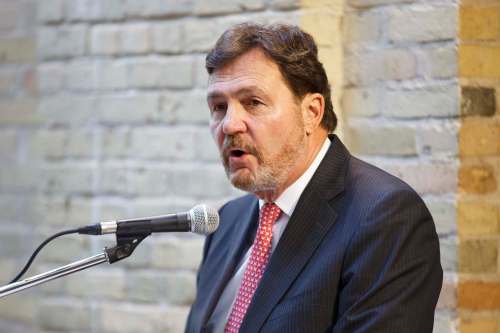
Darragh McGee
McGee, an Englishman himself, hopes Canada avoids the chaos his country and others are suffering having given free enterprise and technology more room than they should have in the marketing of gambling.
McGee is a lecturer at the University of Bath in England and has been studying gambling in sports for a decade.
He laments that betting brands all over the world, of immense wealth and influence, are busy at work programming fans, and their kids, to believe the best way to enjoy spectator sports is to bet on them. And they bombard stadiums and arenas where the pros play with the names of betting sites emblazoned on their tunics.
What happens then is that the industry picks a popular sport such as football (soccer) and creates an “imitation game” of it with bets and stakes. The game is highly addictive because it’s constant and will convince you to stake more cash. The device you employ in this conversation may well be the cellphone you carry in your pocket or purse every day.
“Gambling is so imbedded in mainstream media and broadcasting today that it is virtually impossible for fans to consume sport that isn’t directly produced by, sponsored by or officially linked to a gambling brand,” says McGee. “It is no longer far-fetched to think that the end game of all this… is a world where just as many young people bet on sport as participate in it.”
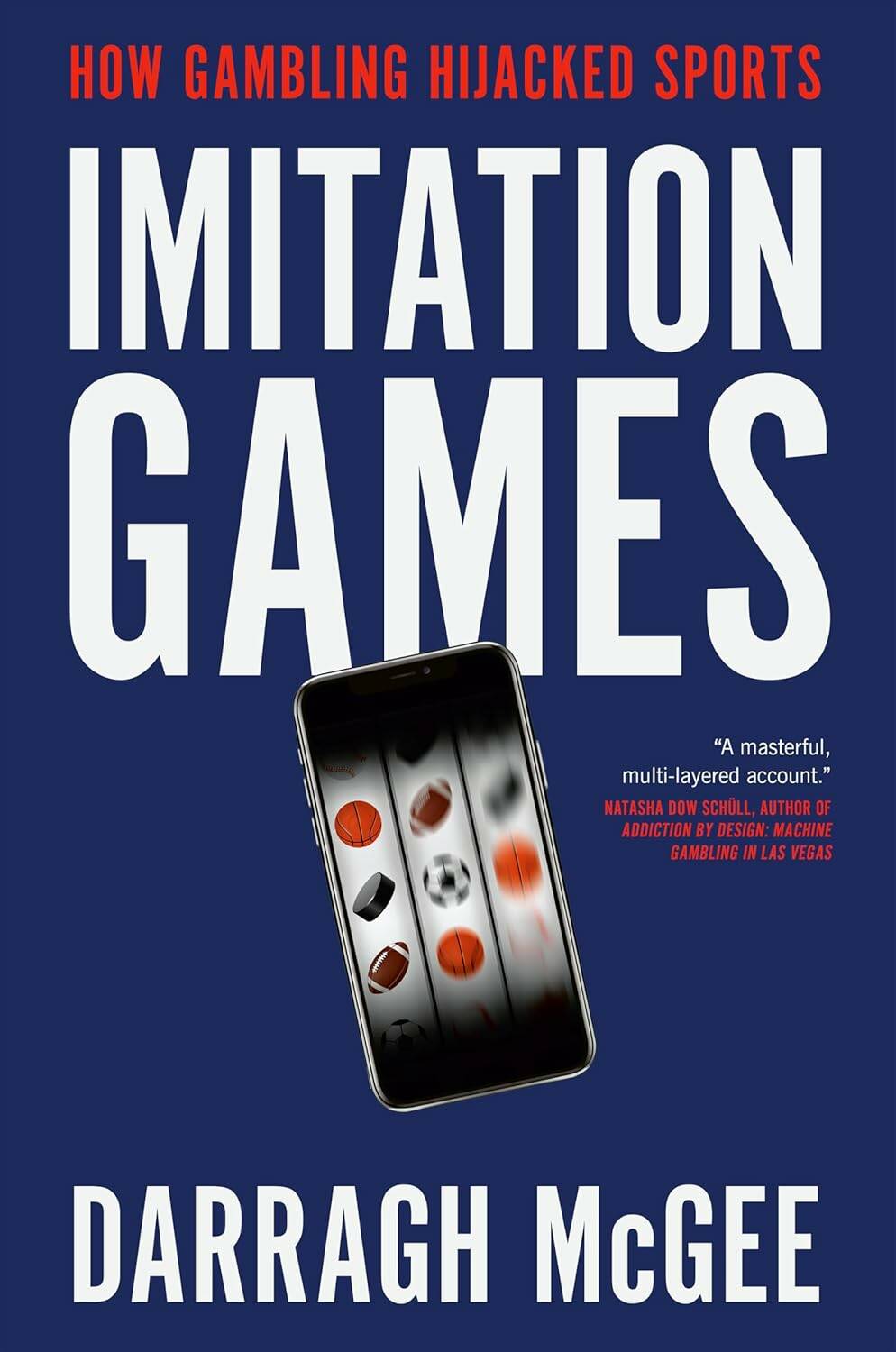
Imitation Games
In England, sports betting has become a monstrous problem, with increasing numbers of compulsive gamblers and the problems of divorce, suicide, theft, bankruptcy, loansharking and an increased strain on the health care system.
McGee’s study shows the magnitude of sports betting in the world is mind-boggling. Europol (EU’s police) claimed in 2020 that the world’s sports gambling market was worth US$1.69 trillion. In 2024, in the U.S. alone it took in almost US$14 billion.
Meanwhile sports betting companies advertise their services on live sporting events. These ads are a kind of social pornography aimed at enticing people to gamble — just like the print ads that used to encourage smoking without saying so.
Some of their names: Bet99. Toonie Bet. BetMGM. FanDuel. Draft Kings. Bet365. The companies that own them are worth billions.
“While many of us think we are in control, few of us realize the extent to which we have allowed our lives to be channelled through our smartphone,” says McGee. “For those who experience the feel-good factor of a winning bet early on, the dopamine hit is laced with an affirmation of ego that is a powerful reinforcer of behaviour, ” McGee explains.
Tony Gutierrez / Associated Press files
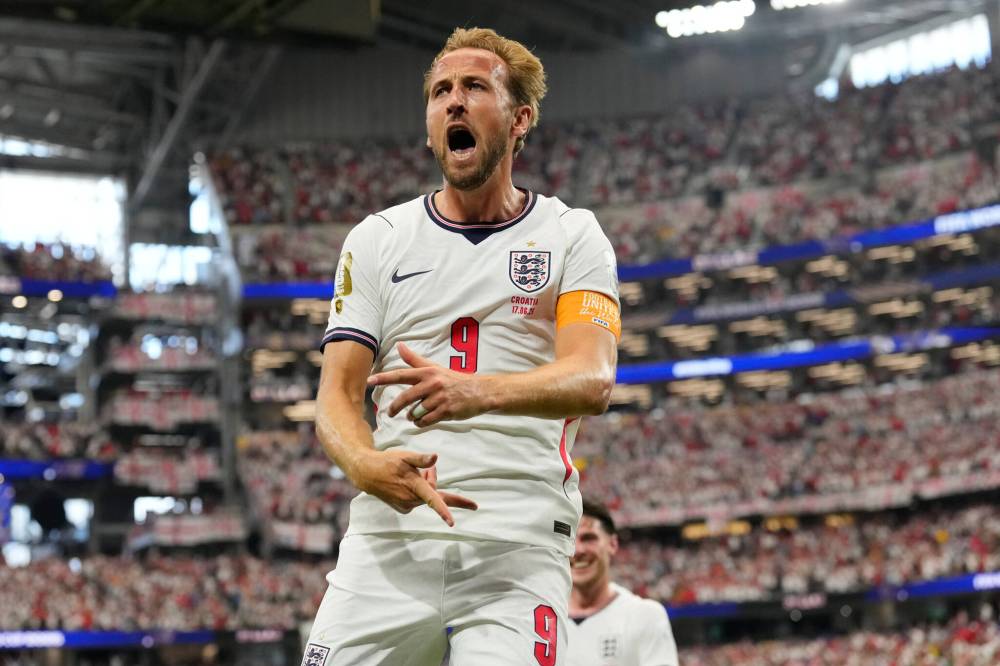
England captain Harry Kane celebrates after scoring a goal during the 2026 World Cup. The 2018 World Cup generated a total global gambling turnover of about $225 billion. That record is expected to be broken at the 2026 tournament.
In the brain, dopamine is central to the reward system which reinforces our pleasurable experiences and encourages the activity that created it (gambling, in this case) be repeated.
One of the most bountiful betting events — the 2026 World Cup of soccer — is currently being staged in the U.S., Mexico and Canada. When Russia hosted the World Cup in 2018, it generated a total global gambling turnover of 120 billion pounds (about $225 billion). The current tournament is expected to beat that record.

When single-game betting became legal in Canada in 2021, Ontario flooded the market with 18 brands; BetMGM partnered with Wayne Gretzky in ads showing The Great One giving shooting advice to current Edmonton Oilers star Connor McDavid, who became one of the few active professional athletes anywhere in the world (at that time) to be an ambassador for a gambling brand. Auston Matthews was then hired to promote Bet99.
The endorsements by these famous and idolized sports names led to a public backlash in 2023, forcing Ontario to ban the use of athletes and celebrities that could appeal to children and young people in the promotion of online gambling.
Says McGee: “It is difficult not to reach the same conclusion that the U.K. government’s football (soccer) regulator did: that is, sport’s governing authorities (in Britain) cannot be trusted to prioritise the wellbeing of fans, including children and young people, and hence should not be allowed control over the future of gambling relationships. It is time to take such decisions out of their hands.”
File photo
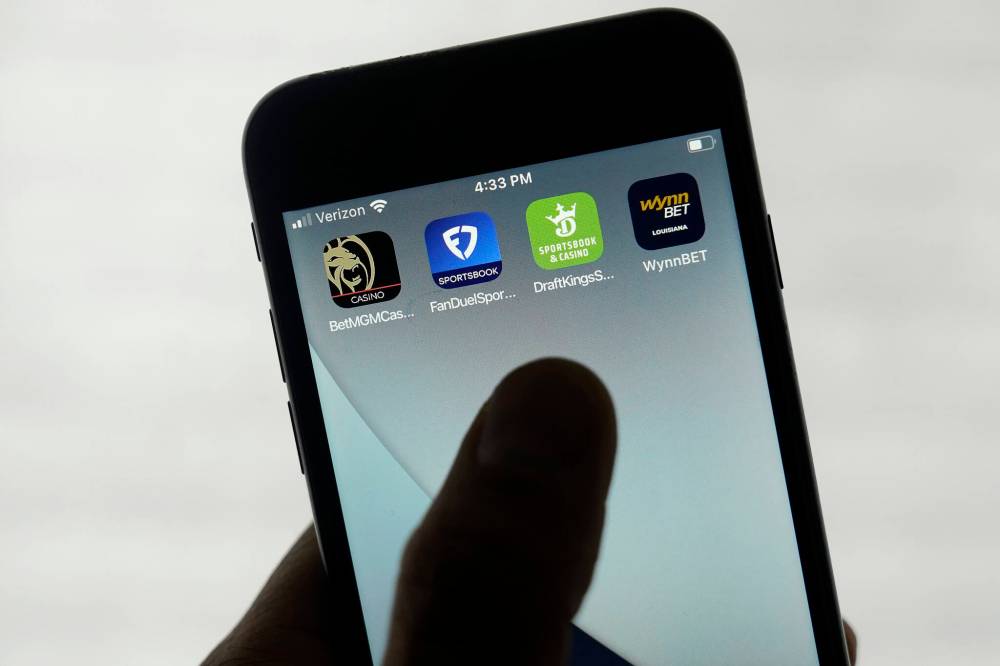
Sports betting apps such as BetMGM, FanDuel, DraftKings and WynnBet have made online gambling remarkably and dangerously easy.
McGee concludes: “Fans in (addiction) recovery… know better than any of us what is at stake when the games we love become a dangerous imitation of all that they once represented.”
Retired journalist Barry Craig doubled his very first paycheque playing craps in the newsroom. He lost it all the following payday.