The art of passion
Story of real-life Scottish painters turned lovers told in joyful, moving prose

Advertisement
Read this article for free:
or
Already have an account? Log in here »
To continue reading, please subscribe:

Digital Subscription
One year of digital access for only $205*
- Enjoy unlimited reading on winnipegfreepress.com
- Read the E-Edition, our digital replica newspaper
- Access News Break, our award-winning app
- Play interactive puzzles
*First annual payment billed as $205.00 + GST for one year. This annual subscription will automatically renew at $233.00 + GST every 52 weeks (10% off the regular annual price of $259.35). Offer available to new and qualified returning subscribers only. Cancel any time.
To continue reading, please subscribe:
Add Free Press access to your Brandon Sun subscription for only an additional
$1 for the first 4 weeks*
- Enjoy unlimited reading on winnipegfreepress.com
- Read the E-Edition, our digital replica newspaper
- Access News Break, our award-winning app
- Play interactive puzzles
*Your next Brandon Sun subscription payment will increase by $1.00 and you will be charged $17.95 plus GST for four weeks. After four weeks, your payment will increase to $24.95 plus GST every four weeks.
Read unlimited articles for free today:
or
Already have an account? Log in here »
In this gorgeously written novel, Scottish writer Damian Barr begins with real-life painters Bobby MacBryde and Robert Colquhoun, crafting a joyful, tragic, vital story of their love and art.
In Barr’s reimagining, which draws broad biographical outlines but fills those in with vivid novelistic colour, the two young working-class men meet in 1934, on their first day as students at the Glasgow School of Art.
“The two Roberts,” as they were often called, go on to become creative partners and lifelong lovers.

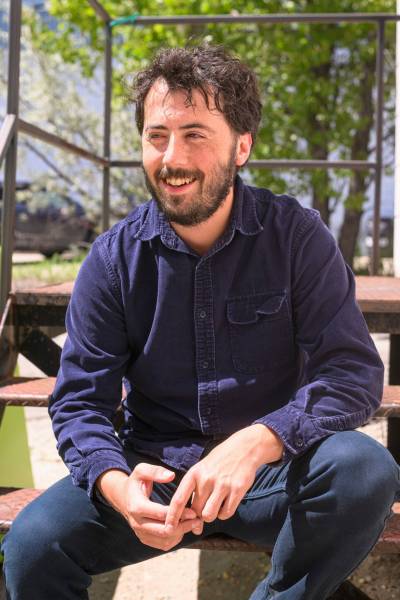
Kirsty Anderson photo
Even at his protagonists’ lowest points, Damian Barr can be wryly funny, and his clear-eyed love for his central characters never waivers.
They are marked off first by their social class. In contrast to many of their art school classmates, who take for granted the cushion of inherited wealth, Bobby comes from a desperately poor family and Robert’s people are only marginally better off, his father’s promotion from the factory floor to a drafting desk at an engineering works having elevated them to “serviettes on Sunday.”
But it’s the men’s queerness that really sets them apart — often dangerously so at a time when homosexuality is criminalized in the U.K.
Bobby has grown up overhearing whispered rumours of arrests, imprisonments, ostracization. “He tells himself these stories do at least mean he’s not the only one,” Barr writes. “All these laws must mean there are a lot of lawbreakers.”
Bobby and Robert take a Glasgow flat together, a small attic room in a big house, ostensibly to save the daily train fares from their Ayrshire hometowns but really because they are beginning to fall in love.
This official story that they’re “just roommates” will continue to provide cover for decades, as their profound connection to each other endures through poverty, professional setbacks and emotional tumult.
Barr keeps the story moving with snapping energy and sneaky humour. As he concisely demonstrates in a brief opening chapter, the two men are opposites in many ways. Bobby is an optimist, Robert a natural pessimist. Bobby is open, outgoing. Robert is guarded and aloof.
Still, they are always together, and the two Roberts are soon identified by teachers and then gallerists and magazine editors as “young artists of great promise.” Influenced by a joint travel scholarship that takes them to Rome and Paris, they fuse European modernism with a Scottish outlook, critics nicknaming them “McPicasso and McBraque.”
The Second World War brings disruption and dislocation, and then there’s a brief burst of success in London’s Soho neighbourhood, where the two run up mountainous bar bills and set up a studio home. Barr goes in for some off-hand name-dropping in this bohemian interlude, with appearances by novelist Elizabeth Smart, poet Dylan Thomas, painters Francis Bacon and Lucian Freud.
Then comes the 1950s, and the tone shifts. After getting evicted from their Soho flat, the two Roberts go through a series of makeshift living arrangements. There are screaming fights in the middle of the night and Bell’s whisky for “a morning sharpener.” Barr conveys much of this despair through letters Bobby writes to old friends and acquaintances, pleading for money or jobs or shows.
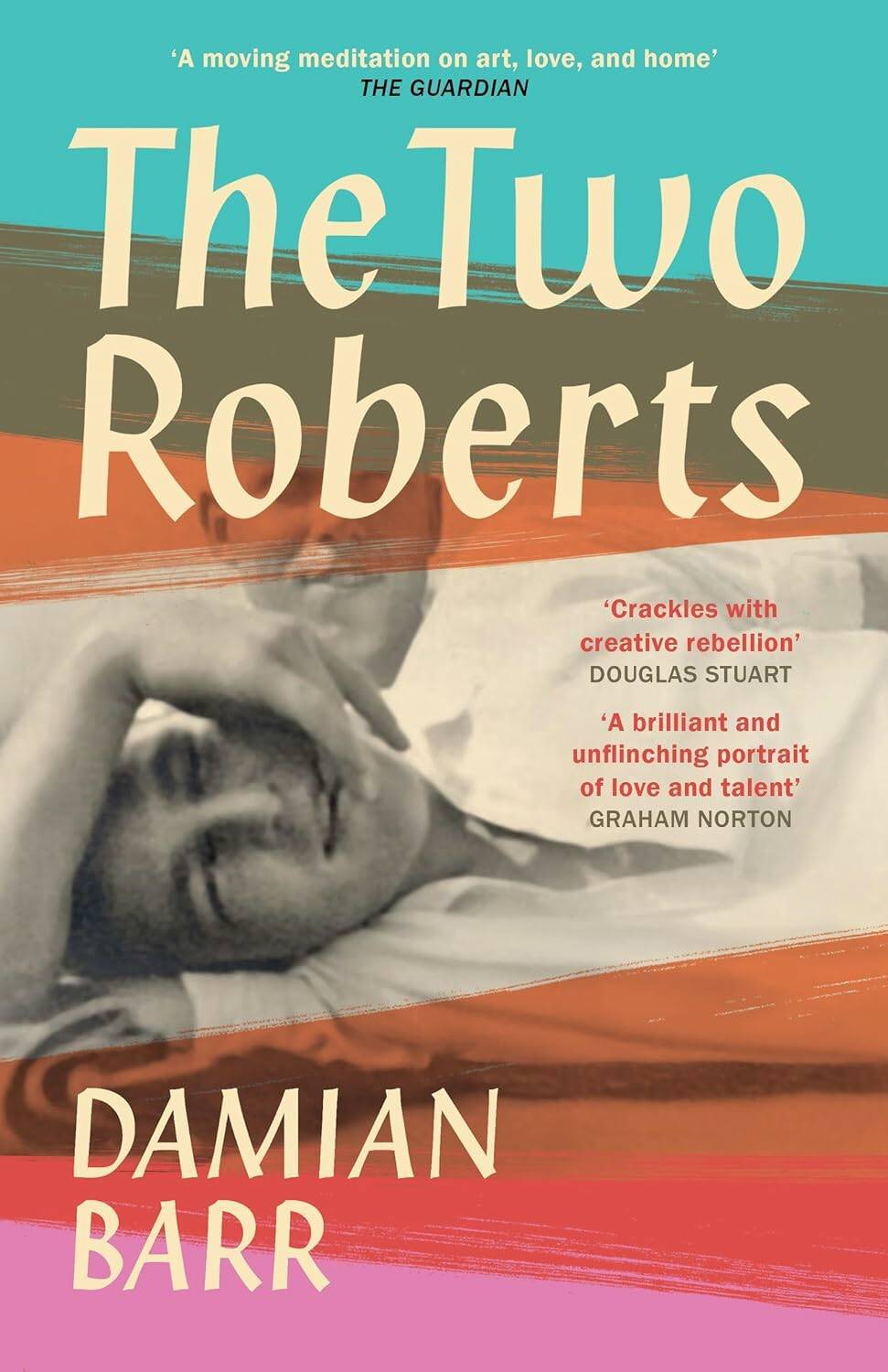
The Two Roberts

Even at the two Roberts’ lowest points, though, Barr can be wryly funny, and his clear-eyed love for his central characters never waivers. He conveys their creativity, their courage, their famously rowdy parties, but he’s honest about their self-destructiveness and their carelessness, of themselves and others.
Barr gives a textured, specific sense of Bobby and Robert’s times and places without falling into the heavy obviousness sometimes seen in historical fiction, when authors can’t quite resist showing off their research. One senses, too, that he is drawing on his biography: His 2013 memoir Maggie & Me chronicled his experience of growing up queer and working-class and Scottish in Thatcherite Britain.
The generational gap between author and subject makes for an interesting tension. Writing now, Barr is understandably distrustful of the “bury your gays” trope, which sees queer characters as somehow doomed to tragedy and early death.
The Two Roberts does deal with the deep sadness of its protagonists, as it must, but the prevailing feeling here is one of intense and extraordinary life.
Alison Gillmor is currently using Robert MacBryde’s Brown Coffee Pot as her screensaver. It’s just that lovely.
Studying at the University of Winnipeg and later Toronto’s York University, Alison Gillmor planned to become an art historian. She ended up catching the journalism bug when she started as visual arts reviewer at the Winnipeg Free Press in 1992.
Our newsroom depends on a growing audience of readers to power our journalism. If you are not a paid reader, please consider becoming a subscriber.
Our newsroom depends on its audience of readers to power our journalism. Thank you for your support.
Studying at the University of Winnipeg and later Toronto’s York University, Alison Gillmor planned to become an art historian. She ended up catching the journalism bug when she started as visual arts reviewer at the Winnipeg Free Press in 1992.
Our newsroom depends on a growing audience of readers to power our journalism. If you are not a paid reader, please consider becoming a subscriber.
Our newsroom depends on its audience of readers to power our journalism. Thank you for your support.
Advertisement Advertise With Us
Advertisement Advertise With Us