Stability, prosperity pivotal in postwar landscape
Advertisement
Read this article for free:
or
Already have an account? Log in here »
To continue reading, please subscribe:

Digital Subscription
One year of digital access for only $205*
- Enjoy unlimited reading on winnipegfreepress.com
- Read the E-Edition, our digital replica newspaper
- Access News Break, our award-winning app
- Play interactive puzzles
*First annual payment billed as $205.00 + GST for one year. This annual subscription will automatically renew at $233.00 + GST every 52 weeks (10% off the regular annual price of $259.35). Offer available to new and qualified returning subscribers only. Cancel any time.
To continue reading, please subscribe:
Add Free Press access to your Brandon Sun subscription for only an additional
$1 for the first 4 weeks*
- Enjoy unlimited reading on winnipegfreepress.com
- Read the E-Edition, our digital replica newspaper
- Access News Break, our award-winning app
- Play interactive puzzles
*Your next Brandon Sun subscription payment will increase by $1.00 and you will be charged $17.95 plus GST for four weeks. After four weeks, your payment will increase to $24.95 plus GST every four weeks.
Read unlimited articles for free today:
or
Already have an account? Log in here »
Acclaimed British popular historian James Holland has written numerous memorable works of history about the Second World War.
But his latest effort, The Visionaries, is a disappointment. It is essentially a narrative of events of American and European history from 1913 to the immediate post-Second World War era.
Holland has nothing original to say; he tells a familiar story that has been told many times before. The only justification for this book seems to be to pad Holland’s lengthy list of publications.
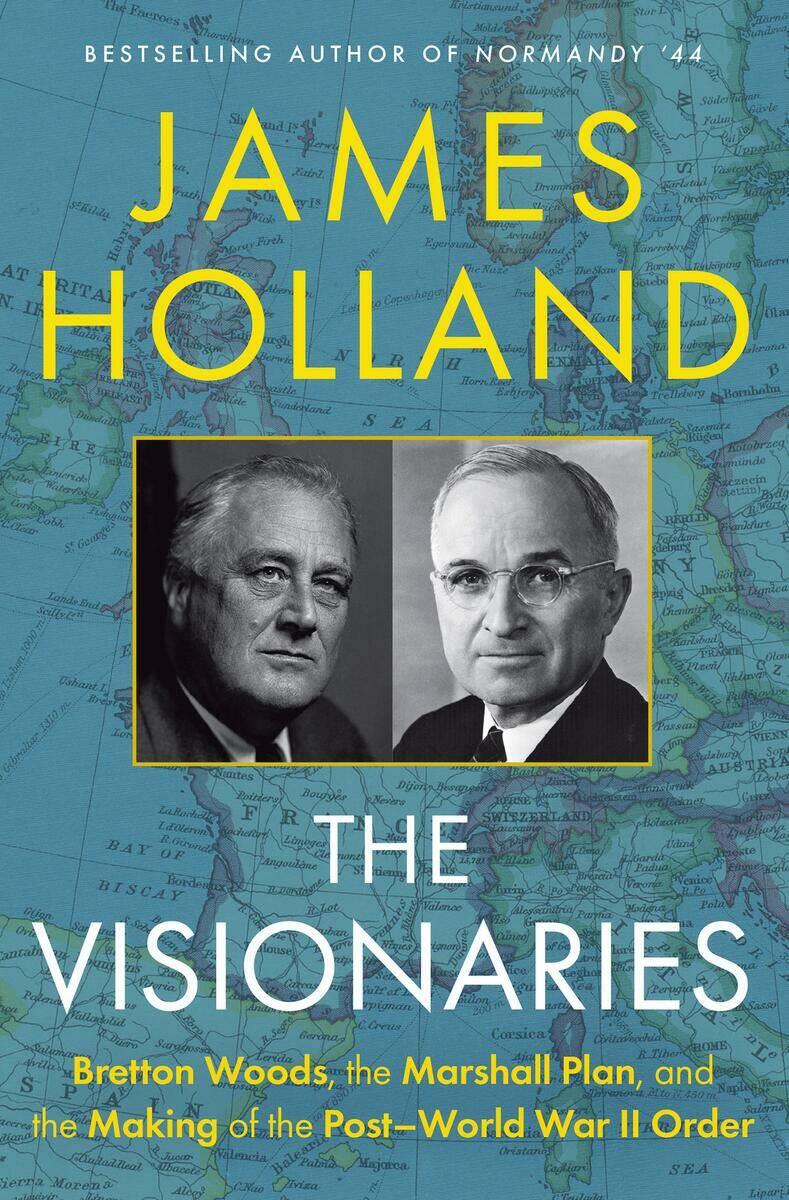
The Visionaries
And his subtitle is a misnomer. The conference at Bretton Woods and the Marshall Plan are each addressed in brief chapters; neither is the focus of his narrative.
The protagonists of Holland’s account are American presidents Franklin D. Roosevelt (FDR) and Harry Truman, portrayed as farsighted statesmen who pursued global peace through economic prosperity and political stability.
Holland does articulate the occasional insight. For example, he touches on the philosophical question of the role of human agency in history. To what extent do individuals influence historical events? Holland suggests that the words and deeds of FDR and German dictator Adolf Hitler decisively shaped the histories of their respective nations, and the world.
As Holland writes, “it is hard to imagine the Nazis having won power without Hitler, nor, without him, having triggered war in 1939.”

While greatly admiring FDR, Holland acknowledges the president’s flaws and missteps. FDR had a delusional view of Soviet communism under dictator Josef Stalin. FDR thought that communism would gradually transform itself into a more benign, socialist version of democracy, and that Stalin would be grateful for all the aid that America had provided the Soviet Union during the Second World War.
The president could not see what was increasingly obvious: that Stalin’s aim was Soviet hegemony throughout Europe.
Stalin, Holland shows, was, like Hitler, a malign actor in the history of the 20th century. In 1940, he actively helped the Nazis in their war against France and Britain, providing fuel for Nazi warplanes.
Its occasional insights notwithstanding, this book is a conventional rehash of familiar events and personalities that is not particularly enlightening.
Graeme Voyer is a Winnipeg writer.