Big names, little heft in sportscaster memoir
Advertisement
Read this article for free:
or
Already have an account? Log in here »
To continue reading, please subscribe:
Digital Subscription
One year of digital access for only $1.44 a week*
- Enjoy unlimited reading on winnipegfreepress.com
- Read the E-Edition, our digital replica newspaper
- Access News Break, our award-winning app
- Play interactive puzzles
*Billed as $5.77 plus GST every four weeks. After 52 weeks, price increases to the regular rate of $19.95 plus GST every four weeks. Offer available to new and qualified returning subscribers only. Cancel any time.
To continue reading, please subscribe:
Add Free Press access to your Brandon Sun subscription for only an additional
$1 for the first 4 weeks*
- Enjoy unlimited reading on winnipegfreepress.com
- Read the E-Edition, our digital replica newspaper
- Access News Break, our award-winning app
- Play interactive puzzles
*Your next Brandon Sun subscription payment will increase by $1.00 and you will be charged $17.95 plus GST for four weeks. After four weeks, your payment will increase to $24.95 plus GST every four weeks.
Read unlimited articles for free today:
or
Already have an account? Log in here »
Native Winnipegger Rod Black had a stellar career as a sports broadcaster.
He started, at age 19, as a sports announcer at then-local station CKY-TV. In 1990 he moved to Toronto and CTV’s national sports division, and in 2001 was assigned to TSN following its acquisition by CTV.
During the course of his career, he apparently never met a celebrity, sports or otherwise, he didn’t like or befriend. Jack Nicklaus, Tiger Woods, Wayne Gretzky, Joe Carter, Charles Barkley, Leo Rautins, Mike Weir, Bob Probert — they’re all unqualifiedly great fellows. The same goes for presidents, prime ministers and TV stars.
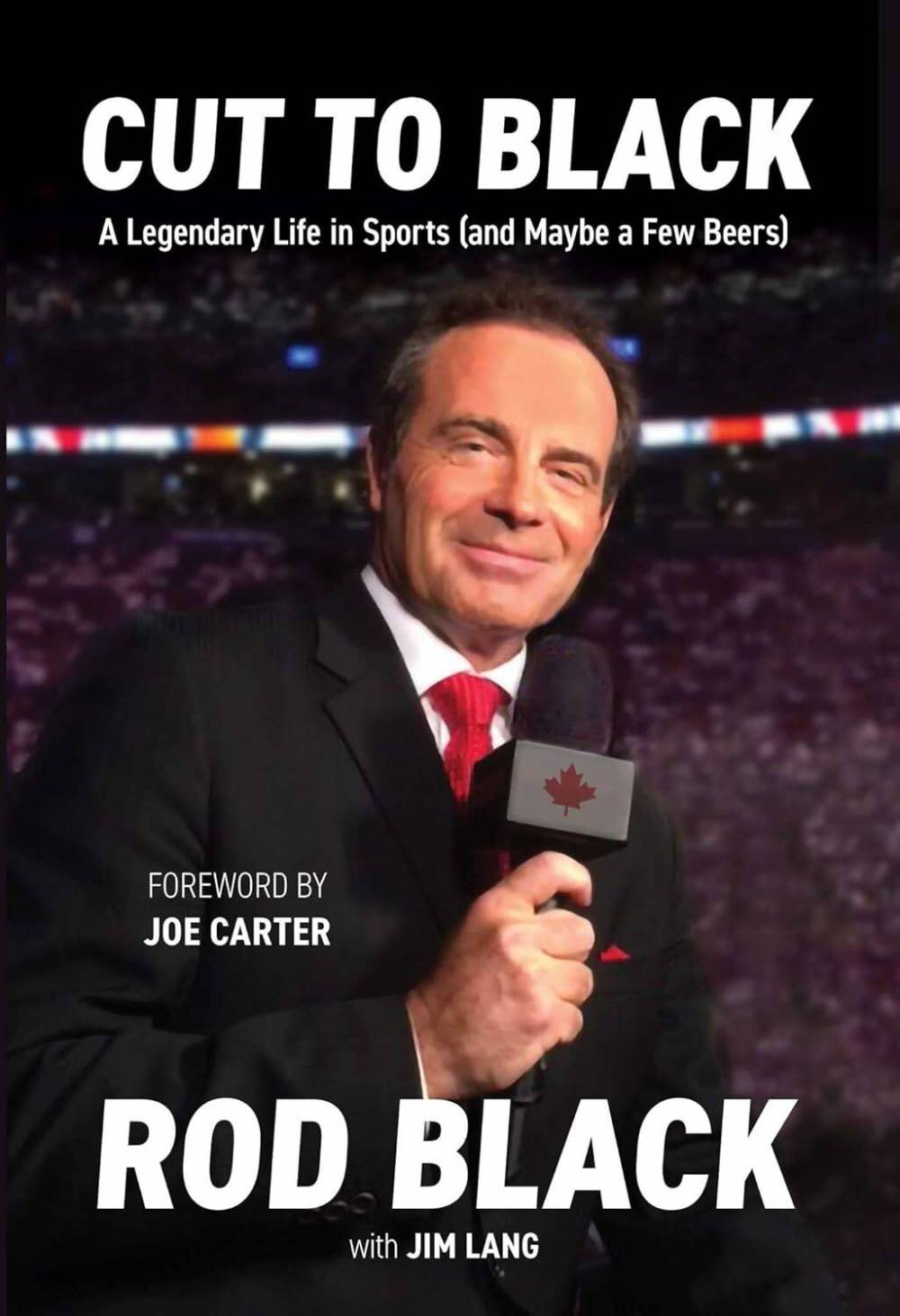
Cut to Black
Cut to Black, written with Jim Lang, is a memoir that offers no insight, critical comment or nuanced opinion about anyone. Black delivers the same (or similar) palsy accolades so frequently to anyone and everyone that it starts to feel like sycophancy.
And then it becomes sycophancy.
Witness his portrayal of Donald Trump. Allowing as to his having interviewed Trump “a few times long before he became president,” he concludes his take on the U.S. president by pretty much endorsing him.
“I have friends who know Trump and golf with him,” he writes. “They swear that everyone who gets around him, even those who despise him, comes away loving the guy. Trump has this sort of charm and charisma about him.”
Black undeniably brought heart and enthusiasm to sports broadcasting.
But this recap of his career lacks discernment, or any hint of gravitas. The result is repetitive cheerleading of a wide swath of the elite athletes and celebs he met, covered or partied with.
And he did party. He recounts a lot of frat-boy-like boozing with players, coaches and colleagues, so his subtitle’s reference to downing beers is apt.
The only moving parts of the memoir are at the beginning and end.
His account of how he went from being a Transcona kid “obsessed” with sports to national hosting of, or calling play-by-play for, major league sports is engaging.
But it’s how his broadcast career came to a surprise end when he was unceremoniously dumped by TSN in 2021 — via a phone call, when at the gym, from then-TSN president (and now Canadian Football League commissioner) Stewart Johnston — that finally gets him visceral.
“It was then that it really dawned on me what a cruel f–king business it is,” he writes. “I’d given my heart and soul to the network, with no regrets. I felt that I had a CTV/TSN tattoo emblazoned on my heart and on my ass, but one of the good things about tattoos is that they can be removed.”
Sports memoirs are designed to offer insight into the obstacles, struggles and triumphs of elite sports figures.
Black clearly got to the top of the sports-broadcasting game. But save for his inglorious exit from the business, there’s not much endured hardship or earned wisdom recounted in this memoir.

This is mostly a good times and good ol’ boys account of a career.
Taken as that, it’s sometimes mildly amusing. But it’s not what you’d call a reflective life story.
A final word of caution: You might want to keep the book out of the reach of children.
Black has a bad case of potty mouth. F-bombs and scatological language abound throughout.
Douglas J. Johnston is a Winnipeg lawyer and writer.