Contrast, colour and the nature of genius
Harvard art fraud novel contemplates questions of artistic talent, ethics, class and more
Advertisement
Read this article for free:
or
Already have an account? Log in here »
To continue reading, please subscribe:
Digital Subscription
One year of digital access for only $1.44 a week*
- Enjoy unlimited reading on winnipegfreepress.com
- Read the E-Edition, our digital replica newspaper
- Access News Break, our award-winning app
- Play interactive puzzles
*Billed as $5.77 plus GST every four weeks. After 52 weeks, price increases to the regular rate of $19.95 plus GST every four weeks. Offer available to new and qualified returning subscribers only. Cancel any time.
To continue reading, please subscribe:
Add Free Press access to your Brandon Sun subscription for only an additional
$1 for the first 4 weeks*
- Enjoy unlimited reading on winnipegfreepress.com
- Read the E-Edition, our digital replica newspaper
- Access News Break, our award-winning app
- Play interactive puzzles
*Your next Brandon Sun subscription payment will increase by $1.00 and you will be charged $17.95 plus GST for four weeks. After four weeks, your payment will increase to $24.95 plus GST every four weeks.
Read unlimited articles for free today:
or
Already have an account? Log in here »
J.R. Thornton, a former internationally ranked tennis player, graduated from Harvard University in 2014 with a degree in history, English and Chinese. He also holds a masters degree from Tsinghua University in Beijing, lives in Italy and works for AC Milan. Lucien is his second novel, following 2016’s novel Beautiful Country.
His most recent is a propulsive page-turner set at Harvard University in 2010, following freshman Christopher Novotny, renamed Atlas by Lucien, his privileged roommate of the book’s title. Christopher is a talented painter from a humble background, attending Harvard on a scholarship. He struggles to fit in with the wealthy, upper-class students who make up Lucien’s friend group.
From the very beginning we see that Christopher, raised by a Czech immigrant widowed mother, lacks the strength of character to allow him to resist peer pressure. The first chapter ends with him jumping off a bridge because his new friends have asked him to.
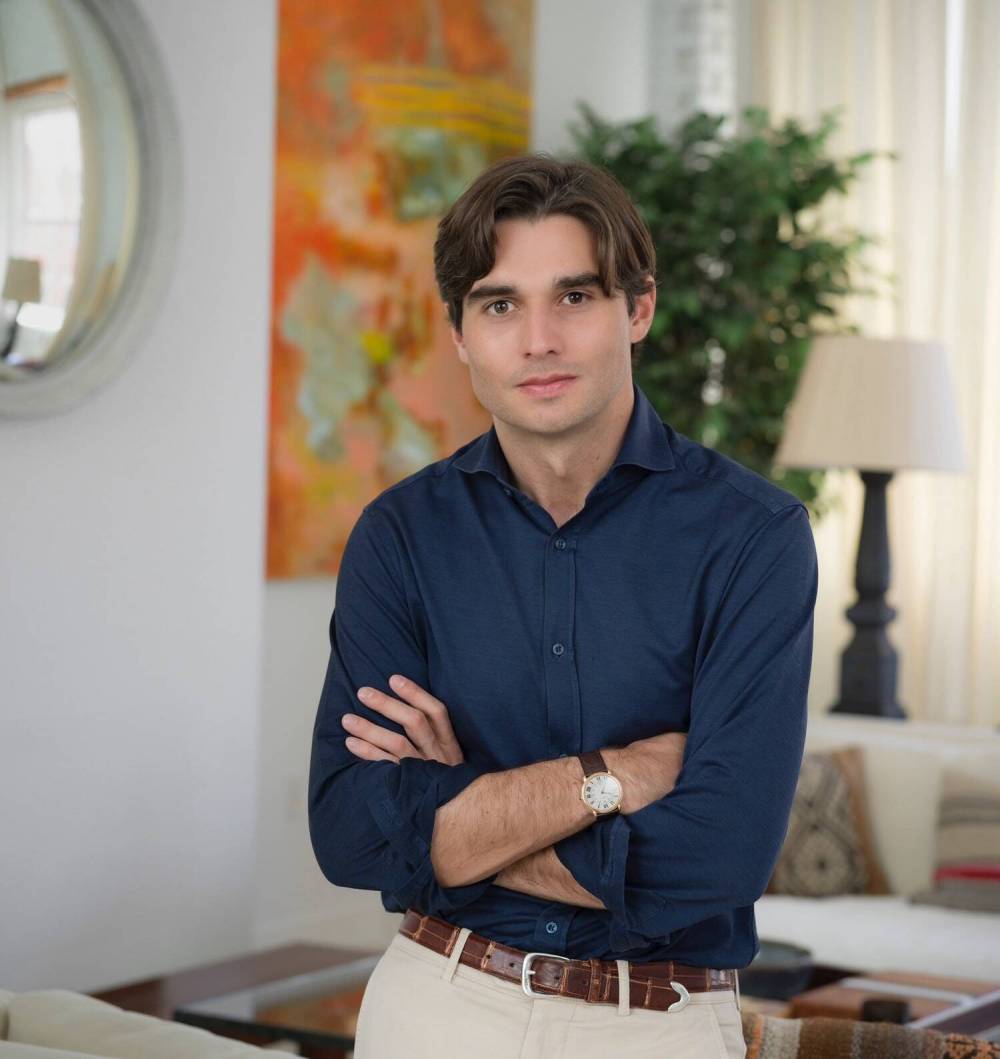
Nina Subin photo
The dialogue in J.R. Thornton’s new novel feels authentically Gen Z, and descriptions of Harvard have an insider’s eye.
It is unsurprising, then, when Christopher caves to pressure from Lucien to create fraudulent replicas of paintings by noted artists. Lucien suggests they pass these off as the real thing to finance their lavish lifestyles.
It’s hard to understand why Christopher is so weak and so easily influenced by others. Why would he have any interest in befriending someone who, when Christopher tells him he is studying painting, says to the person beside him, “Painting! Did you know we could take painting? How the f— do I get in on that? I need an easy class.” However, it’s Christopher’s character defect that makes the rest of the story possible.
As Christopher and Lucien plan their elaborate scheme, we are taken through an examination of race and class at Harvard as well as questions of identity, ethics and the nature of genius. This transforms the novel from a simple thriller to one with a more complex exploration of social themes and larger conflicts, such as Christopher’s observations that all the portraits hung in the dining hall are of old white men, or of the misogynistic attitudes of many of the male students.
Christopher is at Harvard largely due to the support of Marcus Powell, a painter on faculty who Christopher met as a child when he entered an art competition. As a Black man with Jamaican roots, Marcus is also an outsider, and is something of a father figure for Christopher. Marcus could provide Christopher with a real chance at greatness; it’s painful, then, to watch Christopher destroy this relationship and the opportunities it offers.
A most devastating choice is Christopher’s decision to go to Lucien’s girlfriend’s debutante ball rather than attend an important lecture given by Marcus, to be attended by notable people in the art world. Such carelessness cannot be attributed only to youth and naïveté, but goes back to Christopher’s fundamental character flaw. This raises questions: Is artistic genius wasted on someone who isn’t willing to put in the hard work and sacrifice to develop it? Is genius a positive quality in and of itself, or is it only valuable if nurtured correctly? Who are we apart from our talent, and can talent be separated from our essential selves?
While Christopher enjoys painting and has brilliant ideas for new work, he is more interested in being accepted to prestigious Harvard social clubs such as the Hasty Pudding, attracting the attention of his crush and going to parties with Lucien and his friends.

These friends seem rather dull, and are almost caricatures of selfishness and greed. For example, when access to some Harvard buildings are temporarily cut off by police after a “townie” dies by suicide on campus, one young man complains repeatedly that the deceased was inconsiderate by preventing him from finishing his term paper. Another friend is closely related to the head of state of an African country, but his family wealth doesn’t protect him from his “friends” making racist comments at his expense. Although Harvard does have many ultra-privileged students, there must be other students of more modest means, but Christopher never seeks them out — and they are invisible in the book. It takes until his second year of studies for him to ask: “What was I doing here? This wasn’t me. This wasn’t who I wanted to be.”
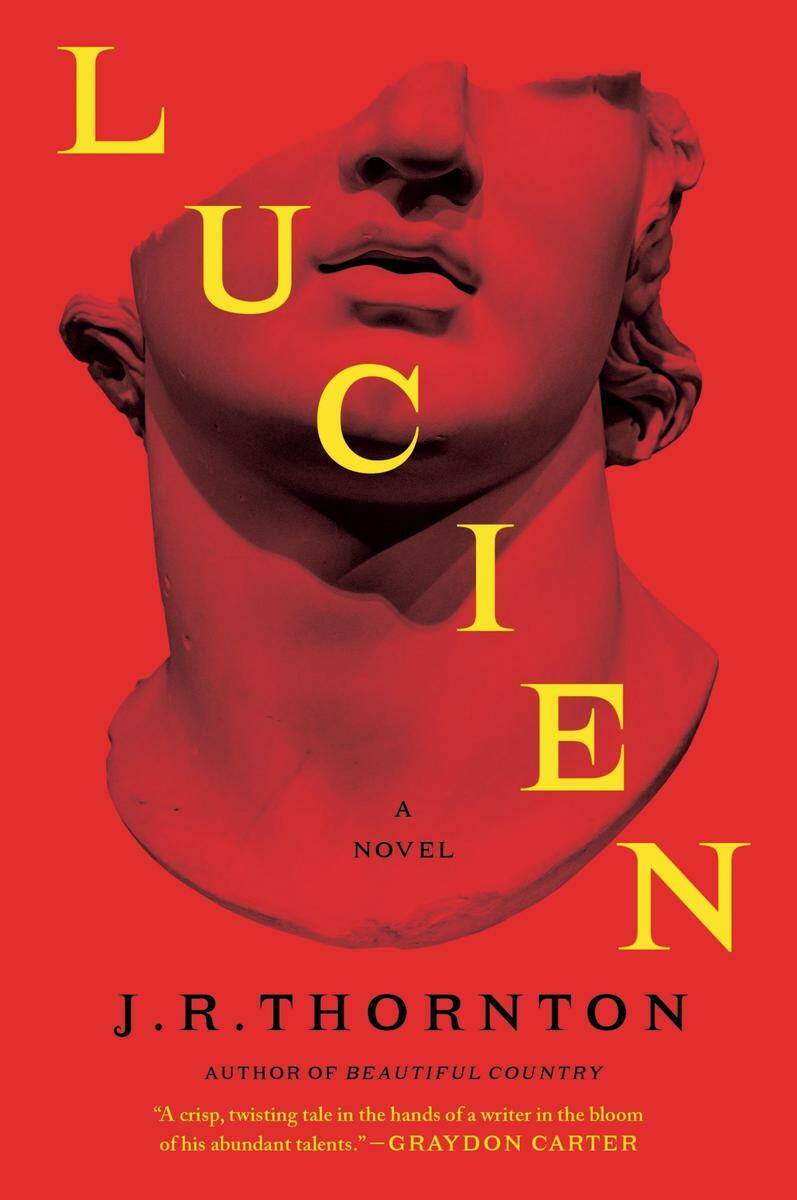
Lucien
The dialogue in Lucien feels very authentically Gen Z, and the descriptions of life at Harvard have an insider’s eye: students clamour to sign up for “gems” — courses seen as easy because they have “no attendance requirement, no regular homework assignments, and only one or two major papers or tests.” While this is true for students anywhere, Thornton tells us that at Harvard, professors deliberately offer “gems” to attract a large enrolment in order to land book deals, media appearances and features in newspapers and journals. We’re also given a front-row seat to the “punch” process by which students are selected for membership in exclusive Harvard clubs.
Christopher and Lucien’s scam eventually (and predictably) begins to wear thin — and the resulting revelations about who Lucien really is are also predictable.
Christopher’s ultimate fate, however, is more of a surprise, and one which returns to the earlier questions about the nature of talent — providing the book with the symmetry and balance of a painting by a great artist.
Zilla Jones is a Winnipeg-based writer of short and long fiction. Her debut novel The World So Wide was published in April 2025.