Ex-exec’s redemption arc exceeds novel’s rough edges
Advertisement
Read this article for free:
or
Already have an account? Log in here »
To continue reading, please subscribe:

Digital Subscription
One year of digital access for only $205*
- Enjoy unlimited reading on winnipegfreepress.com
- Read the E-Edition, our digital replica newspaper
- Access News Break, our award-winning app
- Play interactive puzzles
*First annual payment billed as $205.00 + GST for one year. This annual subscription will automatically renew at $233.00 + GST every 52 weeks (10% off the regular annual price of $259.35). Offer available to new and qualified returning subscribers only. Cancel any time.
To continue reading, please subscribe:
Add Free Press access to your Brandon Sun subscription for only an additional
$1 for the first 4 weeks*
- Enjoy unlimited reading on winnipegfreepress.com
- Read the E-Edition, our digital replica newspaper
- Access News Break, our award-winning app
- Play interactive puzzles
*Your next Brandon Sun subscription payment will increase by $1.00 and you will be charged $17.95 plus GST for four weeks. After four weeks, your payment will increase to $24.95 plus GST every four weeks.
Read unlimited articles for free today:
or
Already have an account? Log in here »
Vancouver-based Patricia Finn has had a varied career; she pursued classical philosophy in university, worked in television and with production companies in both Canada and New Zealand, and has also worked as a ghostwriter. And now, at 71, she has published her debut novel, The Golden Boy.
Stafford Hopkins has built himself a charmed but isolated life. Having made a fortune working as a TV executive when he is suddenly fired, he has a number of far-flung, luxurious properties to which he can retreat. After much arguing with his wife Agnes, they decide to settle in their mansion on Maui, where Agnes can still hobnob and host parties with other ultra-rich elites, while Stafford can hide himself away and restart his studies into Aristotelian philosophy.
Fairly soon into their retreat, Stafford receives a letter from a lawyer in his hometown of Napanee, Ont. that forces him to return home. The four grandchildren of Stafford’s teenage best friend Bobby Shepherd have been orphaned after their parents were killed in a car accident, and Stafford has been named as the children’s guardian.
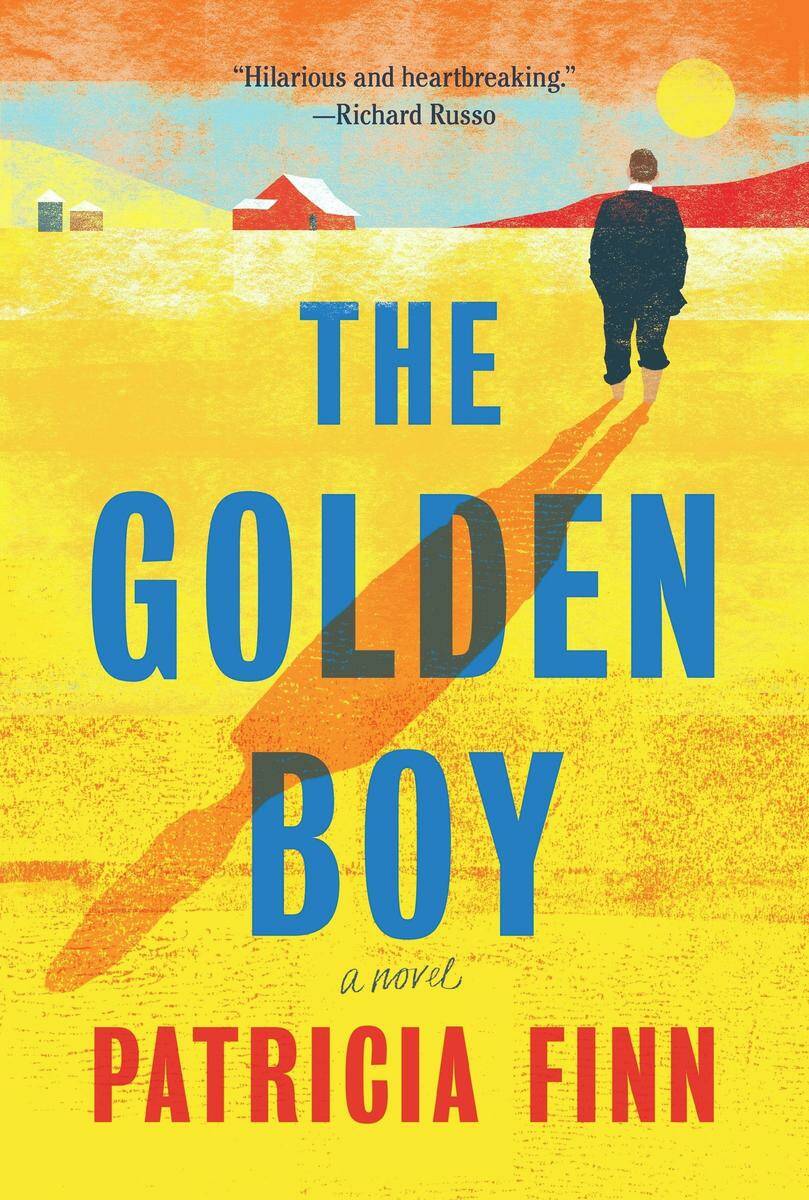
The Golden Boy
The premise of the novel is solid, but it does suffer from some pacing issues. The Golden Boy is divided into three main sections, the first of which is almost entirely devoted to Stafford and Agnes in Hawaii and the trials and minor inconveniences of the monstrously rich. At this early stage the reader does not know much about the redeeming qualities of either character that receive more attention later, and so this early section can be grating; the narrative lacks forward momentum, as the conflict presented by the letter doesn’t appear until nearly 80 pages in.
The second section of the novel sees Stafford return to Napanee, and is told mostly in flashbacks about his life growing up on a farm, the troubles with his alcoholic older brother and his deeply meaningful friendship with Bobby Shepherd, the boy living at the farm next door. While this section of the narrative is the most engaging, it also suffers from a lack of forward momentum, as everything relayed here happened decades before Stafford and his wife received the impactful letter in Hawaii.
The third and shortest section sees the narrative return focus to Stafford and the consequences of his trip home to Napanee.
One element that might have bogged down a lesser book, but is handled quite well here, is the injection of Aristotelian and Biblical philosophy. Each chapter begins with an epigraph from either Aristotle or the Bible, and the narrative makes near-constant mention of the fact that Stafford studied philosophy. But the novel’s engagement with the philosophical concepts peppered throughout do add depth to its themes and conflicts.
There are a few loose ends by the novel’s conclusion. The last section barrels towards what is set up to be a hugely consequential event, but wraps up as neatly as one of the TV shows Stafford once produced. In the middle section, Stafford’s friend Bobby Shepherd is hugely affected by the real-life public condemnation of Stephen Truscott, a 14-year-old boy who was sentenced to death by hanging for the rape and murder of Lynn Harper (his conviction was overturned in 2007), but this doesn’t come to be of much consequence to either Stafford’s or Shepherd’s story.

Still, the story of Stafford’s redemption and his commitment to honouring the memory of his long-dead friend is very satisfying. Finn’s novel is a promising debut with a few rough edges.
Keith Cadieux is a Winnipeg writer and editor. His latest story collection Donner Parties and Other Anti-Social Gatherings is out now from At Bay Press and was named one of the best books of 2024 by the Free Press. He also co-edited the horror anthology What Draws Us Near, published by Little Ghosts Books.