Sketches of the past

Haddon’s illustrated memoir details troubled upbringing — and a yearning for peace in the present

Advertisement

Advertise with us

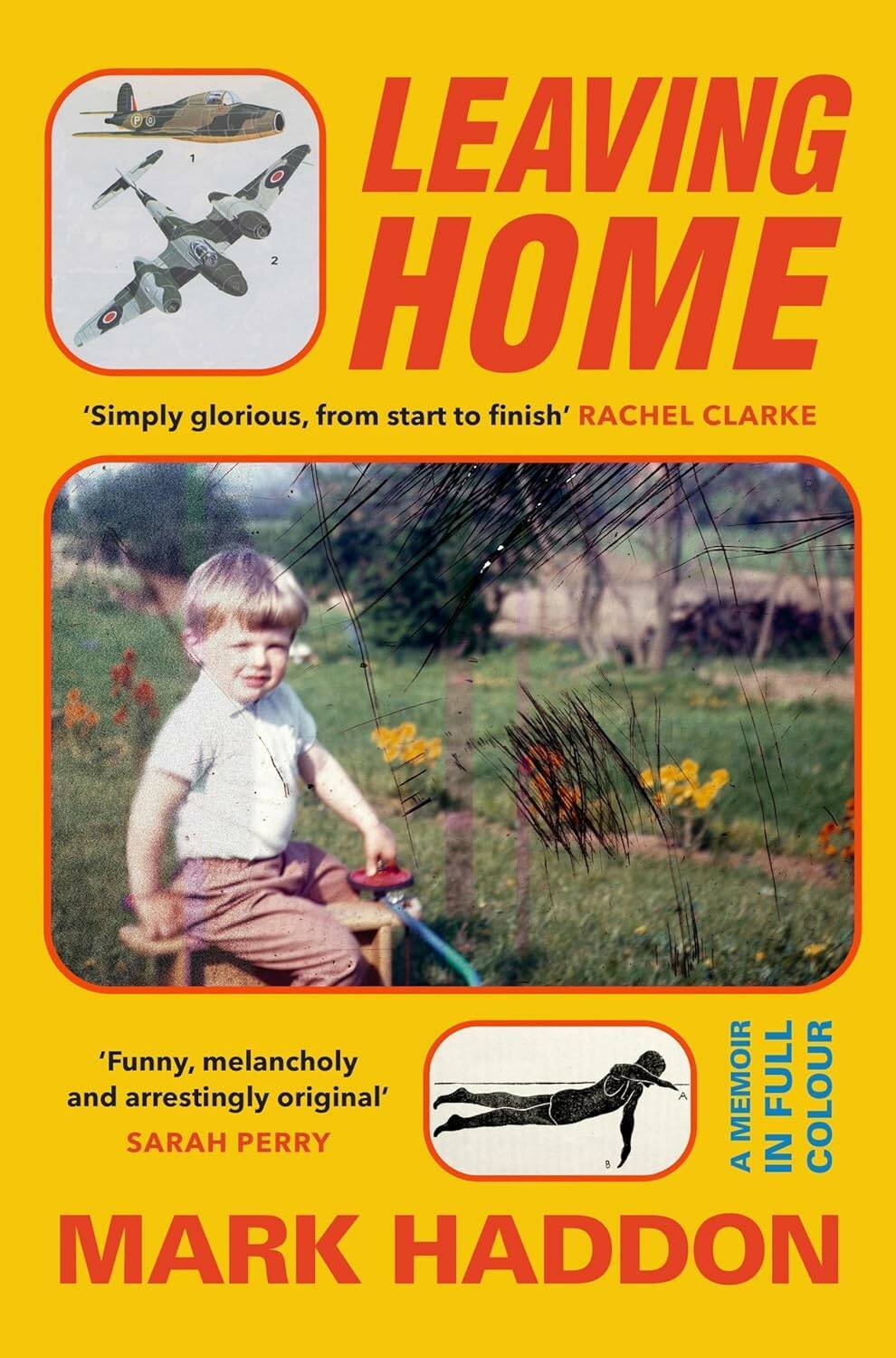
The international success of Mark Haddon’s 2003 novel The Curious Incident of the Dog in the Night-Time propelled the British writer and artist into literary stardom, yet failed to quell his internal discontent and depression. In his illustrated memoir Leaving Home, Haddon reveals how his unhappy childhood, anxious adolescence and generally troubled adult years have directed his writing.

Read this article for free:


or

Already have an account? Log in here »

To continue reading, please subscribe:

Subscribe and receive a limited-edition Free Press branded hat or tote.

Digital Subscription

One year of digital access for only $205*

  • Enjoy unlimited reading on winnipegfreepress.com
  • Read the E-Edition, our digital replica newspaper
  • Access News Break, our award-winning app
  • Play interactive puzzles

*First annual payment billed as $205.00 + GST for one year. This annual subscription will automatically renew at $233.00 + GST every 52 weeks (10% off the regular annual price of $259.35). Offer available to new and qualified returning subscribers only. Cancel any time.

To continue reading, please subscribe:

Add Free Press access to your Brandon Sun subscription for only an additional

$1 for the first 4 weeks*

  • Enjoy unlimited reading on winnipegfreepress.com
  • Read the E-Edition, our digital replica newspaper
  • Access News Break, our award-winning app
  • Play interactive puzzles
Start now

*Your next Brandon Sun subscription payment will increase by $1.00 and you will be charged $17.95 plus GST for four weeks. After four weeks, your payment will increase to $24.95 plus GST every four weeks.

Hey there, time traveller!
This article was published 21/03/2026 (185 days ago), so information in it may no longer be current.

The international success of Mark Haddon’s 2003 novel The Curious Incident of the Dog in the Night-Time propelled the British writer and artist into literary stardom, yet failed to quell his internal discontent and depression. In his illustrated memoir Leaving Home, Haddon reveals how his unhappy childhood, anxious adolescence and generally troubled adult years have directed his writing.

The Curious Incident won the Whitbread Book of the Year Award as well as Los Angeles Times Book Prize for First Fiction. Adapted as a Tony Award-winning play, it was staged at the Royal Manitoba Theatre Centre in 2016. Haddon also wrote the bestselling novels A Spot of Bother and The Red House, as well as a poetry collection, and has written and illustrated children’s books.

Haddon grew up near Northampton in the 1960s. He and his younger sister Fiona were raised by a father who, despite training as an architect, primarily earned his living through designing abattoirs. Their mother likely suffered from undiagnosed and untreated depression, and to the young Haddon her unhappiness and unending criticism led to his feeling of being unloved.
Leaving Home

Leaving Home

He includes one colour photo showing his mother as a beautiful, smiling young woman, and wonders why she changed and became so discontented. “She radiates something I never saw her radiate in real life, nor in any later photos, even those in which she is smiling and appears happy… Maybe the picture’s deceptive, but I think that soon after it was taken some kind of light died in her.”

Feeling unwanted, Haddon retreated into the security he discovered in science. A drawing of the solar system wall chart hanging on his bedroom wall was often the last thing he saw before falling asleep. He believed science offers the reassurance of using simple principles to control complex phenomena and finding answers.

His parents managed to afford to send him to boarding school when he was 12, where he tried to fly under the radar and avoid being the target of bullies. “A fear ran constantly under my every waking moment like a deep discordant basso continuo, a fear either that someone might do something to me or that I might be punished for some offence I had unknowingly committed,” Haddon writes.

Along with a photo of five stitches in his arm and drawing of a dog with a bleeding arm, Haddon writes about cutting his arm more deeply than planned in 2024. “I feel fine now, because that’s what cutting does. It’s not the reason I do it. I do it because I’m uncontrollably angry with myself and there’s just too much pressure inside my head,” he says, adding that he understands how the act of cutting can become addictive because it brings calmness.

Haddon eventually assumes responsibility for overseeing his parents’ care as they age. Already placed in a care centre due to dementia, Haddon’s father is found to have an untreatable wound on his toe. The consultant explains that amputation isn’t an option, and that the infection will result in fatal sepsis within six months.

When Haddon tells his mother the news, she is upset that her husband’s death will take that long. During a short visit with her dying husband, she tells him to “just go to sleep.”

Haddon’s own hypochondria first manifested in A Spot of Bother, as the protagonist deals with a lesion he is convinced will be fatal. “Every time I glanced at my own body I saw a lump, a discolouration, a blemish that was the beginning of a lesion that would soon become a tumour,” he writes.

Charles Moriarty photo
                                Feeling unwanted as a child, Mark Haddon retreated into the security he discovered in science.

Charles Moriarty photo

Feeling unwanted as a child, Mark Haddon retreated into the security he discovered in science.

One positive part of Haddon’s life is his strong relationship with his wife Sos and their two sons. He credits Sos with keeping him functioning in a relatively normal manner. “She’s been inordinately patient with my sometimes very unwell mind, but never to the point of indulgence,” he writes.

In Leaving Home, Haddon’s prose and illustrations — both his own and other works he has curated — provide a creative view into his life.

Andrea Geary is a freelance writer in Selkirk.

Report Error Submit a Tip

More Stories

Owners of beloved Shawarma Time return with new eatery

Jill Wilson 7 minute read Preview

Owners of beloved Shawarma Time return with new eatery

Jill Wilson 7 minute read Wednesday, Dec. 4, 2019

Notre Dame Avenue is becoming a bit of a hotbed of new restaurants and food outlets.

Starting with the easternmost offering, there’s Altanour Restaurant and Deli, which has been open for about four months. It’s owned and run by Talal Dalank and his wife, Dounia, the former owners of Shawarma Time on Ellice.

Dalank, who immigrated to Canada from Lebanon about 26 years ago, made headlines in 2017 when he donated two days’ worth of his restaurant’s profits to the refugee centre Welcome Place, after being inspired by seeing Prime Minister Justin Trudeau welcoming Syrian immigrants with winter jackets.

When the Dalanks had to return to Lebanon to deal with a family emergency, they reluctantly sold Shawarma Time. However, the family maintained their residence in Winnipeg; on trips back to the city, Talal would frequently run into former customers who missed his food. When he was able to return, he and Dounia opened a new place. The menu is slightly expanded and also offers catering options, thanks to a larger kitchen in the simply decorated two-room restaurant.

Read
Wednesday, Dec. 4, 2019

Severe weather preparedness not one-time exercise for businesses

Abiola Odutola 3 minute read Yesterday at 2:00 AM CDT

BRANDON — Local business owners should prepare for the possibility that severe weather could disrupt their operations — even when their facilities escape major damage, a climate resilience expert told the Brandon Chamber of Commerce last week.

Emilia Cameron of the Institute for Catastrophic Loss Reduction told attendees at a September luncheon the recent flooding and heavy rainfall across southern Manitoba affected several businesses.

“Businesses need to prepare not just for direct damages to buildings, but for wide disruptions that can prevent them from operating,” she said. “Road closures, power outages, damaged infrastructure, internet failures and employees being unable to reach work can all bring operations to a standstill.”

Supply chains can also be affected when suppliers cannot reach their customers, she said.

Disturbing rise of the cult of hard-line anti-vaxxers

Bob Hepburn - Star Columnist, Toronto Star 4 minute read Preview

Disturbing rise of the cult of hard-line anti-vaxxers

Bob Hepburn - Star Columnist, Toronto Star 4 minute read Wednesday, Feb. 2, 2022

The serious long-term threat from this anti-vax cult is its ability to spread disinformation to their followers via social media and other outlets.

Read
Wednesday, Feb. 2, 2022

Who will vote for trees?

Erna Buffie 5 minute read Preview

Who will vote for trees?

Erna Buffie 5 minute read Yesterday at 2:01 AM CDT

In July 2026, Terrasse-Vaudreuil, a small Quebec town, made international headlines.

And no, it wasn’t the result of murder and mayhem or a catastrophic flood. The headlines were about a remarkable resolution passed by its town council, making Terrasse-Vaudreuil the first city in the world to recognize the rights of trees.

The town’s resolution, based on a Universal Declaration of the Rights of Trees crafted in France, recognizes that trees are living beings which have the right to exist, thrive and receive protections under the law.

I was blown away when I heard about it. I was even more impressed when I read the words of the town’s mayor, Michel Bordeau, who affirmed that trees were not merely the backdrop for his community. They were “indispensable allies for our health, our climate resilience and our quality of life.”

Read
Yesterday at 2:01 AM CDT

Assiniboine Park has long provided visitors the chance to commune with nature

Alison Gillmor 8 minute read Preview

Assiniboine Park has long provided visitors the chance to commune with nature

Alison Gillmor 8 minute read Monday, Apr. 12, 2021

Here’s what I observed on a perfect spring day in Assiniboine Park last week: I saw people biking, jogging and walking their dogs (so many good dogs).

I saw the Assiniboine River at low ebb and perennial plantings in the English Garden pushing up toward the April sun.

I saw birdwatchers with binoculars, a group of 20-somethings playing cards, a man tossing bread to some chipper little ground squirrels, and a guy on a tricked-out three-wheeled cycle with a speaker blasting Don’t Stop Believing. This being Winnipeg, I also ran into my husband’s aunt’s best friend.

During the last year of COVID-19, as so many indoor places where Winnipeggers would normally gather were shut down, outdoor public spaces became crucial for mental and physical health. When time seems to have stopped, it helps to see the natural world continue its cycles. When life feels isolated, it’s reassuring to realize you’re still part of a larger community.

Read
Monday, Apr. 12, 2021

Who does Manitoba’s police watchdog represent?

Christopher J. Schneider and Stacey Hannem 4 minute read Yesterday at 2:00 AM CDT

Cassity Delvenne, a 24-year-old Indigenous woman, was arrested by the Brandon Police Service (BPS) and charged with impaired driving and resisting arrest on June 12.

A 45-second bystander video of Delvenne’s arrest shows officers on top of her, repeatedly striking her. Brandon Police acknowledge that the officers did hit Delvenne.

Allegations of excessive force have been levied against the arresting officers. Delvenne’s mother maintains that she has photos showing extensive injuries to her daughter that include bloodied ears, bruising, and a chipped tooth.

Delvenne reportedly made a complaint to the BPS following her arrest. She died nine days later. The exact cause of her death is under investigation.