Peace in the balance

As instability threatens to sweep across the globe, leadup to previous wars offer lessons for today’s powers

Advertisement

Advertise with us

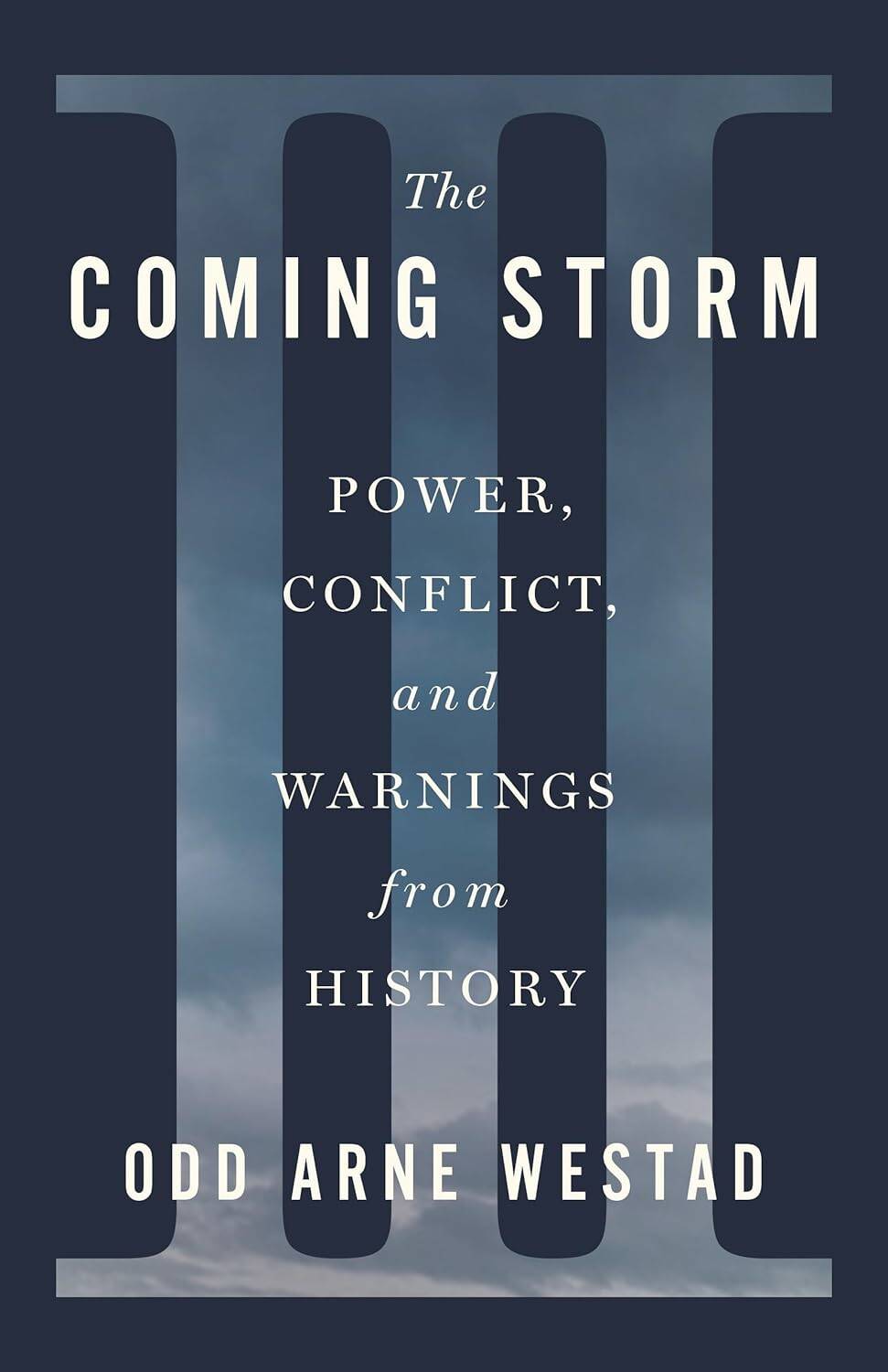
Author Odd Arne Westad probably has more degrees than a thermometer. However, he seems to think us ordinary folks are smarter than we are — at least some of us — because in his new (and 18th) book The Coming Storm he leaves out some critical, basic information.

Read this article for free:


or

Already have an account? Log in here »

To continue reading, please subscribe:

Subscribe and receive a limited-edition Free Press branded hat or tote.

Digital Subscription

One year of digital access for only $205*

  • Enjoy unlimited reading on winnipegfreepress.com
  • Read the E-Edition, our digital replica newspaper
  • Access News Break, our award-winning app
  • Play interactive puzzles

*First annual payment billed as $205.00 + GST for one year. This annual subscription will automatically renew at $233.00 + GST every 52 weeks (10% off the regular annual price of $259.35). Offer available to new and qualified returning subscribers only. Cancel any time.

To continue reading, please subscribe:

Add Free Press access to your Brandon Sun subscription for only an additional

$1 for the first 4 weeks*

  • Enjoy unlimited reading on winnipegfreepress.com
  • Read the E-Edition, our digital replica newspaper
  • Access News Break, our award-winning app
  • Play interactive puzzles
Start now

*Your next Brandon Sun subscription payment will increase by $1.00 and you will be charged $17.95 plus GST for four weeks. After four weeks, your payment will increase to $24.95 plus GST every four weeks.

Author Odd Arne Westad probably has more degrees than a thermometer. However, he seems to think us ordinary folks are smarter than we are — at least some of us — because in his new (and 18th) book The Coming Storm he leaves out some critical, basic information.

Nowhere in his book does Westad list the world’s Great Powers, as he calls them, all together. He writes about five of them all at once, and in a manner that leaves the mistaken impression that’s all there are. Later, more of them pop up here and there, if you can keep track. It’s distracting and needless.

Secondly, Westad speaks often in his book of multipolar/multipolarity. But he never unpacks what it is.
Alexander Zemlianichenko / Associated Press files
                                Odd Arne Westad believes what he calls the ‘Great Powers’ must seek compromise, tentative deals on at least some of the issues that are making today’s conflicts more intense.

Alexander Zemlianichenko / Associated Press files

Odd Arne Westad believes what he calls the ‘Great Powers’ must seek compromise, tentative deals on at least some of the issues that are making today’s conflicts more intense.

Westad, a historian at Yale, is already celebrated for his sprawling 2017 book The Cold War: A World History, his intensive study of the causes of the Cold War between the U.S. and the Soviet Union from 1945 to 1991. He has also taught at Harvard and the London School of Economics; his multilingualism (he speaks six languages) helps him research efficiently.

In The Coming Storm, Westad is as perturbed as writer Kenneth Rosen in his recent book Polar War (reviewed in the Free Press on Feb. 21) that humanity is barrelling towards self-destruction this century.

Rosen believes a third world war is coming, and Westad hopes a developing new world order may prevent it.

Westad believes that even if the next war were non-nuclear, “Millions would die. Human development would be set back by a generation, and our children would spend their lifetimes putting the pieces of progress back together again.”

The Great Powers must seek compromise, says Westad, tentative deals for at least some of the issues that today are making conflicts more intense. If not, the cost in human life and suffering, and in social destruction, “would make all other current wars pale in comparison.”

Westad is confident in his analysis of the future, having intimately studied the common factors that existed in the world before the First World War and Second World War, and how these factors helped generate those wars. More importantly, he has identified what he believes would generate a third world war and has come up with ways to avoid it.

A complicating factor in Westad’s rationale is Donald Trump, president of the most powerful nation in the world. He may discredit Westad’s message.

Westad doesn’t mention Trump by name, but does say his country “is going through an era of political and social unrest and a deep fear of decline.”

(“Donald Trump’s presidency threatens much of what is good in this country,” former FBI director James Comey said in A Higher Loyalty in 2018 after he was fired by Trump.)

“If we want to avoid war, we have to prepare for how to avoid it,” Westad says. “The alternative… is war on a scale that the vast majority of us have never experienced.”

Westad describes the issues the Great Powers must address: “One is at least temporary compromises on dangerous issues of sovereignty or territory, such as between the People’s Republic of China and Taiwan. Another is ending ongoing wars, such as in Ukraine and Palestine. A third is not to stifle global trade through tariffs and embargoes. A fourth is to limit arms races in sensitive technologies, A fifth is to co-operate where co-operation is possible, such as on climate issues, pandemics and space exploration.”

Unfortunately, says Westad, “we are not moving toward any such compromises. Instead, we are moving farther away from them.”
The Coming Storm

The Coming Storm

One of the problems as Westad sees it is that today the Great Powers, as they did before the First World War, “act as if they believe full sovereignty exists only for them and not for smaller countries, be it Iraq or Ukraine.”

Westad explains that “perhaps the most difficult lesson is that the preservation of peace must not make change in the international system impossible.”

For example, he says that means “it is likely that (China) will get at least some of the position of overall influence in East Asia that it searches for.”

As for Ukraine, Westad says: “It is crucial that Ukraine be offered a fast track to EU membership and economic opportunities through working with Europe.”

Finally, Westad concludes that we face uncertain times. “The only thing that is certain is that constellations of power will not remain what they were before and that new solutions will have to be found to keep countries secure and to prevent another world war.

“The task is how to manage the transition to multipolarity without creating the kind of spheres of influence for Great Powers that are based solely on might making right.

“A multipolar world is not something the Great Powers can use or prevent. It is happening today because of changes in the underlying economic and social structure of world affairs.”

He concludes: “On that ambition rests the future of world peace and of generations to come. ”

Barry Craig is a retired journalist.
Report Error Submit a Tip

More Stories

Shiffrin finishes runner-up to Vlhova in comeback race

The Associated Press 4 minute read Saturday, Nov. 21, 2020

LEVI, Finland - Petra Vlhova held on to her opening-run lead to beat Mikaela Shiffrin on Saturday in a women’s World Cup slalom that was the American’s first race in nearly 10 months.

On a course set by her coach Livio Magoni, the Slovakian also posted the fastest time in the second run and extended her advantage over Shiffrin to 0.18 seconds.

“I tried to take this advantage that my coach set the course, and I did it,” Vlhova said. “It wasn’t easy, as it started snowing and also the course was a bit destroyed. But I did it and I am really happy. First victory in the first slalom of the season is always good."

Austria’s Katharina Liensberger was 0.57 behind Vlhova in third, while the rest of the field, led by Swiss racer Wendy Holdener, was at least 1.35 off the lead.

ER wait times continue to rise, patients continue to give up

Carol Sanders 4 minute read Preview

ER wait times continue to rise, patients continue to give up

Carol Sanders 4 minute read Monday, Jul. 4, 2022

Emergency room average wait times in Winnipeg increased in May, while the number of patients who left HSC without receiving care in April nearly doubled its January 2021 sum.

According to Shared Health records, in April, 1,097 patients left the downtown Health Sciences Centre ER without being seen by a physician, compared to 862 who did so in January — and 591 in January 2021.

The longest wait times for nine out of 10 patients seeking medical care at Winnipeg hospitals in May was 7.92 hours — up from 7.62 in April, provincial government data show.

Median wait times increased to 2.97 hours in May, from 2.87 in April.

Read
Monday, Jul. 4, 2022

Proposed Transcona development — which could add 20,000 people — gets thumbs down from residents

Joyanne Pursaga 5 minute read Preview

Proposed Transcona development — which could add 20,000 people — gets thumbs down from residents

Joyanne Pursaga 5 minute read 6:15 PM CDT

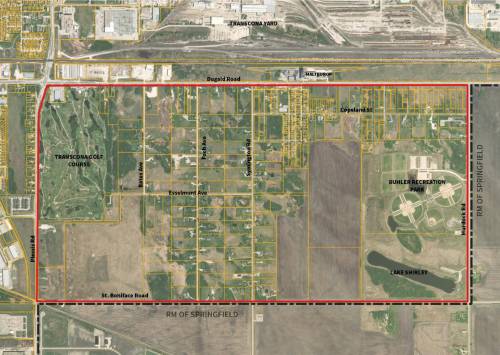
Dozens of Winnipeggers fear plans to make way for up to 20,000 more people to live in south Transcona would dramatically alter their neighbourhood and tie hefty fees for new services to their property titles.

If city council adopts the proposed South Transcona secondary plan, all future development applications would need to conform to its goals. The affected area is located south of Dugald Road, north of St. Boniface Road, east of Plessis Road and west of Murdock Road.

Homeowner Virginia Page Jähne fears the plan could add a massive tab to the title of her 4.3-acre property to cover services required for the development.

“My main concern is that they are wanting to put $1.4 million onto my title to pay for this. Now, they say that I will not have to pay it unless I subdivide. But if a person comes by and wants to buy from me … and they see that $1.4 million … what’s the first thing (they’re) going to do?” said Page Jähne, in an interview.

Read
6:15 PM CDT

Mourinho’s return to Real Madrid a classic rebound

Jerrad Peters 6 minute read Preview

Mourinho’s return to Real Madrid a classic rebound

Jerrad Peters 6 minute read 1:37 PM CDT

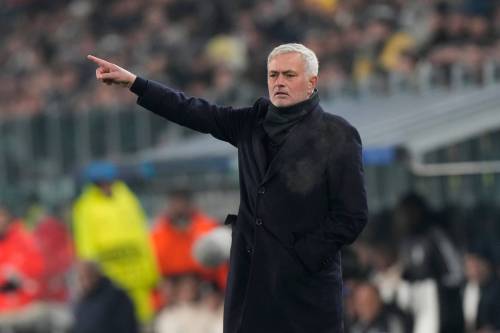
Not quite a month ago, nearly two million people lined the streets of Madrid to see the World Cup paraded by the Spanish national team. It might as well have been another lifetime.

By the time the Plaza de Cibeles was swept up and sprayed down, the country’s attention had shifted to the only thing — or person — it seemed anyone wanted to be talking about: José Mourinho.

And they haven’t stopped talking about him. He hasn’t let them.

On June 11, the same day the World Cup kicked off in Mexico City, Mourinho was appointed head coach of Real Madrid for a second time. In his initial stint at the sport’s biggest club, which had ended 13 years prior, he’d won the Copa del Rey his first season, La Liga in his second and nothing in his third.

Read
1:37 PM CDT

Doctor’s departure stressful for teen

Kevin Rollason 6 minute read Preview

Doctor’s departure stressful for teen

Kevin Rollason 6 minute read Sunday, Oct. 24, 2021

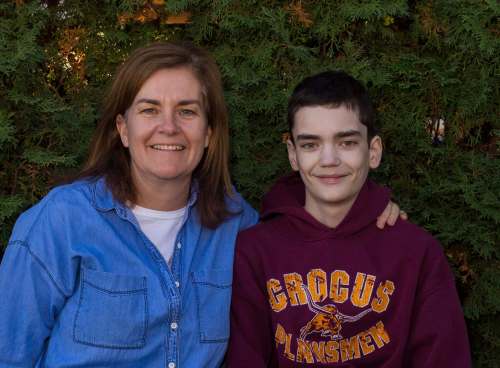
Morgan Walker is a typical teen — but only because a piece of his brain the size of a deck of cards was removed four years ago.

Walker, who had seizures multiple times a day before his surgery, fears other people might not be so lucky.

That’s because his surgeon, Dr. Demitre Serletis, is leaving the province and Health Sciences Centre. Serletis will start practising at the Cleveland Clinic in the new year.

“I was kind of shocked, but I understood why,” Walker said from his home in Brandon. “The government really hasn’t been respecting doctors.”

Read
Sunday, Oct. 24, 2021

Democrats try to stamp out school closures as omicron surges

Nicholas Riccardi And Collin Binkley, The Associated Press 8 minute read Preview

Democrats try to stamp out school closures as omicron surges

Nicholas Riccardi And Collin Binkley, The Associated Press 8 minute read Wednesday, Jan. 12, 2022

When Chicago teachers voted to work remotely last week to protest COVID-19 safety protections in the nation’s third-largest school district, Democratic Party officials leapt into action.

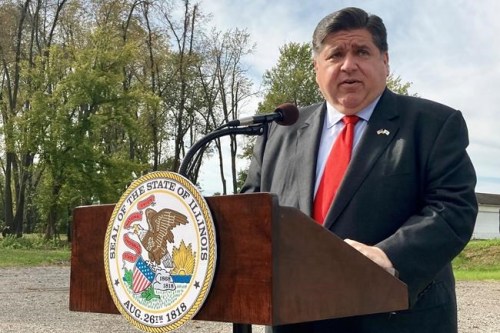
Illinois Gov. J.B. Pritzker pushed for a quick end to the job action and helped secure rapid tests to entice teachers back to the classroom. Mayor Lori Lightfoot said the teachers “abandoned their posts” in “an illegal walkout.” White House press secretary Jen Psaki stressed that students should be in school. The standoff ended with a tentative agreement late Monday.

Nearly two years into a pandemic that shows no signs of waning, Democrats are speaking out more forcefully against COVID-19 school closures, recognizing a rising anger among parents worried that their kids are falling behind. But in doing so, Democrats risk angering some teachers unions, which are advocating for more protections for educators as the omicron variant takes hold and whose support helped get Democrats elected.

The political peril for Democrats became clear after their candidate lost the Virginia governor’s race in November to a Republican who focused on education and slammed the prior year’s school closures. Now, in what already promises to be a tough midterm election year, with frustrations mounting among their base over stalled voting and spending legislation, they may face real trouble over an issue that directly affects Americans' lives.

Read
Wednesday, Jan. 12, 2022