Medical musings

Local doc ponders patient care, assisted dying and more in personable, thoughtful prose

Advertisement

Advertise with us

Who will speak for the dead and dying? Harvey Max Chochinov will.

Read this article for free:


or

Already have an account? Log in here »

To continue reading, please subscribe:

Subscribe and receive a limited-edition Free Press branded hat or tote.

Digital Subscription

One year of digital access for only $205*

  • Enjoy unlimited reading on winnipegfreepress.com
  • Read the E-Edition, our digital replica newspaper
  • Access News Break, our award-winning app
  • Play interactive puzzles

*First annual payment billed as $205.00 + GST for one year. This annual subscription will automatically renew at $233.00 + GST every 52 weeks (10% off the regular annual price of $259.35). Offer available to new and qualified returning subscribers only. Cancel any time.

To continue reading, please subscribe:

Add Free Press access to your Brandon Sun subscription for only an additional

$1 for the first 4 weeks*

  • Enjoy unlimited reading on winnipegfreepress.com
  • Read the E-Edition, our digital replica newspaper
  • Access News Break, our award-winning app
  • Play interactive puzzles
Start now

*Your next Brandon Sun subscription payment will increase by $1.00 and you will be charged $17.95 plus GST for four weeks. After four weeks, your payment will increase to $24.95 plus GST every four weeks.

Hey there, time traveller!
This article was published 14/02/2026 (227 days ago), so information in it may no longer be current.

Who will speak for the dead and dying? Harvey Max Chochinov will.

A Winnipeg palliative-care researcher for four decades, Chochinov has opted to share his writings on the subject in lieu of a biography.

Not to be confused with another Winnipeg physician named Harvey Chochinov, the author added the name of his grandfather Max to avoid confusion.
Mikaela MacKenzie / Free Press files
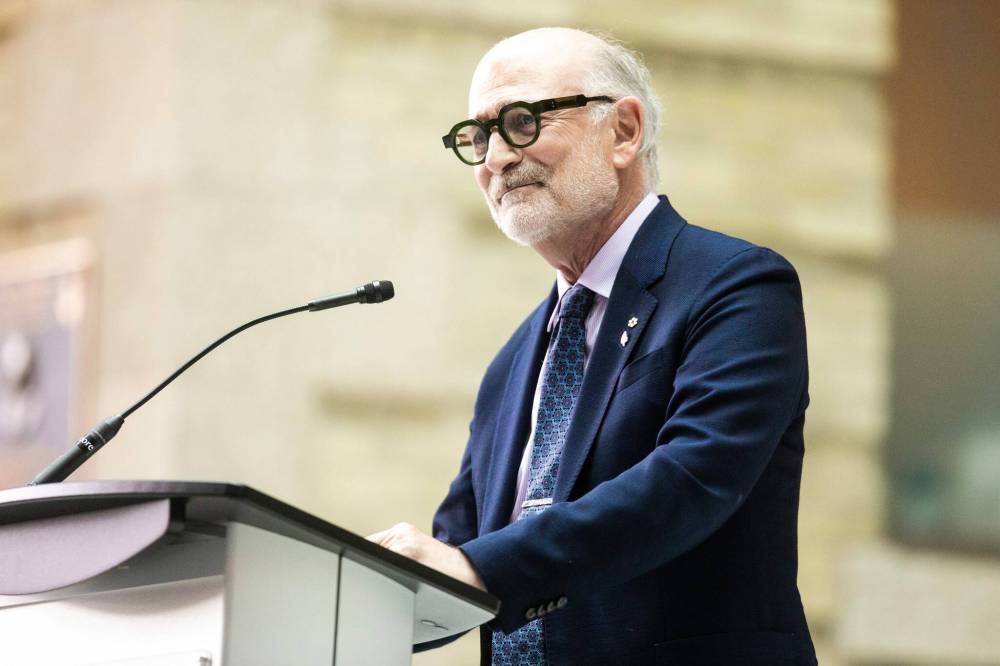
                                Harvey Max Chochinov (seen here in 2024) infuses his collection with humour while avoiding medical jargon, keeping the reader engaged.

Mikaela MacKenzie / Free Press files

Harvey Max Chochinov (seen here in 2024) infuses his collection with humour while avoiding medical jargon, keeping the reader engaged.

The writings here are drawn from 40 or so years of clinical practice, musing, testing and reflection.

At first glance, it may seem various issues and approaches have met with increased understanding and change for the better here in 2026. Alas, too many current headlines regarding health care in Canada suggest that is not the case.

Making articles first published in medical journals for other medical parties available to the general public can come with some risk.

The first clue that this not the case with In Search of Dignity is the author’s willingness to be known as Harvey rather than the impressive but distancing Dr. Chochinov. The second clue is his sense of humour, and the third the absence of jargon, which helps keep the reader engaged and feeling included.

Any reader will find value in his thoughts found in the piece Dying Well: Why We All Need to Have End-of-Life Conversations. As Chochinov points out, “Not acknowledging death does not make it go away, any more so than talking about it will somehow hasten its arrival.”

There is some repetition in articles written years apart, but not enough to be off-putting — and it indicates the continuity in Chochinov’s thought and his determination in the face of disagreement or indifference.

The heart of his work and approach to palliative care is best summed up in his ABCDs of dignity-conserving care: “A is for attitude, B is for behaviour, C is for compassion and D is for dialogue.”

The claim is that the research shows the importance of the patient being seen as more than their illness. Again and again Chochinov returns to what he calls the PDQ, the Patient Dignity Question, which asks, “What do I need to know about you as a person to take the best care of you possible?”

In Search of Dignity

In Search of Dignity

In the face of hallway and assembly-line medicine, Chochinov’s approach is a positive one.

The later articles in Chochinov’s book are the most recent, and here Chochinov asks very pointed questions about medical assistance in dying (MAID). What began as an aid to the terminally ill is expanding to include mental illness, and has led to doctor shopping to move beyond acceptable understanding of palliative care.

The author’s concerns include the argument that “palliative care is part of medicine… MAID can only be considered part of palliative care if this practice resides in the house of medicine. If medicine does not include it, neither can palliative care.”

Chochinov’s years of concern and thoughtfulness are found in one of his summations: “Death is inevitable; suffering ought not to be. I think it will feel like the time before you were born. Knowing our days are numbered makes each one more precious.”

Ron Robinson thinks watching Doc Martin on TV is fun, but not at your hospital bedside.

Report Error Submit a Tip

More Stories

The inaugural Editor’s Note

1 minute read Tuesday, May. 26, 2026

Duha Colour Services to move U.S. firm’s operations to Winnipeg, add 94 new jobs

Erik Pindera 3 minute read Preview

Duha Colour Services to move U.S. firm’s operations to Winnipeg, add 94 new jobs

Erik Pindera 3 minute read Wednesday, Nov. 12, 2025

Fresh off its acquisition of one of its leading U.S. competitors, Winnipeg-based Duha Colour Services Ltd. has announced it will use government grant money to expand its operations.

The federal and Manitoba governments said on Wednesday they have tabbed $160,000 for the Duha Group subsidiary — the world’s largest manufacturer of paint swatches and colour charts — to upgrade its local plant and train 136 employees.

Duha Group first announced bringing the U.S.-based Colwell Color Ltd. brand under its banner in October 2024.

It said this week it is transporting equipment and operations to Winnipeg from Colwell’s facility in Indiana. The move — and government grant — will create 94 new positions and allow the firm to train 42 current employees.

Read
Wednesday, Nov. 12, 2025

AI data centres and public benefit

David Clement 4 minute read Wednesday, Jun. 10, 2026

Manitoba Premier Wab Kinew recently rejected a proposed AI data centre near Winnipeg, citing concerns over water use, noise, and a perceived lack of public benefit.

The instinct to protect communities from unwanted development is understandable. But when the objections collapse under scrutiny, and when the stakes include Canada’s standing in the global AI economy, the decision deserves a harder look.

Critics of data centres frequently invoke water consumption, and there is genuine nuance worth discussing.

Large facilities do use water for evaporative cooling. But comparison matters. A typical 18-hole golf course uses approximately 300,000 gallons of water per day during summer months.

Expert urges food, drink makers to look to foreign markets

Gabrielle Piché 5 minute read Preview

Expert urges food, drink makers to look to foreign markets

Gabrielle Piché 5 minute read 5:04 PM CDT

Canada’s slowing population growth could restrict business expansion, a top economist for Farm Credit Canada warned Manitoba manufacturers.

Craig Johnston, the federal Crown corporation’s chief economist, addressed Prairie businesses at Farm Credit Canada’s Food and Beverage Summit Tuesday.

“There could be some modest growth in Canadian consumption of food and beverage,” Johnston said, relaying population numbers inside a Victoria Inn Hotel conference room.

Still, per-person spending on food is “stagnant, if not somewhat rising,” Johnson later told reporters.

Read
5:04 PM CDT

Supervised consumption site can be delayed no longer

Tom Brodbeck 5 minute read Preview

Supervised consumption site can be delayed no longer

Tom Brodbeck 5 minute read Friday, Apr. 17, 2026

If not now, then when?

That question hangs over Manitoba’s long-delayed supervised drug consumption site as the province weathers yet another surge in overdoses — one that front-line workers say is among the worst they’ve ever seen.

In just two weeks, organizations on the ground report as many as 15 deaths tied to drug toxicity.

Main Street Project executive director Jamil Mahmood calls it “the worst spring I’ve ever seen.” That’s a warning from someone watching the crisis unfold in real time.

Read
Friday, Apr. 17, 2026

Eliminating short-term sick notes ‘big step forward’: Doctors Manitoba

Matthew Frank 2 minute read Preview

Eliminating short-term sick notes ‘big step forward’: Doctors Manitoba

Matthew Frank 2 minute read 1:39 PM CDT

Manitoba doctors will no longer be required to issue sick notes for short-term employee absences due to illness or injury, starting Thursday.

The new provincial legislation, which officially passed in June, will only allow employers to request the medical documents when an employee has been absent for more than a week or if they’ve called in sick 10 or more times in a calendar year.

Dr. Nichelle Desilets, Doctors Manitoba board chair, said the legislation will free up time for physicians to concentrate on medical appointments.

“What may be a small change in the labour code can be a big step forward on improving access to medical care for all Manitobans and using our health care resources wisely,” she said during a news conference Tuesday.

Read
1:39 PM CDT