Smartphones deeply intertwined with our personal lives
Advertisement
Read this article for free:
or
Already have an account? Log in here »
To continue reading, please subscribe:
Digital Subscription
One year of digital access for only $1.44 a week*
- Enjoy unlimited reading on winnipegfreepress.com
- Read the E-Edition, our digital replica newspaper
- Access News Break, our award-winning app
- Play interactive puzzles
*Billed as $5.77 plus GST every four weeks. After 52 weeks, price increases to the regular rate of $19.95 plus GST every four weeks. Offer available to new and qualified returning subscribers only. Cancel any time.
To continue reading, please subscribe:
Add Free Press access to your Brandon Sun subscription for only an additional
$1 for the first 4 weeks*
- Enjoy unlimited reading on winnipegfreepress.com
- Read the E-Edition, our digital replica newspaper
- Access News Break, our award-winning app
- Play interactive puzzles
*Your next Brandon Sun subscription payment will increase by $1.00 and you will be charged $17.95 plus GST for four weeks. After four weeks, your payment will increase to $24.95 plus GST every four weeks.
Read unlimited articles for free today:
or
Already have an account? Log in here »
Hey there, time traveller!
This article was published 08/11/2025 (341 days ago), so information in it may no longer be current.
Consider for a moment the stress of misplacing your iPhone or Android device. Now compare this to 20 years ago, and how you might feel about misplacing a flip phone.
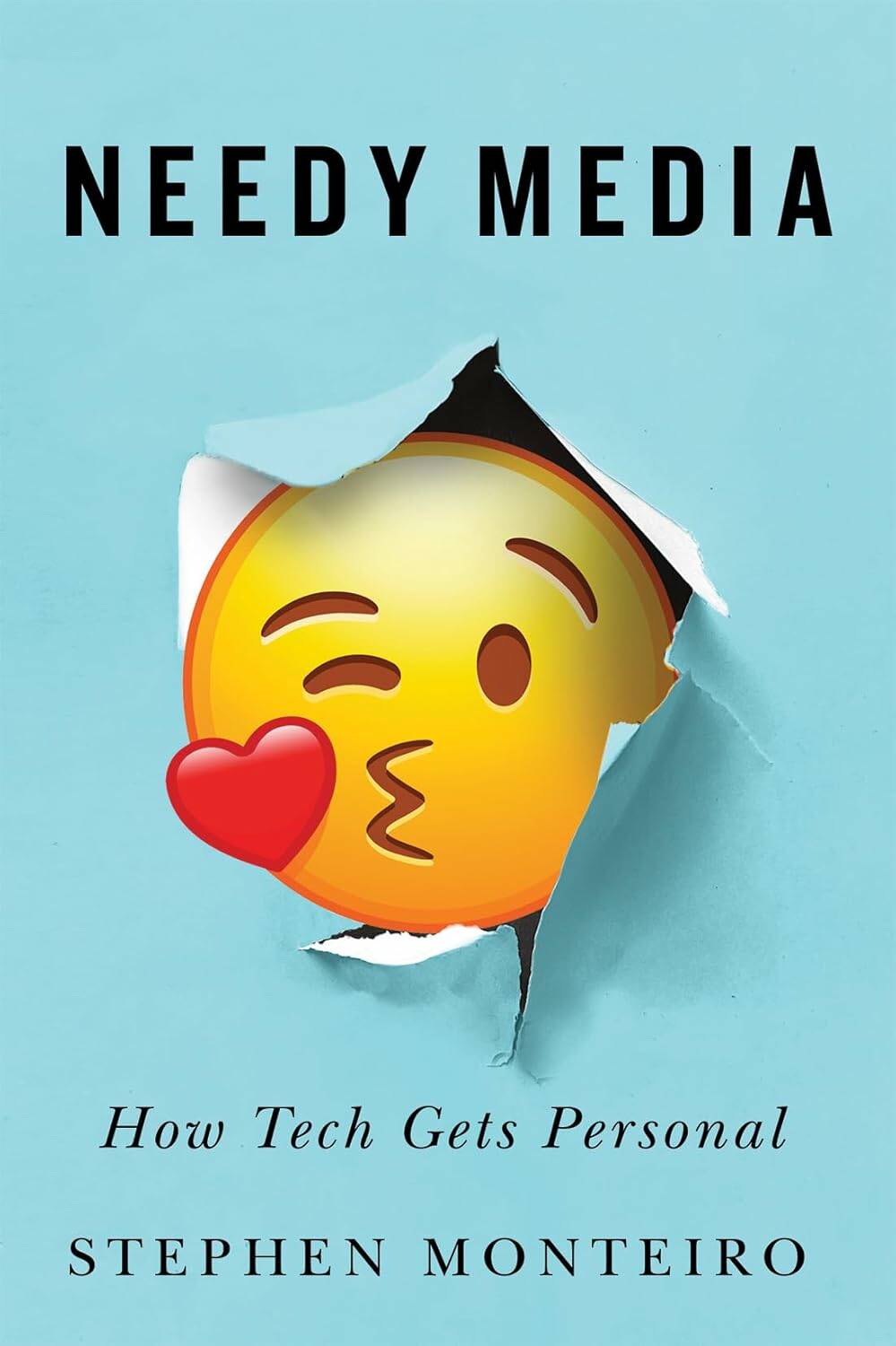
In Needy Media: How Tech Gets Personal professor Stephen Monteiro, who teaches in the department of communications at Concordia University, shows what has changed and why, illustrating how our lives are now intertwined with our personal devices. Losing one of these is much more than losing a flip phone.
Our devices now collect personal data while adjusting to our hour-by-hour activities. Like a suspicious spouse, these devices are needy; they track our activities via GPS, store our experiences through video and photos and even monitor our conversations. Depending on which apps we download, they know our musical likes and dislikes, our sleeping patterns, our calorie intake and when we exercise (or not). They also now recognize our faces and fingerprints. In other words, our personal devices have made us more “bionic” than ever before.
Needy Media
How did we get here? Monteiro provides a history of home computers and personal technologies. This includes hobbyists in the 1970s who purchased computer kits like the Altair 8800. These kits required a lot of effort to assemble, and often failed to work in the end. When they did function, they “computed” by the user flipping toggle switches rather than through a keyboard or mouse.
Early home computers were primarily marketed to men, often through sexist advertising. One consequence for many families was the creation of what were termed “computer widows” whose husbands were totally absorbed by their new machines.
Similar to the demise of crystal radio kits built by hobbyists in the 1920s and the rise of user-friendly radio sets in the ‘20s and ‘30s, by 1980 computer kits were replaced by desktop computers produced under such brands as Apple, Tandy and Commodore, and came out of a box ready to play.

As computer technologies advanced and started to become smaller, they shifted from the top of desks to personal, handheld devices. In the latter half of 1990s and early 2000s, professionals and business executives were widely adopting the PalmPilot and BlackBerry. Ten years later, wearable devices were becoming common, including Fitbits for the wrist to track heart rates and exercise.
One consequence of these evolving technologies is our loss of privacy; the more we use our iPhones and Android devices, the more they learn about us. “The intimacy the user develops with the device” leads to “greater dependency,” Monteiro correctly notes. Furthermore, with increased use, our personal information is transformed into something to be monetized for anonymous third-party profits. In other words, your personal life is someone else’s profit.
While the cover of Needy Media will catch many people’s eyes, Monteiro is really writing for an academic audience. He makes several references to influential theorists, including French philosopher Michel Foucault and American sociologist and psychologist Sherry Turkle, assuming the reader is familiar with their works. Furthermore, his style is sometimes hard to digest, using words and phrases like “dialogical relationship,” “dramaturgical” and “symbolic interactionism.” In short, this volume is for the serious reader.
Those seeking to follow an easier history of computers and technology should turn to Paul E. Ceruzzi’s Computing: A Concise History or Bill Gates’ entertaining autobiography Source Code: My Beginnings. However, Monteiro seeks to do more than give an account of changing technologies and computers — he shows how our phones are now inseparable from our personal worlds. They are needy indeed, absorbing our attention and serving more than one master.
Christopher Adams is an adjunct professor in the department of political science at the University of Manitoba and rector of St. Paul’s College. He recently co-edited The Keystone Province: Politics and Governance in Manitoba.