Praise-worthy prose
Vanderhaeghe ruminates on literary greats, writing, history and more in new non-fiction collection
Advertisement
Read this article for free:
or
Already have an account? Log in here »
To continue reading, please subscribe:

Digital Subscription
One year of digital access for only $205*
- Enjoy unlimited reading on winnipegfreepress.com
- Read the E-Edition, our digital replica newspaper
- Access News Break, our award-winning app
- Play interactive puzzles
*First annual payment billed as $205.00 + GST for one year. This annual subscription will automatically renew at $233.00 + GST every 52 weeks (10% off the regular annual price of $259.35). Offer available to new and qualified returning subscribers only. Cancel any time.
To continue reading, please subscribe:
Add Free Press access to your Brandon Sun subscription for only an additional
$1 for the first 4 weeks*
- Enjoy unlimited reading on winnipegfreepress.com
- Read the E-Edition, our digital replica newspaper
- Access News Break, our award-winning app
- Play interactive puzzles
*Your next Brandon Sun subscription payment will increase by $1.00 and you will be charged $17.95 plus GST for four weeks. After four weeks, your payment will increase to $24.95 plus GST every four weeks.
Read unlimited articles for free today:
or
Already have an account? Log in here »
Hey there, time traveller!
This article was published 28/09/2024 (699 days ago), so information in it may no longer be current.
Veteran Saskatoon author Guy Vanderhaeghe has assembled 37 of his non-fiction pieces written over the last 40 years in a new book — mostly, to paraphrase the book’s title, because his fans have asked him to.
His work is collected into six sections: “Books and Writers 1,” “Recollections 1,” “The Writer and Writing 1: Thinking by Dreams,” “Books and Writers 2,” “Recollections 2,” and “The Writer and Writing 2: History and Literature.” There are insightful book reviews, lively articles, personal memories and a few speeches, such as the Margaret Laurence lecture he gave at the Writers’ Union’s annual general meeting in May 2014.
Vanderhaeghe made an auspicious debut on the Canadian literary scene in 1982 with a much-praised short-story collection called Man Descending. To his great surprise, it won the annual Governor General’s Award for fiction. Early in the Laurence lecture, he said he knew he had not deserved the award. “Self-doubt and embarrassment were making it impossible for me to get on with the next book,” he writes. It was Laurence herself who assured him that “nothing mattered besides getting on with the work and doing it as well as I could manage. Everything else, whether praise or criticism, was in the long run nothing but mere noise, clamour, distraction.”
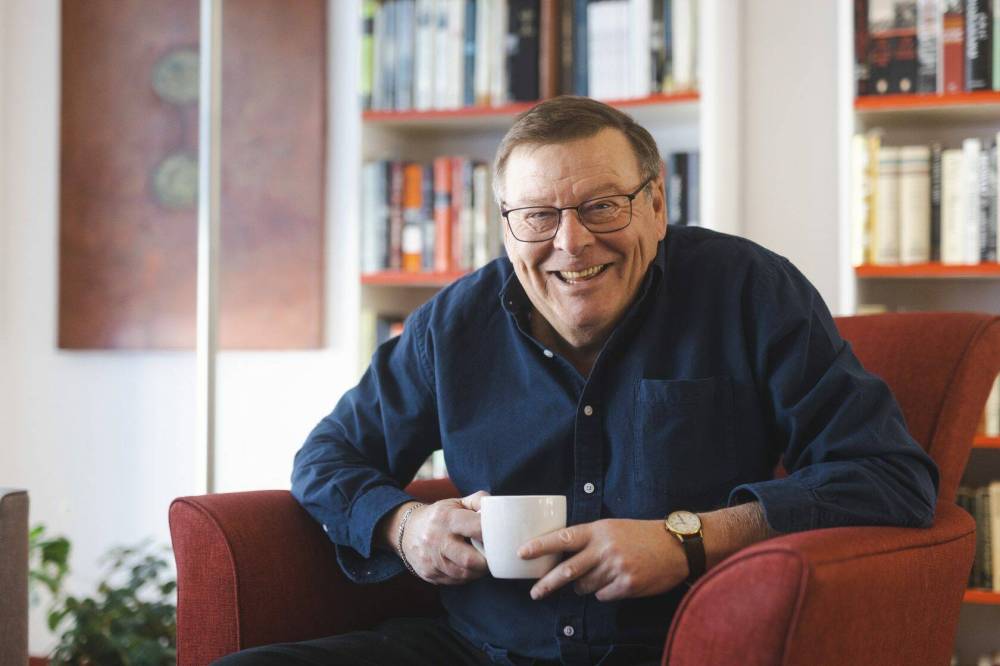
David Stobbe photo
Guy Vanderhaeghe’s 1982 short-story collection Man Descending won the Governor General’s Award for fiction, a prize he’d win again in 1996 and 2015.
Vanderhaeghe has since won the Governor General’s Award two more times — in 1996 for his novel The Englishman’s Boy and in 2015 for his collection Daddy Lenin and Other Stories.
He goes to considerable length — in three articles and a speech — comparing history textbooks with historical literature. He cites William Shakespeare, Daniel Defoe (A Journal of the Plague Year), Charles Dickens (A Tale of Two Cities) and Margaret Mitchell (Gone with the Wind) as writers whose works are potent forces in “the shaping of historical understanding” — so potent that they prevail over what is offered in high school history texts, effectively showing what people were really like. And he picks The Wars, by Timothy Findley, as “the finest historical novel ever written by a Canadian.”
Vanderheaghe does emphasize, however, that history textbooks do have value — they “seek to convey the sweep of time, the march of events, the consequences of cause and effect,” he writes.
His January 2023 speech to Toronto’s Heliconian Club included here is especially articulate in explaining what is happening in the world’s governments. “The rise of ‘strong man’ leaders all over the globe is a dangerous phenomenon… Strongmen need to flex and exert their muscles to demonstrate their strength. They do this not only to suppress dissent within their own countries, but also to direct aggression abroad by manufacturing enemies in an attempt to cement support at home. In a word, they need to invent threats to stay in power, just as a fire requires fuel to keep burning.”
In his review of a collection of American author John Updike’s early stories, Vanderhaeghe expresses his great respect, suggesting Updike was perhaps the last great man of letters. Vanderhaeghe emphasizes not only the quantity of Updike’s work but the variety: short stories, novels, poetry, book and art reviews as well as memoirs.

Other writers Vanderhaeghe praises include Vladimir Nabokov, Annie Proulx, Mordecai Richler, Stephen Leacock and Margaret Laurence. American author Richard Ford is given special attention via rave reviews of his 1997 work Women with Men: Three Stories, and his 2006 novel The Lay of the Land, third of the Frank Bascombe trilogy. Bascombe is a master of ruminating, and Vanderhaeghe calls for him to continue for many years to come. A footnote informs readers that Ford has indeed continued Frank’s ruminating on American society — in two more books, 2014’s Let Me Be Frank with You and 2023’s Be Mine.
In addition to pulling together a wide range of non-fiction pieces — some thought-provoking, some entertaining — Vanderhaeghe even offers the basics on how to start writing a novel and stick with it (in the piece Novel Techniques: From Inspiration to Execution).
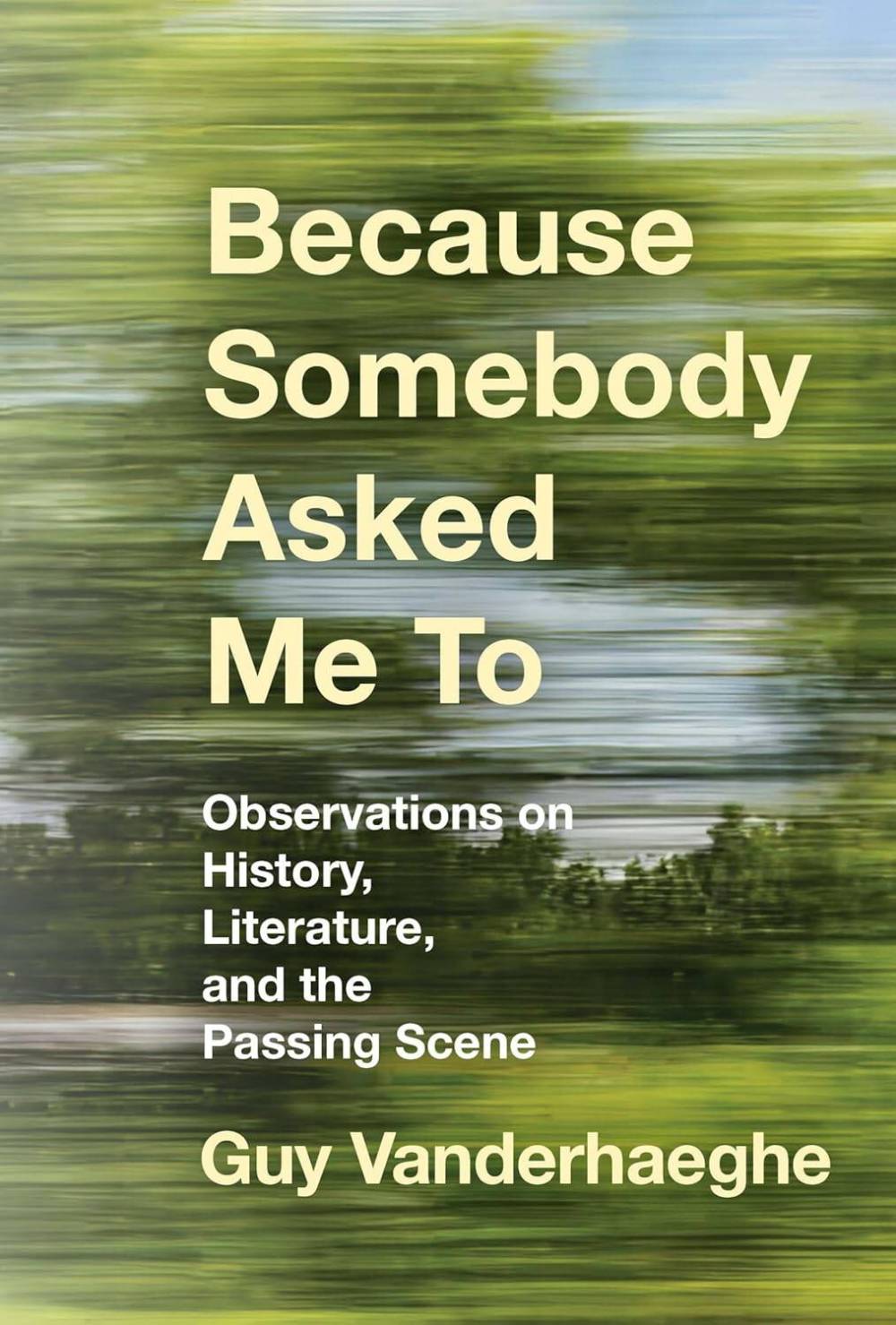
Because Somebody Asked Me To
There’s the odd piece included that might seem trivial, leading the reader to ask why Vanderhaeghe included it.
For your answer, you need only read this book’s title.
Dave Williamson is the Winnipeg author of 10 books, including a history of Red River College.