History in focus

Old photographs provide valuable insight into Ukrainian diaspora in Canada

Advertisement

Advertise with us

Canada is home to the third-largest Ukrainian diaspora in the world, now being enlarged by thousands of refugees fleeing the most recent war in a homeland marked by centuries of deadly conflict.

Read this article for free:


or

Already have an account? Log in here »

To continue reading, please subscribe:

Subscribe and receive a limited-edition Free Press branded hat or tote.

Digital Subscription

One year of digital access for only $205*

  • Enjoy unlimited reading on winnipegfreepress.com
  • Read the E-Edition, our digital replica newspaper
  • Access News Break, our award-winning app
  • Play interactive puzzles

*First annual payment billed as $205.00 + GST for one year. This annual subscription will automatically renew at $233.00 + GST every 52 weeks (10% off the regular annual price of $259.35). Offer available to new and qualified returning subscribers only. Cancel any time.

To continue reading, please subscribe:

Add Free Press access to your Brandon Sun subscription for only an additional

$1 for the first 4 weeks*

  • Enjoy unlimited reading on winnipegfreepress.com
  • Read the E-Edition, our digital replica newspaper
  • Access News Break, our award-winning app
  • Play interactive puzzles
Start now

*Your next Brandon Sun subscription payment will increase by $1.00 and you will be charged $17.95 plus GST for four weeks. After four weeks, your payment will increase to $24.95 plus GST every four weeks.

Hey there, time traveller!
This article was published 19/11/2022 (1414 days ago), so information in it may no longer be current.

Canada is home to the third-largest Ukrainian diaspora in the world, now being enlarged by thousands of refugees fleeing the most recent war in a homeland marked by centuries of deadly conflict.

Readers who identify with this diaspora will find the memoirs and memories making up this aptly titled family chronicle especially meaningful, given its engaging and often endearing narratives that frequently use Ukrainian terms such as Baba (Grandma) and Dido (Grandpa). But there is also universal appeal in a balanced approach to controversies still surrounding the reasons for Ukraine’s torturous history.

Myrna Kostash’s Ghosts in a Photograph is an immigrant — or settler — story about the first wave of “sheepskin-coated” homesteaders who came to a new land in the decades preceding the First World War, but it also offers a window into the lives of family members who remained in the “old country.”

Markian Lozowchuk photo
                                Photos and words by Myrna Kostash’s kin help her craft a narrative of deprivation and toil.

Markian Lozowchuk photo

Photos and words by Myrna Kostash’s kin help her craft a narrative of deprivation and toil.

Commonly called “Galicia” prior to inclusion as a “Ukrainian Socialist Republic” following the 1917 Russian Revolution, which ended centuries of autocratic Tsarist rule, this is the homeland of kin who bore witness to 75 years of communism and a series of cataclysmic events such as two world wars and the emergence of a sovereign state in 1992.

The author of this richly detailed and well-documented familial story carries a family name shortened from the original “Kostashchuk,” a name-changing tactic common amongst eastern European immigrants during the “Red Scare” that followed Communist successes in Europe.

Kostash is writer-in-residence at Athabasca University and an award-winning, prolific non-fiction writer whose works include the classic All of Baba’s Children, continuously printed since 1977, and Prodigal Daughter: A Journey to Byzantium (2010), which explores her lifelong interest in Eastern Christianity.

Her newest book reveals how old family photos, which sharpened memories of her grandparent’s homestead, together with stories told by long-deceased family members to still-living kin, helped construct engaging narratives of deprivation and toil that followed an opportunity to own 160 acres of virgin land northeast of Edmonton.

A common theme runs through these narratives: acquiring new, unsettled lands so children could have a better life, admirable and selfless acts that Kostash now understands came at a high price to the country’s original inhabitants.

Indigenous groups, well aware of the part played by settlers like Kostash’s kin in the eventual loss of their lands, are likely to dismiss the “grief, anguish, outrage, shame” she claims to feel now that the long, slow road to reconciliation has begun.

Other narratives inspired by faded, casual pictures and framed formal portraits alike combine with Kostash’s scholarly assessment of historical events that occurred when the pictures were taken, exposing contrary religious views and political allegiances deeply engrained within her Ukrainian familial circles in Canada and still commonplace in Ukraine, where stories of antisemitic pogroms and mass executions still resonate.
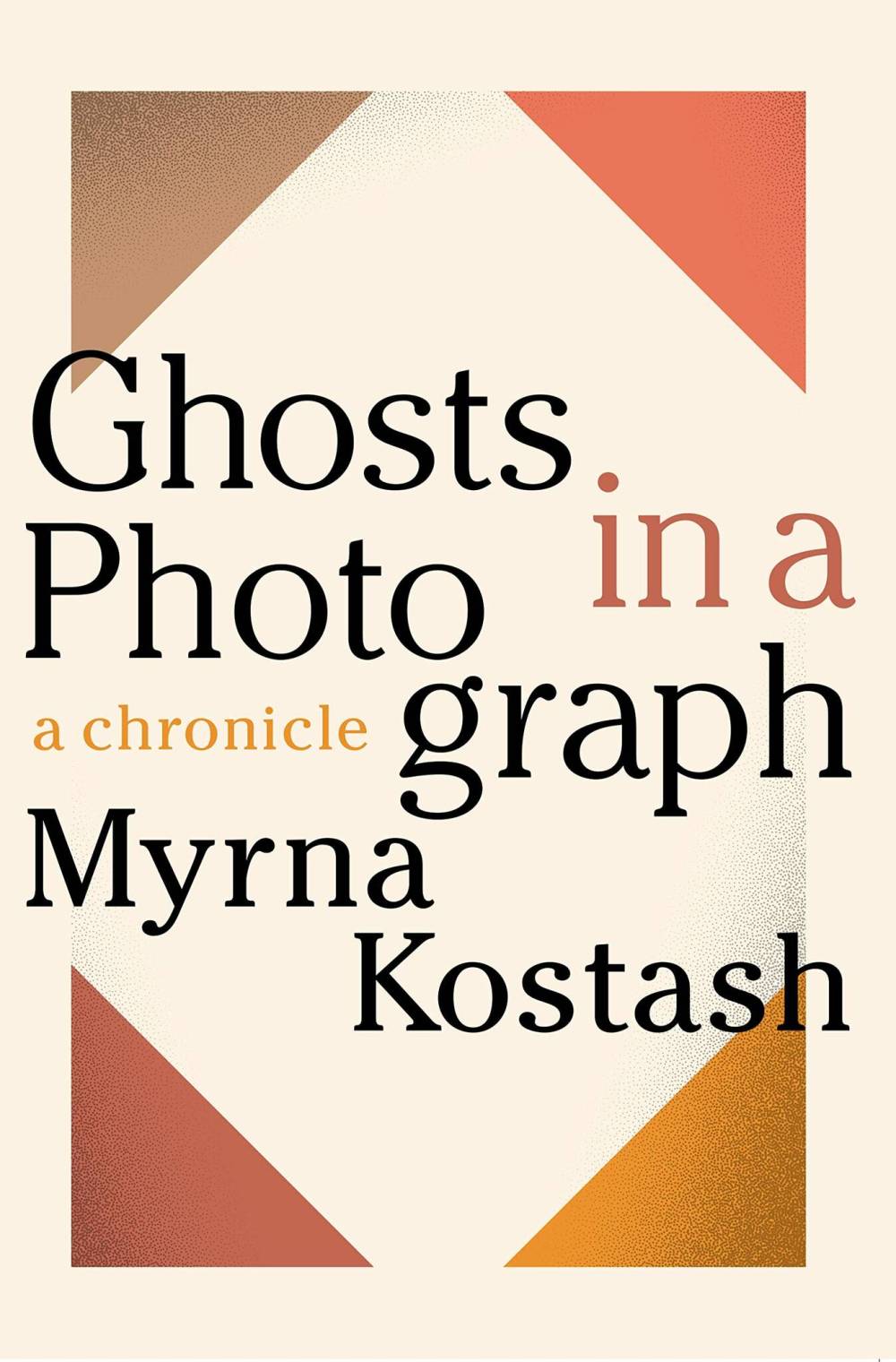
Ghosts in a Photograph

Ghosts in a Photograph

Her Dido, she writes, “was a socialist, never a Communist, although he passionately defended the achievements of the Soviet Union made in the name of the working class,” then recounts her discovery of pictures found in a book in an Edmonton library where an image of a man with “a rakishly tipped cap” — à la Marlon Brando in the movie The Wild One — turned out to be a direct relative named Stepan Kostaschuk, proud member of a much-feared Ukrainian Insurgent Army that fought against Soviet sympathizers during and after the Second World War.

Pictures even lead to a realization that a great uncle in Ukraine who had voiced strong political views had “disappeared” — likely murdered — shortly after Hitler’s defeat, and even trips to Ukraine as part of a genealogical quest can’t provide definitive proof whether he was killed by Communist sympathizers who doubted his loyalty, or by Ukrainian ultra-nationalists.

Those fortunate to read Kostash’s book will reach their own conclusions about the process that helped transform Western Canada into an agricultural hub, while pondering past events which have precipitated yet another deadly war in Ukraine.

Joseph Hnatiuk is a retired teacher whose kin were also “sheepskin-coated” immigrants.
Report Error Submit a Tip

More Stories

U of W Collegiate students thank residential school survivors with the lessons they’ve learned

Maggie Macintosh 6 minute read Preview

U of W Collegiate students thank residential school survivors with the lessons they’ve learned

Maggie Macintosh 6 minute read Yesterday at 6:49 PM CDT

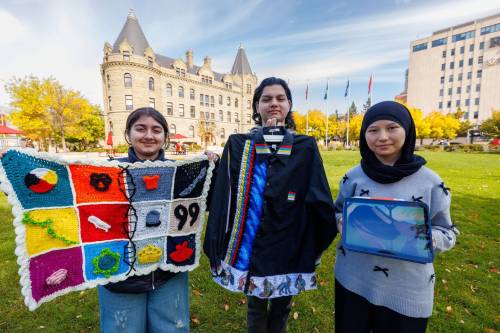
It’s become a back-to-school tradition for teachers to invite Indigenous elders to their classrooms to share first-hand accounts about the ongoing impacts of Canada’s residential school system.

This fall, the University of Winnipeg Collegiate was among the schools that sent an invitation — but its purpose wasn’t to educate students about the system’s horrors.

“Truth and Reconciliation week is so emotional and draining for residential school survivors,” said Christine M’Lot, a longtime instructor of the school’s Grade 9 truth and reconciliation course.

“I wanted to do something a little bit different and offer a thank you.”

Read
Yesterday at 6:49 PM CDT

Cops handcuffed by bail issues, lack of mental-health options, WPS chief tells residents in crime-ridden North End neighbourhood

Nicole Buffie 6 minute read Preview

Cops handcuffed by bail issues, lack of mental-health options, WPS chief tells residents in crime-ridden North End neighbourhood

Nicole Buffie 6 minute read Yesterday at 5:30 PM CDT

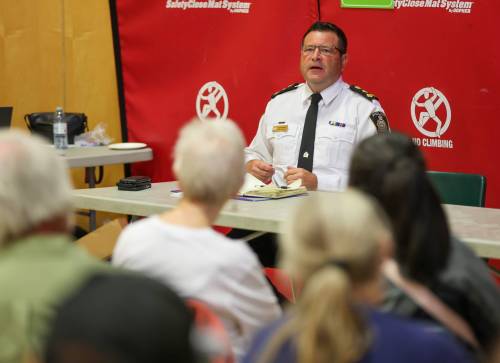
Weak bail reform and a lack of mental-health resources and addictions treatment beds are making it more difficult to tackle crime in inner-city neighbourhoods such as William Whyte, where there has been a significant increase in criminal behaviour compared to last year, the city’s top police officer says.

Winnipeg Police Services Chief Gene Bowers made the remarks Thursday night at an event hosted by the William Whyte Neighbourhood Association, where about two dozen residents gathered to share their concerns about crime in the North End community.

“Fentanyl and meth, that’s caused a strain on all our front lines and and all these agencies that are trying to help people,” Bowers told the room of people at Inner City Youth Alive on Aberdeen Avenue Thursday night.

“What really is the problem is there’s no treatment. That’s the gap, because (police and agencies) are all churning the same people through, and we’re all seeing them. We’re all frustrated that there’s no help.”

Read
Yesterday at 5:30 PM CDT

Small businesses outline election priorities

Robin Bezte 5 minute read Yesterday at 2:00 AM CDT

Since moving to Winnipeg earlier this year, I have come to know the city through its small businesses. As a new Exchange District resident, grabbing coffee at Little Sister, walking through The Forks Market and stopping at Pho Hoang for lunch have become part of my routine. These are the places that give Winnipeg’s neighbourhoods their character and have helped make a new city feel like home.

That is why an empty storefront never feels like just vacant real estate. It represents someone’s investment and hope. When a small business disappears, the community loses a piece of itself.

On Oct. 28, Manitobans in most municipalities will choose their next mayors, reeves and councillors. While city councils may not set interest rates or negotiate global trade agreements, they do have some control over many of the barriers entrepreneurs encounter day to day, from property tax bills and permit applications to public safety and construction disruptions.

Ahead of the upcoming elections, the Canadian Federation of Independent Business (CFIB) surveyed Manitoba small business owners to get a sense of their municipal priorities and concerns.

Mayoral candidate Vogiatzak criticized for living outside Winnipeg

Malak Abas 4 minute read Preview

Mayoral candidate Vogiatzak criticized for living outside Winnipeg

Malak Abas 4 minute read Yesterday at 5:08 PM CDT

A mayoral hopeful took heat from other candidates Friday for living outside Winnipeg while running in the civic election.

Mike Vogiatzakis’s primary residence is in the Rural Municipality of St. Andrews, about 25 kilometres north of Winnipeg — a community with its own mayor and councillors.

But the funeral director said he owns a home in Winnipeg where he divides his time, and he would move to the city full-time if elected mayor.

“It doesn’t matter where a person lives. Why are we dividing St. Andrews and Manitoba and Winnipeg? I’ve met the criteria to run for mayor,” Vogiatzakis said Friday morning.

Read
Yesterday at 5:08 PM CDT

Safety upgrades completed at Whiteshell park falls where brothers drowned

Free Press staff 2 minute read Preview

Safety upgrades completed at Whiteshell park falls where brothers drowned

Free Press staff 2 minute read Updated: Yesterday at 2:54 PM CDT

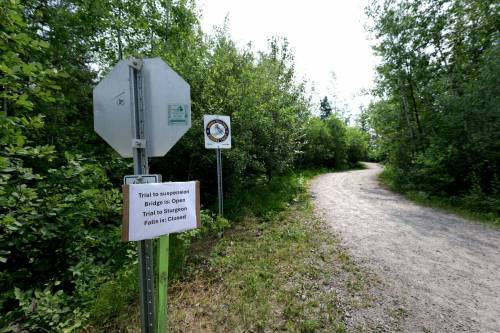
Safety improvements have been completed at Sturgeon Falls in Whiteshell Provincial Park, where two brothers from Winnipeg drowned in July, the province announced Friday.

The Sturgeon Falls trail was closed for upgrades after Maximo Au Ramirez, 10, and Aaron Au Ramirez, 13, disappeared in the fast-moving rapids. Their bodies were recovered days later.

The trail and viewing areas have reopened. Viewing areas are now fenced to prevent people from walking onto hazardous slippery rocks. Signs were installed to warn visitors of drowning hazards.

A new portage gives canoeists and kayakers access to and from safe shoreline areas adjacent to the falls, the province said.

Read
Updated: Yesterday at 2:54 PM CDT

Olympics overnight: Synchro divers spring to silver, while Penny Oleksiak powers relay team to Canada’s first medal in Tokyo

Justin Smirlies - Toronto Star, Toronto Star 7 minute read Preview

Olympics overnight: Synchro divers spring to silver, while Penny Oleksiak powers relay team to Canada’s first medal in Tokyo

Justin Smirlies - Toronto Star, Toronto Star 7 minute read Sunday, Jul. 25, 2021

Here’s what you missed overnight and need to know about the 2020 Tokyo Olympics this morning.

Read
Sunday, Jul. 25, 2021