McCandless’ mosaic memoir lands on lauded short list
Advertisement
Read this article for free:
or
Already have an account? Log in here »
To continue reading, please subscribe:
Digital Subscription
One year of digital access for only $1.44 a week*
- Enjoy unlimited reading on winnipegfreepress.com
- Read the E-Edition, our digital replica newspaper
- Access News Break, our award-winning app
- Play interactive puzzles
*Billed as $5.77 plus GST every four weeks. After 52 weeks, price increases to the regular rate of $19.95 plus GST every four weeks. Offer available to new and qualified returning subscribers only. Cancel any time.
To continue reading, please subscribe:
Add Free Press access to your Brandon Sun subscription for only an additional
$1 for the first 4 weeks*
- Enjoy unlimited reading on winnipegfreepress.com
- Read the E-Edition, our digital replica newspaper
- Access News Break, our award-winning app
- Play interactive puzzles
*Your next Brandon Sun subscription payment will increase by $1.00 and you will be charged $17.95 plus GST for four weeks. After four weeks, your payment will increase to $24.95 plus GST every four weeks.
Read unlimited articles for free today:
or
Already have an account? Log in here »
Hey there, time traveller!
This article was published 14/11/2022 (1446 days ago), so information in it may no longer be current.
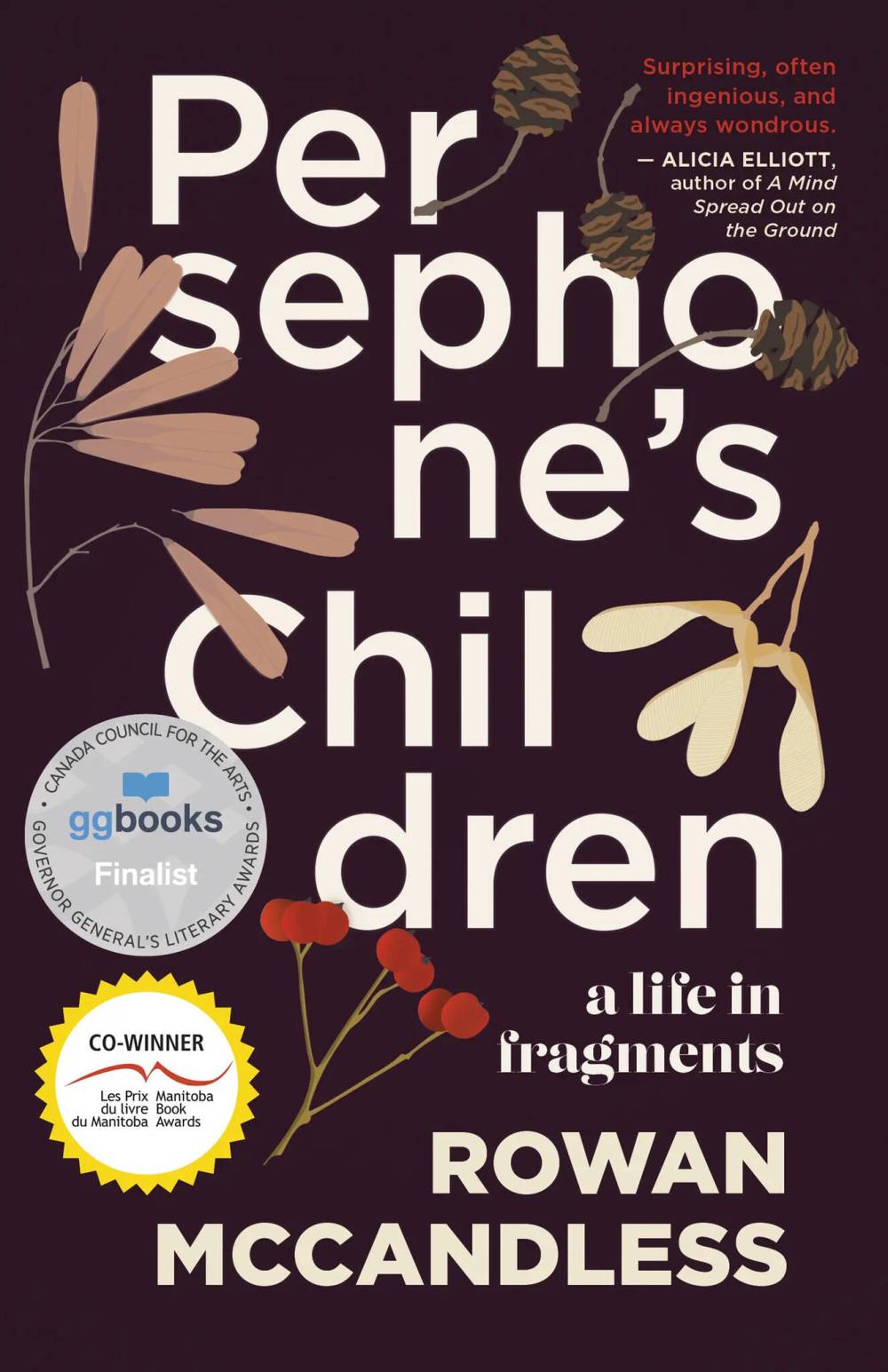
Rowan McCandless, a writer from Treaty 1 territory, continually pushes the boundaries of creative non-fiction. In 2021, Rare Machines, an imprint of Dundurn Press, published McCandless’ mosaic memoir Persephone’s Children: A Life in Fragments, a collection of essays about leaving a long-term abusive relationship. A year later, Persephone’s Children was shortlisted for one of Canada’s most prestigious literary awards, the Governor General’s Literary Award, in the non-fiction category. Winners are to be announced on Wednesday.
Free Press: What did you hope to accomplish with Persephone’s Children, and do you think you accomplished your goal?
Rowan McCandless: When writing Persephone’s Children, I kept my audience in mind. I wanted to reach out to people who needed to read a story of exiting domestic abuse and the rebuilding that comes afterwards — to know that they were not alone. I also hoped to demonstrate a different way to tell stories of intergenerational and personal trauma. This novel way of examining trauma was essential to me because I believe that we all have stories to share, but not all of them will fit a traditional, linear narrative. Some stories swoop and swirl and rush in and out like waves. I also hoped to inspire people to discover their voices. Once the book was launched, I had readers reach out to tell me how much Persephone’s Children resonated with them. People were fascinated by the book’s structure and viewed it as an invitation to write with hybrid forms. All the fantastic feedback from readers let me know I had accomplished my goals.
FP: What themes do you always seem to return to in your writing, and why are you drawn to those themes?
RM: There are many themes woven into Persephone’s Children. I’m particularly drawn to five topics in my writing: identity, race, belonging, voice and family inheritance. Being a Black, biracial woman, I often felt like I was straddling between worlds, occupying a transitional space carved out of necessity. I wondered what it meant to be an insider, or outsider, and consider who the gatekeepers were in charge. Culturally, I’m interested in who gets to be heard and why, and whose voices are silenced. Growing up in a house of secrets, a familial demand for silence impacted my voice. However, the long-term abusive relationship that I left almost six years ago obstructed what I could or couldn’t say, to the point that I physically lost my voice. Writing helped me to rediscover my voice and saved my life.
FP: Persephone’s Children is told in a collection of essays in many different forms. You’ve talked about how you love the relationship between form and content. Where do you see gaps in writers playing with form and content, and how do you plan to continue to push those boundaries?
RM: As the creative non-fiction editor for a literary journal, most submissions follow traditional formatting, which is excellent as I also admire and connect with those works. I’m seeing more experimental forays being forwarded my way, which makes me very excited about the genre. I think it’s just a matter of time before more writers play with form and content. It’s a question of exposure rather than fit. I plan to continue pushing those boundaries further by facilitating workshops and attending readings and panels dealing with these novel forms. As well, I’m going to trust my intuition and continue to write memoir and essays that push boundaries further by experimenting with literary structures and storytelling.
FP: If you had to pick a favourite essay from your book, which would it be and why?
RM: It’s difficult to choose, but I think that Blood Tithes: A Primer would be my favourite essay. I like the abecedarian structure, the lyricism and the dive into family history, including family photographs and historical documents.
FP: How has your experience aligned (or not) with the expectations you had regarding the release of Persephone’s Children?
RM: Other than being published, I had no expectations regarding Persephone’s Children. I hoped it would be well-received, but I didn’t have any thoughts about awards. If anything, it was my writing besties who firmly believed that my book would garner attention. To be a non-fiction finalist with the Governor General’s Literary Awards is a “pinch me, I must be dreaming” moment, especially as it comes on the heels of co-winning the Eileen McTavish Sykes Award for best first book at the Manitoba Book Awards. I am grateful and honoured to be in the company of so many fantastic books and excellent writers.
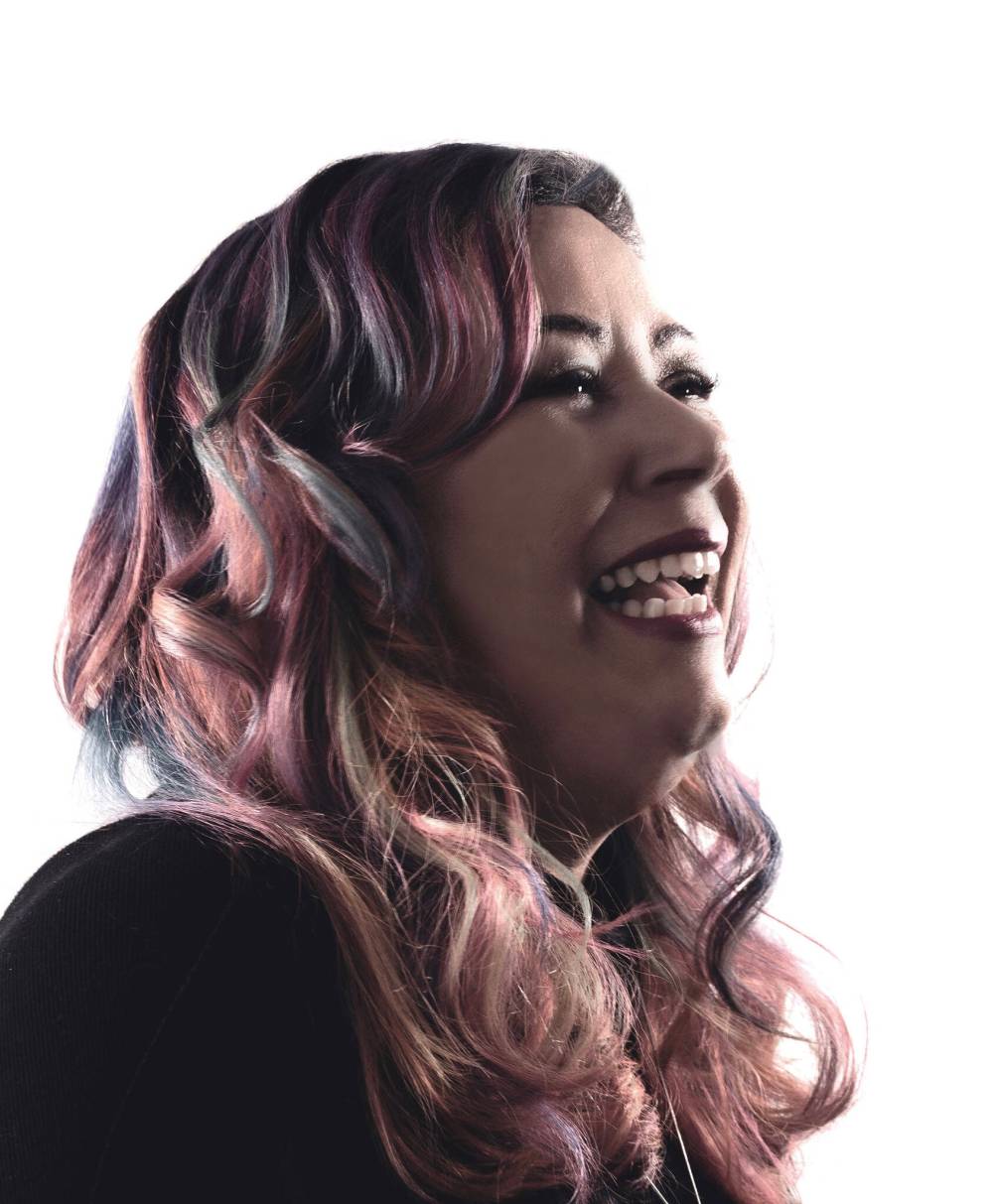
Tessa Vallittu photo
McCandless: ‘Writing helped me to rediscover my voice.’

FP: How is being shortlisted for the Governor General’s Literary Award significant for you?
RM: I started writing five years ago, when my eldest daughter issued a challenge to her sisters and me. She said, “we have all this creativity in our family, but none of us uses it. We should be using our creativity.” Wanting to be a good role model to my children, I picked up the pen and started writing. I had no idea the trajectory my writing would take. A year to the day when Persephone’s Children was first launched, I received an email notification that I was a finalist for the Governor General’s Literary Award in the non-fiction category. What a way to come full circle! This nomination means a great deal to me. It validated my voice and identity as a divergent thinker and writer. It legitimized mosaic memoirs and the hybridity of forms, and demonstrated that there is room for such books in Canadian non-fiction. Perhaps it signals the beginnings of a new literary canon.
FP: What are you writing right now? What are you reading right now?
RM: Right now I’m working on a series of essays and completing a short story collection entitled The Mausoleum of Lost Souls. This book takes an offbeat and heartfelt look at people relegated to the margins, caught on the cusp of life-altering decisions, in haunting, humorous, and sometimes heartbreaking situations. Regarding my reading, I’m currently digesting Human Heartbeat Detected by Chelsey Clammer.
Alyssa Sherlock is a Winnipeg writer.