Sharing child-welfare system stories helps women heal

Advertisement

Advertise with us

This collection of 10 women’s stories is not an easy read, but it is a necessary one.

Read this article for free:


By clicking the button above, an account will be created and you will begin to receive some of our recommended newsletters. You may opt out of any newsletter by visiting your Email and Communication Preferences page or by clicking "unsubscribe" at the bottom of any email.

or

Already have an account? Log in here »

To continue reading, please subscribe:

Digital Subscription

One year of digital access for only $1.44 a week*

  • Enjoy unlimited reading on winnipegfreepress.com
  • Read the E-Edition, our digital replica newspaper
  • Access News Break, our award-winning app
  • Play interactive puzzles

*Billed as $5.77 plus GST every four weeks. After 52 weeks, price increases to the regular rate of $19.95 plus GST every four weeks. Offer available to new and qualified returning subscribers only. Cancel any time.

To continue reading, please subscribe:

Add Free Press access to your Brandon Sun subscription for only an additional

$1 for the first 4 weeks*

  • Enjoy unlimited reading on winnipegfreepress.com
  • Read the E-Edition, our digital replica newspaper
  • Access News Break, our award-winning app
  • Play interactive puzzles
Start now

*Your next Brandon Sun subscription payment will increase by $1.00 and you will be charged $17.95 plus GST for four weeks. After four weeks, your payment will increase to $24.95 plus GST every four weeks.

Hey there, time traveller!
This article was published 12/11/2022 (1448 days ago), so information in it may no longer be current.

This collection of 10 women’s stories is not an easy read, but it is a necessary one.

In their own words and with unfaltering honesty, each of the women in Overcome: Stories of Women Who Grew Up in the Child Welfare System details their childhoods and their time in and out of Manitoba’s child-welfare system — some of it lifesaving, much of it horrific.

The compilation of interviews by three-time social justice author Anne Mahon, current chancellor of the University of Manitoba, features several well-known Indigenous community members and longtime advocates, some of whom are telling their stories in print for the first time.
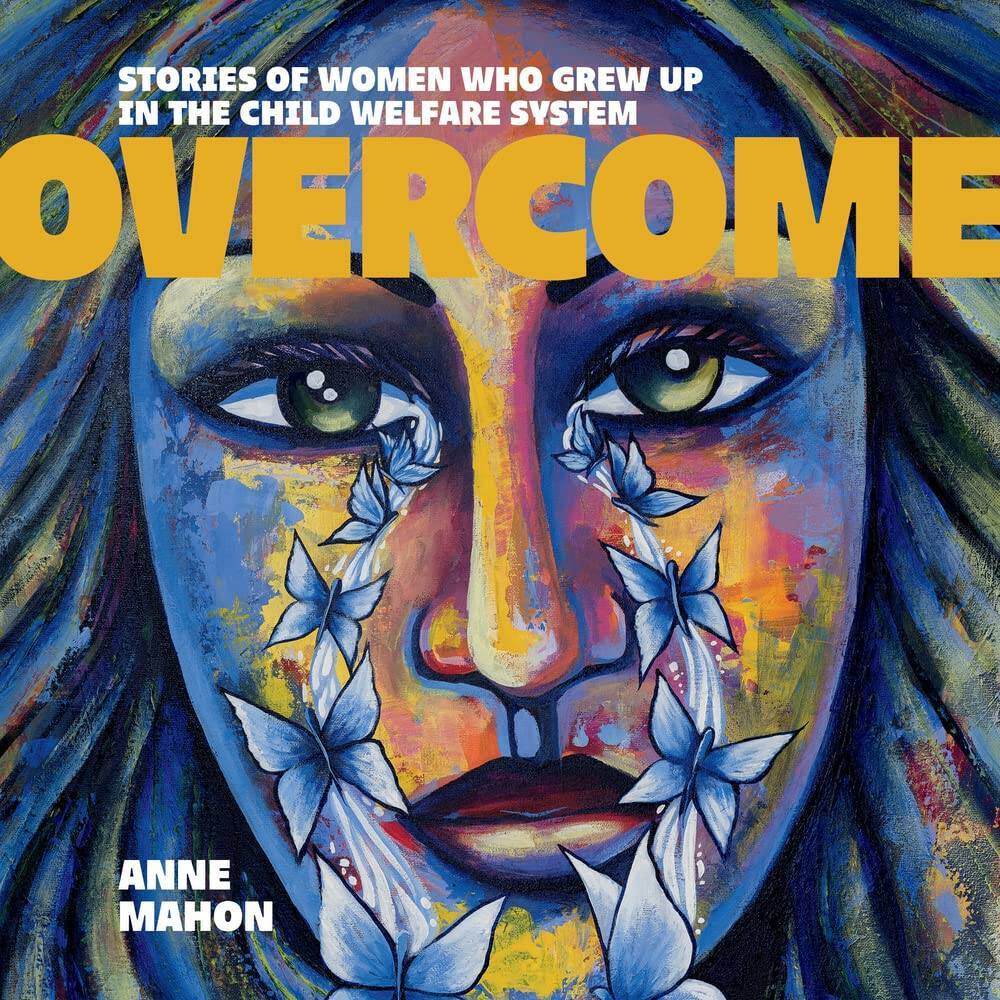
Each of the women — an artist, a tech industry professional, university professor, federal government employee, an aspiring social worker, two sisters with a special bond as well as frontline workers pushing past their own trauma to help other families — talk about their lives with emotional vulnerability and courage in a way that underlines the double meaning of the book’s title.

Like Mahon’s previous books (The Lucky Ones: African Refugees’ Stories of Extraordinary Courage, 2013; and Redemption: Stories of Hope, Resilience and Life After Gangs, 2017) all of the proceeds from sales of Overcome are going to charity. In this case, the funds benefit the non-profit Voices: Manitoba’s Youth In Care Network.

The trust Mahon built with each of the women is evident in the highly conversational, oral-history-style narratives, portions of which read like a stream-of-consciousness outpouring of personal divulgences. These are not profiles; the women share what they want to, from their perspectives only. Each of the narratives ends with a short note from the author reflecting on what it was like to meet and talk to each individual.

Though each is unique, the women’s stories are often similar. Their recollections make it impossible to ignore overlapping outcomes of colonialism, poverty and domestic violence in Manitoba’s child-welfare system.

The women’s memories shed light on ways in which the system has changed over time, how slow that change is and, in some ways, how stalled. Their anecdotes illuminate paths between residential schools to foster care to the youth criminal justice system. They examine complicated mother-daughter relationships with hard-won tenderness, and delve into shadowy practices such as vindictive calls to Child and Family Services, overmedication of kids in care and the struggle to obtain and piece together accurate records from their years in the system.

The women’s experiences are not all bad; in every story, there are bright spots and, often, positive recollections of some foster parents, social workers or authority figures who changed things for the better. But the book begins with a trigger warning for good reason; it contains awful truths and heartbreaking details of child abuse and neglect, too often at the hands of those who were supposed to protect.

All of the stories are distinctly hopeful, but none are comforting. Nor should they be.

Whether they embrace or reject the title of “survivor,” whether they love or loathe the “resilient” label so often pinned upon those who grew up in care, the women invariably describe the healing power of sharing their stories. They are all breaking the cycle of abuse, trying to make things better for their kids and for all children.

In the book, after recounting long-buried or blocked-out stories with her older sister Melissa, Rachel — one of the book’s interviewees — explains the value of sharing, and of realizing “I survived what I had to.”

“These memories trigger me, but at the same time, I look at myself and I know where I am today and I know how loved the next generation is in our family,” she says.

“Talking about my struggles without holding it in and having it eat away at me — that’s a gift.”

Katie May is a Free Press reporter who is interested in learning more about the child-welfare system.

Katie May

Katie May
Reporter

Katie May is a general-assignment reporter for the Free Press.

Our newsroom depends on a growing audience of readers to power our journalism. If you are not a paid reader, please consider becoming a subscriber.

Our newsroom depends on its audience of readers to power our journalism. Thank you for your support.

Report Error Submit a Tip

More Stories

Waiting for Cormier verdict the ‘calm before the storm’

Katie May 6 minute read Preview

Waiting for Cormier verdict the ‘calm before the storm’

Katie May 6 minute read Thursday, Feb. 22, 2018

As the jury room door closed behind the seven women and four men who are now deliberating on the evidence against Tina Fontaine’s accused killer, Thelma Favel rose from the chair she’s occupied for most of Raymond Cormier’s second-degree murder trial.

Almost every day over the past three weeks, Favel, the woman who raised 15-year-old Tina, has sat right up front, directly across from the jury box, listening, sobbing and soaking in disturbing details of the teen’s last days that have come to light over the course of Cormier’s second-degree murder trial.

On Wednesday afternoon, after Court of Queen’s Bench Chief Justice Glenn Joyal instructed the jury and sent them off to be sequestered until they decide whether 56-year-old Raymond Cormier is guilty of killing Tina, Favel got up and hugged Crown prosecutor Breta Passler. It was one of many moments, this one shielded from jurors, that have long since proven the emotional impact of the case and the lasting power of Tina’s legacy.

Tina’s death sparked a public outcry that renewed calls for a national inquiry into disproportionately high rates of missing and murdered Indigenous women and girls across Canada, and the criminal trial for the man accused of killing her hasn’t happened in a vacuum.

Read
Thursday, Feb. 22, 2018

Longtime councillor Eadie ‘knew it was going to be close,’ but expected to finish on top in Mynarski

Scott Billeck 5 minute read Preview

Longtime councillor Eadie ‘knew it was going to be close,’ but expected to finish on top in Mynarski

Scott Billeck 5 minute read Updated: 1:56 PM CDT

Ross Eadie knew his re-election bid would be close, but he didn’t anticipate losing in the neighbourhoods where he grew up.

The 16-year Mynarski councillor, who was defeated Wednesday by political newcomer Natalie Smith, said Thursday the result was difficult to accept because some of his strongest losses were in Luxton, St. John’s Park and surrounding neighbourhoods.

“I knew it was going to be close,” Eadie said. “But I thought it was going to be close with me in first place.”

“I really lost it where I live. So that’s the worst part of it.”

Read
Updated: 1:56 PM CDT

No Christmas trees, no Christmas trees — the lots are empty as can be

Doug Speirs  3 minute read Preview

No Christmas trees, no Christmas trees — the lots are empty as can be

Doug Speirs  3 minute read Monday, Dec. 7, 2020

It might take a Christmas miracle to get your hands on even a scraggly Charlie Brown-style tree this holiday season.

Winnipeg garden centre owners interviewed Monday morning said they are totally sold out and they’ve never seen stock vanish this quickly in all their years in the business.

They likened it to the holiday version of panicked shoppers binge-buying toilet paper when the COVID-19 pandemic first arrived in the province back in March.

“I’m sold out,” declared Ray DuBois, owner of Ron Paul Garden Centre on St. Mary’s Road. “I could see it coming back in August. When we placed our order, I bumped it up by 10 per cent.”

Read
Monday, Dec. 7, 2020

Two government bills left on table as NDP ends third year of term

Carol Sanders 4 minute read Preview

Two government bills left on table as NDP ends third year of term

Carol Sanders 4 minute read 6:59 PM CDT

Year 3 of the NDP government’s four-year mandate ended Thursday with more than 50 bills expected to become law and two that didn’t make it to the finish line.

“We’re on the final stages of passing 52 amazing bills,” government house leader Nahanni Fontaine said after the final question period of the 43rd legislature.

Most were passed before the house rose for the summer break, including getting rid of the provincial sales tax on pop, chips and packaged foods that took effect July 1. A handful of health-care bills that aim to restrict mandatory overtime, create a patient safety charter, establish nurse-to-patient ratios and do away with sick-note requirements for employees — unless they miss more than seven consecutive days or 10 in a year — were also passed.

Under rules of the legislature, the Progressive Conservatives held back three government bills until the fall session to allow for further debate before passage by the NDP majority Thursday. The most contentious was Bill 13, the Residential Tenancies Amendment Act, that aims to strengthen renter protections and increase maximum fines for landlords in breach of the act.

Read
6:59 PM CDT

Multi-year budget to force councillors, bureaucrats to focus on the big picture

Aldo Santin 12 minute read Preview

Multi-year budget to force councillors, bureaucrats to focus on the big picture

Aldo Santin 12 minute read Tuesday, Feb. 26, 2019

City hall is putting the final touches on the 2019 preliminary budget -- but the real tough job will start after that.

The city is committed to developing a four-year budget beginning with 2020, and having it in place by the end of this year.

It's a process that is filled with uncertainties, trying to balance four successive annual budgets at the same time, using assumptions on revenues and expenses that can change without notice: a provincial government that has frozen funding to city hall at 2016 levels and is reluctant to disclose annual funding commitments or share in unexpected revenues; erratic fuel prices; a possible change in government in Ottawa, which could bring new spending priorities. And in the middle of that four-year span, another civic election where new members of council may have other priorities than those laid out by the current crop of office holders.

Municipal governments across Manitoba are required to approve their annual operating and capital budgets by the end of March each year. But the criticism of decision-making at city hall has been that all the decisions are made on a year-to-year basis, keeping voters happy with an eye on the next election.

Read
Tuesday, Feb. 26, 2019

Opera singer David Daniels no longer in singers’ union following sexual assault guilty plea

The Associated Press 2 minute read Preview

Opera singer David Daniels no longer in singers’ union following sexual assault guilty plea

The Associated Press 2 minute read Thursday, Dec. 21, 2023

NEW YORK (AP) — Countertenor David Daniels is no longer a member of the union for singers following his guilty plea to a charge of sexual assault.

The 57-year-old and his husband, Scott Walters, pleaded guilty to sexual assault of an adult, a second-degree felony, in Houston's Harris County District Court on Aug. 4. Their accuser was aspiring opera singer Sam Schultz.

They both were sentenced to eight years’ probation and required to register as sex offenders.

American Guild of Musical Artists spokesperson Alicia Cook said Wednesday that Daniels is no longer a member of the union.

Read
Thursday, Dec. 21, 2023