A dangerous myth
Author explains disproven links between genetics, Indigenous communities and diabetes
Advertisement
Read this article for free:
or
Already have an account? Log in here »
To continue reading, please subscribe:

Digital Subscription
One year of digital access for only $205*
- Enjoy unlimited reading on winnipegfreepress.com
- Read the E-Edition, our digital replica newspaper
- Access News Break, our award-winning app
- Play interactive puzzles
*First annual payment billed as $205.00 + GST for one year. This annual subscription will automatically renew at $233.00 + GST every 52 weeks (10% off the regular annual price of $259.35). Offer available to new and qualified returning subscribers only. Cancel any time.
To continue reading, please subscribe:
Add Free Press access to your Brandon Sun subscription for only an additional
$1 for the first 4 weeks*
- Enjoy unlimited reading on winnipegfreepress.com
- Read the E-Edition, our digital replica newspaper
- Access News Break, our award-winning app
- Play interactive puzzles
*Your next Brandon Sun subscription payment will increase by $1.00 and you will be charged $17.95 plus GST for four weeks. After four weeks, your payment will increase to $24.95 plus GST every four weeks.
Read unlimited articles for free today:
or
Already have an account? Log in here »
Hey there, time traveller!
This article was published 27/11/2021 (1733 days ago), so information in it may no longer be current.
Zombie theories are hypotheses and ideas that have long since been disproven but just will not die. New York Times columnist Paul Krugman, in his 2020 book Arguing With Zombies, called them ideas “that should have been killed by contrary evidence, but instead keep shambling along, eating people’s brains.”
Some zombie theories don’t make much sense, like the belief that the Earth is flat, which was disproved by Aristotle. But it’s been revived in the past decade by flat earthers, who insist that the planet is a flat disc with North Pole in the middle, South Pole at the outer edges. Some people might injure themselves rolling their eyes, but this zombie theory does little harm to society.
Krugman, a Nobel laureate in economics, zeros in on one of the really big and damaging zombie theories: that cutting taxes and making life easier for the wealthiest one per cent is good for everyone. That repeatedly disproved theory has fuelled a wealth gap in North America that rivals the Gilded Age of the Robber Barons and impoverished a great many to make the few even richer.

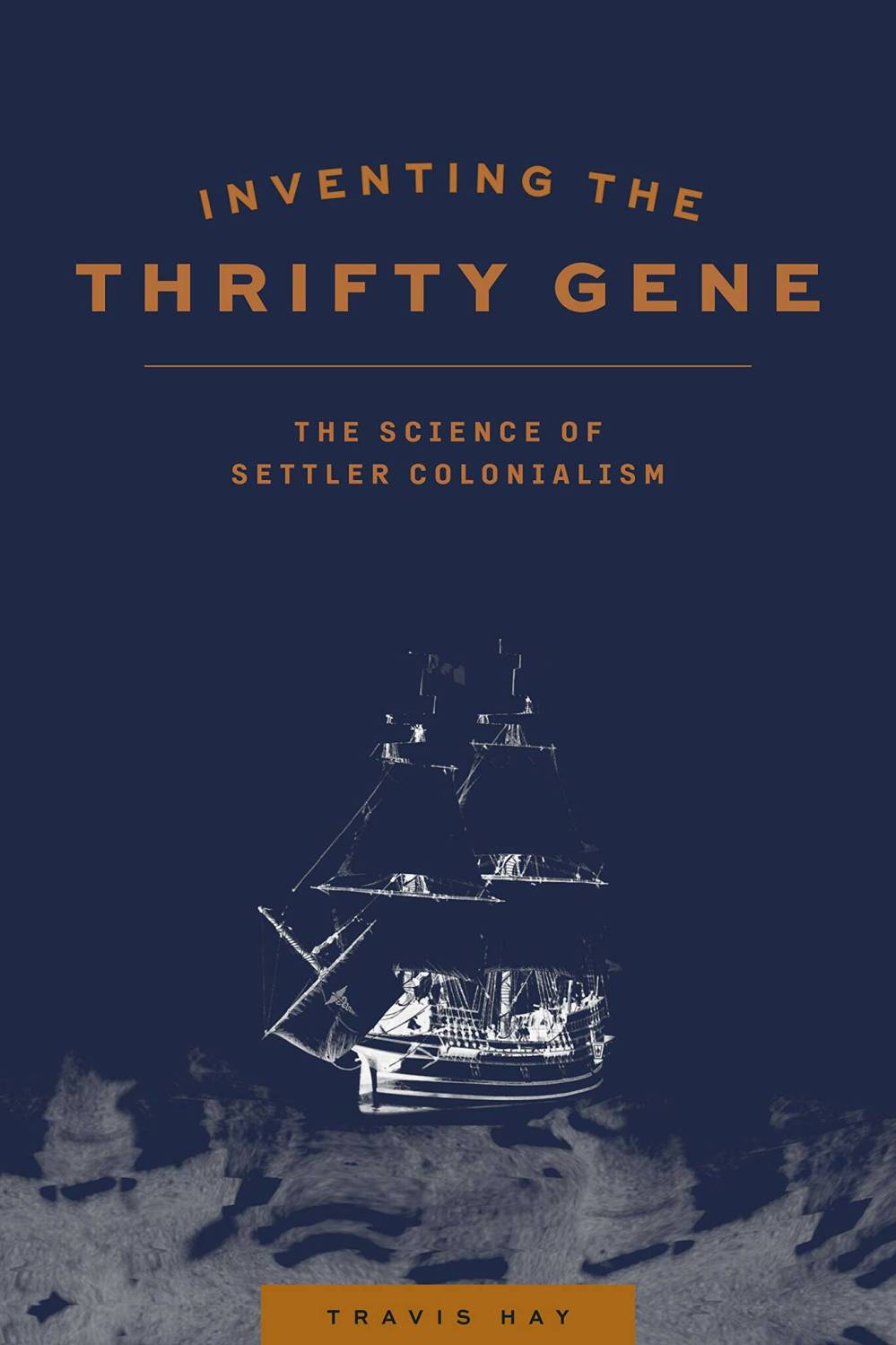
The “thrifty gene” in Travis Hay’s Inventing the Thrifty Gene: The Science of Settler Colonialism is another damaging zombie theory. You may be familiar with the theory’s premise — that Indigenous people are genetically predisposed to develop Type 2 diabetes.
Geneticist James Neel proposed the “thrifty gene” theory in the 1960s. Neel, says Hay, considered Indigenous people as “genetic time machines” that could be studied to learn what prehistoric Europeans were like prior to civilization. He proposed that, unlike “modern” people, Indigenous hunter-gatherers benefited from a genetic predisposition to easily store fat to survive times of famine.
Hay, a post-doctoral fellow at Laurentian University, provides a scientific lineage, dating back to Charles Darwin, of scientists who were excited by the study of isolated Indigenous people. In pre-Confederation Canada, Indian policy based on these studies shifted from a push for Indians to be “civilized” and assimilated to relocating Indians deemed uncivilizable to remote sites to live out their lives as hunter-gatherers.
Isolated First Nations communities in Canada then became laboratories for studying malnutrition, poverty, stresses from forced relocation and experiments testing Indian federal policy. Hay cites numerous cases where children confined to Indian residential schools became subjects of experimentation, from effects of malnutrition to exposure to cold.
“I wrote this book,” says Hay, “for a particular historiographical purpose: to demonstrate that human experiments and medical inquiries involving Indigenous children are not a dark chapter in Canadian history but an enduring characteristic of federal Indian policy.”
James Neel recanted his “thrifty gene” theory in 1989, stating that there was “no evidence of a predisposition to diabetes in… unacculturated Indians.” Indeed, he argued that focusing on genetic susceptibility provided “an invalid excuse for poor medical services and worse socioeconomic conditions.”
But the “thrifty gene” theory roared back to life 10 years later following an intensive scientific study of people living in the Sandy Lake First Nation, 375 kilometres north of Kenora, who were suffering Type 2 diabetes at five times the national rate. Researchers announced in 1999 that they’d found a gene variant to explain the high diabetes rate that was promptly taken up by Canadian health institutions such as Health Canada.

However, by 2005, new genetic sequencing experiments showed that the gene variant discovered the Sandy Lake First Nation study had no actual bearing on diabetes. Still, the belief in the “thrifty gene” was hard to shake, even after one of the authors of the 1999 research publicly recanted the theory yet again in 2013.
Why do zombie theories persist? Because they offer a comfort or other reward that believers don’t want to relinquish.
In the case of the “thrifty gene,” it gives governments and societies an excuse to escape responsibility. If the high levels of Type 2 diabetes in Indian residential schools and First Nations communities could be blamed on genetics, then there was no need to look at crushing poverty, settler colonialism or federal Indian policies as contributing factors. And there is no point in looking for a solution because it’s all genetic.
Hay’s chapters on Canada’s early settler colonialism and Indian policy are illuminating and well worth reading. On the science of settler colonialism, he brings to life the men who were instrumental in establishing the Indian policies, shored by the intensive and perpetual study of First Nations people. And the zombie theories like the “thrifty gene” that emerged from those studies just will not die.
Sheilla Jones is a 12th-generation Canadian settler and author of Let the People Speak: Oppression in a Time of Reconciliation.
Inventing the Thrifty Gene:
The Science of Settler Colonialism
By Travis Hay
University of Manitoba Press, 208 pages, $28
Related Articles
Federal ministers ready plans to boost reconciliation agenda
Advertisement Advertise With Us
Advertisement Advertise With Us
History
Updated on Monday, November 29, 2021 11:18 AM CST: Corrects typo