Anything seemed possible, even talking to the dead

Advertisement

Advertise with us

Canadian writer Claire Mulligan has based her compelling historical novel on the strange but true story of three American sisters who were avatars of the 19th-century's popular spiritualist movement.

Read this article for free:


or

Already have an account? Log in here »

To continue reading, please subscribe:

Subscribe and receive a limited-edition Free Press branded hat or tote.

Digital Subscription

One year of digital access for only $205*

  • Enjoy unlimited reading on winnipegfreepress.com
  • Read the E-Edition, our digital replica newspaper
  • Access News Break, our award-winning app
  • Play interactive puzzles

*First annual payment billed as $205.00 + GST for one year. This annual subscription will automatically renew at $233.00 + GST every 52 weeks (10% off the regular annual price of $259.35). Offer available to new and qualified returning subscribers only. Cancel any time.

To continue reading, please subscribe:

Add Free Press access to your Brandon Sun subscription for only an additional

$1 for the first 4 weeks*

  • Enjoy unlimited reading on winnipegfreepress.com
  • Read the E-Edition, our digital replica newspaper
  • Access News Break, our award-winning app
  • Play interactive puzzles
Start now

*Your next Brandon Sun subscription payment will increase by $1.00 and you will be charged $17.95 plus GST for four weeks. After four weeks, your payment will increase to $24.95 plus GST every four weeks.

Opinion

Hey there, time traveller!
This article was published 25/05/2013 (4848 days ago), so information in it may no longer be current.

Canadian writer Claire Mulligan has based her compelling historical novel on the strange but true story of three American sisters who were avatars of the 19th-century’s popular spiritualist movement.

In 1848, Maggie and Kate Fox, two girls living with their family in a sleepy town in New York State, played a mischievous nighttime prank on their mother.

Using a system of rapping sounds, the girls showed they could communicate with the spirit of a dead pedlar buried under their house.
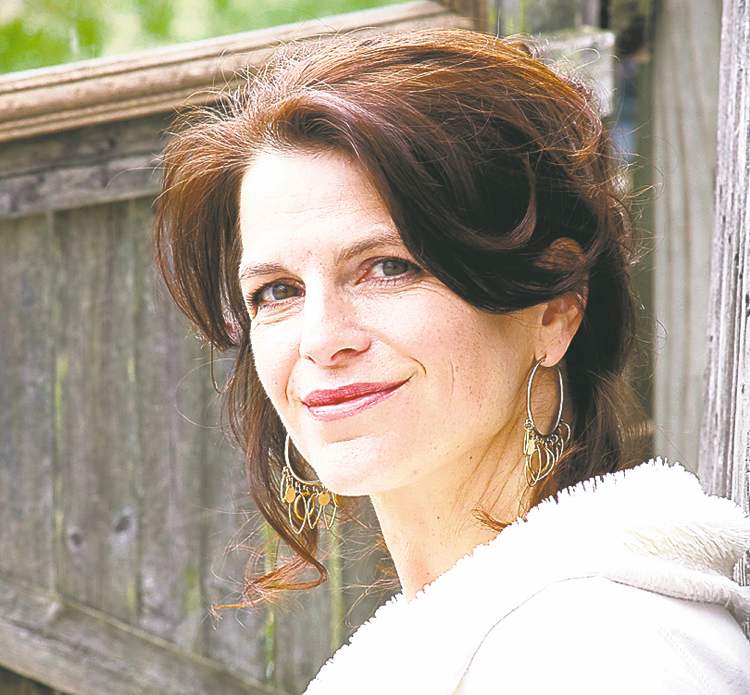
Claire Mulligan
Claire Mulligan

One spirit led to another, and under the skilful management of their ambitious older sister Leah, Maggie and Kate took their show on the road, offering demonstrations of spirit rappings and becoming famous and wealthy in the process.

The Dark opens in 1893 with the once-celebrated Maggie on her deathbed — now poor, alone and addicted to the popular opiate-laced remedy laudanum. A nurse comes to care for her during her final days and so hears and later recounts the story of Maggie’s life.

Each of the 47 chapters begins with the nurse recounting a conversation between herself and Maggie. This conversation provides the transition to the next reminiscence, which often includes memories and stories from the other characters.

Using these conversations to spark the flashbacks seems disruptive to the narrative flow. But by the last third of the novel, the nurse succeeds in becoming a character in her own right, and indeed plays a pivotal role by the end of the novel.

Mulligan, a B.C. native who lives and teaches in Pennsylvania, used the technique of characters telling other characters’ stories, albeit more seamlessly and to better effect, in her first novel, The Reckoning of Boston Jim, longlisted for the 2007 Giller Prize.

As in her previous novel, Mulligan displays her talent for historical research in The Dark. She uses the surging changes of the mid-19th century, including women’s suffrage, the Temperance movement, the abolition of slavery and the carnage of the American Civil War, as well as inventions such as the telegraph, to show a time in which anything seemed possible. Even talking to the dead.

As in Jane Austen’s novels, the precarious struggle of women for social standing and security independent of men is a strong plot element. In The Dark, readers also get a taste of the boisterous American sensibility, as when the sisters try to join Barnum’s circus, or Maggie needs to hide in a closet from a lynch mob, or when the presence of spirits in the room coincides with the liberal use of alcohol.

Love, longing and marriage occur frequently but fleetingly throughout the sisters’ lives. Leah is married three times, and Kate becomes widowed with two children. Maggie’s lover, the famous Arctic adventurer Elisha Kent Kane, disapproved of her profession and failed to fulfil his promises of a formal marriage before his death.
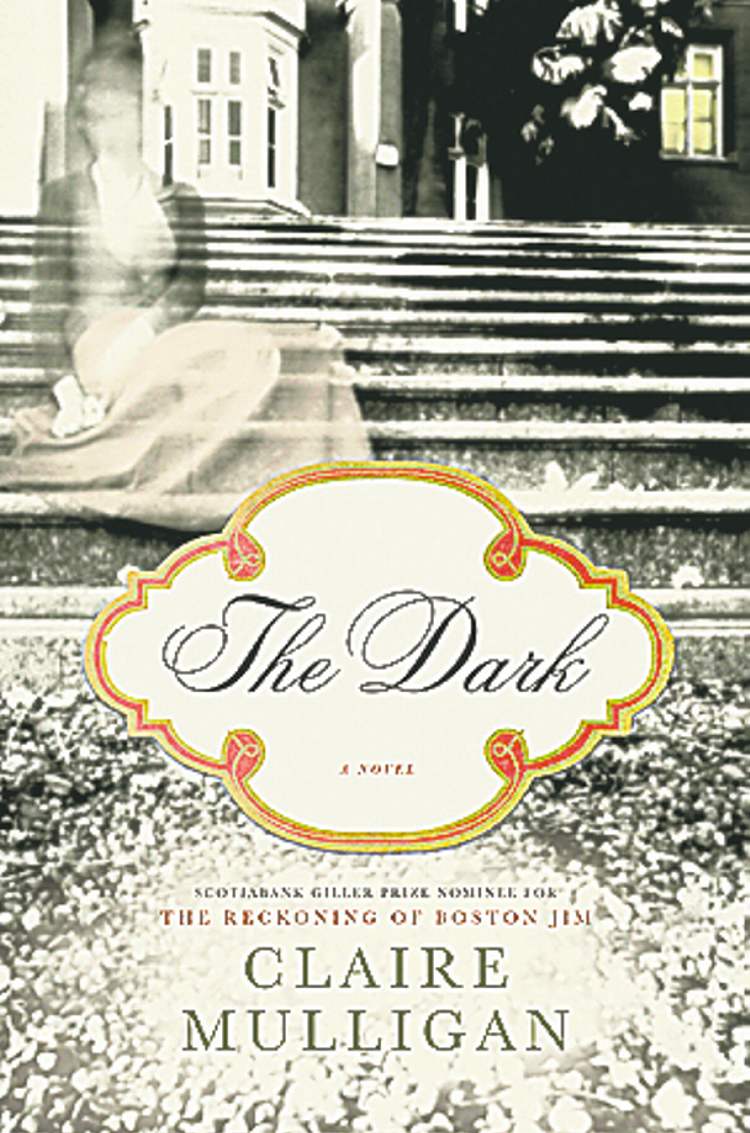
American Barbara Weisberg documented the Fox sisters’ fascinating story in her 2005 book Talking to the Dead, which Mulligan acknowledges as one of her many sources.

There is also a young adult novel, Dianne K. Salerni’s We Hear the Dead (2010), which has been made into a short film premier®ing at Cannes this year.

The popularity of the TV reality series Long Island Medium proves that even today people still try to communicate with the dead — for curiosity, for solace in their grief or, sometimes, as with the Fox sisters, as a way to make a living.

Mulligan serves up plenty of the practical and earthly methods by which spirits can seem to speak, but she also dishes out a few ghosts — ultimately leaving a sense of mystery about what exactly is going bump in the dark.

Mary Horodyski is a writer, researcher and archivist in Winnipeg.
Report Error Submit a Tip

More Stories

Festival du Voyageur's annual celebration won't leave anyone out in the cold

Alan Small 7 minute read Preview

Festival du Voyageur's annual celebration won't leave anyone out in the cold

Alan Small 7 minute read Saturday, Feb. 13, 2021

From “Oh, no!” to “Hé Ho!”

That’s the COVID-19 challenge the Festival du Voyageur has accepted for the 2021 edition of Winnipeg’s winter carnival, which began Friday night and continues to Feb. 21.

Festival has always been a way for Winnipeggers to get out of the house and enjoy the outdoors in the midst of a long winter. Roughly 95,000 people rough the often chilly conditions every year, converging on Fort Gibraltar and St. Boniface to celebrate the city’s French-Canadian and Métis cultures, and Manitoba’s fur-trading history.

People also check out magnificent snow sculptures, enjoy popular events such as the annual beard-growing contest, try some classic French-Canadian cuisine, meet with friends and learn a bit about the city’s culture and history through osmosis along the way.

Read
Saturday, Feb. 13, 2021

‘Million reasons’ to keep virtual school

Maggie Macintosh 4 minute read Preview

‘Million reasons’ to keep virtual school

Maggie Macintosh 4 minute read Thursday, Aug. 25, 2022

Manitoba’s virtual elementary school is scaling back operations as droves of students return to traditional classrooms this fall, but the principal says its early success proves the centre has potential beyond the COVID-19 pandemic.

Read
Thursday, Aug. 25, 2022

Social problems cannot be simply swept away

Editorial 4 minute read Preview

Social problems cannot be simply swept away

Editorial 4 minute read 2:00 AM CDT

In the battle to alleviate homelessness, mental health issues and drug addiction, we just can’t seem to get the order of our response right.

The city dismantles homeless encampments before there are enough safe, permanent places for people to live.

The Winnipeg Police Service conducts an intensive sweep to combat open drug use on Main Street, without arranging support from social service agencies to help the people they are rousting.

Is it any surprise that the acute problems being experienced by residents, businesses and workers on Main Street are beginning to manifest in adjacent neighbourhoods? That’s what happens when you try to solve a problem by moving it, not addressing it head-on.

Read
2:00 AM CDT

Bombers defence still holds hope season can be turned around

Ken Wiebe 7 minute read Preview

Bombers defence still holds hope season can be turned around

Ken Wiebe 7 minute read Friday, Jul. 31, 2026

One solitary, one-syllable word was all Mike O’Shea needed to try and describe what he had just seen.

The head coach of the Winnipeg Blue Bombers had watched his defence get shredded for almost 400 yards in the rushing game alone in what was a 35-19 loss to the B.C. Lions on Thursday night before a stunned crowd of more than 31,000 at Princess Auto Stadium.

“Oof,” said O’Shea, before he explained things a bit further on the tactical side and provided some of the reasons things went sideways in such an important facet of the game.

It wasn’t that the description the head coach of the Bombers gave on that front wasn’t important, but the preamble to the soliloquy on how a series of errors and missed tackles wasn’t really necessary for anyone who had just witnessed this debacle.

Read
Friday, Jul. 31, 2026

Reader Bridge – Freelancer Inquiry

3 minute read Monday, May. 4, 2026

| The Reader Bridge connects Manitoba’s marginalized and historically underserved communities directly with the Winnipeg Free Press by working together to amplify the voices of the diverse people and communities in our province through our journalism.

I am a freelancer I have a story idea I have a comment

Reimagining education in Manitoba

Jim Silver 4 minute read 2:00 AM CDT

There has been much talk lately about how Manitoba can strengthen its economy and improve its general well-being. Adding a third component to our education system, one that would be equal in funding and recognition to K-12 and post-secondary education, would do just that.

That third component, adult basic education, already exists, but with inadequate funding and little recognition.

Adult basic education includes adult learning centres that offer mature high school diplomas to those who have not previously completed high school, and adult literacy programs that bring adults up to high school entry level.

Adult basic education works well. Since 2003, some 25,000 Manitobans have earned their mature high school diplomas. Enough graduates move off employment and income assistance, saving the provincial government money, and into full-time employment, increasing the government’s tax revenue, so that over a 10-year period the government makes more than it spends on adult basic education. The system pays for itself.