Fast-growing, vibrant city a casualty of war
Advertisement
Read this article for free:
or
Already have an account? Log in here »
To continue reading, please subscribe:
Digital Subscription
One year of digital access for only $1.44 a week*
- Enjoy unlimited reading on winnipegfreepress.com
- Read the E-Edition, our digital replica newspaper
- Access News Break, our award-winning app
- Play interactive puzzles
*Billed as $5.77 plus GST every four weeks. After 52 weeks, price increases to the regular rate of $19.95 plus GST every four weeks. Offer available to new and qualified returning subscribers only. Cancel any time.
To continue reading, please subscribe:
Add Free Press access to your Brandon Sun subscription for only an additional
$1 for the first 4 weeks*
- Enjoy unlimited reading on winnipegfreepress.com
- Read the E-Edition, our digital replica newspaper
- Access News Break, our award-winning app
- Play interactive puzzles
*Your next Brandon Sun subscription payment will increase by $1.00 and you will be charged $17.95 plus GST for four weeks. After four weeks, your payment will increase to $24.95 plus GST every four weeks.
Read unlimited articles for free today:
or
Already have an account? Log in here »
Hey there, time traveller!
This article was published 09/10/2010 (5868 days ago), so information in it may no longer be current.
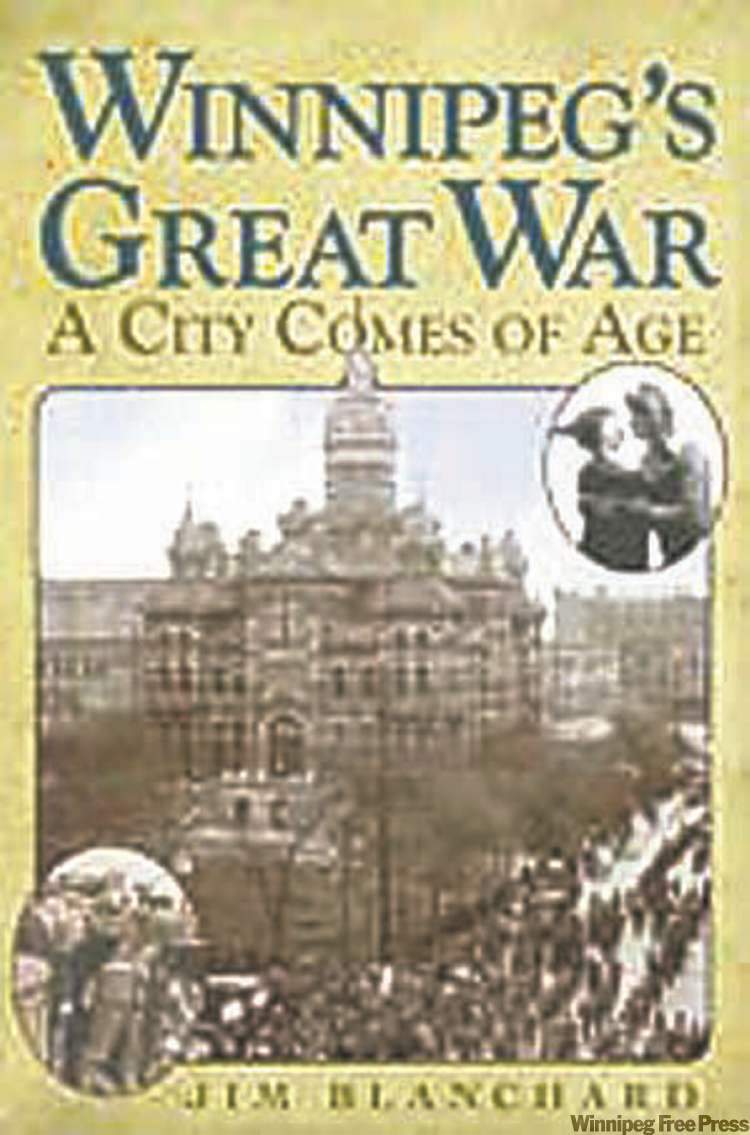
Winnipeg’s Great War
A City Comes of Age
By Jim Blanchard
University of Manitoba Press, 272 pages, $25
With the passing in February 2010 of Canada’s last surviving Great War veteran, we no longer have a living link to that conflict.
Its infamous miseries, desolate battlefields, poison-gas attacks and industrial-scale slaughter are known to us now only through history.
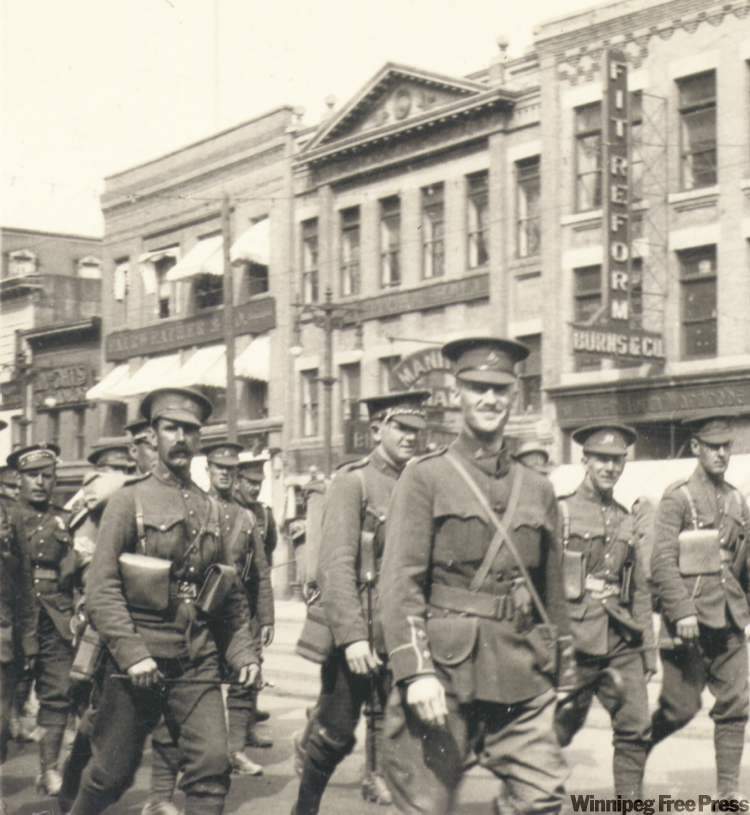
While the veterans themselves are silent, local historian Jim Blanchard reminds us that the city of Winnipeg has its own story to tell about the First World War. Its prominent war memorials, Vimy Ridge Park, and the many churches adorned with plaques honouring the dead all resonate with echoes of an almost forgotten time of patriotism, glory and grief.
In this impressively researched and powerful book, Blanchard returns this era and its fatal passions to life by showing how the city of Winnipeg experienced — and helped wage — the Great War and how it was, in turn, changed by it.
Winnipeg’s Great War functions as something of a sequel to the author’s Winnipeg 1912 (2005), which captured the city at its economic pinnacle. Having secured its position as the major transportation and grain-trade hub of the Canadian West, Winnipeg in the years prior to the war was one of the fastest-growing cities in North America and faced its future with optimism and confidence.
Blanchard shows, however, that the Great War would contribute to ending Winnipeg’s dreams of growth and dominance. Between the tragic loss of more than 1,600 of its young men and its inability to attract significant war manufacturing or shipping, Winnipeg was to emerge from the war a changed and despondent city.
Making excellent use of contemporary newspaper articles, letters and other primary sources, Blanchard, a University of Manitoba librarian, does an admirable job of placing the reader in space and time, from the last carefree summer of 1914 to the mournful 1923 installation of the Winnipeg Soldiers’ Relatives war memorial on the grounds of the Manitoba legislature.
Organized into four chapters (one for each year of the war), the book is not confined to the city’s response to the bloodshed in Europe, but also delves into other major aspects of local history.
For example, this period saw a number of significant events in Winnipeg’s physical and social development. Among them were the construction of the Shoal Lake aqueduct, the construction of the provincial Legislative Building (and the kickback scandal that brought down Rodmond Roblin’s Conservative government), and the battle between streetcars and jitneys over which would be the city’s preferred mode of public transportation.
Winnipeg’s Great War is honest in its portrayal of the best and worst of the city’s response to the conflict overseas. Readers will likely admire the common purpose and selflessness demonstrated by these vanished Winnipeggers, and regret the relative absence of such in our own cynical and individualistic age.
At the same time, we can’t help but recoil from their prejudices.

Blanchard reveals the appalling extent of wartime xenophobia, paranoia and mistrust of “foreigners,” communists and leftists. This context is essential for understanding why the official (and media) response to the Winnipeg General Strike of 1919 would be so resolutely unsympathetic and, ultimately, violent.
Despite the need to occasionally break from a strict chronological account, the text is consistently interesting and well-organized, if dispassionate.
However, the photographs, while also informative, are often curiously isolated from relevant passages by at least several pages.
While Winnipeg’s Great War lends considerable insight into the city’s past and present, it also has broader significance: It reveals the virtues, folly and madness of a society engaged in total war, and demonstrates how its values — largely alien to us now — allowed that war to be both endured and rationalized by its participants.
Michael Dudley is a research associate in the Institute of Urban Studies at the University of Winnipeg.