Reimagined Little House still shot through with the truth

Advertisement
Read this article for free:
or
Already have an account? Log in here »
To continue reading, please subscribe:
Digital Subscription
One year of digital access for only $1.44 a week*
- Enjoy unlimited reading on winnipegfreepress.com
- Read the E-Edition, our digital replica newspaper
- Access News Break, our award-winning app
- Play interactive puzzles
*Billed as $5.77 plus GST every four weeks. After 52 weeks, price increases to the regular rate of $19.95 plus GST every four weeks. Offer available to new and qualified returning subscribers only. Cancel any time.
To continue reading, please subscribe:
Add Free Press access to your Brandon Sun subscription for only an additional
$1 for the first 4 weeks*
- Enjoy unlimited reading on winnipegfreepress.com
- Read the E-Edition, our digital replica newspaper
- Access News Break, our award-winning app
- Play interactive puzzles
*Your next Brandon Sun subscription payment will increase by $1.00 and you will be charged $17.95 plus GST for four weeks. After four weeks, your payment will increase to $24.95 plus GST every four weeks.
Read unlimited articles for free today:
or
Already have an account? Log in here »
In 1974, NBC had to issue a press release explaining why Michael Landon, starring as Charles (Pa) Ingalls on the new show Little House on the Prairie, didn’t have a beard.
Fans of Laura Ingalls Wilder’s beloved Little House books, on which the series was based, objected to Landon’s clean-shaven face. The real Charles Ingalls famously had a beard (a wild one, at that), and Pa certainly has a beard on the page, as illustrated by Garth Williams.
My point is: Lauraheads have always had their bugbears when it comes to adaptations.
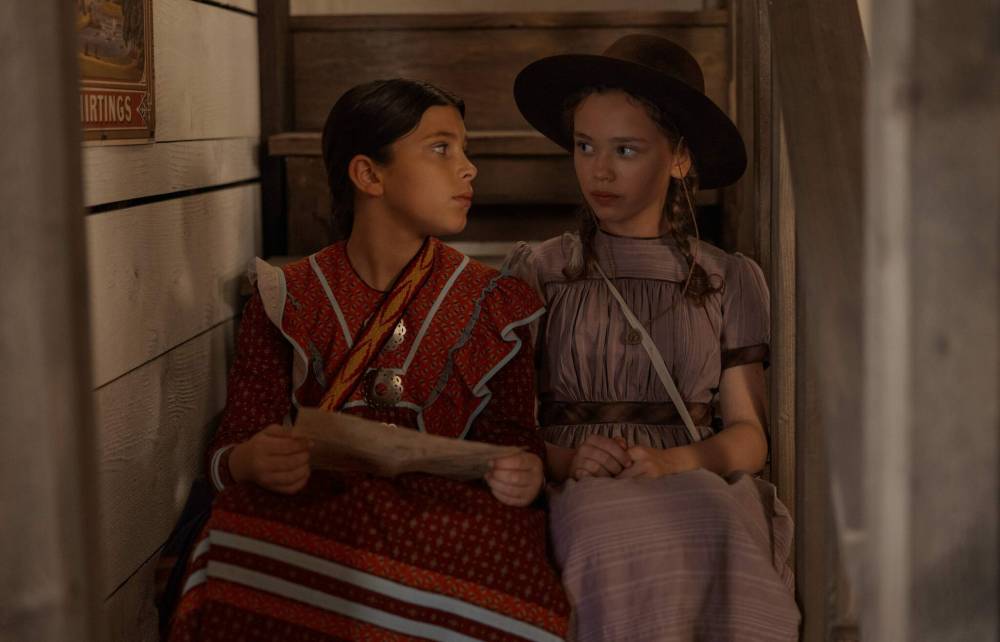
Eric Zachanowich / Netflix
From left: Good Eagle (Wren Zhawenim Gotts) and Laura Ingalls (Alice Halsey) become friends on the new Little House on the Prairie.
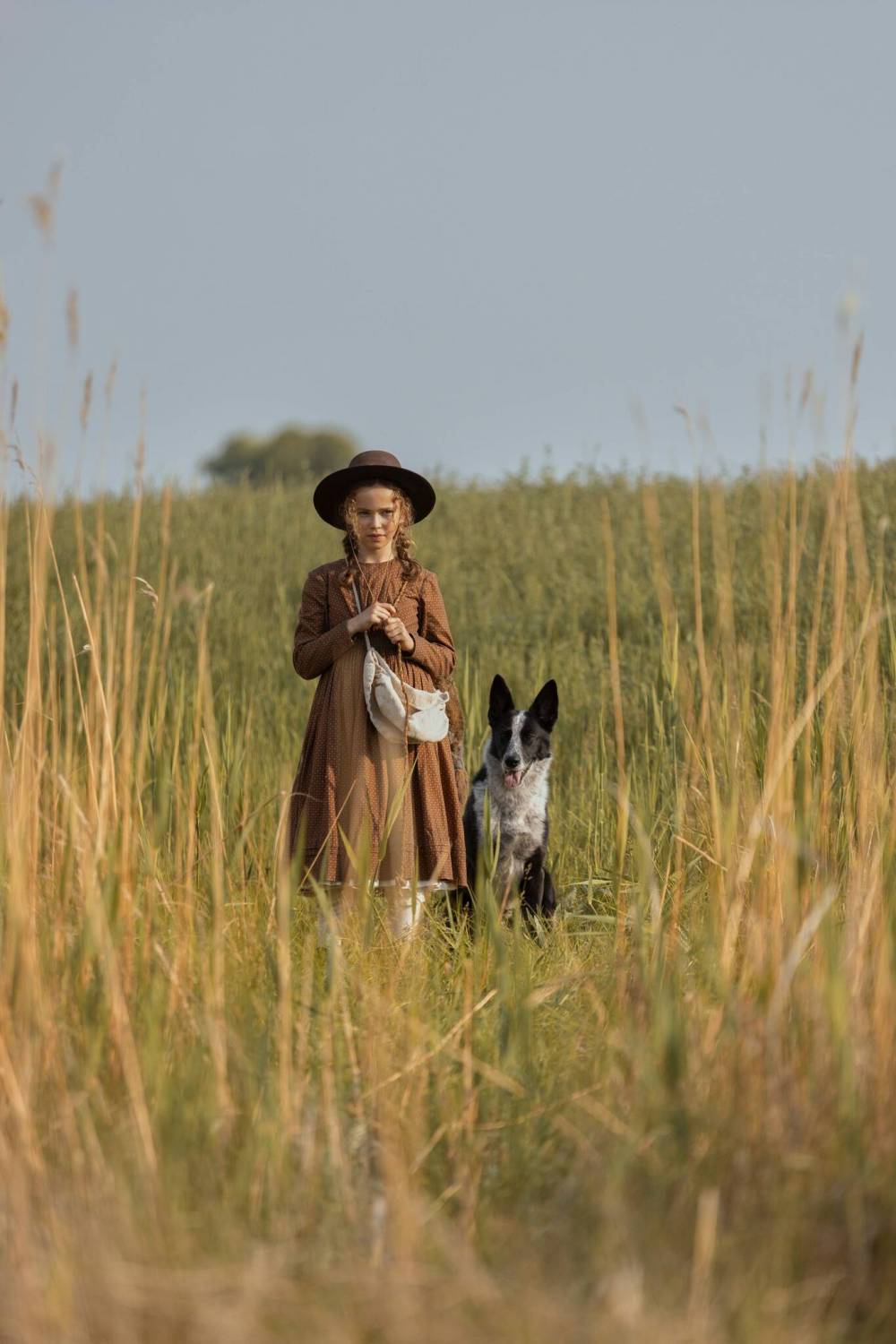
Netflix’s new Little House on the Prairie, which dropped on July 9, is no exception. Among the criticisms I have seen: Mary (Skywalker Hughes) isn’t blond. Jack the dog isn’t a bulldog. Laura (Alice Halsey) wouldn’t have a slingshot and she wouldn’t wear a boy’s hat. And she wouldn’t have an Osage pal named Good Eagle (Wren Zhawenim Gotts).
I am a Laurahead. I’m basically a Little House scholar and this reimagining is very good. It’s less after-school-special than its 1970s counterpart but still has plenty of peppermint-stick sweetness. And Manitoba, standing in for Kansas, looks absolutely stunning.
I find complaints about the realism of Little House curious, especially since the books aren’t always realistic, either. Little House on the Prairie has always been something of an American dream.
It’s important to remember that the nine books that compose the Little House series are not Laura’s memoirs but novels based upon her life. Wilder herself was already taking creative liberties with timelines and plot points and even people.
It might surprise you to learn that snotty baddie Nellie Oleson was a composite character, and I’m gonna hold your hand while I tell you this: so was Jack, the Ingallses’ trusty brindle bulldog. (Actually, the new show is likely more historically accurate on this file, depicting Jack as a shepherd.)
Laura Ingalls Wilder was a storyteller. Her greatest gift was a rich text that can be endlessly adapted and fleshed out and explored.
We also cannot overlook the influence her daughter, Rose Wilder Lane, had on the original series of books. An accomplished writer and journalist in her own right, Wilder Lane was her mother’s editor; it was Wilder Lane who shrewdly convinced her mother to take the facts of her life and write children’s books that, while fictionalized, were true.
Writing to her mother in 1938, Wilder Lane impressed upon her mother the difference between fact and truth.
“Facts are infinite in number. The truth is a meaning underlying them; you tell the truth by selecting the facts which illustrate it,” she wrote.
The facts — and truth — of Laura’s childhood were rougher and more traumatic than what appears in the pages, which are imbued with warmth and family.
Also, both Wilder women were libertarians, which is why self-sufficiency and the concept of bootstrapping are such strong themes. As such, the original novels are considered by some historians to be subtle propaganda for a specific American dream.
Whether or not the new adaptation is canon — which is different from “historically accurate” or “realistic” — is another matter. Yes, Mary’s hair could’ve been blonder, but the fact of her hair doesn’t distract from the truth of Mary and Laura’s relationship, which was often strained by the fact that Mary was so good and compliant and Laura was untamed. Hair colour was not just fact, it was a metaphor.
Here, we’re widening the POV. In this adaptation, we get into Mary’s Eldest Daughter feelings and I’m here for it. She never felt like a real person in the books, because we only saw her through Laura’s smudged-lens view of her.
This version also fleshes out stories of Dr. Tann (Jocko Simms) — a real-life Black physician who helped the Ingallses survive “fever n’ ague” — and Mr. Edwards (Warren Christie), the wildcat from Tennessee, who is given a tragic backstory.
But the most welcome and important departure of this adaptation is the inclusion of Osage characters and their perspective, too often crowded off the margins of the page. This Little House widens the lens to show the inhabitants of the land who were there long before the Ingallses. Showrunner Rebecca Sonnenshine worked with many Indigenous consultants, actors and writers to make that happen.

The books’ depictions of Osage people — as well as Ma’s views about them — are xenophobic at best and racist at worst. I didn’t know the full context of where they built their little house on the Prairie until I read Prairie Fires: The American Dreams of Laura Ingalls Wilder, Caroline Fraser’s Pulitzer Prize-winning biography, and that the Ingallses were, indeed, illegal squatters on the Osage Diminished Reserve.
So is it “realistic” that Laura would befriend Good Eagle? Does that matter?
What is fact — and what is true — is that there would have been Osage girls Laura’s age just outside of the pages of the books, who had hopes and dreams and older sisters who bothered them. They, too, would have been curious or fearful of the new people they didn’t recognize suddenly setting up houses on their land.
Netflix’s reimagining trades the American dream of relentless self-sufficiency for a different one, one in which people help each other to survive, and a settler girl and an Osage girl might bead together.
jen.zoratti@winnipegfreepress.com
Jen Zoratti is a Winnipeg Free Press columnist and author of the newsletter, NEXT, a weekly look towards a post-pandemic future.
Our newsroom depends on a growing audience of readers to power our journalism. If you are not a paid reader, please consider becoming a subscriber.
Our newsroom depends on its audience of readers to power our journalism. Thank you for your support.
Jen Zoratti is a Winnipeg Free Press columnist and author of the newsletter, NEXT, a weekly look towards a post-pandemic future.
Our newsroom depends on a growing audience of readers to power our journalism. If you are not a paid reader, please consider becoming a subscriber.
Our newsroom depends on its audience of readers to power our journalism. Thank you for your support.
Advertisement Advertise With Us
Advertisement Advertise With Us