Yiddish fest highlights comfort of knish crafting

Advertisement
Read this article for free:
or
Already have an account? Log in here »
To continue reading, please subscribe:
Digital Subscription
One year of digital access for only $1.44 a week*
- Enjoy unlimited reading on winnipegfreepress.com
- Read the E-Edition, our digital replica newspaper
- Access News Break, our award-winning app
- Play interactive puzzles
*Billed as $5.77 plus GST every four weeks. After 52 weeks, price increases to the regular rate of $19.95 plus GST every four weeks. Offer available to new and qualified returning subscribers only. Cancel any time.
To continue reading, please subscribe:
Add Free Press access to your Brandon Sun subscription for only an additional
$1 for the first 4 weeks*
- Enjoy unlimited reading on winnipegfreepress.com
- Read the E-Edition, our digital replica newspaper
- Access News Break, our award-winning app
- Play interactive puzzles
*Your next Brandon Sun subscription payment will increase by $1.00 and you will be charged $17.95 plus GST for four weeks. After four weeks, your payment will increase to $24.95 plus GST every four weeks.
Read unlimited articles for free today:
or
Already have an account? Log in here »
For Sara Kasdan, the author of the mid-century ethnic best-seller Love and Knishes, the titular dough pocket was a pathway to everlasting romance via the stomach, assured to get the cook’s name into a man’s heart “faster … and stay longer.”
For Harriet Zaidman, the knish’s starting point — an opaque knob of dough to be stretched translucent-thin — is a doorway to a different kind of love, and a reminder of her family’s lasting immigrant roots.
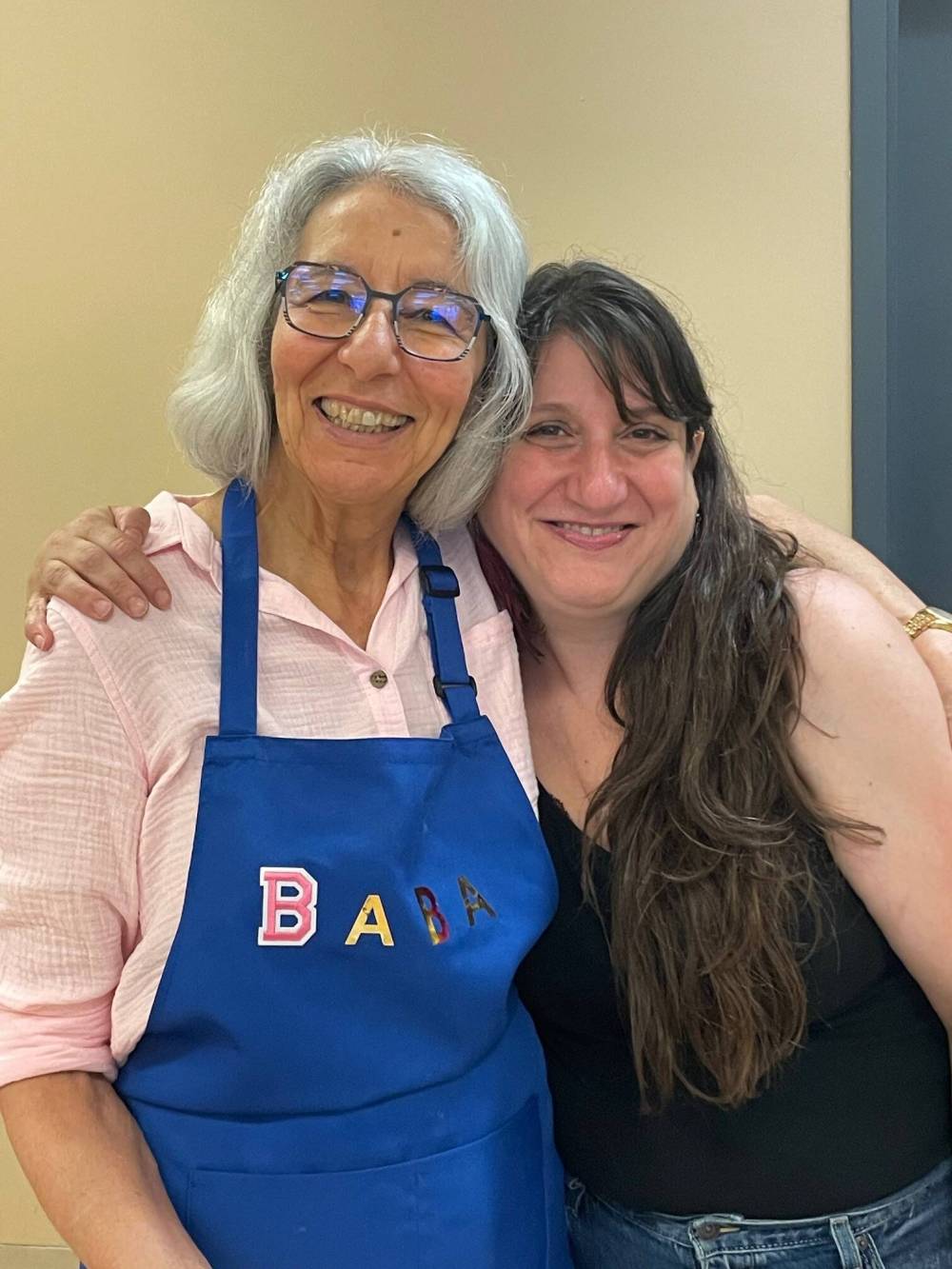
“I’ve had all my life this vision of my baba taking that small knob and stretching it thinly across the table, draping down over the side. You could see the table through it,” says Zaidman, a Garden City-based author who has posted more than 450 recipes to her blog, North End Nosh, since 2017.
Supplied
When she gets the dough and its fillings — usually potato or kasha (buckwheat) — ready, Zaidman can just about hear her baba Goldie knocking on her family’s Smithfield Avenue door with a weekly delivery of haimishe cooking.
But despite this deeply felt connection, Zaidman was scared for most of her life to try making knishes by hand.
“So I decided to face my fear this year,” she says: she kneaded to try.
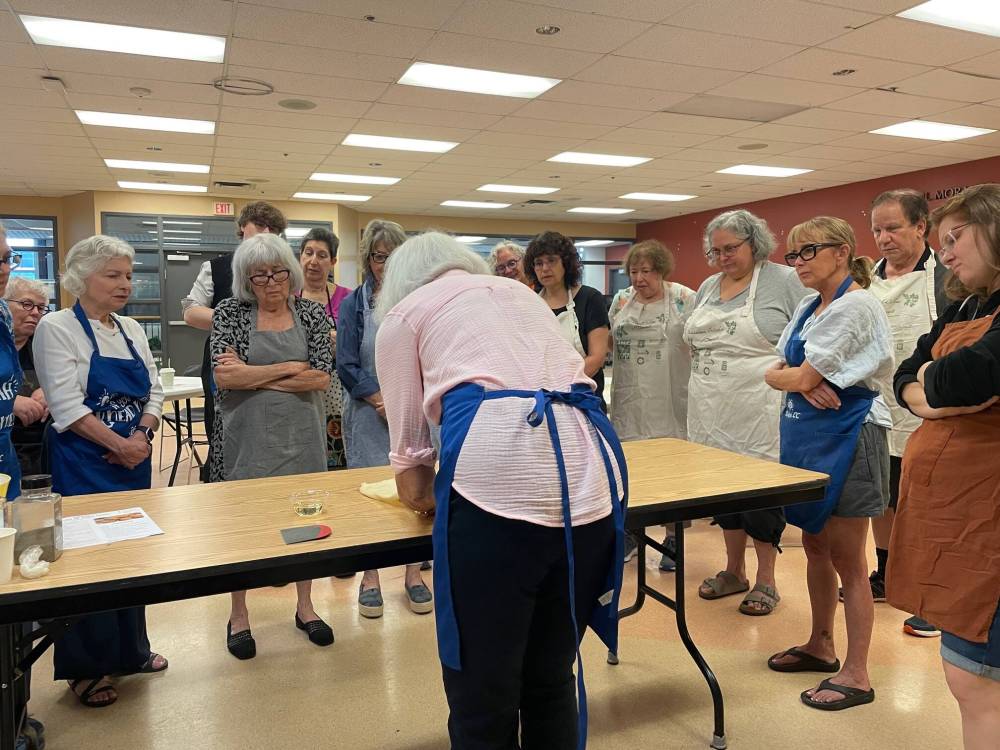
Her first attempts went so well that on Sunday, the retired teacher-librarian taught 30 first-timers how to craft knishes as the opening event of this year’s Put A Yid On It, a festival of new Yiddish culture running at the Rady JCC.
Zaidman demonstrated how to stretch the dough, which can also be used as the basis for a strudel, how to use the back of the hand to nudge it and develop elasticity.
Supplied
As part of the Put a Yid On It festival, Harriet Zaidman leads a workshop teaching people how to make authentic knishes.
Supplied
“It’s quite a labour-intensive process,” she says.
Her participants included young couples in their 20s and 30s, as well as a 79-year-old woman, each of whom told the instructor about their own babas’ culinary prowess.
“Some people said they’d never made them, but watched their grandmothers, so they didn’t follow my method; it was like some muscle memory took over and they did it as their babas did it,” says Zaidman, whose own granddaughter is set to graduate from high school this week.
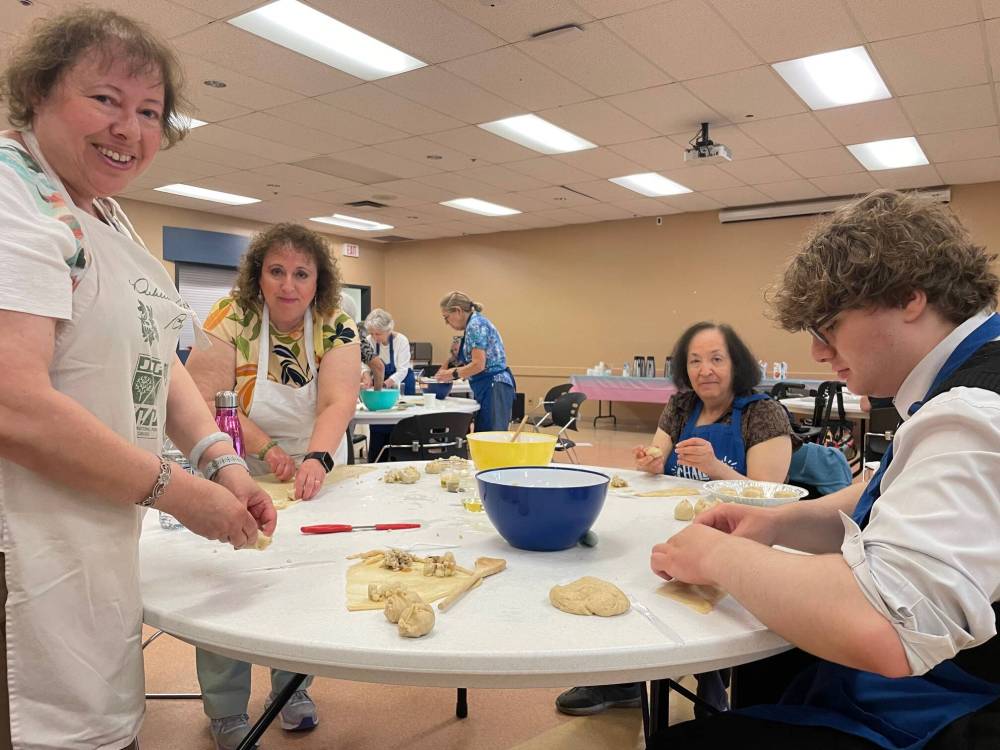
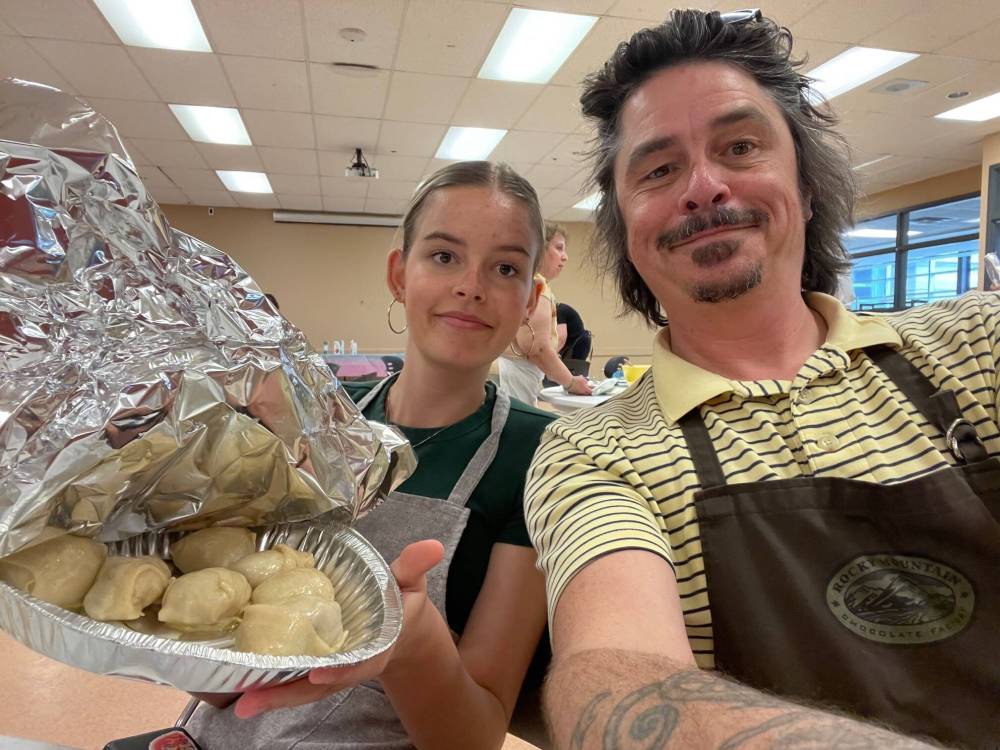
The 30 participants made between 12 and 18 knishes each, meaning about 450 knishes were prepared in the Rady’s multi-purpose room. Sunday was a very geschmachteh — delicious, delightful — day.
Though she delivered the lesson in English, Zaidman — a member of the North End Jewish Folk Choir who attends weekly English-language lectures about Yiddish culture by University of Manitoba professor Itay Zutra — says the culinary tradition of making knishes helps to preserve “the memory of our families, our origins, and the history of what they went through in life.”
Supplied
As part of the Put a Yid On It festival, Harriet Zaidman leads a workshop teaching people how to make authentic knishes.
“That’s what formed us,” says Zaidman, whose first historical novel, the 1919-set City on Strike, depicted an event that two of her Eastern European Jewish grandparents participated in.

“Yiddish has a very rich history worth preserving, and part of that is excellent food.”
Organized by Shira Newman, Put A Yid On It continues to Saturday. Tonight, the Yiddish-language film I Have Sinned (Al Khet) — directed in 1936 in Poland by Aleksander Marten — screens at 7:30 p.m. Set against the First World War, the film — restored by the National Centre for Jewish Film with English subtitles — follows Esther (Rachel Holzer), who, after being impregnated by a German Jewish officer, flees to the U.S.
On Thursday, a 2010 feature by American director Eve Annenberg studies a Brooklyn grad student tasked with translating Shakespeare’s most famous romance into the mamaloshen (mother tongue). Romeo and Juliet in Yiddish was shot with non-professional actors.
On Saturday, Grammy-winning ensemble the Klezmatics bring their latest album, We Were Made For These Times, to the Crescent Arts Centre, marking the 40th anniversary of the group, which has collaborated with Itzhak Perlman, Arlo Guthrie and Allen Ginsberg, among others. Tickets for all events are available at radyjcc.com.
Supplied
As part of the Put a Yid On It festival, Harriet Zaidman leads a workshop teaching people how to make authentic knishes.
Supplied
winnipegfreepress.com/benwaldman
Ben Waldman covers a little bit of everything for the Free Press.
Our newsroom depends on a growing audience of readers to power our journalism. If you are not a paid reader, please consider becoming a subscriber.
Our newsroom depends on its audience of readers to power our journalism. Thank you for your support.
Festival preview
Put a Yid on It:
Festival of New Yiddish Culture
● Various locations
● To Saturday
● Tickets at radyjcc.com
Ben Waldman covers a little bit of everything for the Free Press.
Our newsroom depends on a growing audience of readers to power our journalism. If you are not a paid reader, please consider becoming a subscriber.
Our newsroom depends on its audience of readers to power our journalism. Thank you for your support.
Advertisement Advertise With Us
Advertisement Advertise With Us