Artificial art a threat to human creativity

Advertisement

Advertise with us

Even if you don’t know the name Drew Struzan, you’ve definitely seen his work. It’s been shown in the odd art gallery, but you’ve likely encountered it in popcorn-scented movie theatres, or, even more likely, on your friends’ bedroom walls, that first site of personal art curation.

Read this article for free:


or

Already have an account? Log in here »

To continue reading, please subscribe:

Subscribe and receive a limited-edition Free Press branded hat or tote.

Digital Subscription

One year of digital access for only $205*

  • Enjoy unlimited reading on winnipegfreepress.com
  • Read the E-Edition, our digital replica newspaper
  • Access News Break, our award-winning app
  • Play interactive puzzles

*First annual payment billed as $205.00 + GST for one year. This annual subscription will automatically renew at $233.00 + GST every 52 weeks (10% off the regular annual price of $259.35). Offer available to new and qualified returning subscribers only. Cancel any time.

To continue reading, please subscribe:

Add Free Press access to your Brandon Sun subscription for only an additional

$1 for the first 4 weeks*

  • Enjoy unlimited reading on winnipegfreepress.com
  • Read the E-Edition, our digital replica newspaper
  • Access News Break, our award-winning app
  • Play interactive puzzles
Start now

*Your next Brandon Sun subscription payment will increase by $1.00 and you will be charged $17.95 plus GST for four weeks. After four weeks, your payment will increase to $24.95 plus GST every four weeks.

Opinion

Hey there, time traveller!
This article was published 08/11/2025 (294 days ago), so information in it may no longer be current.

Even if you don’t know the name Drew Struzan, you’ve definitely seen his work. It’s been shown in the odd art gallery, but you’ve likely encountered it in popcorn-scented movie theatres, or, even more likely, on your friends’ bedroom walls, that first site of personal art curation.

The American artist and illustrator created more than 150 movie posters. He was the brain behind the enduring images we have in our minds of Star Wars, E.T., The Shawshank Redemption, Bladerunner, Back to the Future and Indiana Jones. Struzan died in October at the age of 78. Earlier this year, his wife disclosed that he had Alzheimer’s and was no longer drawing.

“Iconic” is an overused adjective, often breathlessly used in the place of “popular” or “very famous.”

American artist and illustrator Drew Struzan created more than 150 movie posters – many of them iconic – including posters for movies such as Indiana Jones, Star Wars, E.T., The Shawshank Redemption, Bladerunner and Back to the Future.

American artist and illustrator Drew Struzan created more than 150 movie posters – many of them iconic – including posters for movies such as Indiana Jones, Star Wars, E.T., The Shawshank Redemption, Bladerunner and Back to the Future.

But what Struzan created was, indeed, iconography. When you hear the titles of some of these films, it’s very possible you think of Struzan’s soft-glow imagery before you even think of a specific scene.

He was famous for both his airbrush technique as well as his unparalleled ability to capture actors’ likenesses. “Wait, these are all paintings?!?!” read a post on Instagram after he died. “I thought these were edited layers of actual photos with digital effects added in,” followed by head-exploding emojis.

Struzan wouldn’t have had access to digital effects. He would have had to work by hand.

Thinking of Struzan’s legacy of art — of magic, really — it’s hard not to think that this particular form will be another casualty of artificial intelligence, another art form reduced to cheap slop.

You could argue the art of the movie poster was already dying, long before AI was sitting on its chest. Many movies don’t get theatrical releases anymore; people don’t buy them in physical-media forms. Struzan himself already had to pivot as early as the ’90s when demand for hand-drawn film posters was already starting to decline.

Movie posters, album covers and book jackets are art about art, but they are works of art unto themselves.

One thing I don’t see much in the discourse about our increasing reliance on readily available AI tools is the inevitable pipeline problem we’re going to have when it comes to creating artists.

I read a piece on New York Magazine’s site The Cut about people outsourcing their hobbies to ChatGPT or using it to cheat at things, such as tricky escape rooms, coming up with trivia night questions or participating in their book clubs for which they haven’t read the book.

The world of crochet patterns, apparently, is overrun with AI slop.

What this says to me is that some people want the satisfaction of having done without doing. They want the satisfaction of having created without actually creating.

Trust me, I get it. The process of creating can be frustrating and hard and uncomfortable. It’s what I call the messy middle, when you’re in the weeds and you wish the idea you were once so enthusiastic about never entered your brain and you hate everything you’re doing. That’s creating.

You can’t skip over that part. That part is key. The messy middle is where mastery lives.

I often deeply relate to a quote ascribed to the late, great Dorothy Parker: “I hate writing, but I love having written.” But I love having written the same way I love having exercised: it’s hard while you’re doing it, and that’s why you get so much out of doing it at all and why it feels so good when it’s done.

You can’t hack, cheat or outsource that.

I wonder if this over-reliance on ChatGPT for things that are ostensibly about leisure or joy is a byproduct of people being more afraid of failing, or getting it “wrong,” or making things that aren’t Pinterest perfect and ready to be monetized.

Struzan was a professional. His art wasn’t a hobby. He chose illustration over fine art at the outset of his career because of financial stability (!), an idea that seems absolutely improbable now.

But it probably started out that way. He was probably a kid who liked to doodle in the margins of his notebooks during class. He was probably a guy who liked movies and then worked hard on mastering his own craft to become part of them.

If everyone skips over the middle and cuts right to the result, truly nothing will be iconic anymore. And there will certainly be no more Drew Struzans.

jen.zoratti@freepress.mb.ca

Jen Zoratti

Jen Zoratti
Columnist

Jen Zoratti is a Winnipeg Free Press columnist and author of the newsletter, NEXT, a weekly look towards a post-pandemic future.

Our newsroom depends on a growing audience of readers to power our journalism. If you are not a paid reader, please consider becoming a subscriber.

Our newsroom depends on its audience of readers to power our journalism. Thank you for your support.

Report Error Submit a Tip

More Stories

Tories likely to follow giant leap towards balanced budget with a step or two in other direction

Tom Brodbeck 5 minute read Preview

Tories likely to follow giant leap towards balanced budget with a step or two in other direction

Tom Brodbeck 5 minute read Friday, Sep. 27, 2019

The only problem with slashing the size of the deficit as much as the province did last year is it’s going be tough for government officials to explain why the shortfall will likely be higher this year — and maybe next year, too.

Last year’s deficit came in at a surprising $163 million, according to the province’s public accounts released Thursday. That’s well below the budgeted shortfall of $521 million. It’s great news. The sooner the province stops borrowing money to finance its daily operating costs, the closer it will be to paying down debt and freeing up more money for front-line services (and cutting taxes). It’s a major accomplishment for a government that, just three years earlier, inherited a deficit of $932 million and a debt that was growing at about $2 billion a year.

Considering government is so close to balance, it’s tempting to assume they could be back in the black as early as next year. After all, what’s $163 million in a $17.4-billion budget? It’s less than one per cent.

But there were some unique reasons why the deficit fell so dramatically last year, many of which were due to one-time events. The stars probably won’t align like that anytime soon. Which means this year's deficit, and maybe next year's, could be higher.

Read
Friday, Sep. 27, 2019

Letters, Aug. 29

7 minute read 2:01 AM CDT

Lake fever

Re: Lake Ontario ‘then, now and always’ (Aug. 28)

Some people are stupid and uninformed and uneducated about history, as well as lacking in empathy and respect for other cultures, especially Indigenous cultures and their rich histories.

If all of the above are true for some of the American public and for Donald Trump — then you go ahead and call it Lake America!

One family passes trapping knowledge through three generations

Story and photography by Mikaela Mackenzie / Winnipeg Free Press 5 minute read Preview

One family passes trapping knowledge through three generations

Story and photography by Mikaela Mackenzie / Winnipeg Free Press 5 minute read Tuesday, Mar. 23, 2021

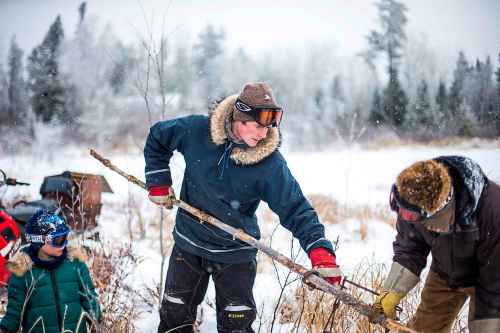
Snow falls softly over a muted landscape of boreal forest, rock ridges, spruce swamps and beaver ponds. This 60-square-kilometre area of land in the southwest corner of Whiteshell Provincial Park is the Imrie family trapline; they are designated to trap and manage the populations of fur-bearing animals.

Right now, three generations of Imries — Murray, 72, Devin, 36, and five-year-old Thomas — are gathered at a beaver house. Devin thumps a 1.5-metre-long ice chisel onto the surface of the pond, looking for the entrance of the lodge (the movement of the beavers swimming back and forth below weakens the surface). Thomas climbs onto the pile of sticks and brush with his grandpa, and the two dig through the snow to find the breathing hole. Hot air and a thick, musky smell means that the beavers are active here this winter.

The scene could have taken place a century earlier. Other than the snowmobiles parked nearby, the process hasn’t changed much over the years. Devin cuts a hole in the ice, chops down a long, thin tree to serve as a pole for holding the traps under the water, and then gets to work setting them. They are wire “conibear” style traps, orange with rust after many seasons of use, designed to snap around the animals’ neck or body, killing them instantly.

Murray explains the beavers have already eaten all of the poplar in the area, which is their preferred food source, and have moved onto birch and spruce. If the going gets really rough, the rodents might even resort to eating cattail tubers to make it through the winter. A twig of poplar, scratched to simulate tooth marks, is stuck into the trap as bait. “We’re going to have a beaver probably in less than two days,” crows Thomas.

Read
Tuesday, Mar. 23, 2021

Beware invasive, ‘frightening’ waterhemp

Laura Rance-Unger 4 minute read Preview

Beware invasive, ‘frightening’ waterhemp

Laura Rance-Unger 4 minute read 2:01 AM CDT

There’s a threat lurking on the edge of Manitoba farmers’ fields this fall that’s even scarier than the escalating trade war with their biggest customer.

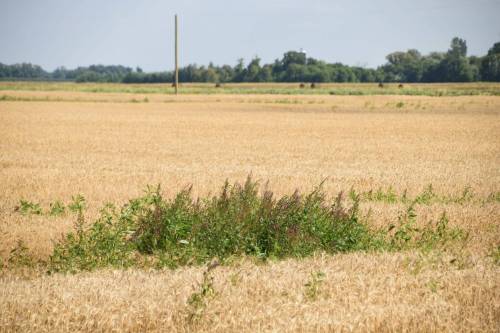
Provincial extension advisers are warning farmers to watch for a weed known as “tall waterhemp,” which, true to its name, may already be towering above ready-to-harvest crops.

Those wispy tentacles waving in the breeze look pretty innocuous from a distance. But this highly invasive member of the pigweed family produces hundreds of thousands of seeds that are just itching for dispersal through farmers’ combines and across their fields.

Each of those tiny seeds — one small pill container filled halfway holds 44,000 — can produce plants with stems the width of saplings and heights of two to five metres. One or two plants can quickly turn into a patch. If waterhemp takes over a field, it can choke out the growing crop and cut yields by more than 90 per cent.

Read
2:01 AM CDT

Global sextortion targets teenage boys

Kelly Geraldine Malone, The Canadian Press 5 minute read Preview

Global sextortion targets teenage boys

Kelly Geraldine Malone, The Canadian Press 5 minute read Tuesday, Jun. 21, 2022

PILOT MOUND, Man. - Daniel Lints was kind and responsible with a witty sense of humour. The rural Manitoba teenager had a bright future and loving family. He played hockey and was a constant visitor to the nearby community pool.

He was a normal and happy 17-year-old until one chilly February day, he accepted a message request from what appeared to be an attractive young woman on Snapchat.

She coerced him into sending an explicit image. In minutes he was being blackmailed and within three hours he took his own life.

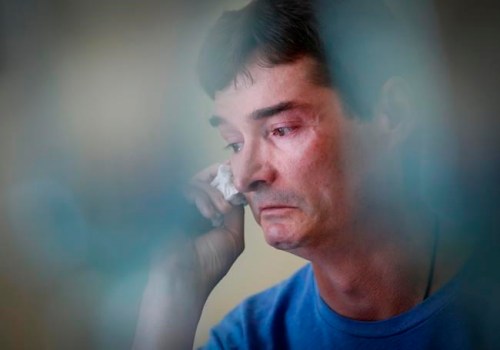
"I feel like he was murdered,” says Derek Lints, Daniel’s father, as tears stream down his cheeks.

Read
Tuesday, Jun. 21, 2022

Leaked data prompts news backlash in Canada, U.S.

James McCarten, The Canadian Press 5 minute read Preview

Leaked data prompts news backlash in Canada, U.S.

James McCarten, The Canadian Press 5 minute read Friday, Feb. 18, 2022

WASHINGTON - Journalists in Canada and the United States, veterans of a daily grind that entails tracking down and chatting up newsmakers, politicians and ordinary citizens by whatever means necessary, are encountering a very different — and hostile — world as they work to learn more about supporters of the protests in Ottawa.

Reporters are being harassed, spammed, "doxxed" and even threatened for reaching out to donors to an online crowdfunding campaign that was targeted last week by hackers who disclosed the contact details of thousands of pro-trucker contributors.

"I actually had someone come to my door and leave a threatening note," said Bryan Schott, a political reporter with the Salt Lake Tribune who used the list to send emails to donors with Utah zip codes.

In Schott's case, along with countless others, people have been using social media to post screen shots of emails they've received from reporters — usually innocuous queries asking for confirmation that they had donated to the protesters and whether they'd agree to an interview.

Read
Friday, Feb. 18, 2022